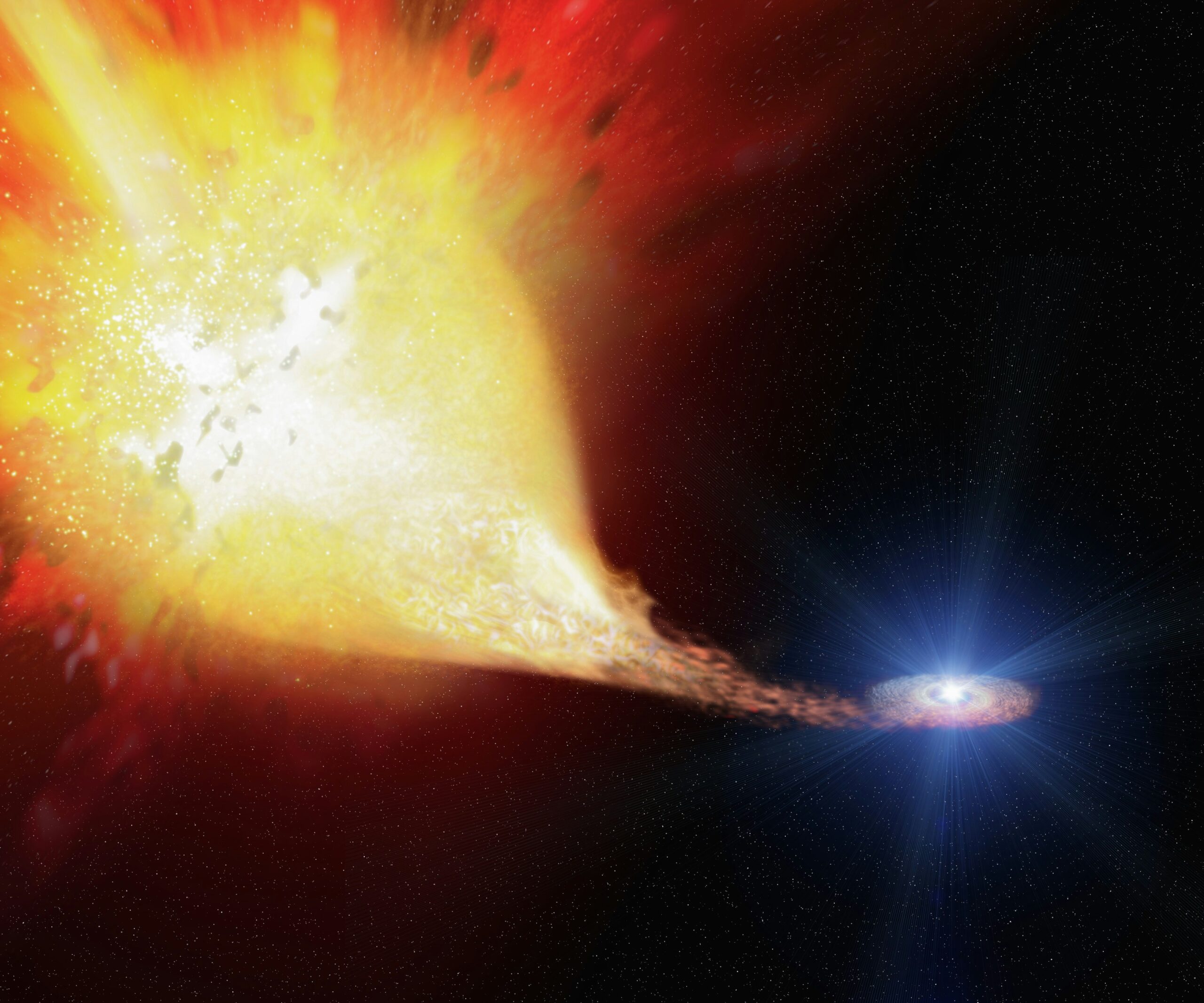
The relentless procession of Earth’s climate has long been a subject of intense scientific scrutiny. Among the most profound and mystifying shifts documented in the planet’s history are the ice ages – periods of glacial expansion that dramatically reshaped landscapes and challenged life itself. For centuries, various hypotheses have been proposed to explain these colossal climatic upheavals. However, a compelling and increasingly influential theory suggests that these icy eras may have been triggered by a celestial interloper: a comet. This “Comet Impact Theory for the Ice Age” proposes a dramatic and elegant, albeit catastrophic, mechanism for initiating and sustaining the planet-wide freezing events that characterize Earth’s glacial periods.
The evidence for past ice ages is etched into the very fabric of our planet. Vast moraines, sculpted valleys, and immense deposits of glacial till stand as silent testaments to the immense power of ice sheets that once covered vast swathes of continents. Geologists and paleoclimatologists have meticulously pieced together records of these periods, revealing a cyclical nature to glacial and interglacial epochs. These cycles, lasting tens of thousands to hundreds of thousands of years, are characterized by significant drops in global temperatures, leading to the accumulation of ice over polar and mid-latitude regions.
The Traditional View: Orbital Eccentricities
For decades, the dominant explanation for the timing and duration of ice ages has revolved around the Milankovitch cycles. These cycles describe variations in Earth’s orbit around the Sun, including changes in its eccentricity (the shape of the orbit), axial tilt (obliquity), and the precession of its equinoxes (wobble).
Eccentricity’s Influence
The Earth’s orbit is not a perfect circle but an ellipse, and the degree of this ellipticity varies over long timescales. When the orbit is more eccentric, the difference in solar radiation received by Earth at its closest and farthest points from the Sun is amplified. This can lead to more pronounced seasonal variations, potentially influencing glacial periods, particularly when combined with other orbital factors.
Obliquity’s Impact on Seasons
The tilt of Earth’s axis, currently around 23.5 degrees, dictates the intensity of our seasons. A greater tilt leads to more extreme seasonal differences (hotter summers and colder winters), while a lesser tilt results in milder seasons. Variations in obliquity are thought to play a role in initiating or terminating glacial periods by affecting the amount of summer insolation at high latitudes. If summers are too cool, snow that fell in winter may not melt, allowing ice sheets to grow.
Precession’s Seasonal Shift
Axial precession refers to the slow wobble of Earth’s axis, which causes the timing of the solstices and equinoxes to shift relative to the Earth’s position in its orbit. This means that the seasons, over thousands of years, occur at different points in the orbit. For example, if perihelion (closest approach to the Sun) shifts to occur during the Northern Hemisphere’s summer, summers will be warmer, potentially inhibiting ice sheet growth. Conversely, if perihelion occurs during a hemisphere’s winter, that hemisphere will experience warmer winters, which can paradoxically lead to more snowfall, contributing to ice accumulation.
Limitations of the Milankovitch Theory
While the Milankovitch cycles provide a compelling framework for understanding the timing of ice ages, they do not fully explain the initiation of these dramatic climatic shifts. The variations in solar insolation caused by orbital changes are relatively gradual. Scientists have struggled to reconcile these smooth orbital forcings with the abrupt and dramatic onset of glacial periods observed in the geological record. This has left a crucial gap in our understanding, prompting the search for more potent triggers.
The Comet impact Ice Age theory posits that a significant comet or asteroid impact could have triggered dramatic climate changes, leading to the onset of an ice age. This theory is supported by various geological and paleontological evidence that suggests a correlation between impact events and periods of global cooling. For further insights into how external factors can influence Earth’s climate and economy, you may find the article on economic stabilization measures for recovery particularly relevant. It discusses how understanding past events can inform current strategies for managing climate-related challenges. You can read more about it here: US Economic Stabilization Measures for Recovery.
The Comet Impact Hypothesis: A Celestial Cataclysm
The Comet Impact Theory for the Ice Age offers a more dynamic and potentially explosive explanation for the initiation of glacial periods. It posits that the impact of one or more large comets with Earth, or the deposition of vast amounts of cometary material into the atmosphere, could have triggered the severe cooling necessary to initiate glaciation.
What are Comets?
Comets are celestial bodies composed of ice, dust, and rock that originate from the outer reaches of the solar system, primarily from the Kuiper Belt and the Oort Cloud. They are often described as “dirty snowballs.” When a comet approaches the Sun, its ice vaporizes, creating a luminous coma and often a spectacular tail of gas and dust.
Composition and Behavior
The ice in comets is predominantly frozen water, but it also contains frozen gases like carbon dioxide, methane, and ammonia, along with organic molecules. The dust component consists of silicate materials, carbonaceous particles, and metallic grains. The volatile nature of cometary ice makes them dynamic objects, shedding material as they journey through the solar system.
Origins in the Outer Solar System
The Kuiper Belt is a doughnut-shaped region beyond Neptune, home to numerous icy bodies. The Oort Cloud, a theoretical spherical shell surrounding the solar system at much greater distances, is thought to be the source of long-period comets. Gravitational perturbations from passing stars or giant planets can send these icy wanderers on trajectories towards the inner solar system.
The Impact Scenario: More Than Just a Crater
The Comet Impact Theory doesn’t necessarily require a direct, continent-shattering impact, although such an event could certainly have profound climatic consequences. Instead, it encompasses a range of possibilities:
Atmospheric Dust and Aerosols: A Global Shroud
A significant factor proposed by the theory is the injection of enormous quantities of dust and aerosols into Earth’s stratosphere. A large comet breaking apart or impacting the ocean could vaporize vast amounts of water and eject pulverized rock and ice particles high into the atmosphere. These fine particles, once dispersed globally, can reflect incoming solar radiation back into space.
Stratospheric Residence Time
Particles injected into the stratosphere, which lies above the troposphere where weather occurs, can remain suspended for months or even years. This extended residence time at high altitudes allows them to effectively blanket the planet, significantly reducing the amount of sunlight reaching the surface.
Albedo Enhancement
The presence of this stratospheric veil increases Earth’s albedo, or reflectivity. A higher albedo means more solar energy is reflected away from the planet, leading to a net cooling effect. This is analogous to the dimmer sunlight experienced during volcanic eruptions that inject ash into the stratosphere.
Chemical Changes in the Atmosphere
Beyond reflecting sunlight, cometary impacts or the dispersal of cometary material could also alter the chemical composition of the atmosphere, further contributing to cooling.
Water Vapor and Cloud Formation
The vaporization of cometary ice would introduce massive amounts of water vapor into the atmosphere. While water vapor is a greenhouse gas, the resulting increase in cloud cover, particularly high-altitude cirrus clouds, could have a net cooling effect by reflecting incoming solar radiation.
Other Volatiles and Their Effects
Comets also contain frozen gases like methane and ammonia. Their release into the atmosphere could lead to complex chemical reactions. While some of these gases are greenhouse gases, their initial release could trigger atmospheric changes that ultimately lead to cooling. For example, reactions involving ammonia could lead to the formation of aerosols.
Temporal Triggers: Aligning with Glacial Cycles
A key aspect of the Comet Impact Theory is its potential to explain the cyclical nature of ice ages. This is where the concept of cometary showers or periodic bombardment becomes crucial.
Periodic Cometary Bombardment
It is theorized that the solar system might not be uniformly free of comets; rather, there might be periods of increased cometary activity or “showers” that coincide with glacial cycles.
Galactic Environment
The Sun’s journey through the Milky Way galaxy exposes it to varying densities of celestial objects. Passing through denser regions of the galaxy, or interacting with the gravitational influence of other stars, could disturb the Oort Cloud, sending a swarm of comets on a collision course with the inner solar system.
Gravitational Perturbations
The gravitational pull of giant planets like Jupiter and Saturn can also perturb cometary orbits, occasionally sending them into the inner solar system. If these perturbations occur in clusters or over extended periods, they could lead to a series of impacts or atmospheric injections.
Evidence Supporting the Theory

While a direct cometary impact event is difficult to pinpoint definitively for every ice age, a growing body of scientific evidence suggests a potential link.
Geochemical Anomalies at Ice Age Boundaries
Scientists have identified distinct geochemical signatures in geological layers that mark the boundaries between interglacial and glacial periods. These anomalies are consistent with the presence of extraterrestrial material.
Iridium Anomalies
Iridium is a platinum-group metal that is rare in Earth’s crust but relatively abundant in asteroids and comets. The discovery of elevated iridium levels in sediments dating to the end of the last interglacial period and the beginning of the subsequent ice age has been cited as strong evidence for extraterrestrial input.
The K-T Boundary Connection
The most famous example of an iridium anomaly is at the Cretaceous-Paleogene (K-T) boundary, which marks the extinction of the dinosaurs and is widely attributed to an asteroid impact. The presence of similar, albeit often less pronounced, anomalies at ice age boundaries suggests a similar extraterrestrial trigger.
Other Isotopes and Elements
Beyond iridium, studies have also found variations in the isotopic composition of elements like carbon and oxygen, as well as the presence of other extraterrestrial elements and compounds, in ice age boundary layers. These findings further support the idea of a significant influx of non-terrestrial material.
Microscopic Evidence: Cosmic Spherules
Microscopic analysis of geological samples from key periods has revealed the presence of “cosmic spherules.” These are small, glassy or metallic spheres formed when extraterrestrial material melts and cools rapidly.
Formation in Impact Events
Cosmic spherules are thought to form during hypervelocity impacts when the incoming object and target material are vaporized and then rapidly condense into tiny spheres. Their presence in ice age sediments provides a tangible link to extraterrestrial bombardments.
Distribution and Dating
The widespread distribution of these spherules across various geological sites, and their precise dating to the onset of glacial periods, strengthens the argument for a cataclysmic event.
Astronomical Observations: Young Comets and Galactic Cycles
Modern astronomical observations provide context for how comets might be delivered to Earth and hint at potential cyclic patterns.
The Nemesis Hypothesis and the “Oort Cloud Companions”
Some theories suggest the existence of a distant, unseen companion star to our Sun, dubbed “Nemesis.” This hypothetical star could periodically stir up the Oort Cloud, sending comets towards the inner solar system. While Nemesis remains unproven, the general idea of external gravitational influences on the Oort Cloud is scientifically plausible.
Tidal Disruption of the Oort Cloud
As our solar system orbits the galactic center, it experiences tidal forces. These forces can be stronger in denser regions of the galaxy, potentially leading to the disruption of the Oort Cloud and the release of comets.
The Shiva Hypothesis: A Rogue Object in the Solar System
Another, more speculative, hypothesis suggests the presence of a transient object, perhaps a brown dwarf or a large planet, that occasionally passes through the solar system, perturbing cometary orbits.
Mechanisms of Cooling: The Cascading Effects

Once initiated, the climatic effects of a cometary event could trigger a cascade of feedbacks leading to sustained global cooling and the onset of an ice age.
Stratospheric Aerosols and Polar Vortex Intensification
The prolonged presence of stratospheric aerosols has a direct impact on atmospheric circulation.
Blocking Incoming Solar Radiation
As previously mentioned, these aerosols reflect solar radiation, leading to a general cooling of the troposphere.
Impact on Temperature Gradients
The cooling at the surface can alter temperature gradients between the equator and the poles. This can potentially lead to a more stable, colder polar vortex.
The Polar Vortex and its Role in Glaciation
The polar vortex is a band of strong easterly winds in the upper atmosphere that encircles the North and South poles. A more intense and stable polar vortex can trap cold air over the polar regions, contributing to the growth of ice sheets.
Reduced Heat Transport
A stronger polar vortex can also restrict the transport of warmer air from lower latitudes towards the poles, further exacerbating the cold conditions.
Ocean Circulation Changes: A Global Thermostat Disrupted
Earth’s oceans play a crucial role in regulating global climate through their vast conveyor belt of currents. A major atmospheric disruption could significantly impact these circulation patterns.
Thermohaline Circulation and its Sensitivity
Thermohaline circulation, driven by differences in temperature and salinity, is particularly sensitive to changes in polar ice melt and freshwater input.
Freshwater Input and Salinity Reduction
A significant influx of freshwater from melting cometary ice or impact-induced melting of terrestrial ice could reduce the salinity of ocean surface waters, especially in key areas like the North Atlantic.
Halting or Slowing of Deep Water Formation
This reduction in salinity can disrupt the sinking of cold, salty water in the polar regions, which is a critical engine for driving the global thermohaline circulation. If this process is slowed or halted, it can lead to a redistribution of heat from the equator to the poles, potentially causing significant regional cooling.
Impact on Global Heat Distribution
Disruptions to ocean currents can lead to a less efficient transport of heat from the tropics towards the poles, contributing to a colder global climate.
Feedback Loops: Amplifying the Cooling
The initial cooling triggered by a cometary event would likely be amplified by a series of positive feedback loops.
Ice-Albedo Feedback
As temperatures drop and ice sheets begin to form, the Earth’s albedo increases. Ice and snow are highly reflective, meaning they bounce more sunlight back into space. This further reduces the amount of solar energy absorbed by the planet, leading to even more cooling and more ice formation. This is a powerful self-reinforcing cycle.
Greenhouse Gas Reductions (Potentially)
While debated, some theories suggest that a significant cooling event and increased glaciation could lead to a reduction in certain greenhouse gases. For instance, colder oceans can absorb more CO2, and changes in vegetation patterns might also influence atmospheric gas concentrations.
The Comet impact Ice Age theory has garnered significant attention in recent years, as researchers explore the possibility that a cosmic event may have triggered dramatic climate changes on Earth. This theory suggests that a comet or asteroid impact could have led to widespread glaciation, drastically altering the planet’s ecosystems. For those interested in understanding the broader implications of such catastrophic events, a related article discusses the importance of securing your savings in the face of potential global disruptions. You can read more about this topic in the article on protecting bank deposits from collapse.
Reconciling Impact Theory with Milankovitch Cycles
| Comet Impact Ice Age Theory Metrics | Details |
|---|---|
| Comet Impact Hypothesis | Proposes that a comet impact caused the Younger Dryas cooling period and contributed to the extinction of many large mammals |
| Evidence | Presence of nanodiamonds, microspherules, and other impact-related materials in sediment layers from the Younger Dryas period |
| Debate | Controversy exists among scientists regarding the extent of the comet’s impact on the climate and ecosystems |
| Research | Ongoing studies continue to investigate the potential link between comet impacts and major climate events in Earth’s history |
The Comet Impact Theory does not necessarily negate the role of Milankovitch cycles. Instead, it proposes that these cycles may act as modulators or “fine-tuners” for the more dramatic trigger events.
The “Punch” to Initiate Glaciation
Imagine Milankovitch cycles as slowly turning up the dimmer switch on Earth’s climate. This gradual change might make the planet more susceptible to glaciation, but a comet impact could be the “punch” that knocks it into an ice age.
Pre-conditioning the Planet
During periods of lower summer insolation at high latitudes, as dictated by Milankovitch cycles, the Earth’s climate is already predisposed to cooling. A cometary event, with its immediate and potent cooling effects, could then tip the scales, initiating the rapid growth of ice sheets that wouldn’t have occurred otherwise.
Orbital Variations as “Grooming” for Impact Events
Conversely, it’s also possible that gravitational interactions within the solar system, influenced by orbital configurations, might direct comets towards Earth during specific periods.
Gravitational Alignments
Certain orbital alignments of the giant planets could, over time, funnel comets from the outer solar system into trajectories that bring them closer to Earth. If these alignments coincide with periods of increased cometary activity or with favorable Milankovitch phases, the probability of an ice age-initiating impact increases.
Interglacial Termination and the Role of Trigger Events
The end of an ice age and the transition to an interglacial period also involve complex climatic shifts. While orbital forces are generally considered the primary drivers of deglaciation, smaller trigger events might still play a role in accelerating or moderating these transitions.
Accelerating Meltbacks
While less commonly proposed, a major impact event during a deglacial phase could potentially melt existing ice sheets faster due to heat release, although the long-term cooling effects are generally considered more dominant for ice age initiation.
Challenges and Future Directions
Despite its growing appeal, the Comet Impact Theory for the Ice Age faces its own set of challenges and requires further rigorous investigation.
Direct Evidence and Pinpointing Specific Events
The primary challenge remains the direct identification of specific cometary impact events that precisely coincide with the onset of every documented ice age. The geological record is complex, and distinguishing between multiple impactors or differentiating from other extraterrestrial sources can be difficult.
The “Smoking Gun” Conundrum
Finding a single, undeniable “smoking gun” – a pristine impact crater or a definitive cometary fragment embedded in ice age boundary sediments – for every glacial period is a significant hurdle. However, the cumulative weight of geochemical and micro-particle evidence is building a compelling case.
Quantifying the Climatic Effects
Accurately modeling the precise climatic consequences of different types of cometary impacts or atmospheric injections is an ongoing area of research. The scale and composition of the cometary material, the impact location, and atmospheric feedback mechanisms all play crucial roles.
Sophisticated Climate Modeling
Advanced climate models are being developed and refined to simulate the effects of stratospheric aerosols, altered ocean circulation, and feedback loops under various impact scenarios. These models are essential for testing the plausibility of the theory.
Addressing Alternative Explanations
While the Comet Impact Theory offers a compelling alternative or complementary explanation, scientists continue to explore and refine other hypotheses, such as changes in ocean circulation solely driven by internal Earth processes or variations in solar output.
Continued Scrutiny of Milankovitch Cycles
Research into the precise mechanisms by which Milankovitch cycles translate into glacial cycles remains active, seeking to understand if subtle variations in insolation could, under specific conditions, trigger ice age onset without a catastrophic external trigger.
The Search for Extraterrestrial Triggers for Other Climatic Events
The principles of the Comet Impact Theory could potentially be applied to understanding other significant climatic shifts throughout Earth’s history, not just ice ages.
Investigating Other Earth History Events
Scientists are beginning to explore whether similar extraterrestrial triggers might have played a role in other abrupt climatic changes, such as rapid warming events or episodes of extreme aridity.
In conclusion, the Comet Impact Theory for the Ice Age presents a bold and scientifically intriguing explanation for one of Earth’s most dramatic climatic transformations. By proposing a celestial trigger, it offers a potential solution to the limitations of purely orbital forcing, providing a mechanism for the abrupt and profound cooling that characterizes glacial periods. While challenges remain in definitively linking specific impacts to every ice age, the growing body of geochemical, geological, and astronomical evidence suggests that the icy grip of glacial epochs may indeed have been initiated by a startling and awe-inspiring visitor from the frozen reaches of our solar system. The ongoing research promises to further illuminate the complex interplay between Earth and its cosmic environment, forever reminding us of our planet’s dynamic and often violent past.

When the Ice Age Ended… Everything Changed
FAQs
What is the Comet impact Ice Age theory?
The Comet impact Ice Age theory suggests that a comet impact may have been responsible for triggering the onset of the last Ice Age approximately 12,800 years ago.
What evidence supports the Comet impact Ice Age theory?
Evidence supporting the theory includes the discovery of nanodiamonds, microspherules, and other impact-related materials in sediment layers dating back to the proposed time of the impact. Additionally, there is evidence of abrupt climate change and megafaunal extinctions around the same time period.
How would a comet impact trigger an Ice Age?
The theory proposes that a comet impact could have caused widespread wildfires, leading to the release of soot and other aerosols into the atmosphere. This would have blocked sunlight, causing a rapid cooling effect and potentially triggering an Ice Age.
What are some criticisms of the Comet impact Ice Age theory?
Critics argue that the evidence for a comet impact triggering the Ice Age is not conclusive and that other factors, such as volcanic activity or changes in ocean circulation, could have played a more significant role in causing the climate changes.
What are the implications of the Comet impact Ice Age theory?
If the theory is confirmed, it would significantly change our understanding of the causes of past climate change and mass extinctions. It could also have implications for our understanding of the potential impact of future comet or asteroid impacts on Earth’s climate and ecosystems.