The documentary “The Enigmatic Nimrud Crystal: A Fascinating Journey” delves into one of archaeology’s most perplexing discoveries, presenting a compelling narrative that blends scientific inquiry with historical mystery. This cinematic exploration invites viewers to ponder the origins, purpose, and potential implications of a small, unassuming artifact that has captivated scholars and enthusiasts alike for decades. The film meticulously reconstructs the context of its discovery, traces the threads of its subsequent study, and offers a platform for diverse interpretations, ultimately leaving the audience with more questions than answers, a testament to the enduring allure of the unknown.
Echoes from Ancient Nimrud: The Discovery and Initial Astonishment
The narrative begins by transporting the audience back to the ancient Mesopotamian city of Nimrud, once a jewel of Assyrian power. Through vivid recreations and expert commentary, the documentary establishes the historical significance of the site, known for its monumental architecture, intricate reliefs, and vast treasuries. It was within the ruins of this once-great city, specifically in what is believed to be an Assyrian palace, that the Nimrud Crystal was unearthed. The film emphasizes the serendipitous nature of the find, highlighting how this small, seemingly insignificant object was almost overlooked amidst the grandeur of more obvious treasures. The initial reaction of the archaeologists, as depicted in the documentary, was one of curiosity mingled with bewilderment. The crystal, no larger than a thumb, possessed a peculiar clarity and a subtle, almost unnatural, sheen that immediately set it apart from other excavated materials. Its smooth, polished surface and precisely carved facets, if they can be called that, hinted at a level of craftsmanship that seemed incongruous with the known technological capabilities of the period.
The documentary dedicates a significant portion to detailing the circumstances of the discovery. Archival footage, interviews with descendants of the original excavators, and expert analyses of the excavation reports paint a picture of a painstaking process. The sheer volume of artifacts recovered from Nimrud is staggering, making the identification of this particular object’s unique properties all the more remarkable. The film suggests that its small size and the prevailing focus on larger, more ornate objects might have meant it was initially cataloged with less fanfare. However, as subsequent examinations were conducted, its unusual characteristics began to emerge, sparking an intellectual firestorm that continues to this day. The documentary skillfully conveys the initial sense of wonder and the dawning realization that they might have stumbled upon something truly extraordinary. This early section effectively sets the stage for the deep dive into the scientific and theoretical discussions that follow, grounding the enigma in its archaeological reality.
The Accidental Gem: Unpacking the Context of Discovery
The film meticulously details the archaeological context of the Nimrud Crystal’s unearthing. Viewers are guided through the layers of history, understanding Nimrud as a significant Assyrian capital. The documentary uses CGI and expert interviews to illustrate the grandeur of the palace complexes where the crystal was found. This section focuses on the excavation itself, highlighting the meticulous work of archaeologists and the challenges they faced. It suggests that the crystal, due to its size and perhaps its unassuming location within the dig, could have easily been dismissed as a mere trinket. However, the documentary underscores that certain elements of its condition and surrounding finds hinted at a more profound significance. It avoids definitive pronouncements, instead focusing on the observations made by the excavators that sparked the initial intrigue.
The Unveiling of Peculiarity: First Impressions and Questions
Early examinations of the Nimrud Crystal revealed characteristics that defied simple classification. The documentary presents the initial scientific observations, focusing on the material composition and the remarkable clarity of the object. Experts discuss how it resisted identification with commonly known geological formations from the region. The precision of its form, which some interpret as deliberate shaping rather than natural occurrence, further deepened the mystery. The film emphasizes the immediate questions that arose: Who made this? What was its purpose? Why was it created with such apparent care and skill? These initial inquiries, born from the tangible evidence, laid the groundwork for the more speculative theories that would later emerge.
The documentary on the Nimrud crystal delves into the fascinating history and significance of this ancient artifact, shedding light on its origins and the mysteries surrounding it. For those interested in exploring related themes of historical artifacts and their impact on society, an insightful article can be found at The History of Government Asset Confiscation, which discusses how governments have historically seized valuable items and the implications of such actions on cultural heritage.
Unraveling the Material: Scientific Scrutiny and Unanswered Queries
The documentary “The Enigmatic Nimrud Crystal” transitions to a rigorous examination of the artifact’s material properties. This section is a fascinating blend of scientific investigation and the inherent limitations of current technology when confronted with such an anomaly. Experts from various fields, including geology, optics, and material science, are interviewed, each offering their perspective on the crystal’s composition and structure. The film showcases the meticulous processes involved in analyzing such an ancient object, from non-destructive testing to microscopic examinations. Despite these efforts, the crystal continues to guard its secrets, presenting a compelling case study in the boundaries of scientific understanding when faced with the truly unique.
The documentary highlights the ongoing debate surrounding the crystal’s material. While it exhibits characteristics of quartz, its exceptional clarity and the presence of internal structures that defy typical geological formation processes have led to considerable debate. Some scientists propose that it might be a rare type of natural crystal, perhaps subjected to intense geological pressures or unique mineral interactions. Others, however, lean towards the possibility of artificial manipulation, suggesting that it was painstakingly carved and polished by human hands. The film presents compelling arguments from both sides, illustrating the scientific methodologies employed in each case. Spectroscopic analysis, for instance, is detailed, with experts explaining how it can identify elemental composition. Yet, even with this advanced technology, certain readings remain ambiguous or present anomalies that do not fit neatly into established categories.
The Geological Enigma: Natural Formation or Crafted Object?
This part of the documentary delves deep into the scientific analysis of the Nimrud Crystal’s composition. Geologists and mineralogists present their findings, discussing the rarity of materials exhibiting such clarity and perfection within the known geological formations of ancient Mesopotamia. The film showcases microscopic imagery of the crystal’s internal structure, highlighting patterns that have baffled experts. Theories range from exceptionally pure quartz deposits subjected to unique environmental pressures to the possibility of other, as yet unidentified, naturally occurring minerals. The visual evidence presented is compelling, leaving viewers to ponder the vastness of geological possibilities.
Microscopic Mysteries: Illuminating Inclusions and Imperfections
The documentary focuses on the microscopic details of the crystal, revealing subtle inclusions and structural anomalies that deviate from standard crystalline growth. Material scientists explain how these imperfections, or lack thereof in certain areas, can provide clues about the object’s formation. The film presents cutting-edge imaging techniques that have been used to study these features. The ambiguity of these microscopic findings is emphasized, as they can be interpreted in multiple ways, either supporting natural processes or suggesting deliberate human intervention. This section effectively conveys the frustration and fascination that arises when scientific data remains open to interpretation.
Theories and Speculations: Functionality Beyond Understanding
As the scientific investigation of the Nimrud Crystal reaches its inherent limitations, “The Enigmatic Nimrud Crystal” pivots to the realm of theories and speculations. This is where the documentary truly shines, presenting a diverse range of hypotheses that attempt to explain the crystal’s purpose and origin. The film carefully navigates these often-controversial ideas, presenting them not as definitive truths but as intellectually stimulating possibilities. From practical applications to more esoteric interpretations, the documentary allows the audience to engage with the profound questions that the crystal continues to pose, pushing the boundaries of historical and scientific thought.
The documentary explores the most prominent theories surrounding the crystal’s function. One of the leading ideas posits that it may have served as a lens or a magnifying tool. The film illustrates how such an object, with its precise curvature and clarity, could have been used for detailed work, perhaps in the creation of intricate artifacts or for rudimentary astronomical observations. This theory is supported by the general technological advancements of the Assyrian civilization. However, the documentary also acknowledges the lack of definitive evidence to support this specific use, such as wear patterns or accompanying tools.
Another significant line of inquiry suggests a ritualistic or symbolic purpose. The Assyrians were known for their elaborate religious practices and their belief in the power of certain objects. The crystal’s unique properties, its rarity, and its careful crafting could have imbued it with immense symbolic value, perhaps used in ceremonies or as a focal point for religious devotion. The film touches upon Assyrian iconography and religious texts, seeking parallels that might illuminate this perspective.
More audacious theories are also presented, including the possibility of it being a rudimentary electrical device or a component of a lost technology. These ideas, while highly speculative, are framed within the context of ancient civilizations potentially possessing knowledge far beyond what is currently understood. The documentary interviews proponents of these theories, allowing them to articulate their reasoning, often drawing upon interpretations of ancient texts, myths, and other enigmatic artifacts. The film maintains a balanced approach, acknowledging the lack of concrete proof while recognizing the appeal of such mind-expanding possibilities. Ultimately, this section highlights the enduring human desire to find meaning and purpose in the face of profound mystery.
The documentary on the Nimrud crystal offers a fascinating glimpse into the ancient artifacts that have captivated historians and archaeologists alike. For those interested in the broader implications of resource scarcity and its impact on historical treasures, a related article explores the ongoing struggles over valuable resources in modern times. You can read more about this pressing issue in the article titled “Resource Wars: The Fight for Scarce Supplies” by following this link: Resource Wars. This connection between the past and present highlights the enduring significance of such artifacts in understanding our world today.
The Lens Hypothesis: A Tool for Ancient Craftsmen?
This section of the documentary examines the theory that the Nimrud Crystal served as a lens. Experts discuss the optical properties of the crystal and how, if shaped appropriately, it could have been used for magnification. The film presents visual aids demonstrating how a clear, curved object could have aided artisans in detailed work, such as inscribing fine inscriptions or creating intricate jewelry. The historical context of Assyrian craftsmanship is explored to support the plausibility of such a tool.
Ritualistic Resonance: A Sacred Artifact of the Ancients?
The documentary delves into the possibility of the crystal holding religious or symbolic significance. Assyrian scholars discuss the importance of sacred objects in their culture and how the unique properties of the crystal might have been interpreted as divine. The film explores potential connections to astronomical observations, divination, or ceremonial practices, drawing upon existing knowledge of Assyrian religious beliefs and iconography.
Out-of-Place Artifacts: Whispers of Lost Technologies?
This speculative section explores more unconventional theories, including the idea that the Nimrud Crystal might be evidence of an advanced, lost technology. The documentary interviews proponents of ancient astronaut theories and other fringe archaeological hypotheses, allowing them to present their arguments. While acknowledging the lack of direct evidence, the film presents these ideas as thought-provoking possibilities that challenge conventional historical narratives.
The Legacy of Intrigue: Enduring Questions and Future Research
The documentary “The Enigmatic Nimrud Crystal” concludes by reflecting on the enduring legacy of this singular artifact. It underscores that the true power of the Nimrud Crystal lies not in definitive answers but in the persistent questions it raises. The film emphasizes that the ongoing research, the advancements in scientific technology, and the continued exploration of ancient sites hold the potential to shed further light on its mysteries. It leaves the audience with a profound appreciation for the complexities of history and the thrill of the unknown, urging a continued pursuit of knowledge.
The documentary highlights how the Nimrud Crystal has become a touchstone for broader discussions about ancient civilizations and their capabilities. It has spurred further research into other enigmatic artifacts and encouraged a re-examination of established historical timelines. The film suggests that the process of attempting to understand the crystal has itself been a valuable endeavor, pushing the boundaries of scientific inquiry and fostering interdisciplinary collaboration.
Furthermore, the documentary poses a challenge to future researchers. It underscores the need for continued, rigorous investigation, employing the latest scientific tools and methodologies. It also calls for an open mind, a willingness to consider unconventional theories, and a collaborative approach that bridges different fields of expertise. The Nimrud Crystal serves as a potent reminder that history is not a static narrative but a dynamic field of ongoing discovery, where even the smallest object can hold the key to unlocking monumental secrets. The film’s closing remarks are not of finality, but of invitation – an invitation to continue the journey of unraveling this captivating enigma.
The Crystal’s Footprint: Influence on Archaeological Thought
This section explores how the Nimrud Crystal has impacted archaeological research and public perception. The documentary discusses how the artifact has inspired new avenues of investigation, encouraged the development of specialized analytical techniques, and fueled public fascination with ancient mysteries. It highlights the crystal’s role in popularizing the idea of advanced ancient technologies and the ongoing debate surrounding human ingenuity in antiquity.
A Call to Arms: The Future of Crystal Investigation
The documentary concludes with a forward-looking perspective, emphasizing the ongoing nature of scientific inquiry. It discusses the potential of new technologies, such as advanced imaging, AI-driven analysis, and interdisciplinary collaborations, to provide further insights into the Nimrud Crystal. The film encourages continued research and urges for an open-minded approach to understanding this perplexing artifact, leaving viewers with a sense of anticipation for future discoveries.
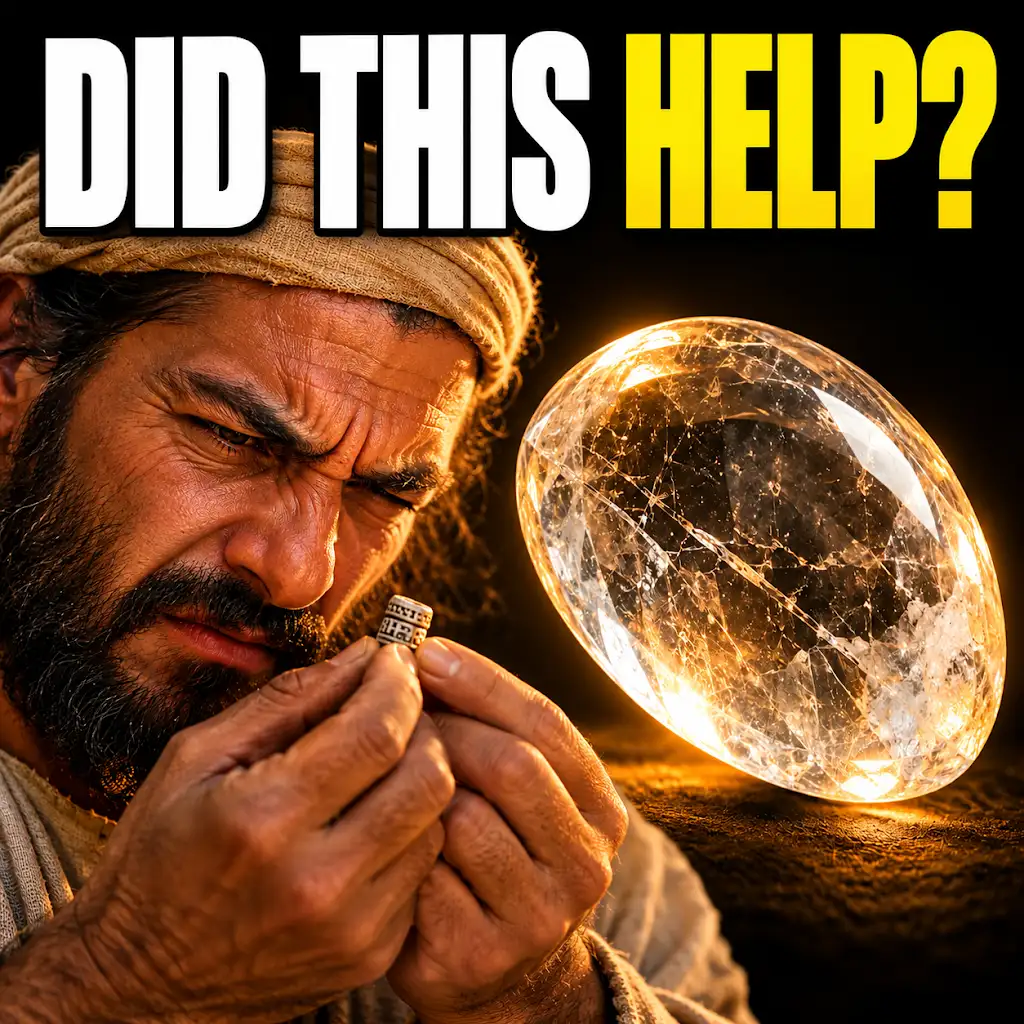
Did This Ancient Crystal Help People See?
FAQs
What is the Nimrud crystal documentary about?
The Nimrud crystal documentary explores the history and significance of the crystal artifacts discovered in the ancient city of Nimrud in Iraq.
When were the Nimrud crystal artifacts discovered?
The Nimrud crystal artifacts were discovered in the late 19th century during archaeological excavations at the ancient city of Nimrud, which was the capital of the Assyrian Empire.
What makes the Nimrud crystal artifacts unique?
The Nimrud crystal artifacts are unique due to their exquisite craftsmanship and intricate designs. They are considered to be some of the finest examples of ancient Assyrian artistry.
Where are the Nimrud crystal artifacts currently housed?
The Nimrud crystal artifacts are currently housed in various museums around the world, including the British Museum in London and the Iraq Museum in Baghdad.
Why are the Nimrud crystal artifacts important in understanding ancient Assyrian culture?
The Nimrud crystal artifacts provide valuable insights into the artistic and cultural achievements of the ancient Assyrians. Studying these artifacts helps researchers and historians better understand the religious beliefs, social structures, and technological advancements of the Assyrian Empire.