
The dusty trails of ancient caravans and the bustling ports of modernity represent a continuous thread in human history: the evolution of trade. From the legendary Silk Road, a network of arteries that once connected the East and West, to the intricate, hyper-connected web of globalization, the ways in which goods, ideas, and cultures have been exchanged have undergone a profound metamorphosis. This journey is not merely about the movement of commodities; it is a narrative of human ingenuity, technological advancement, political ambition, and the persistent drive for connection and prosperity.
The very concept of trade predates the grand empires and celebrated routes. In humankind’s earliest days, barter was the fundamental mode of exchange, driven by necessity and the uneven distribution of resources. As communities settled and developed specialized skills, the desire for goods beyond immediate reach fostered rudimentary trade. These early exchanges, though localized, laid the groundwork for more complex systems.
The Birth of Barter and Early Specialization
Before the advent of currency, goods and services were directly traded. Tribes would exchange surplus grain for tools, or their hunting prowess for crafted pottery. This system, while simple, encouraged specialization within communities. Artisans, farmers, and hunters could focus on what they did best, knowing they could acquire other necessities through exchange. This specialization not only increased efficiency but also fostered a greater awareness of the needs and capabilities of neighboring groups, planting the seeds for more expansive trade.
The Significance of Obsidian and Shells: Early “Currencies”
While formal currency was a distant concept, certain highly valued and portable items began to function as proto-currencies. Obsidian, a volcanic glass prized for its sharpness in toolmaking, and decorative shells from distant seas, were among the earliest examples. The presence of obsidian far from its volcanic source, or specific shell types in inland communities, is tangible evidence of extensive prehistoric trade networks. These “long-distance” exchanges, often facilitated by nomadic groups or early riverine civilizations, demonstrated the human capacity for organized, long-range movement of goods.
The Rise of Riverine Civilizations and Maritime Ventures
The emergence of great river valleys – the Nile, the Tigris-Euphrates, the Indus, and the Yellow River – was pivotal. These waterways facilitated not only agriculture but also served as natural highways for trade. Early boats allowed for the transport of heavier goods and facilitated contact between settlements that might have otherwise remained isolated. Simultaneously, coastal communities began to explore the seas, establishing early maritime trade routes. The Minoans, for instance, were renowned seafarers whose reach extended across the Mediterranean, exchanging goods like pottery, textiles, and olive oil. These early ventures, driven by resource discovery and the pursuit of luxury items, were the precursors to the grand Silk Road.
The history of trade routes is a fascinating subject that highlights the interconnectedness of civilizations throughout time. One related article that delves into the complexities of trade and its implications is “Understanding the Trading with the Enemy Act.” This article explores the legal frameworks that have shaped trade practices, particularly during times of conflict, and offers insights into how such regulations have influenced international commerce. For more information, you can read the article here: Understanding the Trading with the Enemy Act.
The Silk Road: A Tapestry of Cultures and Commerce
The Silk Road, more than a single path, was a complex web of routes that flourished for over a millennium, linking the East and West. It was a conduit not only for precious commodities but also for the exchange of ideas, technologies, religions, and artistic styles, shaping the destinies of civilizations from China to the Roman Empire and beyond.
The Genesis of the Silk Road: Imperial Ambitions and Desires
The formalization of the Silk Road is often traced back to the Han Dynasty in China (206 BCE – 220 CE). Emperor Wu of Han sought alliances and trade opportunities beyond his borders, particularly to counter the Xiongnu confederation. His emissary, Zhang Qian, embarked on journeys that opened up new diplomatic and commercial connections, most notably with Central Asian kingdoms. This imperial drive, coupled with the burgeoning demand for Chinese silk in the Roman Empire and other Western markets, provided the impetus for establishing and maintaining these long and arduous trade routes.
The Majestic Flow of Goods: Beyond Silk
While silk was the most famous commodity, the Silk Road facilitated the exchange of a vast array of goods. From the East came porcelain, spices (pepper, ginger, cinnamon), tea, paper, gunpowder, and precious metals. Heading West were horses, wool, glassware, gold, silver, and agricultural products like grapes and alfalfa. This bidirectional flow of goods enriched economies, diversified diets, and spurred the development of new industries in various regions. The demand for these exotic items fueled a thriving merchant class and fostered innovation in transportation and logistics.
The Exchange of Ideas: Religions, Philosophies, and Technologies
Perhaps the most profound legacy of the Silk Road lies in the transmission of non-material wealth. Buddhism, originating in India, spread eastward along these routes, transforming the cultural and spiritual landscapes of Central Asia and China. Christianity and later Islam also found their way along the Silk Road, interacting with and influencing existing belief systems. Philosophical ideas, scientific knowledge, and artistic motifs traversed continents, leading to syncretism and the cross-pollination of cultures. Technologies such as papermaking, printing, and gunpowder, originating in China, eventually made their way to Europe, profoundly impacting its development.
The Perilous Journey: Challenges and Innovations
The Silk Road was not a paved highway. It traversed formidable terrains – scorching deserts like the Taklamakan, towering mountain ranges like the Pamirs, and vast steppes. Merchants faced dangers from bandits, extreme weather, disease, and political instability. These challenges spurred innovations in transportation, from the hardy Bactrian camel, perfectly adapted to desert conditions, to the development of caravanserai – roadside inns that provided shelter, food, and water for travelers and their animals. Navigational techniques and cartography also evolved to better chart these extensive routes.
Age of Discovery and the Militarization of Trade

The Age of Discovery, beginning in the 15th century, marked a significant shift in global trade. Driven by a desire for new trade routes to the East and fueled by advancements in shipbuilding and navigation, European powers began to explore the world, leading to the establishment of new global trade networks and the foundation for modern globalization. However, this era was also characterized by aggressive competition, colonialism, and the militarization of trade routes.
The Quest for the Indies: New Maritime Routes
For centuries, overland trade routes to Asia were controlled by intermediaries, making goods expensive by the time they reached Europe. The Portuguese explorer Vasco da Gama’s successful voyage around the Cape of Good Hope to India in 1498 was a watershed moment. This discovery opened up a direct sea route to the lucrative spice markets of the East, bypassing traditional land routes and significantly reducing costs. This success spurred other European nations – Spain, England, France, and the Netherlands – to embark on their own voyages of exploration, seeking new passages and establishing their presence in distant lands.
The Columbian Exchange: A World Transformed
Christopher Columbus’s “discovery” of the Americas in 1492, while a miscalculation in his quest for Asia, initiated the Columbian Exchange. This vast, unplanned transfer of plants, animals, culture, human populations, technology, diseases, and ideas between the Americas, West Africa, and the Old World in the 15th and 16th centuries had profound and lasting impacts on every continent. New World crops like potatoes, maize (corn), tomatoes, and chili peppers revolutionized European agriculture and diets, leading to population growth. Conversely, Old World livestock such as horses, cattle, and pigs were introduced to the Americas, transforming its ecosystems and economies.
European Colonialism and the Exploitation of Resources
The Age of Discovery was inextricably linked to European colonialism. European powers established colonies in the Americas, Africa, and Asia, not only for trade but also for resource extraction and territorial expansion. The desire for goods like sugar, tobacco, silver, and gold from the colonies fueled the transatlantic slave trade, a brutal and dehumanizing system that forcibly transported millions of Africans to the Americas to provide labor on plantations. This exploitation of resources and labor generated immense wealth for European nations, laying the foundation for their economic dominance.
The Rise of Mercantilism and Trade Wars
The prevailing economic theory of Mercantilism guided much of the trade during this period. Mercantilists believed that a nation’s power and wealth were directly related to its supply of capital, emphasizing accumulating precious metals and maintaining a positive balance of trade. This led to intense competition among European powers, often resulting in trade disputes and wars to control key trade routes and markets. The establishment of chartered trading companies, such as the British East India Company and the Dutch East India Company, with considerable powers to trade, build forts, and even wage war, further exemplifies the militarized nature of trade.
The Industrial Revolution and the Intensification of Global Trade
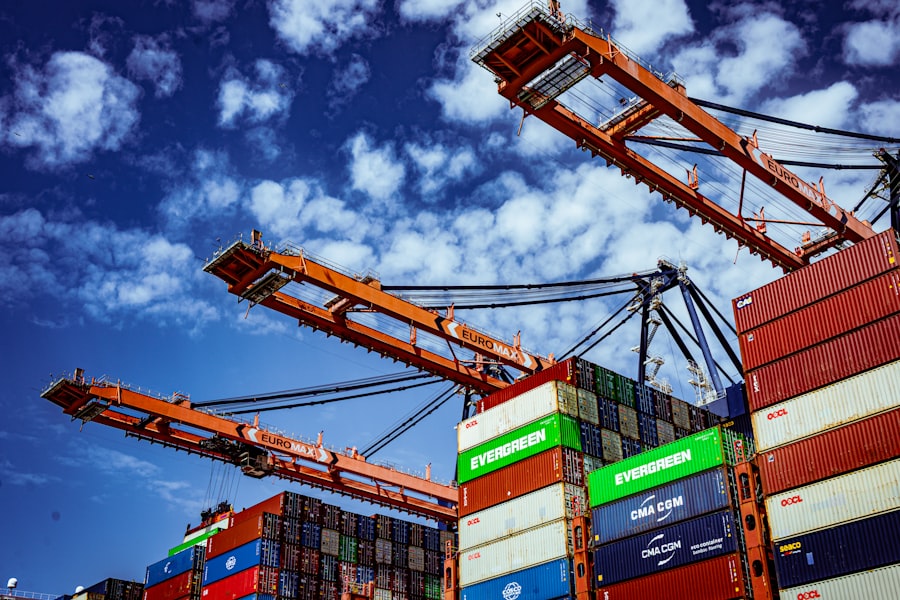
The Industrial Revolution, which began in Great Britain in the late 18th century and spread across the globe, fundamentally reshaped production, transportation, and consumption patterns, leading to an unprecedented intensification of global trade. New technologies dramatically increased the capacity to produce goods and move them across vast distances, fueling a new era of economic expansion and interconnectedness.
Mechanization and Mass Production: Surplus and Demand
The invention of new machinery, powered by steam and later electricity, revolutionized manufacturing. Factories replaced artisanal workshops, allowing for the mass production of goods at lower costs. Textiles, iron, and later steel became core commodities of industrial production. This surge in production created a surplus that needed new markets, while the burgeoning urban populations, driven by industrialization, created a massive demand for raw materials and manufactured goods. This created a feedback loop that propelled global trade to new heights.
Steam Power and the Transportation Revolution: Shrinking the World
The advent of steam-powered ships and railways was a game-changer for trade. Steamships were faster, more reliable, and could carry significantly larger cargoes than sailing vessels, dramatically reducing shipping times and costs. Railways, in turn, allowed for the efficient overland transport of goods from inland production centers to ports and to consumers throughout continents. These innovations effectively “shrunk the world,” making it easier and cheaper to move goods across oceans and landmasses, thereby fostering a more interconnected global economy.
The Scramble for Africa and Imperial Expansion
The Industrial Revolution, with its insatiable demand for raw materials like cotton, rubber, and minerals, coincided with a renewed wave of European imperialism in the late 19th century, often referred to as the “Scramble for Africa.” European powers carved up the African continent, establishing colonies to secure access to these vital resources and to create new markets for their manufactured goods. This period of intense colonial expansion further integrated vast swathes of the globe into the Western-dominated global trade system, often under exploitative conditions.
The Rise of Standardized Goods and Branding
Mass production also led to the standardization of goods. Products were made to consistent specifications, making them more interchangeable and facilitating large-scale trade. This era also saw the rise of early forms of marketing and branding as manufacturers sought to differentiate their products and appeal to a wider consumer base. The ability to produce and distribute identical goods across multiple markets was a crucial step towards the globalized marketplace of today.
The history of trade routes is a fascinating topic that reveals how ancient civilizations connected and exchanged goods, ideas, and cultures. For a deeper understanding of the economic implications of trade, you might find it interesting to explore how financial systems have evolved over time. An insightful article discussing modern financial concerns can be found here, where it examines the potential risks associated with savings and investments. This connection between historical trade practices and contemporary financial systems highlights the ongoing importance of economic stability in our lives. For more information, check out this article.
The Era of Globalization: Interconnectedness and New Challenges
| Trade Route | Time Period | Key Commodities | Notable Empires/Regions |
|---|---|---|---|
| Silk Road | 2nd century BCE – 14th century CE | Silk, spices, precious metals | China, Central Asia, Middle East, Mediterranean |
| Trans-Saharan Trade Route | 8th century – 16th century | Gold, salt, ivory | West Africa, North Africa, Mediterranean |
| Indian Ocean Trade Route | 4th century BCE – 16th century CE | Spices, textiles, precious stones | India, East Africa, Middle East, Southeast Asia |
| Hanseatic League Trade Route | 12th century – 17th century | Fish, timber, furs | Northern Europe, Baltic region |
The 20th and 21st centuries have witnessed the acceleration and intensification of global trade, leading to what is commonly known as globalization. This era is characterized by unprecedented levels of economic integration, the free flow of capital and information, and the rise of multinational corporations. While globalization has brought significant benefits, it has also presented new and complex challenges.
The Information Revolution and Digital Trade
The advent of computers, the internet, and telecommunications has revolutionized the flow of information and, consequently, trade. Digital platforms have enabled e-commerce, allowing businesses and consumers to connect and transact across borders with unprecedented ease. This has opened up new markets, facilitated faster communication for supply chain management, and led to the rise of new digital industries and services, fundamentally altering the nature of global commerce.
Multinational Corporations and Global Supply Chains
Globalization has been a major catalyst for the growth of multinational corporations (MNCs). These companies operate in numerous countries, sourcing raw materials, manufacturing components, and selling finished products across the globe. They have orchestrated intricate global supply chains, optimizing production and distribution efficiencies. This has led to a significant increase in the volume and speed of trade, but it has also raised concerns about labor practices, environmental impact, and the concentration of economic power.
Deregulation and Free Trade Agreements
A significant driver of modern globalization has been the trend towards deregulation and the establishment of free trade agreements. Organizations like the World Trade Organization (WTO) have promoted the reduction of tariffs and other trade barriers, aiming to foster a more open and competitive global marketplace. Bilateral and multilateral trade agreements have facilitated the movement of goods and services, creating larger integrated markets and encouraging international investment.
Challenges of Globalization: Inequality, Environmental Concerns, and Cultural Homogenization
While globalization has lifted millions out of poverty and fostered economic growth, it has also amplified existing inequalities. Wealth disparities between and within nations have widened, and concerns about fair labor practices in developing countries, where production is often concentrated, are prevalent. The environmental impact of increased global transportation and production is a significant concern, from carbon emissions to resource depletion. Furthermore, there are debates about the potential for cultural homogenization as global brands and media exert increasing influence. The complex interplay of benefits and drawbacks continues to shape the ongoing evolution of global trade.
The journey from the humble barter of ancient times to the hyper-connected digital marketplaces of today is a testament to humanity’s enduring drive for connection, innovation, and prosperity. The evolution of trade routes, from the dusty trails of the Silk Road to the intricate arteries of globalization, is not just a story of commerce; it is a narrative of cultural exchange, technological advancement, and the continuous reshaping of our interconnected world. As we navigate the complexities of the 21st century, understanding this rich history provides crucial insights into the forces that shape our global economy and the challenges and opportunities that lie ahead.

How Volcanic Glass Solved a 10,000-Year-Old Mystery
FAQs
What are trade routes?
Trade routes are pathways used by traders to transport goods and services from one place to another. These routes have been used throughout history to facilitate the exchange of goods between different regions and civilizations.
What are some famous historical trade routes?
Some famous historical trade routes include the Silk Road, which connected China to the Mediterranean region, the Trans-Saharan trade routes in Africa, and the Maritime Silk Road, which connected China to Southeast Asia, the Indian subcontinent, the Arabian Peninsula, and East Africa.
How did trade routes impact civilizations?
Trade routes played a significant role in shaping the development of civilizations by facilitating the exchange of goods, ideas, and cultures. They contributed to the spread of technology, religion, and language, and also led to the rise of powerful empires and city-states.
What were some of the challenges faced by traders on these routes?
Traders faced various challenges on trade routes, including harsh weather conditions, bandit attacks, and the risk of disease. They also had to navigate unfamiliar terrain and negotiate with different cultures and languages.
What is the significance of studying the history of trade routes?
Studying the history of trade routes provides valuable insights into the interconnectedness of different societies and the impact of trade on global development. It also helps us understand the exchange of goods and ideas that have shaped the world we live in today.