Nevali Çori, a remarkable Neolithic site nestled in the Upper Euphrates basin of southeastern Turkey, stands as a testament to the ingenuity and complex societal structures of early human civilizations. While often overshadowed by its more famous neighbor, Göbeklitepe, Nevali Çori presents an equally compelling, if not more intimate, glimpse into the dawn of monumental architecture and sophisticated ritual practices. At the heart of this ancient settlement’s mystique lie its distinctive T-shaped pillars, enigmatic monoliths that echo the grandeur and symbolism found at Göbeklitepe, but with their own unique characteristics and implications. These imposing stone figures, predating Göbeklitepe’s earliest layers by several centuries, suggest a continuous cultural and architectural tradition that profoundly shaped the region’s Neolithic landscape. Exploring Nevali Çori and its T-shaped pillars offers a profound opportunity to understand the intellectual and spiritual lives of people who lived over 11,000 years ago, challenging our preconceptions about early human capabilities and the origins of complex society.
The excavation of Nevali Çori, beginning in the late 1970s, unearthed a settlement that defied expectations for its time. Dating primarily to the Pre-Pottery Neolithic (PPN) period, specifically from around 9000 to 7000 BCE, the site revealed not just domestic structures but also monumental constructions, including a large, circular building at its core. This edifice, tentatively interpreted as a communal or ritualistic space, was adorned with some of the earliest known examples of carved T-shaped pillars. These pillars, hewn from local limestone, are not merely decorative elements; they are imbued with symbolic meaning, hinting at a rich cosmological understanding and a sophisticated artistic sensibility. The discovery of these monumental stones, erected by communities that had not yet developed pottery or the plow, fundamentally altered our understanding of the Neolithic Revolution, demonstrating that complex social organization and monumental construction preceded the widespread adoption of agriculture.
Unveiling Nevali Çori: A Glimpse into the PPN Heartland
Nevali Çori’s strategic location on a terrace overlooking the Euphrates River played a vital role in its development. The fertile land provided resources for sustenance, while the river likely served as a crucial artery for communication and trade. The site’s excavation has been a painstaking process, revealing multiple layers of occupation, with the PPN layers being of paramount importance for understanding its monumental architecture.
The Significance of the Pre-Pottery Neolithic Period
The Pre-Pottery Neolithic (PPN) period, which Nevali Çori so vividly represents, is a crucial transitional phase in human history. It marks a time when humans began to settle permanently, developing sophisticated stone tools and engaging in communal activities that went beyond mere survival. The emergence of settled life, coupled with the development of complex social structures and ritual practices, laid the groundwork for the subsequent agricultural revolution.
Challenging the Agricultural Determinism
For a long time, the prevailing theory was that agriculture was the sole catalyst for sedentary life and the development of complex societies. Nevali Çori, along with Göbeklitepe, profoundly challenges this view. It suggests that hunter-gatherer-gatherer societies, or those in transition, were capable of organizing large-scale labor and undertaking ambitious construction projects, driven by shared beliefs and social cohesion, long before widespread domestication of plants and animals. This implies that spiritual and social needs may have been as powerful, if not more so, than the need for food surplus in driving societal innovation.
The Architecture of Communal Life
The most striking feature of Nevali Çori is its large, circular building, often referred to as “Building T.” This structure, with its diameter of approximately 20 meters, was a monumental undertaking for its time. Its walls were constructed of stone, and it was strategically placed at the heart of the settlement, suggesting its central importance in the community’s life.
The Enigmatic “Building T”
The precise function of Building T remains a subject of scholarly debate. However, its size, the presence of elevated platforms or benches within its interior, and the carefully arranged T-shaped pillars strongly suggest a communal or ritualistic purpose. It may have served as a meeting place, a ceremonial center, or a sanctuary for religious practices. The careful planning and construction of such a large structure indicate a high degree of social organization and cooperation.
Evidence of Daily Life Alongside the Monumental
While the monumental structures are captivating, excavations at Nevali Çori have also revealed evidence of daily life. This includes hearths, tools, and postholes, providing a more holistic picture of the community that inhabited this extraordinary site. The integration of domestic spaces with monumental architecture is a recurring theme in Neolithic settlements and underscores the interconnectedness of the sacred and the secular in early human societies.
The T-shaped pillars of Nevali Çori, an archaeological site in southeastern Turkey, have intrigued researchers and historians alike due to their unique design and significance in understanding early human civilization. These pillars, believed to date back to the Pre-Pottery Neolithic period, are thought to have played a role in ritualistic practices and community gatherings. For those interested in exploring the broader implications of ancient structures and their influence on modern society, a related article discussing investment opportunities in Monterrey can provide insights into how historical contexts shape contemporary development. You can read more about it here: Monterrey: The Ideal Nearshoring Investment Opportunity.
The T-Shaped Pillars: Symbols of Power and Belief
The T-shaped pillars of Nevali Çori are the most iconic and enigmatic elements of the site. Standing at an average height of 3 to 4 meters, these monoliths are carved from limestone and bear a striking resemblance to those found at Göbeklitepe. Their anthropomorphic form, with the T shape often interpreted as stylized human figures with arms, suggests a deep symbolic significance.
Carving and Placement: A Testament to Skill
The craftsmanship involved in quarrying, transporting, and carving these massive pillars is truly remarkable, especially considering the limited technological resources available to the PPN people. The precision of the carvings and the sheer weight of the stones attest to a sophisticated understanding of stoneworking and a well-coordinated labor force.
The Art of Stone Manipulation
The process likely involved using harder stones as tools for chipping and shaping the limestone. The sheer scale of the undertaking suggests that entire communities, or at least significant portions of them, were involved in the effort, from quarrying the raw material to transporting the finished pillars to their designated locations.
Strategic Integration within Buildings
The pillars were not scattered randomly but were carefully placed within the buildings, particularly in Building T. They were often positioned in pairs, flanking entrances or occupying prominent positions within the circular space. This deliberate placement underscores their importance in the architectural and symbolic design of these structures.
Interpretations of the T-Shape: Human or Divine?
The most debated aspect of the T-shaped pillars is their meaning. The most widely accepted interpretation is that they represent stylized human figures, perhaps ancestors, spiritual guides, or deities. The broad, flat top could represent the head, while the narrower section below signifies the torso and arms.
Anthropomorphic Representations
The anthropomorphic nature of the pillars is evident in their overall form and, in some cases, in the subtle carvings that suggest facial features or adornments. This human-like representation suggests a focus on the human form within their belief systems.
Beyond the Literal: Symbolic Layers
However, the interpretation of the T-shape might extend beyond a simple representation of the human body. Some scholars suggest it could also symbolize a connection between the earth and the sky, or a gateway to the spiritual realm. The unique form might also have represented abstract concepts or cosmic forces that were central to their worldview.
Animal Motifs and Abstract Designs
While anthropomorphic figures dominate, some pillars at Nevali Çori also feature carved animal motifs, including snakes, bulls, and possibly birds. These animals, often found in other Neolithic sites and art, likely held symbolic significance related to fertility, power, or the natural world.
The Role of Fauna in Neolithic Beliefs
The presence of animal carvings suggests a close relationship between humans and the animal kingdom in their spiritual and symbolic understanding. These animals may have been seen as totems, messengers of the gods, or embodiments of certain attributes.
Abstract Patterns and Their Meanings
In addition to figurative carvings, some pillars exhibit abstract geometric patterns. The meaning of these patterns is even more elusive but could have represented cosmological maps, calendrical systems, or other symbolic notations that are now lost to us.
The Ritualistic Landscape: Practices at Nevali Çori
The presence of monumental architecture and symbolic pillars at Nevali Çori strongly indicates a society with well-developed ritualistic practices. The layout of the site, particularly the central building, suggests a focal point for communal ceremonies and gatherings.
Communal Gatherings and Ceremonial Spaces
Building T, with its capacity for a large number of people and its central location, was undoubtedly a space for collective activities. These could have involved religious ceremonies, social gatherings, or important decision-making processes.
The Social Cohesion Driven by Ritual
Engaging in communal rituals, especially those involving the construction and veneration of monumental structures, would have fostered strong social bonds and a shared sense of identity among the inhabitants of Nevali Çori.
Evidence of Feasting and Offerings
While direct evidence of offerings is scarce, the scale of the communal buildings and the effort invested in their construction suggest a society that valued shared experiences, which could have included communal feasts or the presentation of symbolic items.
The Role of the Pillars in Ritual Performance
The T-shaped pillars themselves likely played an integral role in these rituals. Their imposing presence and symbolic imagery would have been central to the ceremonies performed within the buildings.
Veneration and Symbolism
It is plausible that the pillars were objects of veneration, representing ancestors, deities, or important spiritual concepts. Their presence might have been believed to imbue the space with sacred power or to facilitate communication with the divine.
Performance and Spectacle
The placement of the pillars might have been designed to enhance the visual and symbolic impact of rituals. They could have served as backdrops for ceremonies, focal points for processions, or even as elements within complex performances.
Connections to Göbeklitepe: A Shared Heritage
The discovery of Nevali Çori significantly deepened our understanding of Göbeklitepe, revealing that the monumental T-shaped pillars were not an isolated phenomenon but part of a broader cultural tradition that spanned multiple sites.
Preceding Göbeklitepe: The Older Tradition
Nevali Çori’s PPN layers, dating from around 9000 BCE, predate the earliest constructions at Göbeklitepe, which are generally dated from around 9600 BCE. This means that Nevali Çori represents an earlier manifestation of the T-pillar tradition.
Tracing the Origins of Monumental Architecture
This temporal precedence suggests that the architectural and symbolic ideas that culminated at Göbeklitepe were already taking shape at sites like Nevali Çori. It provides a crucial link in understanding the development of early monumental construction.
A Developing Artistic and Religious Grammar
The similarities in style and form between the pillars of Nevali Çori and Göbeklitepe suggest a shared artistic and religious grammar, possibly indicating cultural diffusion or a common origin of these ideas.
Shared Symbolism and Belief Systems
The striking resemblance between the T-shaped pillars at both sites points to shared cosmological beliefs and symbolic interpretations. The anthropomorphic nature of the pillars and the recurring animal motifs suggest a common underlying worldview.
The Human Form as a Central Symbol
The consistent representation of the T-shape, interpreted as human, across different sites indicates the importance of the human form or the concept of humanity within their spiritual frameworks.
The Enduring Significance of Animals
The shared presence of animal carvings, such as bulls and snakes, further reinforces the notion of a common set of symbolic associations and a shared understanding of the natural world’s role in their belief systems.
The T-shaped pillars of Nevali Çori have intrigued archaeologists and historians alike, as they represent a significant advancement in the architectural practices of prehistoric societies. These remarkable structures not only showcase the ingenuity of early humans but also provide insights into their social and ritualistic behaviors. For those interested in exploring the broader implications of ancient structures on modern society, a related article discusses the role of private companies in military space infrastructure, highlighting how the evolution of technology and architecture continues to shape our world today. You can read more about this fascinating topic here.
The Legacy of Nevali Çori: Rethinking the Neolithic
Nevali Çori and its T-shaped pillars have fundamentally reshaped our understanding of the Neolithic Revolution. They demonstrate that complex social organization, monumental construction, and sophisticated ritualistic practices were not solely the product of agriculture but could arise from other drivers.
The Power of Belief and Social Organization
The existence of such sites challenges the traditional narrative that emphasizes material needs like food production as the primary catalyst for societal complexity. Instead, Nevali Çori highlights the potent role of shared beliefs, collective identity, and social cohesion in driving human innovation.
Spirituality as a Precursor to Agriculture
The elaborate constructions and symbolic art suggest that spiritual and ritualistic needs might have been powerful motivators for community formation and large-scale cooperation, potentially even preceding or co-evolving with early agricultural practices.
The Birth of Monumentalism
Nevali Çori stands as an early testament to humanity’s capacity for monumental building, a trait that would continue to define civilizations throughout history. It marks a pivotal moment in the development of human culture, where abstract ideas began to be expressed through tangible, enduring structures.
Ongoing Research and Future Discoveries
The study of Nevali Çori is far from complete. Ongoing excavations and analyses continue to reveal new insights into the lives of its inhabitants and the meaning of its remarkable structures.
Unlocking Further Secrets
Future research may shed more light on the precise functions of its buildings, the social structures of its community, and the full extent of its symbolic language. The potential for new discoveries at Nevali Çori and other related sites remains immense.
A Continuing Dialogue with the Past
Nevali Çori, with its silent sentinels – the T-shaped pillars – continues to speak to us across millennia, urging us to reconsider our assumptions about the capabilities and motivations of our earliest ancestors and the complex tapestry of human development. The site serves as a profound reminder that the foundations of civilization were laid not just with stone and mortar, but with shared beliefs, collective aspirations, and the enduring human need to create meaning and connect with something larger than oneself.
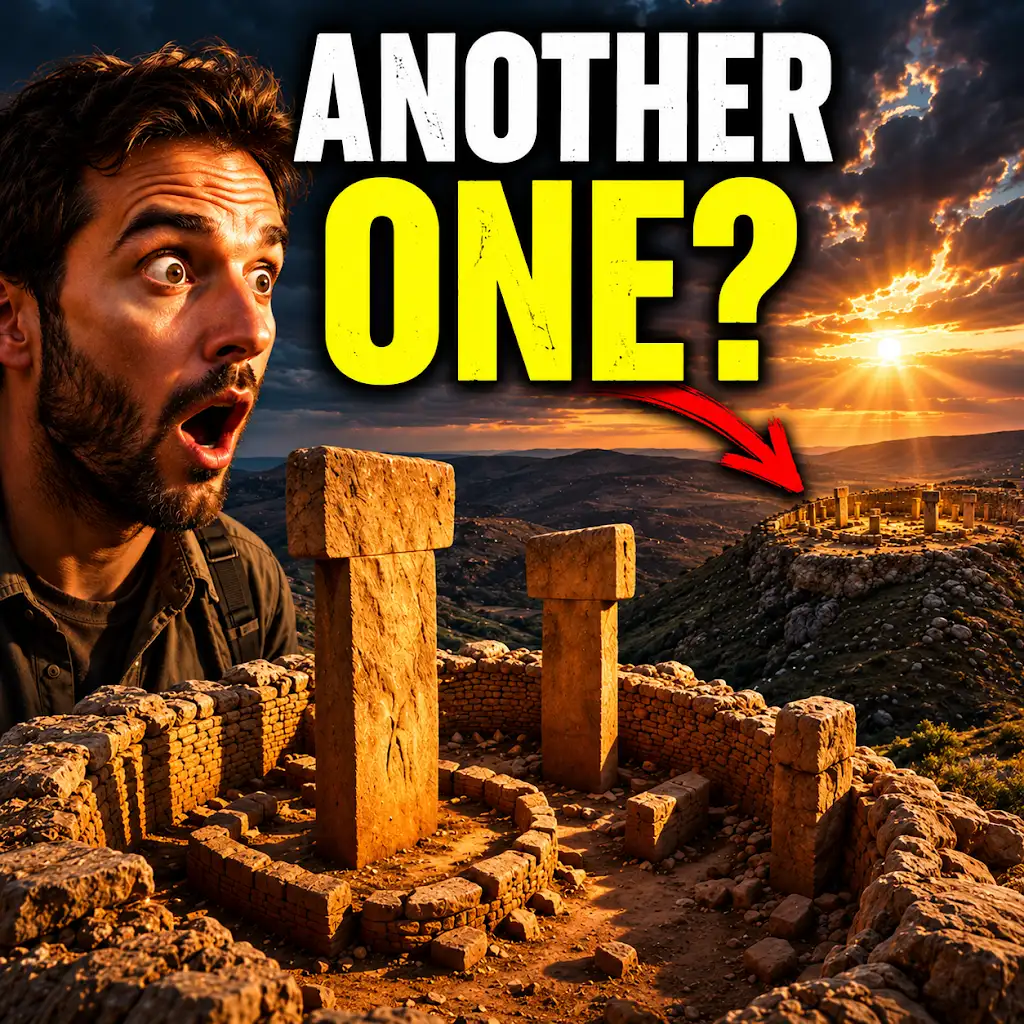
The World Beyond Göbekli Tepe Is Far Bigger Than We Thought
FAQs

What are the T shaped pillars at Nevali Çori?
The T shaped pillars at Nevali Çori are large, carved stone pillars that are a distinctive feature of the ancient site. They are believed to have had a religious or ceremonial significance.
When were the T shaped pillars at Nevali Çori constructed?
The T shaped pillars at Nevali Çori were constructed during the Pre-Pottery Neolithic period, around 9,000 to 8,000 BCE, making them some of the earliest known examples of monumental architecture.
What is the significance of the T shaped pillars at Nevali Çori?
The T shaped pillars at Nevali Çori are significant because they provide insight into the religious and ceremonial practices of the ancient people who inhabited the site. They also demonstrate the early development of architectural and construction techniques.
How were the T shaped pillars at Nevali Çori constructed?
The T shaped pillars at Nevali Çori were carved from local limestone and then transported to the site. It is believed that they were then erected in deep sockets in the floor, possibly with the use of ropes and levers.
What is the current status of the T shaped pillars at Nevali Çori?
The T shaped pillars at Nevali Çori are no longer standing in their original positions, as the site was partially submerged by the Atatürk Dam in the 1990s. However, some of the pillars have been relocated and are on display at the Sanliurfa Museum in Turkey.