
The 1840s, a decade often characterized by rapid industrialization and burgeoning nationalisms, also held within it a complex web of geopolitical undercurrents that continue to puzzle historians. While the broader sweep of events like the Opium Wars or the Mexican-American War are well-documented, the precise motivations, clandestine dealings, and long-term consequences of numerous geopolitical maneuvers during this period remain subjects of ongoing debate and investigation. This was a decade where old empires grappled with new challenges, where emerging powers asserted their influence, and where the seeds of future conflicts were sown in a manner that often eluded contemporary understanding.
The Concert of Europe, established after the Napoleonic Wars, represented an attempt to maintain stability through a system of alliances and balance of power. However, the 1840s witnessed persistent strains on this framework, driven by a confluence of internal dissent and external ambitions.
The Eastern Question: A Perpetual Thorn
The ailing Ottoman Empire remained a focal point of geopolitical anxiety. Its territorial integrity, or lack thereof, posed a constant dilemma for the major European powers. Russia, with its designs on Constantinople and the Straits, consistently probed Ottoman weaknesses.
Russian Ambitions and the Straits Convention
Russia’s long-standing desire for warm-water access via the Turkish Straits was a fundamental driving force behind its foreign policy. While often couched in terms of religious solidarity with Orthodox Christians within the Ottoman Empire, the strategic implications of controlling this vital waterway were paramount. The 1841 Straits Convention, an attempt by European powers to solidify the status quo and close the Straits to all warships in peacetime, represented a complex diplomatic maneuver. While it temporarily appeased some powers, it also underscored the underlying tensions and the potential for future conflict should Russia feel its interests were sufficiently threatened or that an opportunity arose to unilaterally alter the agreement. The inherent contradiction of trying to pacify a power with clear expansionist aims by simply codifying existing restrictions raises questions about the efficacy and long-term viability of such diplomatic endeavors.
Great Power Rivalry over Ottoman Succession
Beyond Russia’s overt ambitions, the other Great Powers – Britain, France, and Austria – each maintained intricate relationships with the Ottoman Empire, often characterized by conflicting interests. Britain, concerned about protecting its routes to India, sought to preserve Ottoman stability, albeit often from a position of pragmatic self-interest rather than genuine altruism. France, under Louis-Philippe, pursued its own colonial ambitions and sought to counterbalance British influence, sometimes by aligning with Russia on certain issues, creating a dynamic and often unstable alliance structure. Austria, inherently wary of Russian expansionism and its potential to destabilize the Balkans, found itself in a precarious position, attempting to maintain a fragile peace on its eastern frontier. The intricate web of treaties, economic entanglements, and informal understandings between these powers and the Ottoman Porte created a multifaceted challenge for policymakers.
The Revolutions of 1848: A Deluge of Unfulfilled Aspirations
The widespread revolutionary movements that swept across Europe in 1848, while ultimately suppressed in many instances, had profound and lasting geopolitical ramifications. These uprisings were fueled by a potent mix of liberalism, nationalism, and social discontent, challenging the established order and forcing governments to reassess their policies and alliances.
The Italian Unification Movement and Foreign Intervention
The burgeoning desire for a unified Italy was a significant force in the 1840s, with various movements advocating for independence from foreign domination and internal fragmentation. The involvement of external powers in these nascent nationalist aspirations was a key geopolitical mystery. While some rulers and factions within Italian states sought foreign aid, the motivations and ultimate aims of these external patrons were often ambiguous. France, under Louis-Napoleon Bonaparte in certain contexts, played a complex role, sometimes supporting liberal causes and at other times prioritizing its own strategic objectives, which involved maintaining influence in the Italian peninsula.
German Nationalism and the Austrian Question
Similarly, the German states experienced a surge of nationalistic sentiment, with calls for a unified Germany gaining traction. However, the question of whether this unified Germany would be dominated by Prussia or Austria, and the implications of each scenario for the broader European balance of power, created significant geopolitical friction. Austria, as a multi-ethnic empire with a significant German-speaking population, viewed calls for German unification with alarm, fearing it could weaken its own position and ignite further nationalist aspirations within its borders. Prussia, on the other hand, saw an opportunity to expand its influence and potentially lead a new German state, setting the stage for future power struggles.
The geopolitical mysteries of the 1840s were marked by significant events that shaped the future of nations, particularly in North America. One intriguing aspect of this era was the economic and territorial tensions between the United States and Mexico, which ultimately led to the Mexican-American War. For a deeper understanding of how these historical dynamics continue to influence contemporary economic relationships, you can explore the article titled “Will Mexico’s Economy Surpass the U.S.?” available at this link.
The Expanding Reach of Imperial Powers
The 1840s were a period of intensified imperial expansion for several European powers, driven by economic imperatives, geopolitical strategy, and a pervasive sense of civilizational superiority.
Britain’s Maritime Hegemony and the Opium Wars
The First Opium War (1839-1842) fundamentally altered the geopolitical landscape of East Asia and solidified Britain’s position as a dominant maritime power. The war’s origins and justifications, often presented in moralistic terms related to free trade, masked a deeper struggle for economic and strategic advantage.
The Treaty of Nanking and its Aftermath
The Treaty of Nanking, which concluded the Opium War, was a watershed moment, forcing China to cede Hong Kong, open multiple treaty ports, and pay substantial indemnities. The long-term consequences of this unequal treaty, which undermined Chinese sovereignty and opened the door to further foreign encroachment, were profound. The geopolitical mystery here lies in the degree to which British policymakers foresaw or intentionally orchestrated the long-term erosion of Chinese power for their own enduring benefit, versus a more contingent response to perceived insults and trade imbalances. The subsequent establishment of spheres of influence by other European powers and later Japan was a direct consequence of the precedent set by Britain.
The Oregon Dispute and Anglo-American Relations
The ongoing dispute over the Oregon Territory between Great Britain and the United States, which simmered throughout the 1840s, represented another significant geopolitical flashpoint. While ultimately resolved through diplomacy in 1846 with the 49th parallel as the border, the potential for conflict was very real. The escalating rhetoric, the naval posturing, and the competing claims underscored the fragile nature of Anglo-American relations and the potential for a significant rupture that could have reshaped the North American continent. The willingness of both nations to push the boundaries of diplomatic negotiation while simultaneously preparing for conflict highlights the complex interplay of national pride, territorial ambition, and strategic calculation.
French Colonial Ambitions in North Africa
France’s conquest and colonization of Algeria, which began in earnest in the 1830s, continued to be a major undertaking throughout the 1840s. This expansion represented a significant shift in French colonial policy and had far-reaching geopolitical implications.
The Brutality of the Algerian Conquest
The subjugation of Algerian resistance was marked by extreme violence and brutality, including scorched-earth tactics and the dispossession of indigenous populations. The geopolitical justification for this conquest, often framed as a civilizing mission, masked a complex set of economic and strategic motivations. France sought to secure Mediterranean territories, establish a new colonial base, and assert its status as a global power. The international community’s relative silence or acquiescence to this brutal campaign raises questions about the prevailing norms of international conduct and the selective application of humanitarian concerns.
The Wider Impact on Mediterranean Geopolitics
The French presence in Algeria significantly altered the geopolitical dynamics of the Mediterranean. It created a new locus of power, challenged existing naval balances, and influenced relationships with other North African states. The ongoing resistance within Algeria also served as a constant drain on French resources and manpower, influencing its broader foreign policy calculations and its interactions with other European powers who viewed its North African expansion with a mixture of apprehension and opportunism.
The Unsettling Rise of the United States
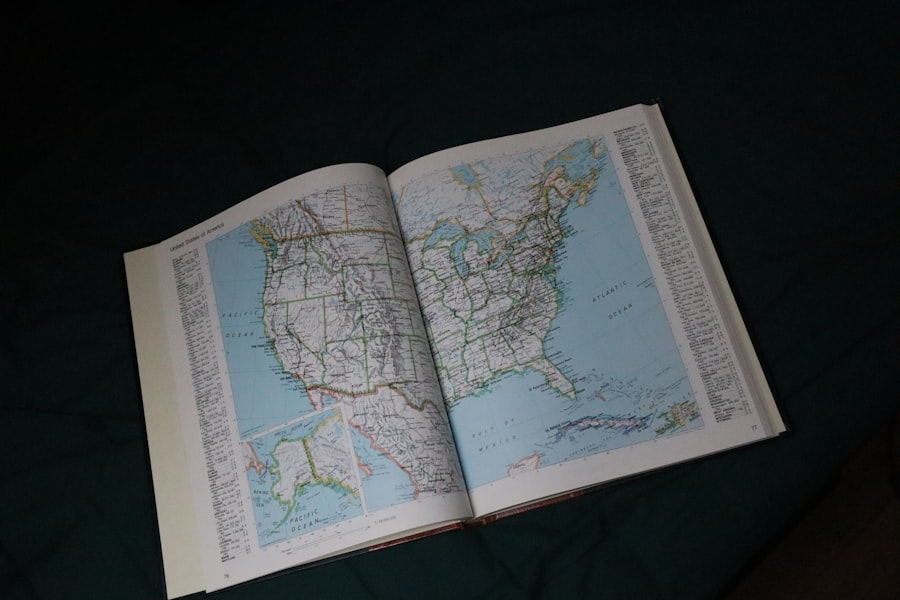
The 1840s marked a period of dramatic territorial expansion for the United States, fueled by the ideology of Manifest Destiny and leading to significant geopolitical realignments in North America.
Manifest Destiny and the Mexican-American War
The concept of Manifest Destiny, the belief that the United States was divinely ordained to expand its dominion and spread democracy across the North American continent, provided the ideological underpinning for aggressive territorial expansion. This led directly to the Mexican-American War (1846-1848).
The Pretext and the Consequences of the War
The specific pretexts for the war, such as border disputes, were often thinly veiled justifications for a pre-meditated expansionist agenda. The war resulted in the United States acquiring vast territories, including present-day California, Nevada, Utah, Arizona, and parts of New Mexico, Colorado, and Wyoming. The geopolitical question here is the extent to which this expansion was driven by genuine strategic necessity versus aggressive imperial ambition, and the long-term implications for both the United States and its neighbors. The displacement and subjugation of indigenous populations and the intensification of the debate over slavery in the newly acquired territories were direct consequences that would shape American history for decades to come.
The Californias and the Pacific Frontier
The acquisition of Alta California, with its strategically important ports and potential for trade with Asia, was a key objective. The rapid influx of American settlers following the discovery of gold in 1848 further cemented American control. This expansion westward fundamentally altered the geopolitical landscape of the Pacific coast, setting the stage for future American dominance in the region and impacting relations with other Pacific powers, including nascent Asian nations.
The Texas Annexation and its Diplomatic Ramifications
The annexation of the Republic of Texas by the United States in 1845 was a contentious issue, with significant diplomatic fallout. Texas had declared independence from Mexico in 1836, and its subsequent annexation by the U.S. was viewed by Mexico as an act of aggression.
The Border Dispute with Mexico
The unresolved border dispute between Texas and Mexico was a primary catalyst for the Mexican-American War. Mexico claimed the Nueces River as the border, while Texas and later the U.S. claimed the Rio Grande. This territorial disagreement, exacerbated by the annexation, served as a convenient casus belli for the United States’ expansionist ambitions. The geopolitical mystery lies in the degree to which American policymakers prioritized territorial acquisition over peaceful resolution of disputes, and the calculated risk involved in provoking a war with a weaker neighbor.
The Impact on Slavery Debates
The annexation of Texas, a slave state, intensified the already heated debates over the expansion of slavery within the United States. This issue would become a central point of contention, ultimately contributing to the secession of Southern states and the American Civil War. The geopolitical implications extended beyond North America, as the growing power and expansion of the slaveholding United States influenced international perceptions of American democracy and its ethical standing.
The Seeds of Future Conflict in Asia

While European powers were busy consolidating their empires and asserting their influence globally, the 1840s also witnessed the initial tremors of significant geopolitical shifts in Asia, largely driven by the growing imbalance of power between the West and established Asian empires.
The Decline of Qing China and Foreign Encroachment
As previously mentioned, the Opium Wars and the subsequent treaties marked a profound turning point in China’s relationship with the outside world. The 1840s saw the initial stages of China’s semi-colonial status.
The Unequal Treaties and Extraterritoriality
The imposition of unequal treaties granted foreign powers significant privileges, including extraterritoriality, which meant their citizens were subject to their own national laws, not Chinese law. This undermined Chinese sovereignty and created a system of legal and political inequality that fueled resentment and instability within China. The geopolitical question is the extent to which Western powers understood, or cared about, the long-term consequences of such policies for China’s internal stability and its ability to modernize.
The Taiping Rebellion: A Long-Term Consequence?
The widespread social and economic disruption caused by these foreign interventions, coupled with internal mismanagement, contributed to the conditions that would eventually erupt into the devastating Taiping Rebellion (1850-1864). While the rebellion began in the 1850s, the geopolitical factors that created its fertile ground were demonstrably present and developing throughout the 1840s. The destabilization of the Qing Dynasty was a direct, albeit delayed, geopolitical consequence of the interactions of the 1840s.
Emerging Powers and Shifting Alliances in Southeast Asia
The 1840s also saw nascent signs of geopolitical flux in Southeast Asia, with the consolidation of colonial presence and the beginnings of resistance.
British Influence in Burma and Malaya
Britain continued to solidify its control over Burma, with the Second Anglo-Burmese War (1852-1853) further expanding its territorial claims. Similarly, British influence in the Malay Peninsula grew, laying the groundwork for direct colonial rule. These expansions were driven by a combination of strategic interests, resource acquisition, and inter-European rivalries.
French Interactions with Vietnam and the Kingdom of Siam
France began to exert its influence in Indochina, with early interactions with Vietnam and the Kingdom of Siam (modern-day Thailand). While direct colonization was yet to come, the 1840s marked the initial probes and diplomatic maneuvers that would eventually lead to French dominance. The geopolitical mystery involves assessing the early strategic calculations of France in this region and how they intertwined with its broader colonial ambitions and its competition with other European powers.
The geopolitical mysteries of the 1840s were marked by significant events that shaped the future of North America, including the expansionist policies of the United States and the complex relationships with neighboring territories. These developments not only influenced the political landscape but also had lasting effects on trade and supply chains in the region. For a deeper understanding of how these historical dynamics continue to resonate today, you can explore this insightful article on the evolution of the North American supply chain by following this link: embracing the future.
Conclusion: A Decade of Disruption and Unanswered Questions
| Geopolitical Mystery | Description |
|---|---|
| The Franklin Expedition | British expedition to the Arctic to find the Northwest Passage that disappeared without a trace in 1845. |
| The Texas Border Dispute | The boundary between the Republic of Texas and the United States was a source of conflict and mystery in the 1840s. |
| The Oregon Question | Dispute between the United States and Great Britain over the boundary of the Oregon Territory, leading to geopolitical tensions. |
The 1840s were far from a static decade. They were characterized by a dynamic and often opaque confluence of geopolitical forces. The Concert of Europe was tested, imperial ambitions surged, new nations asserted their identities, and the foundations of future global power structures were being laid. The mysteries that persist are not necessarily about a lack of historical data, but rather about the nuanced understanding of motivations, the unintended consequences of actions, and the complex interplay of diplomatic maneuvering, economic imperatives, and ideological underpinnings that shaped the decisions of the era. The decade serves as a potent reminder that geopolitical landscapes are rarely fixed, and that even seemingly well-understood historical periods can harbor a deep well of unanswered questions, inviting continued scholarly inquiry and debate. The legacy of these geopolitical currents continues to resonate in the contemporary world, underscoring the enduring significance of understanding the complexities of the 1840s.
FAQs
1. What were some of the major geopolitical mysteries of the 1840s?
Some of the major geopolitical mysteries of the 1840s included the fate of the Franklin Expedition, the territorial disputes between the United States and Mexico, and the shifting alliances and power struggles in Europe.
2. What was the Franklin Expedition and why is it considered a mystery?
The Franklin Expedition was a British voyage led by Sir John Franklin to navigate the Northwest Passage. The expedition disappeared in 1845, and the fate of the crew and the exact location of the ships remained a mystery for decades, sparking numerous search efforts and theories.
3. What were the territorial disputes between the United States and Mexico in the 1840s?
The territorial disputes between the United States and Mexico in the 1840s centered around the annexation of Texas and the subsequent Mexican-American War. The exact boundaries and ownership of territories such as Texas, California, and New Mexico were hotly contested, leading to geopolitical tensions and conflicts.
4. How did the shifting alliances and power struggles in Europe contribute to the geopolitical mysteries of the 1840s?
The 1840s saw significant power struggles and shifting alliances in Europe, particularly with the revolutions of 1848. These events led to uncertainty and instability in the balance of power, creating geopolitical mysteries as new alliances formed and old ones dissolved.
5. What were some of the key events or factors that shaped the geopolitical landscape of the 1840s?
Key events and factors that shaped the geopolitical landscape of the 1840s included the revolutions of 1848, the expansion of empires such as the British and Russian Empires, the rise of nationalism, and the ongoing conflicts and power struggles between major world powers.