Greenland, a vast expanse of ice and stark beauty, harbors a secret beneath its frozen surface, a legacy of the Cold War that poses a growing environmental threat. Buried deep within the Greenlandic ice sheet lies Camp Century, a once-operational U.S. Army base that, unbeknownst to many, became a repository for a significant amount of nuclear waste. The very ice that preserved this forgotten facility is now beginning to betray its secret, melting at an alarming rate and threatening to expose a hidden danger to the Arctic environment and potentially beyond.
Camp Century, established in 1959, was more than just a military outpost; it was a symbol of American technological ambition and a strategic foothold during the height of the Cold War. Its primary purpose was not combat readiness, but rather the exploration of the feasibility of constructing and operating a vast underground military base within the Greenland ice sheet. The idea was audacious: to create a camouflaged and virtually impenetrable facility that could house thousands of soldiers, aircraft, and the necessary infrastructure for extended operations.
Project Iceworm: The Vision of an Arctic Fortress
The brainchild of the U.S. Army Corps of Engineers, Project Iceworm was a classified endeavor that aimed to push the boundaries of military engineering. The concept involved excavating a network of tunnels and caverns beneath the surface of the ice, creating a sprawling metropolis frozen in time. These subterranean spaces were intended to shield personnel and equipment from detection and attack, making Camp Century a crucial component of North America’s defense strategy. The construction itself was a monumental undertaking, requiring innovative techniques to drill and blast through solid ice, a process fraught with logistical challenges and environmental considerations that were largely secondary to the overriding strategic imperative.
The Strategic Imperative: Deterrence and Deniability
The strategic rationale behind Camp Century was rooted in the escalating tensions of the Cold War. The United States sought to establish a presence in the Arctic, a region of increasing geopolitical importance due to its proximity to the Soviet Union and its potential for missile deployment. Camp Century was envisioned as a platform for early warning systems, reconnaissance, and potentially even as a launch site for intercontinental ballistic missiles, though this latter aspect was highly classified and never fully realized. The secrecy surrounding the project was paramount, aiming for a level of deniability that would complicate any Soviet response. The base was designed to be largely self-sufficient, with its own power generation, water supply, and waste management systems, all operating under the frozen embrace of the ice.
Camp Century, a former U.S. military base in Greenland, has garnered attention due to its role in the storage of nuclear waste, raising concerns about environmental safety and the long-term implications for the Arctic region. The complexities surrounding Camp Century’s legacy are echoed in discussions about broader economic and environmental issues, such as those highlighted in the article on the impact of nearshoring on American jobs. For more insights on how global economic shifts affect local job markets and environmental policies, you can read the article here: The Impact of Nearshoring on American Jobs.
The Unforeseen Payload: Nuclear Waste Beneath the Ice
While the primary mission of Camp Century revolved around military logistics and strategic positioning, the base also served as a convenient, albeit temporary, storage site for a different kind of payload: nuclear waste. The disposal of radioactive materials was a significant challenge for the military during this era, and the remote and seemingly secure environment of Camp Century offered a seemingly ideal solution. What was intended as a temporary measure, however, has evolved into a ticking time bomb, as the environmental conditions that initially secured the waste begin to degrade.
The Nature of the Waste: Radioactive Contaminants
The nuclear waste deposited at Camp Century is a byproduct of the base’s operations, primarily from its small, portable nuclear reactor, the PM-2A. This reactor provided the electricity to power the vast underground facility. While the reactor itself was eventually decommissioned and removed in 1965, the waste generated during its operation, including spent fuel rods and contaminated materials, was left behind. The exact quantities and types of radioactive isotopes are not fully documented, but they are known to include highly hazardous substances that can remain radioactive for thousands of years. The buried waste also includes other hazardous materials, such as diesel fuel and sewage, which further compound the potential environmental risks.
The Illusion of Security: Temporary Storage, Permanent Problem
The decision to store nuclear waste at Camp Century was based on the prevailing assumption that the ice sheet would remain stable for millennia, effectively encapsulating the hazardous materials indefinitely. This assumption, however, has proven to be tragically flawed. The remote location, while offering isolation from human populations, did not account for the dynamic nature of the Arctic environment. The concept of “temporary storage” has now stretched for over six decades, with the promise of indefinite containment proving to be an illusion as the climate changes. The very ice that was meant to be a permanent shield is now a source of concern.
The Melting Menace: Climate Change’s Arctic Toll
The most significant threat to Camp Century and its buried contaminants is the accelerating pace of climate change, particularly its amplified impact on the Arctic region. The Greenland ice sheet, once considered an immutable frozen landscape, is now a casualty of global warming, with far-reaching consequences for the hidden dangers lurking beneath its surface. The melting ice is not a distant, abstract threat; it is a present and escalating reality that is directly impacting the integrity of the former military base.
Arctic Amplification: A Disproportionate Warming
The Arctic is warming at a rate two to four times faster than the global average, a phenomenon known as Arctic amplification. This accelerated warming is driven by a complex interplay of factors, including the reduction of sea ice, which in turn reduces the Earth’s albedo (reflectivity), leading to increased absorption of solar radiation. The feedback loops within the Arctic climate system are intensifying, accelerating ice melt and making the region particularly vulnerable to the impacts of global warming. This amplified warming is directly impacting the stability of the ice sheet that encases Camp Century.
The Degradation of the Ice Sheet: A Looming Collapse
Scientific studies have shown that the Greenland ice sheet is losing mass at an unprecedented rate. Glaciers are retreating, and the ice sheet itself is thinning. This degradation of the ice sheet poses a direct threat to Camp Century. As the ice melts, the tunnels and caverns that once housed the base will become unstable, leading to the potential collapse of structures and the release of buried materials. The once-solid ice that provided a secure barrier is now actively contributing to the problem, as meltwater erodes and destabilizes the environment.
The Cascade of Consequences: Environmental and Geopolitical Risks
The potential consequences of Camp Century’s nuclear waste becoming exposed are significant and multifaceted, extending beyond immediate environmental concerns to encompass broader geopolitical implications. The release of radioactive contaminants into the pristine Arctic environment could have devastating and long-lasting impacts on ecosystems and human health. Furthermore, the discovery and handling of such a cache of waste raise complex questions of sovereignty and international responsibility.
Ecological Devastation: A Contaminated Arctic Ecosystem
If the nuclear waste is released into the environment, the impact on the fragile Arctic ecosystem could be catastrophic. The radioactive isotopes could contaminate soil, water sources, and the food chain, affecting wildlife and potentially migrating to more populated areas. The Arctic is home to a unique and vulnerable array of species, many of which are already under pressure from climate change. The introduction of radioactive contaminants would represent an additional and potentially insurmountable challenge to their survival. This contamination could also affect indigenous communities who rely on traditional hunting and fishing practices for their sustenance, introducing severe health risks.
Human Health Concerns: Long-Term Radioactive Exposure
The long-term health implications for humans exposed to radioactive materials are well-documented and include an increased risk of cancer, genetic mutations, and other severe health problems. While Camp Century is currently uninhabited, the potential for contamination to spread through waterways or the atmosphere raises concerns for populations that might be indirectly affected, particularly indigenous communities in Greenland and potentially even further afield. The long half-lives of many radioactive isotopes mean that any contamination could pose a threat for generations to come.
Geopolitical Tensions: Sovereignty and Responsibility
The presence of U.S. military waste in Greenland raises complex questions of sovereignty and international responsibility. While Greenland is an autonomous territory within the Kingdom of Denmark, the discovery of such a significant environmental threat within its borders will inevitably involve complex negotiations and potential disputes. The United States, as the creator of the waste, will be under immense pressure to address the issue, but the logistics and costs involved will be substantial. This situation could also create friction with other Arctic nations who are increasingly concerned about the environmental security of the region.
Camp Century, a former U.S. military base in Greenland, has become a focal point of concern regarding the long-term storage of nuclear waste. The site, which was operational during the Cold War, is now buried under ice and poses potential environmental risks as climate change accelerates melting in the region. For a broader perspective on how geopolitical factors influence infrastructure and environmental management, you might find the article on maximizing benefits through nearshoring for U.S. companies insightful. It discusses the implications of strategic decisions in various sectors, which can relate to the challenges faced at Camp Century. You can read more about it here.
Addressing the Hidden Threat: Mitigation, Monitoring, and International Cooperation
| Metrics | Data |
|---|---|
| Location | Greenland |
| Type of waste | Nuclear waste |
| Site name | Camp Century |
| Current status | Concerns about potential environmental impact |
| History | Established as a military base in 1959 |
The challenge posed by Camp Century’s nuclear waste is significant, but it is not insurmountable. A proactive and collaborative approach is necessary to mitigate the risks and prevent a future environmental catastrophe. This requires a concerted effort involving scientific research, technological innovation, and robust international cooperation. The longer action is delayed, the more challenging and costly it will become to address the problem.
Scientific Monitoring and Assessment: Understanding the Risk
The first crucial step is to gain a comprehensive understanding of the current state of Camp Century and the extent of the contamination. This involves ongoing scientific monitoring of ice melt rates, ground stability, and the potential pathways for contaminant migration. Advanced remote sensing technologies, ice core analysis, and ground-penetrating radar can provide valuable insights into the subsurface conditions and the integrity of the buried waste. A thorough assessment of the types and quantities of radioactive materials present is also essential for developing effective mitigation strategies.
Decommissioning and Remediation: Long-Term Solutions
The ultimate solution will likely involve the complex and costly process of decommissioning and remediating the site. This could entail various approaches, ranging from containment and stabilization of the waste in situ to its eventual removal and disposal in a secure, long-term repository. The feasibility and effectiveness of different technologies will need to be carefully evaluated, considering the unique challenges of operating in an Arctic environment. Any remediation efforts will require significant financial investment and a sustained commitment from the responsible parties.
International Cooperation and Policy: A Shared Responsibility
Given the transboundary nature of environmental threats and the geopolitical implications, international cooperation is paramount. Denmark, as the sovereign power over Greenland, will play a central role, but the United States, as the party responsible for the waste, must be a key partner in finding solutions. Engaging other Arctic nations and relevant international organizations, such as the Arctic Council, can facilitate knowledge sharing, resource mobilization, and the development of common strategies. Establishing clear policies and agreements regarding the management of legacy Cold War waste is crucial for preventing similar situations in the future and ensuring the long-term environmental security of the Arctic. The hidden threat of Camp Century serves as a stark reminder of the enduring consequences of past actions and the urgent need for responsible stewardship of our planet. The melting ice is not just an environmental issue; it is a historical reckoning that demands our immediate attention and collaborative action.
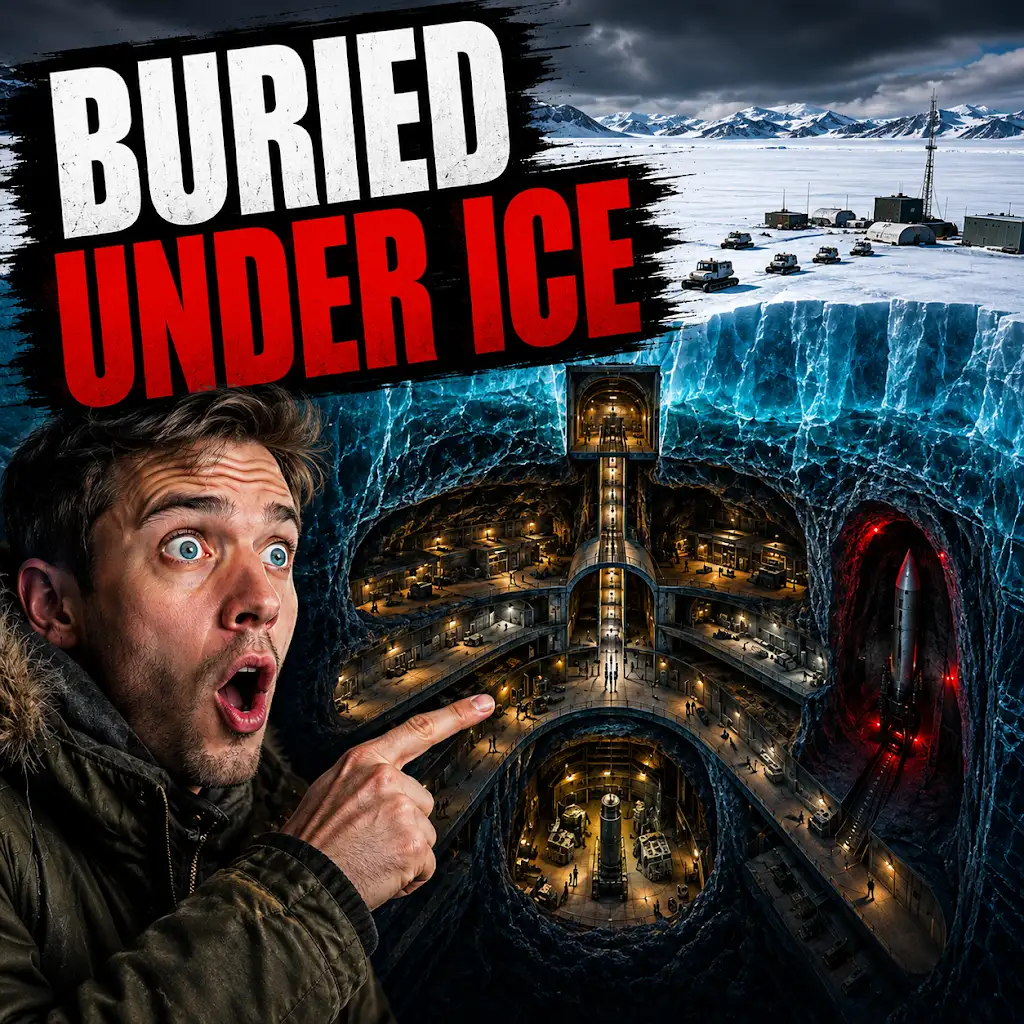
The U.S. Built a Nuclear City Under Greenland. The Ice Won.
FAQs
What is Camp Century in Greenland?
Camp Century was a military base built by the United States in Greenland in 1959 as part of a secret Cold War project. It was intended to be a nuclear missile launch site, but was later repurposed for scientific research.
What nuclear waste is located at Camp Century?
Camp Century was powered by a portable nuclear reactor, and as a result, it contains radioactive waste including diesel fuel, polychlorinated biphenyls (PCBs), and radioactive coolant water.
What is the current status of Camp Century?
Camp Century was abandoned in 1967, and the nuclear reactor was removed. However, the waste left behind is a concern due to the melting ice in Greenland, which could potentially release the contaminants into the environment.
What are the potential environmental impacts of the nuclear waste at Camp Century?
The melting ice in Greenland could release the nuclear waste into the environment, potentially contaminating the surrounding area and impacting local ecosystems and wildlife.
What is being done to address the nuclear waste at Camp Century?
The Danish and Greenlandic governments are working with the United States to address the issue of the nuclear waste at Camp Century. Plans include monitoring the site and assessing potential cleanup options.