
The human quest for relief from suffering is as old as humanity itself. From the earliest whispers of ancient cultures to the sophisticated formulations of modern natural medicine, the history of natural pain relief is a testament to our ingenuity, our observational prowess, and our deep-seated connection to the natural world. For millennia, before the advent of synthetic pharmaceuticals, humans turned to the plants, minerals, and even animal products readily available to them to soothe aches, dull throbs, and conquer debilitating pain. This journey through the history of natural pain relief reveals a rich tapestry of tradition, empirical knowledge, and evolving understanding that continues to influence wellness practices today.
The earliest evidence of pain management likely lies in the very origins of human existence. Our hominid ancestors, driven by instinct and the need to survive, would have undoubtedly discovered the soothing properties of their environment. While direct evidence is scarce due to the ephemeral nature of early remedies, archaeological findings and anthropological studies of indigenous populations offer compelling insights.
Early Observations and Instinctive Healing
It is reasonable to surmise that early humans learned through trial and error. Observing animals in their natural habitat might have provided crucial clues. An injured animal licking a wound and then consuming a specific plant could have signaled its medicinal value to observant humans. Similarly, the application of cool mud or water to burns and wounds, or the use of heat from fires to ease stiffness, would have been intuitive responses to pain.
The Role of Shamans and Spiritual Healers
In many prehistoric societies, healing was intricately linked with spiritual beliefs. Shamans, medicine men, and wise women served as the custodians of this knowledge. They not only possessed practical understanding of medicinal plants but also acted as conduits to the spiritual realm, believing that illness and pain were often caused by spiritual imbalances or the displeasure of deities. Their rituals, often involving chanting, drumming, and the use of psychoactive plants, were designed to both appease spirits and directly alleviate physical suffering.
Mesopotamia and Ancient Egypt: Early Written Records
The Mesopotamians, as early as the 3rd millennium BCE, left behind cuneiform tablets detailing remedies for various ailments, including pain. These texts reveal a sophisticated understanding of herbal medicine, with prescriptions for poultices, tinctures, and decoctions. Ingredients like poppy, willow bark, and various herbs were commonly used.
Ancient Egyptians, renowned for their advanced civilization, also documented their healing practices. The Ebers Papyrus, dating back to around 1550 BCE, contains hundreds of spells and remedies, many of which focus on pain relief. They utilized a wide array of botanical ingredients, including opium, cannabis, and various aromatic oils, often in combination with other substances. Their understanding of anatomy, though rudimentary by modern standards, allowed for more targeted applications of these remedies.
The history of natural pain relief is a fascinating journey that spans centuries, showcasing various methods and remedies used by different cultures to alleviate discomfort. For those interested in exploring how historical advancements in technology, such as space exploration, can influence modern medicine and pain management, a related article discusses the implications of SpaceX’s Starship on global geopolitics. You can read more about this intriguing connection in the article found here: SpaceX Starship: Shifting Space Geopolitics.
The Golden Age of Ancient Greece and Rome: Philosophical and Empirical Approaches
The classical civilizations of Greece and Rome represent a significant turning point in the history of natural pain relief. Here, the practice began to move beyond purely spiritual explanations and incorporate more empirical observation and philosophical reasoning.
Hippocrates and the Foundation of Rational Medicine
Hippocrates, often hailed as the “Father of Western Medicine” (circa 460-370 BCE), championed a more rational and observational approach to healing. He emphasized the importance of diet, exercise, and the body’s natural ability to heal itself, a concept known as vis medicatrix naturae. While still utilizing herbal remedies, Hippocrates and his followers sought to understand the underlying causes of disease and pain, moving away from supernatural explanations.
Humoral Theory and its Influence
The prevailing theory of medicine during this era was humoral theory, which posited that the body was composed of four humors: blood, phlegm, yellow bile, and black bile. Imbalances in these humors were believed to cause disease and pain. Natural remedies were prescribed to restore the equilibrium of the humors. For example, purgatives were used to expel excess bile, while certain herbs were believed to have cooling or warming properties to counteract specific humoral imbalances.
Dioscorides and the “De Materia Medica”
Pedanius Dioscorides, a Greek physician in the Roman army, authored De Materia Medica around the 1st century CE. This monumental work cataloged over 600 medicinal plants, detailing their properties, uses, and preparation methods. It became the definitive herbal text for over 1,500 years, influencing physicians across Europe and the Middle East. Dioscorides described the analgesic properties of numerous plants, including willow bark (a precursor to aspirin) for fever and pain, and opium for severe suffering.
Galen and the Art of Pharmacy
Galen of Pergamon, a prominent Greek physician who served the Roman Empire in the 2nd century CE, further advanced the field. He built upon the work of Hippocrates and Dioscorides, meticulously documenting his observations and experiments. Galen was a skilled pharmacist, developing complex compound remedies and preparations from various botanical and mineral sources. His emphasis on the precise dosage and combination of ingredients laid the groundwork for future pharmaceutical practices. He also recognized the importance of topical applications for pain relief, advocating for ointments and liniments.
The Middle Ages and the Preservation of Knowledge: Monasteries and Islamic Scholarship

Following the decline of the Roman Empire, much of the classical knowledge was preserved and expanded upon by monastic communities in Europe and by scholars in the Islamic world. These periods were crucial for safeguarding and developing natural pain relief practices.
Monastic Medicine and Herbal Gardens
Monasteries became centers of learning and healing. Monks cultivated extensive herb gardens, meticulously documenting their medicinal properties. They brewed herbal teas, prepared tinctures, and made poultices to treat a wide range of ailments, including pain. The emphasis was on practical, accessible remedies for the local community.
The Influence of Benedictine Monks
The Benedictine Order, with its emphasis on self-sufficiency and charitable works, played a significant role in preserving and disseminating herbal knowledge. Their detailed manuscripts often included illustrations of plants, making the identification and use of medicinal herbs more accessible to other monasteries and practitioners.
The Islamic Golden Age: A Flourishing of Materia Medica
The Islamic world experienced a flourishing of scientific and medical advancement during its Golden Age (roughly 8th to 14th centuries). Scholars translated and built upon Greek and Roman texts, making significant contributions to pharmacology and botany.
Ibn Sina (Avicenna) and the “Canon of Medicine”
Ibn Sina, known in the West as Avicenna, was a Persian polymath whose Canon of Medicine (circa 1025 CE) became a cornerstone of medical education in both the Islamic world and Europe for centuries. He meticulously documented the properties and uses of hundreds of medicinal substances, including many for pain relief. He discussed the use of opium for insomnia and pain, as well as other herbs like saffron and rose for their calming and analgesic effects.
The Development of Sophisticated Preparations
Islamic physicians developed sophisticated methods for extracting and preparing medicinal compounds, including distillation, which allowed for the creation of more potent and stable remedies. They also explored the use of minerals and animal products in their pain relief formulations.
The Renaissance and the Rise of Scientific Inquiry: From Alchemy to Botany

The Renaissance marked a period of renewed interest in scientific exploration and a gradual shift away from purely traditional and spiritual approaches to medicine. While alchemy still held sway, the foundations for modern scientific botany and pharmacology were being laid.
The Revival of Classical Texts and New Discoveries
The rediscovery and translation of ancient Greek and Roman medical texts fueled a wave of intellectual curiosity. Simultaneously, explorers began bringing back new plants and substances from voyages of discovery, expanding the known pharmacopeia.
Paracelsus and the iatrochemical revolution
Paracelsus (1493-1541), a Swiss physician and alchemist, challenged traditional humoral theory and advocated for a more chemically-based approach to medicine. He believed that disease was caused by chemical imbalances in the body and that remedies should be derived from mineral sources. While controversial in his time, his emphasis on specific chemical compounds as remedies paved the way for modern pharmacology. He is credited with advocating for the use of opium in a more purified form, which he called Laudanum, for pain management.
The Birth of Modern Botany and Pharmacy
The development of systematic classification and detailed botanical illustration during the Renaissance helped to standardize the identification and use of medicinal plants. Apothecaries became more skilled in preparing complex remedies, moving beyond simple herbal preparations.
Early Pharmaceutical Compendia
The creation of early pharmaceutical compendia and pharmacopoeias began to codify the use of medicinal substances, including those for pain relief. These texts provided standardized recipes and instructions for preparation, increasing the reliability and reproducibility of treatments.
The history of natural pain relief is a fascinating journey that spans centuries, showcasing various methods and remedies used by different cultures. For those interested in exploring how ancient practices have influenced modern approaches to pain management, a related article can provide valuable insights. You can read more about the intriguing connections between historical remedies and contemporary treatments in this article. Understanding these connections can deepen our appreciation for the evolution of pain relief techniques over time.
The Modern Era and the Integration of Natural Therapies: From Folk Wisdom to Evidence-Based Practice
| Year | Discovery/Development | Method |
|---|---|---|
| 5000 BCE | First recorded use of willow bark for pain relief | Chewing willow bark |
| 3000 BCE | Use of opium poppy for pain relief | Ingesting opium |
| 1763 | Isolation of morphine from opium | Extraction and purification of morphine |
| 1899 | Discovery of aspirin as a pain reliever | Synthesis of acetylsalicylic acid |
| 1970s | Introduction of acupuncture in the Western world | Inserting thin needles into specific points on the body |
The 19th and 20th centuries witnessed the rapid rise of synthetic pharmaceuticals, which often overshadowed natural remedies. However, a parallel movement has seen a resurgence of interest in natural pain relief, driven by a desire for safer, more holistic, and evidence-based approaches.
The Discovery of Active Compounds and Isolation of Natural Drugs
The scientific revolution of the 19th century led to the isolation of active compounds from medicinal plants. This marked a significant advancement, allowing for more precise dosages and a better understanding of how these substances worked.
Aspirin: A Synthetic Derivative of a Natural Remedy
The discovery of salicylic acid in willow bark and its subsequent modification led to the synthesis of acetylsalicylic acid, better known as aspirin. This iconic pain reliever is a prime example of how modern medicine has built upon ancient natural remedies. Other alkaloids, such as morphine from the opium poppy, were also isolated and utilized.
The Rise of Traditional Chinese Medicine (TCM) and Ayurveda
While Western medicine was focusing on isolation and synthesis, ancient systems of medicine like Traditional Chinese Medicine (TCM) and Ayurveda in India continued to thrive, offering sophisticated and time-tested natural approaches to pain management.
Acupuncture and Herbal Formulas in TCM
TCM, with its emphasis on balancing the body’s vital energy (Qi), utilizes acupuncture, a technique involving the insertion of fine needles into specific points on the body to relieve pain and restore balance. TCM also employs complex herbal formulas, meticulously crafted from a variety of plants, to address the root causes of pain.
Ayurvedic Principles and Herbal Therapies
Ayurveda, the ancient Indian system of medicine, focuses on individual constitution (dosha) and employs a holistic approach that includes diet, lifestyle, detoxification (panchakarma), and a vast array of herbal remedies. Many Ayurvedic herbs, such as turmeric and ashwagandha, are now recognized in the West for their anti-inflammatory and pain-relieving properties.
The Modern Revival: Natural Pain Relief in the 21st Century
Today, there is a significant and growing interest in natural pain relief. Consumers and healthcare professionals alike are seeking alternatives and complementary therapies to conventional medicine. This resurgence is fueled by a desire for:
Growing Demand for Holistic and Preventative Care
Many individuals are looking for ways to manage pain that address the whole person, not just the symptom. Natural remedies often align with this holistic philosophy, focusing on supporting the body’s innate healing abilities and promoting overall well-being.
Scientific Validation and Evidence-Based Approaches
Modern research is increasingly providing scientific validation for the efficacy of many traditional natural remedies. Studies are exploring the mechanisms of action of various herbs and natural compounds, leading to a more evidence-based approach to natural pain relief.
The Integration of Complementary and Alternative Medicine (CAM)
Many healthcare providers are now integrating Complementary and Alternative Medicine (CAM) therapies, including natural pain relief modalities, into their practice. This integrative approach aims to provide patients with a wider range of options for managing their pain effectively.
From the intuitive applications of our earliest ancestors to the sophisticated research of the modern era, the history of natural pain relief is a continuous narrative of human resilience and our enduring connection to the healing power of nature. It is a story that continues to unfold, promising further discoveries and a deeper understanding of how we can alleviate suffering using the gifts of the earth.
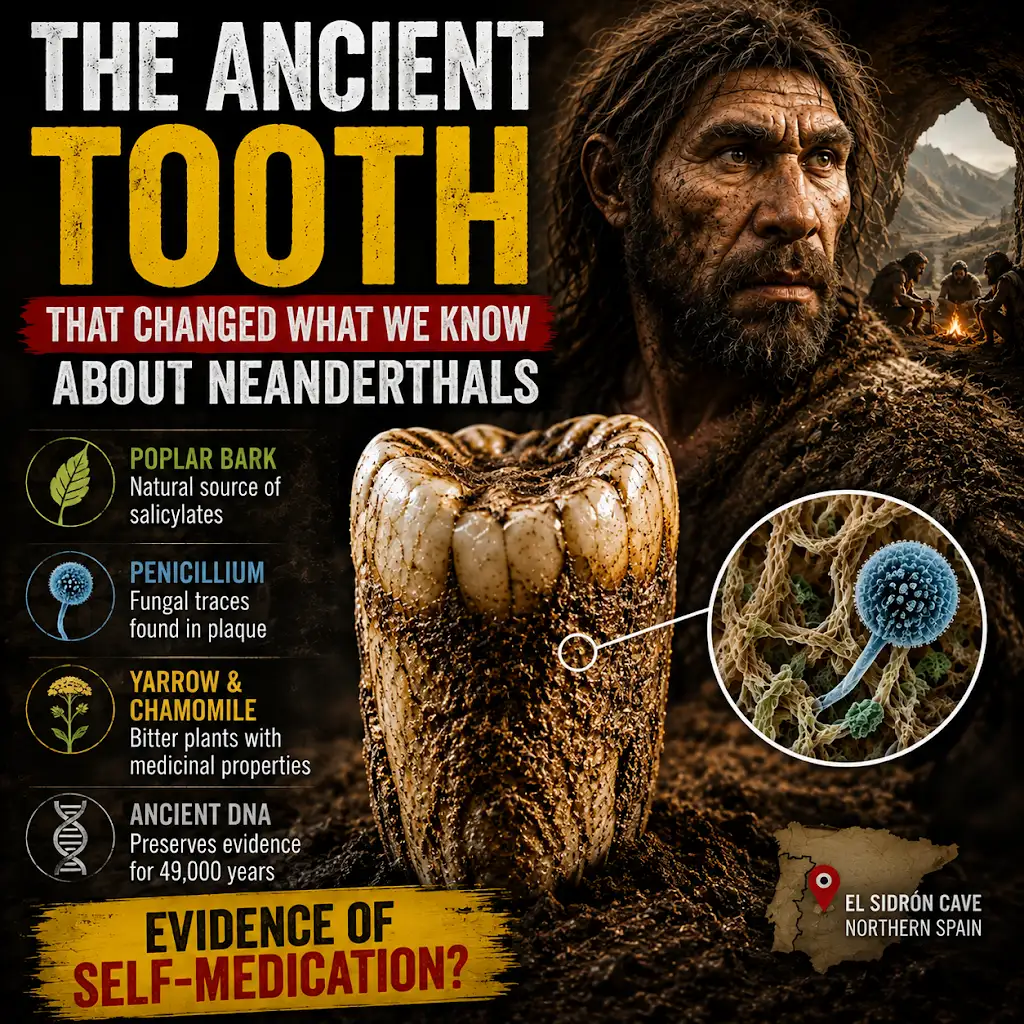
The Ancient Tooth That Changed What We Know About Neanderthals
FAQs
What is the history of natural pain relief methods?
Natural pain relief methods have been used for centuries, with evidence of their use dating back to ancient civilizations. Traditional Chinese medicine, Ayurveda, and Native American healing practices all incorporate natural pain relief techniques such as herbal remedies, acupuncture, and massage.
What are some examples of natural pain relief methods used in history?
Historical natural pain relief methods include the use of plants and herbs such as willow bark (a precursor to aspirin), turmeric, and ginger for their anti-inflammatory properties. Other methods include acupuncture, which originated in China over 2,500 years ago, and the use of heat and cold therapy for pain relief.
How have natural pain relief methods evolved over time?
Natural pain relief methods have evolved as new scientific research has validated their effectiveness. For example, the active ingredient in willow bark, salicin, was later synthesized to create aspirin. Additionally, modern technology has allowed for the development of advanced natural pain relief devices such as TENS units and infrared light therapy.
What role do natural pain relief methods play in modern medicine?
Natural pain relief methods continue to play a significant role in modern medicine, with many people seeking alternative and complementary therapies to manage pain. These methods are often used in conjunction with conventional medical treatments to provide a holistic approach to pain management.
Are there any potential risks or drawbacks to using natural pain relief methods?
While natural pain relief methods are generally considered safe, there can be potential risks and drawbacks. For example, some herbal remedies may interact with medications or have side effects. Additionally, not all natural pain relief methods have been extensively studied, so their effectiveness and safety may not be well understood. It’s important to consult with a healthcare professional before using any natural pain relief method, especially if you have underlying health conditions or are pregnant or breastfeeding.