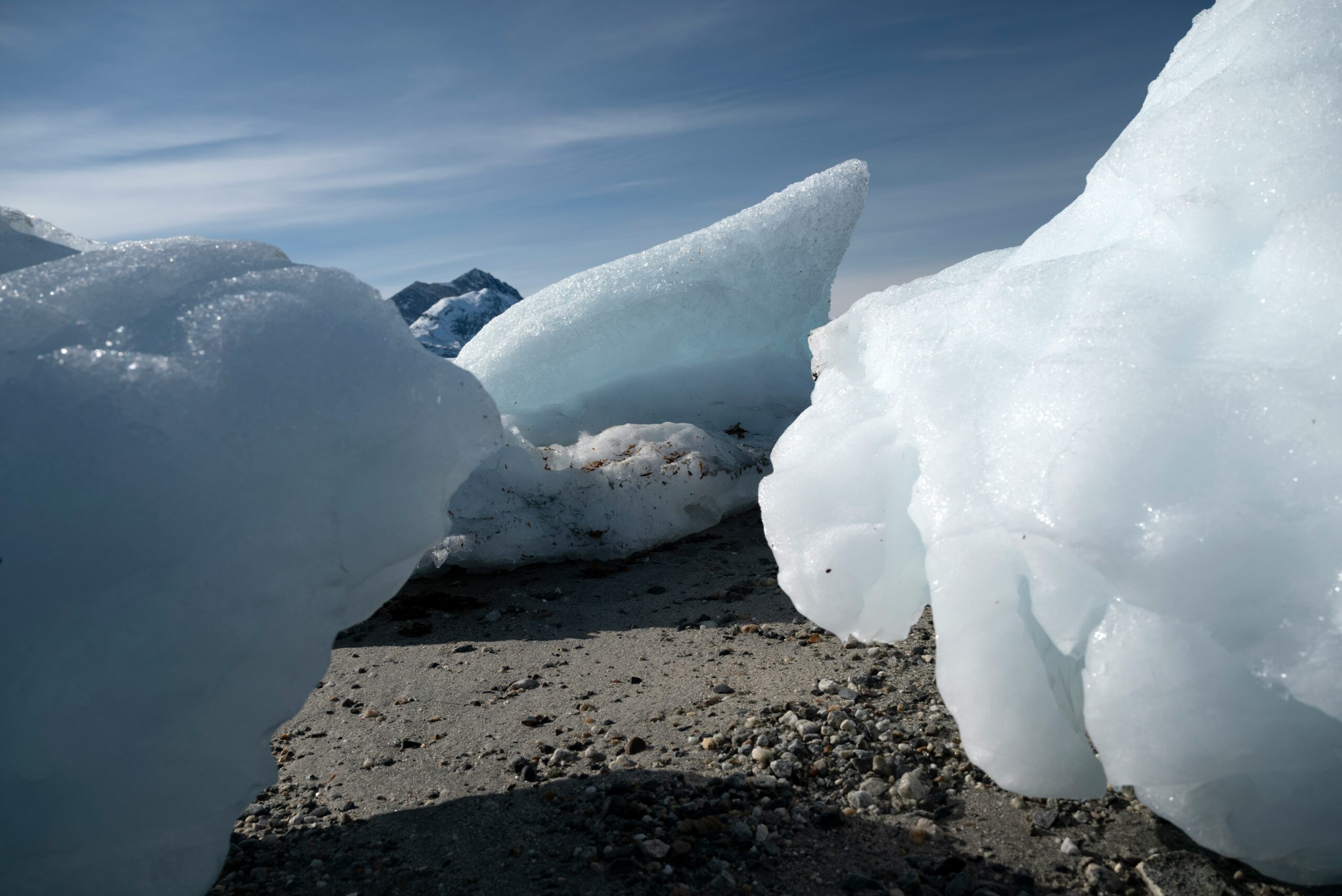
The Ice Age Meltdown: Explained
For vast stretches of Earth’s history, much of the planet was a stark, frozen landscape. These periods, known as glacial periods or, more colloquially, Ice Ages, were characterized by the extensive growth of continental ice sheets that covered significant portions of the Northern Hemisphere. These colossal formations of ice, often kilometers thick, sculpted the very face of the land, carving out valleys, fjords, and the characteristic U-shaped troughs that define so many mountain ranges today. The sheer volume of water locked away in these ice sheets led to a dramatic drop in global sea levels, exposing land bridges that allowed for the migration of flora and fauna, including early human ancestors. This was a world of immense scale and slow, inexorable change, where the rhythm of life was dictated by the expansion and contraction of ice.
What Constitutes an Ice Age?
Scientists define an Ice Age not by the presence of glaciers, but by the sustained presence of ice sheets in the polar and mid-latitude regions. We are, in fact, still technically within an Ice Age – the Quaternary glaciation, which began approximately 2.6 million years ago. However, within this larger epoch, there are cycles of glacial and interglacial periods.
Glacial Periods: The Ascent of Ice
During glacial periods, the Earth’s climate cools, leading to the accumulation of snow and ice over landmasses. This process is a gradual one, driven by a complex interplay of factors. The ice sheets grow, advancing across continents, reaching their maximum extent at the peak of the glacial period.
Interglacial Periods: A Fleeting Thaw
Interglacial periods, like the one we are currently experiencing, are warmer phases within an Ice Age. During these times, ice sheets retreat, and sea levels rise. These periods are significantly shorter than glacial periods, typically lasting for tens of thousands of years. While seemingly a respite from the cold, they are ultimately temporary phases before the next glacial advance.
The end of the Ice Age marked a significant turning point in Earth’s climate and ecosystems, leading to the emergence of human civilizations as we know them today. For those interested in exploring related topics, the article “The Antarctic Conspiracy: Uncovering the Mystery of the Piri Reis Map” delves into the intriguing connections between ancient maps and historical climate changes. You can read more about it by following this link: The Antarctic Conspiracy.
The Drivers of Ice Age Cycles
The existence of Ice Ages and their cyclical nature is not a random phenomenon. A delicate celestial mechanism, known as the Milankovitch cycles, plays a pivotal role in orchestrating these dramatic climatic shifts. These cycles are based on variations in Earth’s orbital parameters, which influence the amount and distribution of solar radiation received by our planet.
Eccentricity: The Wobbling Orbit
Earth’s orbit around the Sun is not a perfect circle but an ellipse. The degree of this ellipticity, or eccentricity, varies over long periods, roughly 100,000 and 400,000 years. A more eccentric orbit means a greater difference in the amount of solar radiation received at perihelion (closest to the Sun) and aphelion (farthest from the Sun). This variation can amplify or dampen the effects of other orbital changes. When Earth’s orbit is more eccentric, and other conditions are favorable, the difference in solar insolation between summer and winter can become more pronounced, potentially triggering glacial or interglacial conditions.
Obliquity: The Tilted Axis
Earth’s axis of rotation is tilted at an angle of approximately 23.5 degrees relative to its orbital plane around the Sun. This tilt is responsible for the seasons. The angle of this tilt, known as obliquity, varies between about 21.1 and 24.5 degrees over a cycle of roughly 41,000 years. A greater tilt leads to more extreme seasons, with hotter summers and colder winters. Conversely, a smaller tilt results in milder seasons. During glacial periods, a smaller obliquity can favor the accumulation of ice, as summers are cooler, allowing snow to persist and build up over time.
Precession: The Slow Spin
Earth also undergoes a wobble in its axial tilt, a phenomenon called axial precession, akin to a spinning top slowing down. This wobble causes the timing of the solstices and equinoxes to shift relative to Earth’s position in its orbit. This cycle has a period of approximately 23,000 years. Precession influences the intensity of seasons in different hemispheres. For instance, if Earth is closest to the Sun during the Northern Hemisphere’s summer, that summer will be warmer than if it were closest during the Southern Hemisphere’s summer. This can, in turn, influence the melting of ice sheets.
The Great Thaw: Unraveling the Last Ice Age
Following a period of immense cold and widespread glaciation, the Earth began to warm. The last glacial period, often referred to as the Wisconsin glaciation in North America, reached its peak around 20,000 years ago. The subsequent melting of these colossal ice sheets was not a uniform or instantaneous event, but a complex and protracted process that spanned thousands of years, fundamentally reshaping the planet.
The Initial Warming: A Whispered Promise of Change
The initial stages of the melt were likely driven by subtle shifts in Earth’s orbital parameters, amplified by feedback loops within the climate system. As temperatures began to rise, even slightly, the vast ice sheets, already nearing their stability limits, started to lose mass. This initial warming was a critical trigger, setting in motion a cascade of events.
The Impact of Rising Sea Levels: A World Submerged
One of the most dramatic consequences of the melting ice sheets was the inexorable rise in global sea levels. As trillions of tons of ice dissolved into the oceans, the water volume increased significantly, flooding vast coastal areas that had been exposed during the glacial period. Land bridges that had facilitated migration were submerged, separating continents and populations. This period saw the formation of many of today’s coastlines and the creation of new islands.
The Bering Land Bridge: A Lost Pathway
The Bering Land Bridge, a landmass that connected Siberia and Alaska during the last glacial period, is a prime example of a submerged pathway. This crucial connection allowed the migration of humans and animals between Asia and North America. As the ice melted, the sea levels rose, and the land bridge was eventually inundated, effectively isolating North America for millennia.
The Creation of New Seas and Channels: Reshaping Geography
The influx of meltwater not only raised sea levels but also carved out new geographical features. Vast proglacial lakes, formed by the impoundment of meltwater behind retreating ice margins, eventually breached their confines, creating powerful rivers and carving new canyons and valleys. The formation of the Baltic Sea and the North Sea, for instance, can be traced back to the meltwater of the Scandinavian ice sheet.
The Release of Trapped Carbon: A Potent Greenhouse Effect
The melting process also played a role in the release of greenhouse gases, further accelerating the warming trend. Permafrost, ground that remained frozen for millennia, began to thaw, releasing methane and carbon dioxide that had been locked away in organic matter.
Methane from Thawing Permafrost: A Potent Accelerator
Permafrost regions contain vast amounts of organic material that have been preserved in the frozen ground for thousands of years. As permafrost thaws, this organic matter decomposes, releasing significant amounts of methane, a greenhouse gas far more potent than carbon dioxide in the short term. This created a powerful positive feedback loop, where warming led to more thawing, which led to more greenhouse gas release, which led to more warming.
The Release of CO2 from Oceans and Soils: A Warming Cycle Continues
Warming oceans also become less effective at absorbing carbon dioxide from the atmosphere, leading to a net release. Similarly, thawing soils release stored carbon dioxide as organic matter decomposes. This interconnected system of carbon release amplified the initial warming, pushing the planet further into an interglacial state.
The Consequences of a Warming World: A New Equilibrium
The end of the last Ice Age was not merely a period of melting ice; it was a fundamental transformation of Earth’s ecosystems and a catalyst for human development. The dramatic changes in climate and geography had profound and lasting impacts, shaping the world as we know it today.
The Emergence of New Ecosystems: Adapting to a Changing Planet
As the ice retreated, vast landscapes were exposed, paving the way for new ecological communities to take root. Forests began to spread into previously glaciated regions, and diverse plant and animal life colonized the newly deglaciated terrain. The biodiversity of the planet began to shift and adapt to the warmer, more hospitable conditions.
The Spread of Forests and Vegetation: A Greening Earth
The receding ice margins left behind fertile ground, ready to be colonized by pioneering plant species. Over centuries, these regions transformed from barren landscapes into thriving forests, grasslands, and wetlands. This vegetation not only changed the physical appearance of the Earth but also began to influence local and global climates by absorbing carbon dioxide.
The Evolution and Migration of Species: A Dynamic Biological Landscape
The post-Ice Age period witnessed significant evolutionary and migratory events. Animals adapted to the changing environments, and new species emerged as populations became isolated or adapted to new niches. The extinction of many large megafauna, which had thrived during the Ice Age, is also a notable feature of this period, likely due to a combination of climate change and human hunting pressures.
The Rise of Human Civilization: Seizing New Opportunities
The end of the Ice Age created new opportunities for human societies. The expansion of arable land and the availability of new plant and animal resources facilitated the development of agriculture, leading to settled lifestyles and the eventual rise of complex civilizations. The warming climate also made northern latitudes more habitable, opening up new territories for human settlement.
The Agricultural Revolution: A Paradigm Shift
The availability of fertile land and a more stable climate, particularly after the initial tumultuous melt, proved to be a critical factor in the development of agriculture. Humans began to cultivate crops and domesticate animals, leading to a more reliable food supply. This shift from a hunter-gatherer lifestyle to settled agriculture was a fundamental turning point in human history, allowing for population growth and the development of complex societies.
The Expansion of Human Habitation: Colonizing New Frontiers
As the ice retreated and habitable landscapes emerged, human populations began to expand into new territories. This expansion contributed to the distribution of human populations across the globe, filling niches that had been inaccessible during the colder glacial periods. The colonization of regions like Northern Europe and parts of North America became possible due to the warming climate.
The end of the Ice Age marked a significant turning point in Earth’s climate and ecosystems, leading to the emergence of new habitats and the migration of various species. This transformative period not only reshaped the natural world but also influenced human societies as they adapted to changing environments. For a fascinating exploration of how ancient cultures navigated these changes, you can read about Polynesian wayfinding techniques in a related article that highlights the ingenuity of early seafarers. Discover more about this remarkable skill by visiting Polynesian wayfinding.
The Frozen Legacy: Glaciers Today and the Future of Melting
While the most dramatic melting of the last Ice Age is long past, our planet continues to experience glacial and interglacial cycles. Today, however, the world is witnessing a rapid and concerning acceleration of glacial melt, driven by anthropogenic climate change. Understanding the processes of past melts provides crucial context for the challenges we face today.
The Retreat of Modern Glaciers: A Warning Sign
Glaciers and ice sheets around the world are currently retreating at an unprecedented rate. This is a direct consequence of rising global temperatures caused by the increase in greenhouse gas concentrations in the atmosphere due to human activities. This modern retreat serves as a stark reminder of the power of climate to reshape the planet.
Polar Ice Caps: Indicators of Global Warming
The massive ice sheets of Greenland and Antarctica, along with the Arctic sea ice, are particularly sensitive to rising global temperatures. Their accelerated melting contributes significantly to global sea-level rise and has far-reaching implications for weather patterns and ocean circulation. The vastness of these ice reserves means their melting poses a significant threat.
Mountain Glaciers: Vital Water Sources Under Threat
Mountain glaciers, often considered “water towers” for many regions, are shrinking rapidly. These glaciers provide essential meltwater for agriculture, drinking water, and hydropower for millions of people. Their disappearance threatens water security and agricultural productivity in many parts of the world.
The Future of Sea Levels: A Rising Tide
The continued melting of glaciers and ice sheets poses a significant threat of rising sea levels. This poses a direct risk to coastal communities, low-lying islands, and vital ecosystems, potentially leading to widespread displacement and economic disruption. Predicting the exact rate and magnitude of future sea-level rise remains a critical area of scientific research.
Coastal Erosion and Flooding: An Imminent Threat
Rising sea levels exacerbate coastal erosion and increase the frequency and intensity of coastal flooding. Many coastal cities and communities are already facing these challenges, and the situation is expected to worsen without significant mitigation efforts. The economic and social costs of these impacts are immense.
Displacement and Migration: A Humanitarian Crisis in the Making
As coastal areas become uninhabitable due to sea-level rise and increased storm surges, mass displacement and migration are likely to occur. This presents a significant humanitarian challenge, requiring international cooperation and robust planning to address the needs of affected populations.
Learning from the Past: Implications for the Present and Future
The study of past Ice Age melts offers invaluable insights into the Earth’s climate system and the potential consequences of significant warming. By understanding the mechanisms and impacts of these ancient transitions, scientists can better model and predict future climate change scenarios and develop effective strategies for adaptation and mitigation. The lessons learned from the slow, natural cycles of the past are more critical than ever as humanity grapples with the rapid, human-induced changes of the present.

When the Ice Age Ended… Everything Changed
FAQs
What is the Ice Age?
The Ice Age was a period of time in Earth’s history when the climate was much colder than it is today, resulting in large ice sheets covering parts of the planet.
When did the Ice Age end?
The Ice Age ended approximately 11,700 years ago, marking the beginning of the current geological epoch known as the Holocene.
What caused the end of the Ice Age?
The end of the Ice Age was primarily caused by changes in Earth’s orbit and axial tilt, leading to shifts in the distribution of solar radiation and ultimately resulting in a warming of the climate.
What were the effects of the end of the Ice Age?
The end of the Ice Age led to the melting of ice sheets, the rise of sea levels, and the expansion of habitable land areas. It also marked the beginning of significant changes in plant and animal life.
How do scientists study the end of the Ice Age?
Scientists study the end of the Ice Age through various methods, including analyzing ice cores, studying fossil records, and using climate models to understand the complex interactions that led to the transition from the Ice Age to the current interglacial period.