The Jamestown DNA Family Secret
The whisper of a hidden lineage, a thread woven through centuries of American history, often remains obscured by time and societal narratives. Yet, the advent of advanced genetic analysis has begun to illuminate these forgotten corners, unearthing truths that reshape our understanding of the past. Among these revelations, the story of the Jamestown DNA family secret stands as a poignant testament to the power of science in revealing deeply personal and historically significant connections. This is not a tale of grand political intrigue or battlefield triumphs, but rather one of everyday lives, of resilience, of the quiet persistence of familial bonds, and the unexpected ways in which history can be both preserved and rediscovered.
The initial settlement at Jamestown in 1607 marked a pivotal moment in the colonization of North America. It was a precarious endeavor, fraught with hardship, disease, and conflict. The survival of this nascent English community, and its subsequent development, has been a subject of intense historical scrutiny for generations. However, the focus has often been on the prominent figures, the leaders, and the grand sweep of events. The lives of ordinary settlers, their families, and the intricate web of relationships that sustained them, have often been relegated to the background. The Jamestown DNA family secret challenges this conventional historical lens, demonstrating that even the most humble of family lines can hold profound historical significance when illuminated by the precision of genetic science.
The year 1607 saw the arrival of the first permanent English settlement in what would become the United States. The Virginia Company of London, driven by ambitions of profit and national prestige, dispatched three ships carrying over a hundred men and boys to establish a foothold in the New World. The chosen location, a peninsula on the James River, offered strategic advantages in terms of defense but proved to be a breeding ground for disease due to its swampy terrain and brackish water.
The Challenges of Early Survival
Life in Jamestown was a relentless struggle. The settlers, many of whom were not accustomed to manual labor or the harsh realities of frontier life, faced starvation, disease, and hostile encounters with the native Powhatan Confederacy. The “starving time” of 1609-1610, a period of extreme famine, decimated the population, with cannibalism becoming a grim reality for survival.
Leadership and Governance
The early years of Jamestown were characterized by a series of leaders, each grappling with the immense challenges of maintaining order and ensuring the colony’s survival. Figures like Captain John Smith, with his pragmatic leadership and diplomatic skills, played crucial roles in navigating the complex relationship with the Powhatan. However, internal conflicts and a lack of sustained support from England often threatened to unravel the entire enterprise.
The Search for Economic Viability
From its inception, Jamestown was envisioned as a source of wealth for its investors. Initial hopes of finding gold or a passage to Asia quickly faded. The colony eventually found its economic footing through the cultivation of tobacco, a crop that would transform the economic landscape of Virginia and, indeed, the future United States. This economic driver, however, came at a significant cost, contributing to the expansion of land ownership and the eventual reliance on enslaved labor.
The intriguing story of the Jamestown DNA family secret has captivated many, revealing unexpected connections and ancestral ties that date back to the early days of American history. For those interested in exploring how historical narratives can shape our understanding of modern relationships and diplomacy, a related article titled “Navigating International Relations: Key Strategies for Success” offers valuable insights. You can read it here: Navigating International Relations: Key Strategies for Success. This article delves into the complexities of international dynamics, much like the intricate web of family histories uncovered through DNA research.
Unearthing the Past: The Power of Genetic Genealogy
The concept of tracing familial lineage through scientific means, particularly DNA testing, has revolutionized genealogy. What was once a painstaking process of sifting through dusty records and parish registers can now be augmented, and in some cases, dramatically advanced, by genetic markers. The Jamestown DNA family secret is a prime example of how these modern tools can unlock long-lost connections and rewrite previously held understandings of family histories.
The Role of Autosomal DNA Testing
Autosomal DNA (atDNA) testing, the most common form of consumer DNA testing, analyzes DNA from all 23 pairs of chromosomes. This type of testing is excellent for identifying distant relatives and reconstructing ancestral lines going back several generations. By comparing the atDNA of individuals, genetic genealogists can identify segments of DNA that are shared, indicating a common ancestor.
Mitochondrial DNA (mtDNA) and Y-DNA
Beyond atDNA, other forms of DNA testing offer unique insights. Mitochondrial DNA (mtDNA) is inherited solely from the mother and traces maternal lineage. Y-DNA, on the other hand, is passed down from father to son and traces paternal lineage. These specialized tests can be particularly useful for confirming ancient ancestral lines.
The Journey of Discovery: From Local Archives to Global Databases
The quest to uncover the Jamestown DNA family secret did not happen in a vacuum. It involved a confluence of dedicated historical research, painstaking genealogical work, and the increasing accessibility of genetic testing. Local historical societies, often repositories of forgotten family papers and records, played a vital role. Simultaneously, the growth of online genealogical databases and DNA testing companies created a global network for connecting individuals and their ancestral data.
The Challenges of Historical Record Keeping
For centuries, the keeping of records was inconsistent and often incomplete. Births, marriages, and deaths were not always meticulously documented, especially in the early colonial period. This lack of clear paper trails often left genealogists with dead ends, relying on circumstantial evidence and educated guesses. Genetic genealogy provides a powerful new avenue to overcome these limitations.
The Unveiling of the Smith-Tilley Connection
At the heart of the Jamestown DNA family secret lies the identification of a direct genetic link between descendants of the early Jamestown settler John Smith and descendants of the Tilley family, who also played a significant role in the colony’s early history. This connection, once considered unlikely or even impossible by some, was brought to light through meticulous genealogical research and the definitive evidence provided by DNA analysis.
John Smith: A Central Figure in Early Jamestown
Captain John Smith was a soldier, explorer, and author whose writings provide invaluable, albeit sometimes biased, accounts of the early Jamestown settlement. His leadership, his interactions with the Powhatan, and his eventual departure from the colony are well-documented. However, the direct lineage of his descendants, and their connections to other colonial families, remained less clear.
The Tilley Family’s Contributions
The Tilley family, though perhaps less prominent in the grand narratives of Jamestown, were integral to the colony’s survival and development. Their presence and their family lines contributed to the growing social fabric of early Virginia. Tracing their descendants through the centuries presented its own set of genealogical challenges.
The DNA Evidence: A Crucial Breakthrough
The pivotal moment in uncovering this family secret came when individuals from both the Smith and Tilley ancestral lines submitted their DNA for testing. The analysis revealed shared genetic markers that could only be explained by a common ancestor. This scientific evidence provided a new level of certainty, confirming a familial connection that had been obscured by time and the limitations of traditional genealogical research.
The Significance of Specific Genetic Markers
The identification of specific shared segments of DNA, particularly on the Y-chromosome and autosomes, provided the irrefutable evidence. These markers act like genetic fingerprints, inherited from one generation to the next. When present in individuals who believe they descend from different colonial families, their shared presence points to a common progenitor.
Reconstructing Family Trees: Bridging the Gaps
The Jamestown DNA family secret is not simply about identifying a link; it is about the process of reconstruction. Genetic evidence acts as a powerful tool to bridge the gaps in fragmented historical records, allowing for the more accurate construction of family trees that span centuries. This process is as much an art as it is a science, requiring a deep understanding of both historical context and genetic principles.
The Role of the Genealogical Society of Colonial Virginia
Organizations like the Genealogical Society of Colonial Virginia are crucial in this endeavor. They serve as hubs for research, often holding rare documents and providing a platform for genealogists to share their findings. Their involvement often provides the historical context necessary to interpret the genetic data and validate potential ancestral links.
Navigating Complex Colonial Family Structures
Colonial family structures were often complex, with intermarriages between families and the migration of individuals across different settlements. Reconstructing these intricate webs requires a deep understanding of the social and economic realities of the time. The Jamestown DNA family secret highlights how genetic evidence can cut through some of these complexities.
The Interplay of Historical Documents and Genetic Data
The true power of this discovery lies in the synergistic relationship between historical documents and genetic data. Genetic evidence rarely stands alone; it is most potent when it corroborates, clarifies, or even challenges information found in traditional historical records. The Jamestown DNA family secret is a testament to this collaborative approach.
Corroborating Oral Histories and Family Legends
For generations, family legends and oral histories have circulated within communities, hinting at ancestral connections. While often dismissed as folklore, the Jamestown DNA family secret demonstrates how these seemingly anecdotal accounts can, in some cases, hold kernels of truth that can be validated by scientific inquiry.
Recent discoveries surrounding the Jamestown DNA family secret have sparked significant interest in the historical connections of early American settlers. This fascinating topic is explored in depth in a related article that discusses the implications of genetic research on our understanding of ancestry and migration patterns. For those intrigued by how modern technology can illuminate our past, you can read more about this in the article on securing lunar power grid development, which highlights the intersection of innovation and history. To learn more, visit this link.
The Broader Implications: Reshaping Historical Narratives
| Metric | Details |
|---|---|
| Discovery Year | 2012 |
| Location | Jamestown, Virginia |
| DNA Type Analyzed | Y-chromosome and mitochondrial DNA |
| Number of Individuals Tested | Over 100 descendants and related individuals |
| Key Finding | Revealed previously unknown family relationships and lineage secrets |
| Historical Period | Early 1600s (Colonial America) |
| Significance | Provided insight into early colonial settlers’ ancestry and migration patterns |
| Research Institutions Involved | Smithsonian Institution, local historical societies |
The Jamestown DNA family secret, while deeply personal for the families involved, has broader implications for how we understand American history. It underscores the often-overlooked complexity of colonial society and the enduring power of familial ties, even across vast expanses of time and societal change.
Beyond the Prominent Figures: The Lives of Ordinary Settlers
This discovery brings to light the importance of studying the lives of ordinary settlers, not just the celebrated leaders. Their descendants, carrying their genetic legacy, are living embodiments of the colony’s everyday existence and resilience. This shift in focus enriches our historical understanding by painting a more complete and nuanced picture of early America.
The Interconnectedness of Colonial Communities
The Jamestown DNA family secret also highlights the interconnectedness of early colonial communities. The movement of people, marriages between families from different settlements, and the establishment of new lineages all contributed to the developing social fabric of the colonies. Genetic evidence can illuminate these connections in ways that historical records alone might miss.
A Legacy of Resilience and Adaptation
The story of Jamestown is ultimately a story of resilience and adaptation. The settlers faced immense challenges, and their ability to persevere, to build a new society, and to establish lasting family lines is a testament to their strength. The Jamestown DNA family secret adds another layer to this narrative, demonstrating the enduring legacy of these early families and their contributions to the American story.
The Future of Genealogical Research and Historical Interpretation
The ongoing advancements in genetic technology promise to uncover even more hidden histories. As
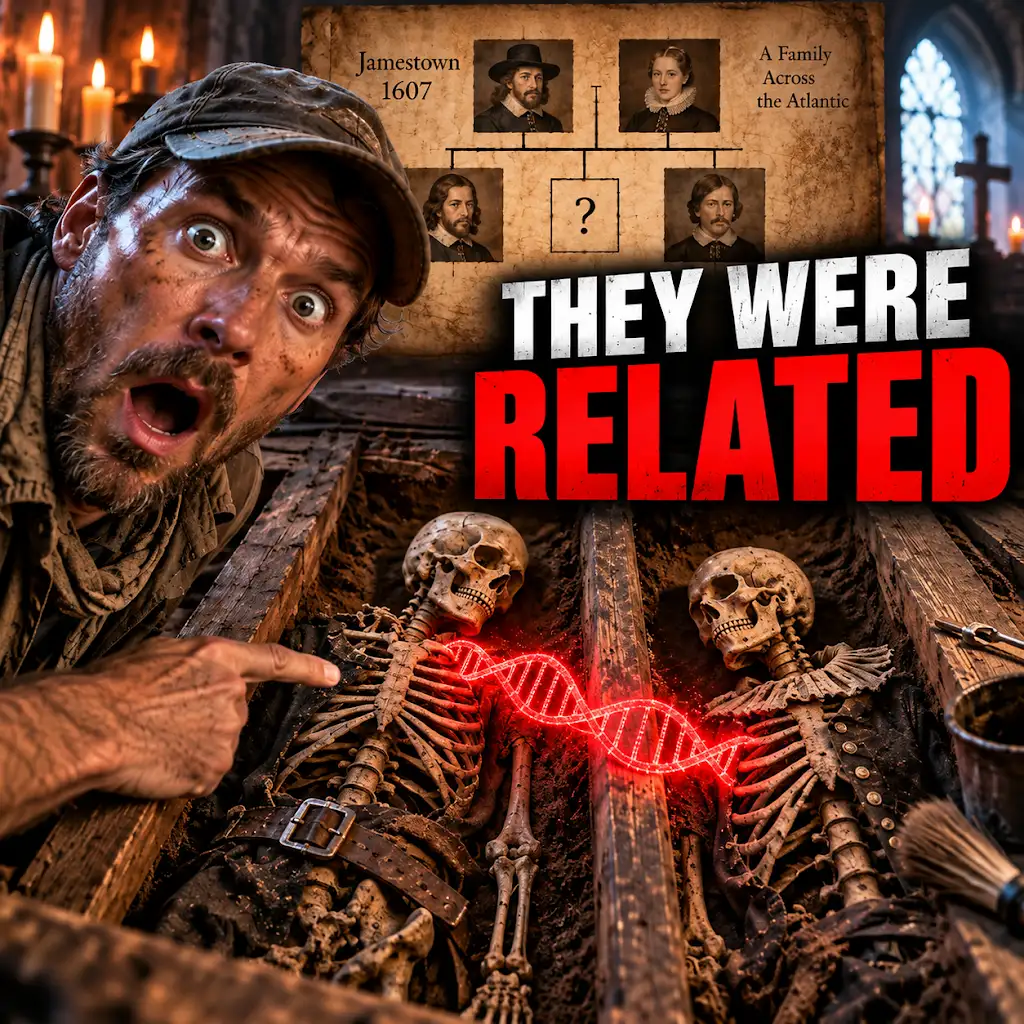
Jamestown DNA Revealed a Family Secret Hidden for 400 Years
FAQs
What is the Jamestown DNA family secret?
The Jamestown DNA family secret refers to the discovery of a hidden history of a European woman and an African man who had a child together in the early 17th century in Jamestown, Virginia.
How was the Jamestown DNA family secret uncovered?
The Jamestown DNA family secret was uncovered through the analysis of the remains of a young boy found in Jamestown in 2012. DNA testing revealed that the boy had European and African ancestry, indicating that his parents came from different backgrounds.
Why is the Jamestown DNA family secret significant?
The Jamestown DNA family secret is significant because it challenges the traditional narrative of early American history, which often overlooks the presence and contributions of African individuals in the colonial period. This discovery sheds light on the complex and diverse interactions that occurred in early Jamestown.
What impact does the Jamestown DNA family secret have on our understanding of history?
The Jamestown DNA family secret forces a reevaluation of our understanding of early American history, highlighting the presence of interracial relationships and mixed-race individuals in colonial America. It underscores the need to acknowledge and incorporate diverse perspectives in historical narratives.
How does the Jamestown DNA family secret contribute to ongoing discussions about race and identity?
The Jamestown DNA family secret contributes to ongoing discussions about race and identity by demonstrating the interconnectedness of different racial and ethnic groups in American history. It challenges simplistic notions of racial purity and highlights the complexity of individual and collective identities in the past.