The Kola Superdeep Borehole Drilling Accident: Lessons Learned
The pursuit of knowledge has often driven humanity to the brink of the impossible. In the realm of scientific exploration, few endeavors embody this spirit more than the Kola Superdeep Borehole. Located on the Kola Peninsula in northwestern Russia, this ambitious project aimed to penetrate the Earth’s crust to unprecedented depths, seeking answers to fundamental questions about our planet’s composition and history. While the project yielded invaluable scientific data, it was not without its challenges, and a significant drilling accident, a catastrophic blowout, served as a stark reminder of the inherent risks involved in such extreme exploration. This incident, though a setback, provided crucial lessons that continue to inform deep-drilling operations and scientific endeavors across the globe.
The concept of delving deep into the Earth’s interior has long captivated scientists. For decades, geologists and geophysicists debated the composition of the Earth’s crust and mantle, relying primarily on indirect methods like seismic wave analysis. The desire to obtain direct samples and conduct in-situ measurements spurred the development of technologies capable of penetrating thousands of meters beneath the surface.
A Cold War Endeavor
The Kola Superdeep Borehole project was initiated in 1970, a period marked by intense scientific and technological competition between the United States and the Soviet Union during the Cold War. While not directly related to military objectives, the Soviet Union viewed the project as a demonstration of its scientific prowess and technological capabilities. The location on the Kola Peninsula was strategically chosen for its relatively stable geological conditions and accessibility.
Scientific Objectives
The primary scientific goals of the Kola Superdeep Borehole were multifaceted:
- Understanding the Structure of the Earth’s Crust: The project aimed to determine the precise composition, layering, and physical properties of the Earth’s continental crust. This included investigating the transition from the upper crust to the lower crust and potentially reaching the Mohorovičić discontinuity (the Moho), the boundary between the Earth’s crust and upper mantle.
- Investigating the History of the Earth: By studying rock samples from various depths, scientists hoped to uncover information about the geological history of the region, including the formation of ancient rock formations and the processes that shaped the Earth over millions of years.
- Studying Deep Processes: The borehole provided an unparalleled opportunity to study the physical and chemical conditions at great depths, including temperature, pressure, and the presence of fluids. This was crucial for understanding processes like metamorphism, mineral formation, and seismic activity.
- Exploring for Resources: While not the primary focus, the project also had the potential to identify deep mineral and hydrocarbon resources.
The Kola Superdeep Borehole drilling accident remains one of the most intriguing events in scientific history, shedding light on the challenges faced during deep Earth exploration. For those interested in the mysteries of exploration and the secrets of ancient maps, a related article titled “Uncovering the Mystery of the Piri Reis Map” provides fascinating insights into how historical cartography intersects with modern scientific endeavors. You can read more about it by following this link: Uncovering the Mystery of the Piri Reis Map.
The Unprecedented Depth and Technological Hurdles
Reaching such extreme depths presented immense engineering and technological challenges. The prevailing drilling technologies of the time were not designed for the conditions encountered thousands of meters below the surface.
Engineering Marvels and Innovations
The drilling equipment and techniques employed at Kola were at the cutting edge of what was possible:
- Advanced Drilling Rigs: Massive drilling rigs were constructed to handle the immense weight of the drill string and the forces exerted during drilling.
- Specialized Drill Bits: The drill bits had to be exceptionally durable and capable of withstanding high temperatures, pressures, and abrasive rock formations. Various types of bits, including diamond-tipped and tungsten carbide bits, were utilized.
- Mud Circulation Systems: Efficient mud circulation systems were crucial for cooling the drill bit, removing rock cuttings, and maintaining borehole stability. However, the extreme temperatures and pressures presented significant challenges to the effectiveness of these systems.
- Well Logging Technologies: Specialized well-logging tools were developed and deployed to measure various parameters downhole, such as temperature, pressure, density, and radioactivity.
The Relentless Ascent of Depth
The drilling process was slow and meticulous. Each meter gained represented a significant achievement. The project progressed in stages, with casing being inserted to support the borehole walls as drilling continued. The depth records were gradually broken:
- Early Successes: By the late 1970s and early 1980s, the Kola Superdeep Borehole had already achieved impressive depths, surpassing many existing boreholes.
- Reaching Record Depths: The borehole eventually reached its deepest point of 12,262 meters (approximately 7.6 miles) in 1989. This remains the deepest artificial point on Earth’s surface.
The Catastrophic Blowout: A Turning Point
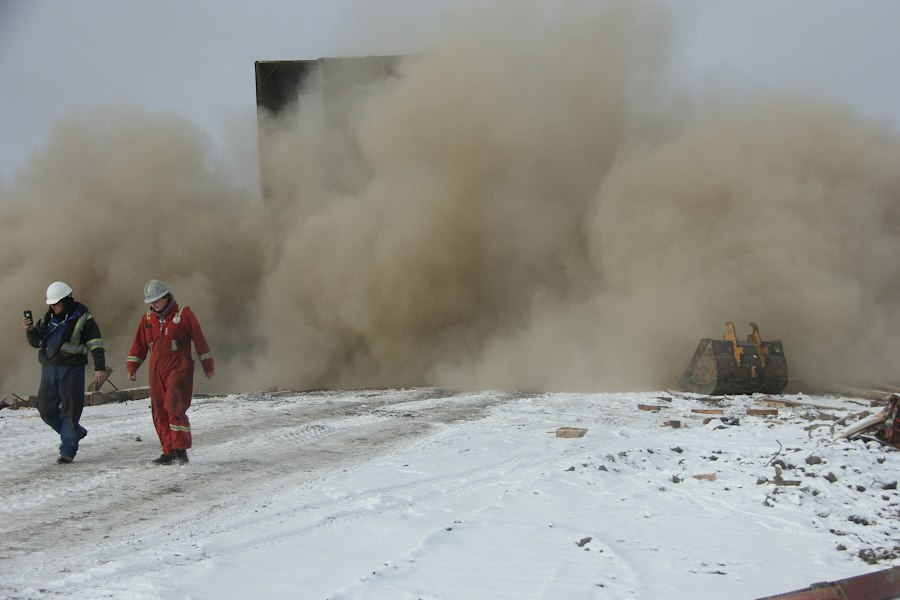
Despite the meticulous planning and engineering, the immense pressures and temperatures encountered at extreme depths created unforeseen risks. The most significant incident occurred in 1992, a catastrophic blowout that effectively brought an end to the active drilling phase of the project.
The Incident Unfolds
The exact sequence of events leading to the blowout is complex, but it is generally understood to have involved a sudden and uncontrolled release of high-pressure gas and fluids from a deep geological formation.
- Sudden Pressure Release: As the drill string was being pulled out of the borehole, a deep formation encountered an unexpected and rapid influx of superheated gas and fluids.
- Escalating Danger: The pressure within the borehole increased exponentially, exceeding the integrity of the casing and the control mechanisms.
- The Blowout: The uncontrolled release of these materials resulted in a massive blowout, ejecting debris, gas, and fluids at high velocity. The event caused significant damage to the drilling rig and the immediate surrounding infrastructure.
- Subsequent Events: The blowout led to the ignition of combustible gases, creating a fiery spectacle and posing a severe safety hazard. The well was eventually brought under control, but the damage was substantial.
Immediate Consequences and Damage
The blowout had immediate and far-reaching consequences:
- Safety Concerns: The primary concern was the safety of personnel and the surrounding environment. Evacuations were necessary, and the area was deemed hazardous.
- Infrastructure Damage: The drilling rig and associated equipment suffered extensive damage, rendering them inoperable for further deep drilling.
- Costly Endeavor: The accident represented a significant financial loss, adding to the already considerable investment in the project.
- Operational Halt: The incident effectively halted any further attempts to deepen the borehole, forcing a re-evaluation of the project’s future.
Lessons Learned: A Legacy of Caution and Innovation
The Kola Superdeep Borehole accident, while devastating in its immediate impact, served as an invaluable, albeit costly, learning experience. The lessons derived from this event have profoundly influenced the approach to deep-drilling operations and scientific exploration worldwide.
Enhanced Understanding of Subsurface Risks
The blowout provided a stark, real-world demonstration of the immense pressures and potentially volatile conditions that can exist deep within the Earth’s crust.
- Hydrocarbon and Gas Accumulations: The incident highlighted the possibility of encountering unexpected accumulations of hydrocarbons and other gases under extreme pressure, even in formations not previously considered to be significant reservoirs.
- Geological Instability: It underscored the dynamic nature of deep geological formations and the potential for sudden shifts in pressure and fluid dynamics.
- Predictive Modeling Improvements: The data gathered, including pressure readings and fluid analyses, before and during the incident, contributed to improved predictive models for subsurface hazards in future drilling operations.
Evolution of Safety Protocols and Technologies
The accident prompted a critical review and enhancement of safety protocols and drilling technologies.
- Advanced Blowout Prevention Systems: The incident spurred the development and implementation of more robust and sophisticated blowout prevention (BOP) systems. These systems are designed to rapidly seal off the wellbore in the event of an uncontrolled influx of formation fluids.
- Real-time Monitoring and Early Warning Systems: Greater emphasis was placed on real-time monitoring of downhole conditions, including pressure, temperature, and gas detection. Advanced sensors and data analysis techniques were developed to provide early warnings of potential hazards.
- Well Control Procedures: Safety protocols for well control were re-evaluated and strengthened. This included developing more comprehensive contingency plans and improving the training of drilling crews in emergency response.
- Material Science Advancements: The extreme conditions encountered highlighted the need for materials that could withstand higher temperatures and pressures. This led to further research and development in metallurgy and composite materials used in drilling equipment.
Rethinking Deep-Drilling Strategies
The Kola experience fundamentally altered how scientists and engineers approach deep-drilling projects.
- Phased Drilling and Risk Assessment: A greater emphasis was placed on phased drilling, where each stage of drilling involves thorough risk assessment and the implementation of appropriate safety measures before proceeding to the next depth.
- Geological Surveys and Exploration: More comprehensive pre-drilling geological surveys and seismic imaging became standard practice to better understand the subsurface conditions and identify potential hazards.
- International Collaboration and Knowledge Sharing: The lessons learned at Kola were shared internationally, fostering a collaborative approach to deep-drilling research and the development of best practices. This ensured that the safety lessons were disseminated widely.
- Alternative Exploration Methods: The challenges and risks associated with extremely deep drilling also encouraged the exploration of alternative methods for obtaining subsurface data, such as advanced remote sensing and improved geophysical techniques.
The Kola Superdeep Borehole drilling accident remains one of the most intriguing events in scientific exploration, shedding light on the challenges faced by researchers delving into the Earth’s crust. For those interested in the broader implications of lost technologies and the mysteries of our planet, a related article discusses the captivating topic of advanced technologies that have seemingly vanished over time. You can read more about this fascinating subject in the article on lost high technology, which offers insights into how such advancements can shape our understanding of history and science. For more information, visit this link.
The Scientific Legacy of Kola
| Metric | Details |
|---|---|
| Project Name | Kola Superdeep Borehole |
| Location | Kola Peninsula, Russia |
| Start Year | 1970 |
| Depth Reached | 12,262 meters (40,230 feet) |
| Drilling Accident Date | 1984 (approximate) |
| Cause of Accident | Equipment failure due to extreme temperature and pressure |
| Temperature at Depth | Approximately 180 °C (356 °F) |
| Pressure at Depth | Over 600 MPa (megapascals) |
| Impact of Accident | Temporary halt in drilling; damage to drill string and borehole stability issues |
| Project Completion Year | 1994 |
Despite the drilling accident, the Kola Superdeep Borehole remains a monumental scientific achievement. The data collected from its depths has provided invaluable insights into the Earth’s crust.
Unveiling the Crust’s Secrets
The rock cores and measurements obtained from Kola offered an unprecedented glimpse into the Earth’s lithosphere.
- Compositional Analysis: Samples revealed the surprising complexity of the Earth’s crust, including the presence of minerals and rock formations not previously expected at such depths. The discovery of granite at depths typically associated with basalt was particularly significant.
- Temperature and Pressure Gradients: The borehole provided accurate data on temperature and pressure gradients within the crust, which are crucial for understanding geothermal energy potential and the behavior of rocks under stress.
- Fluid Inclusions: The study of fluid inclusions within rock samples provided information about the composition and origin of fluids deep within the Earth, shedding light on processes like metamorphism and groundwater circulation.
Understanding Earth’s Processes
The Kola project contributed significantly to our understanding of fundamental geological processes.
- Metamorphism: The borehole allowed for the direct observation of metamorphic processes occurring in the Earth’s crust. The study of rocks subjected to high temperatures and pressures provided insights into how rocks transform over geological time.
- Seismic Activity: The project helped to refine seismic models by providing in-situ data on rock properties and stress conditions. This contributed to a better understanding of earthquake generation and propagation.
- The Nature of the Crust-Mantle Boundary: While the Moho was not definitively reached, the data collected provided crucial information that helped geophysicists refine their models of the crust-mantle boundary.
The Enduring Impact
The Kola Superdeep Borehole, despite its dramatic conclusion, has left an indelible mark on scientific exploration. It stands as a testament to human curiosity and the relentless pursuit of knowledge. The lessons learned from its challenges, particularly the catastrophic blowout, have made future deep-drilling endeavors safer and more informed. The project’s scientific legacy continues to inform geological research, inspiring future generations of scientists to probe the mysteries of our planet. The pursuit of understanding the Earth’s inner workings, though fraught with peril, continues, armed with the hard-won wisdom gained from the depths of the Kola Superdeep Borehole.
They Drilled 12 KM Into Earth — Then Everything Changed
FAQs
What is the Kola Superdeep Borehole?
The Kola Superdeep Borehole is the deepest man-made hole on Earth, reaching a depth of over 7.5 miles (12 kilometers) in the Kola Peninsula, Russia.
What was the purpose of drilling the Kola Superdeep Borehole?
The main purpose of drilling the Kola Superdeep Borehole was to study the Earth’s crust and mantle, as well as to explore the possibility of drilling to unprecedented depths for scientific research.
What was the drilling accident that occurred at the Kola Superdeep Borehole?
During the drilling process at the Kola Superdeep Borehole, a drilling accident occurred when the drilling rig unexpectedly encountered higher-than-expected temperatures and pressures, causing equipment failures and safety concerns.
Were there any casualties or fatalities as a result of the drilling accident at the Kola Superdeep Borehole?
Fortunately, there were no casualties or fatalities as a result of the drilling accident at the Kola Superdeep Borehole. However, the incident did lead to the suspension and eventual abandonment of the project.
What were some of the scientific discoveries made during the drilling of the Kola Superdeep Borehole?
Despite the drilling accident and subsequent abandonment of the project, the Kola Superdeep Borehole did yield valuable scientific data and discoveries, including new insights into the Earth’s crust, geology, and seismic activity at extreme depths.