The human story is not a simple, linear progression. For eons, our genus Homo was a diverse and dynamic tapestry, woven with myriad species, each with its own unique adaptations and evolutionary trajectories. Yet, the narrative we often encounter is a streamlined account, focusing on a select few ancestors that ultimately led to modern Homo sapiens. This singular focus, while convenient, obscures a far richer and more complex past, a past populated by the “lost branches” of human evolution – hominin lineages that flourished, diversified, and eventually disappeared, leaving behind only tantalizing clues in the fossil record. Understanding these lost branches is not merely an academic exercise; it is crucial for grasping the true breadth of human potential, the contingency of our own existence, and the profound mystery that still surrounds our origins.
The emergence of the genus Homo around 2.8 million years ago marked a significant turning point in hominin evolution. While Australopithecus and its relatives had been bipedal, their tool use, brain size, and overall morphology were still relatively rudimentary. The earliest members of Homo, such as Homo habilis, exhibited a noticeable increase in cranial capacity and a more sophisticated suite of stone tools, the Oldowan industry. However, even at this nascent stage, the picture was far from clear.
Beyond Homo habilis: A Multitude of Early Forms
The traditional view of Homo habilis as the sole progenitor of later hominins is increasingly being challenged. Evidence suggests that alongside or perhaps even predating Homo habilis, other hominin species were carving out their own evolutionary niches. The discovery of fossils at sites like Ledi-Geraru in Ethiopia, attributed to Homo sp. (a classification for species not yet definitively identified), hints at a greater diversity within the early Homo lineage than previously appreciated. These fossils, dating to around 2.8 to 2.5 million years ago, exhibit a mosaic of traits, some reminiscent of australopithecines and others pointing towards later Homo species. This suggests a period of significant experimentation and diversification within the early genus, with multiple lineages exploring different adaptive strategies.
The Role of Environmental Fluctuations
The Pliocene epoch, the period of early Homo diversification, was characterized by significant environmental shifts. Fluctuations in climate, leading to the expansion and contraction of forests and grasslands, would have placed selective pressures on hominin populations. Different groups might have adapted to these changing landscapes in distinct ways, leading to the divergence of lineages. For instance, some groups might have remained in more forested environments, retaining adaptations for arboreal locomotion, while others ventured into more open savannas, further refining their bipedalism and developing new foraging strategies. These differential pressures could have spurred the development of distinct morphological and behavioral traits, ultimately leading to the emergence of separate species.
The Enigmatic Homo rudolfensis
Another significant player in the early Homo narrative, often relegated to the sidelines, is Homo rudolfensis. Known primarily from a few key fossil finds from East Turkana in Kenya, dating to around 2.4 to 1.9 million years ago, H. rudolfensis possessed a notably larger braincase than H. habilis, alongside a more robust facial structure. The debate surrounding its taxonomic status – whether it represents a distinct species or a variation within H. habilis – highlights the challenges in interpreting limited fossil evidence and the potential for multiple distinct hominin forms coexisting. The possibility that H. rudolfensis represented a separate lineage, perhaps with a different dietary specialization or cognitive abilities, remains a compelling avenue of research.
The study of lost branches of human evolution continues to captivate researchers and enthusiasts alike, shedding light on our complex ancestry. A fascinating article that delves into the mysteries of ancient civilizations and their potential connections to human evolution can be found at this link. It explores evidence that suggests the existence of advanced societies long before recorded history, prompting intriguing questions about how these civilizations may have influenced the development of early humans.
The Age of Disagreement: Middle Pleistocene Hominin Diversity
As hominins moved into the Middle Pleistocene (roughly 774,000 to 129,000 years ago), the fossil record becomes richer, yet paradoxically, more confusing. This era witnessed the rise of Homo erectus and its subsequent evolution, but also the emergence and possible interaction of other hominin groups that challenge our tidy ancestral tree.
Homo erectus and Its Global Reach
Homo erectus is undeniably a success story, a species that spread out of Africa and across vast swathes of Eurasia. With its larger brain, more modern body proportions, and sophisticated tool use (Acheulean industry), H. erectus was a highly adaptable hominin. However, the fossil evidence suggests that H. erectus itself was not a monolithic entity. Regional variations in morphology, observed in fossils from Africa, Asia, and Europe, suggest that H. erectus may have been a paraphyletic group, encompassing several distinct evolutionary trajectories.
Regional Variations: The Seeds of Divergence
The differences observed between African H. erectus (sometimes classified as Homo ergaster) and Asian H. erectus are significant. African specimens tend to be more gracile with certain cranial features that align more closely with later hominins, while Asian H. erectus often exhibits a more robust build and distinct cranial crests. These differences could indicate that populations of H. erectus became isolated and evolved independently, adapting to local conditions and potentially laying the groundwork for the emergence of new species.
The Enigmatic Homo heidelbergensis: Ancestor or Relative?
Homo heidelbergensis, emerging around 600,000 years ago, is a pivotal hominin in the evolutionary puzzle. Possessing a brain size within the modern human range and exhibiting advanced tool-making capabilities, H. heidelbergensis is often considered the last common ancestor of Homo sapiens and Neanderthals. However, the geographic distribution and morphological variation of H. heidelbergensis fossils suggest a more complex picture.
European and African Branches: The Roots of Neanderthals and Us
Fossils attributed to H. heidelbergensis in Europe, such as those found at Sima de los Huesos in Spain, bear striking resemblances to Neanderthals, leading many to classify them as early Neanderthals or a direct ancestral population. Conversely, African fossils that fall under the H. heidelbergensis umbrella, like those from Bodo in Ethiopia, display features that are considered more ancestral to Homo sapiens. This geographic division points towards the possibility that H. heidelbergensis was not a single species, but rather a diverse group from which distinct lineages – the Neanderthals in Europe and the ancestors of modern humans in Africa – eventually diverged. The “lost branches” here are the myriad forms of H. heidelbergensis that might have existed in other regions or followed different evolutionary paths, leaving minimal traces.
The Out of Africa Debate: More Than One Exit?

The dominant paradigm for the origin of Homo sapiens is the “Recent Out of Africa” model, which posits that modern humans originated in Africa and then migrated out, eventually replacing other hominin populations. However, the increasing discoveries of archaic human fossils outside of Africa, such as Denisovans and the individuals from the “Dragon Man” fossil, complicate this narrative, suggesting that the story of hominin dispersal and interaction was far more intricate than a single exodus.
Denisovans: The Enigmatic Cousins from Asia
The discovery of Denisovans, known primarily from fragmented remains and ancient DNA found in the Denisova Cave in Siberia, has revolutionized our understanding of hominin diversity. This group, which diverged from the Neanderthal lineage around 400,000 years ago, occupied vast swathes of Asia. Their genetic legacy is found in modern human populations, particularly in Melanesia and Southeast Asia, indicating significant interbreeding events. The existence of Denisovans as a distinct, widespread hominin group during the time Homo sapiens was emerging and spreading highlights the presence of multiple coexisting human lineages.
The Extent of Denisovan Presence
While initially thought to be confined to Siberia, evidence suggests Denisovans may have had a much broader distribution across Asia, potentially overlapping with early Homo sapiens migrations. The discovery of a jawbone on the Tibetan Plateau, dated to at least 160,000 years ago, provides compelling evidence of Denisovan presence in high-altitude environments, suggesting adaptations to challenging conditions. These findings imply that Denisovans were not an isolated relic population but a successful and widespread hominin group, a significant “lost branch” that interacted with our own ancestors.
The “Dragon Man”: A New Player in the Human Family Tree
The recent description of the skull from Harbin, China, nicknamed the “Dragon Man,” has further blurred the lines between known hominin groups. Dated to at least 146,000 years ago, this fossil exhibits a mosaic of features, with some traits linking it to Homo sapiens and others to Neanderthals, and yet others unique. Initial analyses suggest it may represent a new species, possibly closely related to Neanderthals and Denisovans, or perhaps even a descendant of Homo erectus that survived much later than previously thought. This discovery underscores the possibility of previously unknown hominin lineages thriving in East Asia, adding another layer to the complex tapestry of human evolution.
The Islands of Isolation: Unique Hominin Branches

Geographic isolation has always been a powerful driver of evolutionary divergence. Islands, in particular, have provided unique evolutionary laboratories where hominin populations, separated from their mainland relatives, could evolve in isolation, leading to the development of specialized and often bizarre forms.
Homo floresiensis: The “Hobbits” of Indonesia
The discovery of Homo floresiensis on the island of Flores in Indonesia, nicknamed “hobbits” due to their diminutive stature (standing around 3.5 feet tall), sent shockwaves through the paleoanthropological community. Dating to as recently as 50,000 years ago, these small-brained hominins possessed a unique combination of primitive and derived traits, suggesting a long period of independent evolution. The prevailing hypothesis is that H. floresiensis evolved from an ancestral Homo erectus population that became isolated on the island, undergoing insular dwarfism.
Evolutionary Pressures on Islands
The limited resources and predator-free environments typical of islands can exert strong selective pressures, favoring smaller body sizes and different foraging strategies. The case of H. floresiensis is a prime example of how isolation can lead to dramatic evolutionary changes, creating a hominin branch that diverged significantly from mainland populations. Their survival until relatively recently raises questions about potential interactions with early Homo sapiens that might have migrated to Southeast Asia.
Homo luzonensis: Another Island Enigma
Further evidence of island-bound hominin evolution comes from the discovery of Homo luzonensis in the Philippines. This species, known from a handful of teeth and bone fragments dating to at least 50,000 years ago, also exhibits a peculiar mix of primitive and derived traits. Like H. floresiensis, H. luzonensis likely evolved in isolation from a mainland ancestor, showcasing another example of a distinct hominin branch adapting to insular conditions. The limited fossil evidence for both H. floresiensis and H. luzonensis means that much about their evolutionary history and relationship to other hominins remains speculative, but their existence clearly demonstrates the potential for significant diversification in isolated environments.
The study of lost branches of human evolution continues to captivate researchers and enthusiasts alike, shedding light on our complex ancestry. A fascinating article discusses how various factors have contributed to the disappearance of certain human populations, drawing parallels to the ongoing global crisis affecting countries today. For more insights on this topic, you can read the article on disappearing nations and their implications for humanity by following this link. Understanding these connections can deepen our appreciation for the intricate tapestry of human history and evolution.
The Ghosts in the Genes: What Ancient DNA Reveals
| Species | Time Period | Reason for Extinction |
|---|---|---|
| Australopithecus sediba | 1.977 million years ago | Unknown |
| Homo habilis | 2.4 – 1.4 million years ago | Competition with other hominid species |
| Homo erectus | 1.89 – 143,000 years ago | Climate change and competition with other species |
The advent of ancient DNA analysis has provided an unprecedented window into the genetic relationships and interactions of extinct hominin populations. While fossil evidence can be fragmented and difficult to interpret, genetic data offers a powerful means to trace lineages, identify interbreeding events, and reveal the presence of previously unknown groups.
The Neanderthal-Denisovan Connection and Beyond
Ancient DNA studies have definitively confirmed the close evolutionary relationship between Neanderthals and Denisovans, revealing that they shared a common ancestor and diverged from each other before spreading across Eurasia. Furthermore, genetic evidence has shown that both Neanderthals and Denisovans interbred with Homo sapiens as they migrated out of Africa. This means that most modern humans carry a small percentage of Neanderthal DNA, and some populations, particularly in Melanesia, carry Denisovan DNA.
The Legacy of Interbreeding
These interbreeding events were not mere footnotes in our evolutionary history; they likely played a significant role in our adaptation. Genes inherited from Neanderthals and Denisovans may have conferred advantages in new environments, such as improved immune responses or adaptation to high altitudes. The presence of these genes in our genome is a tangible reminder of our past interactions with these “lost branches” and the complex genetic tapestry that constitutes modern humanity.
The Unseen Hominins: Genetic Signatures of the Unknown
The ongoing analysis of ancient DNA continues to surprise. In some instances, genetic signatures have been detected in ancient human genomes that do not neatly align with Neanderthals or Denisovans, hinting at the presence of other, as yet undiscovered, archaic hominin groups. These genetic ghosts represent potential further “lost branches” whose fossil remains have either not yet been found or have not been recognized as distinct. The quest to identify and characterize these genetically indicated hominins is a frontier of current paleoanthropological research.
The study of lost branches of human evolution continues to captivate researchers and the public alike, shedding light on our complex ancestry. Recent discoveries have unveiled fascinating insights into ancient hominins that once roamed the Earth, prompting discussions about their potential influence on modern humans. For those interested in exploring how ancient technologies might inform our understanding of evolution, a related article discusses the innovative ways we can harness the wisdom of the past for contemporary challenges. You can read more about this intriguing connection in the article Unlocking the Power of Ancient Tech for Modern Solutions.
The Future of Discovery: Unearthing the Lost Branches
The story of human evolution is far from complete. The ongoing exploration of new fossil sites, coupled with advancements in dating techniques and ancient DNA analysis, promises to continue unearthing the lost branches of our evolutionary past. Each new discovery challenges existing paradigms and adds complexity to our understanding of what it means to be human.
The Importance of a Broader Perspective
Recognizing and studying these lost branches is crucial for several reasons. Firstly, it provides a more accurate and nuanced picture of hominin diversity and adaptation. It moves us away from a simplistic, linear model of evolution towards a more realistic understanding of branching, diversification, and extinction. Secondly, it highlights the contingency of our own existence. Modern humans are not the inevitable outcome of evolution; we are one branch that, through a complex interplay of factors, survived and thrived. Had other branches persisted, the trajectory of life on Earth might have been vastly different. Finally, the study of lost branches reminds us of the immense biodiversity that once existed and the fragility of evolutionary success. These extinct hominins, once as real and vital as we are today, serve as a somber reminder that even successful species can eventually fade into oblivion, leaving behind only echoes in the fossil record and the genes of their distant descendants. The continued search for these lost branches is not just an archaeological endeavor; it is a journey to understand the deepest roots of our own identity and the vast, untold story of our shared ancestry.
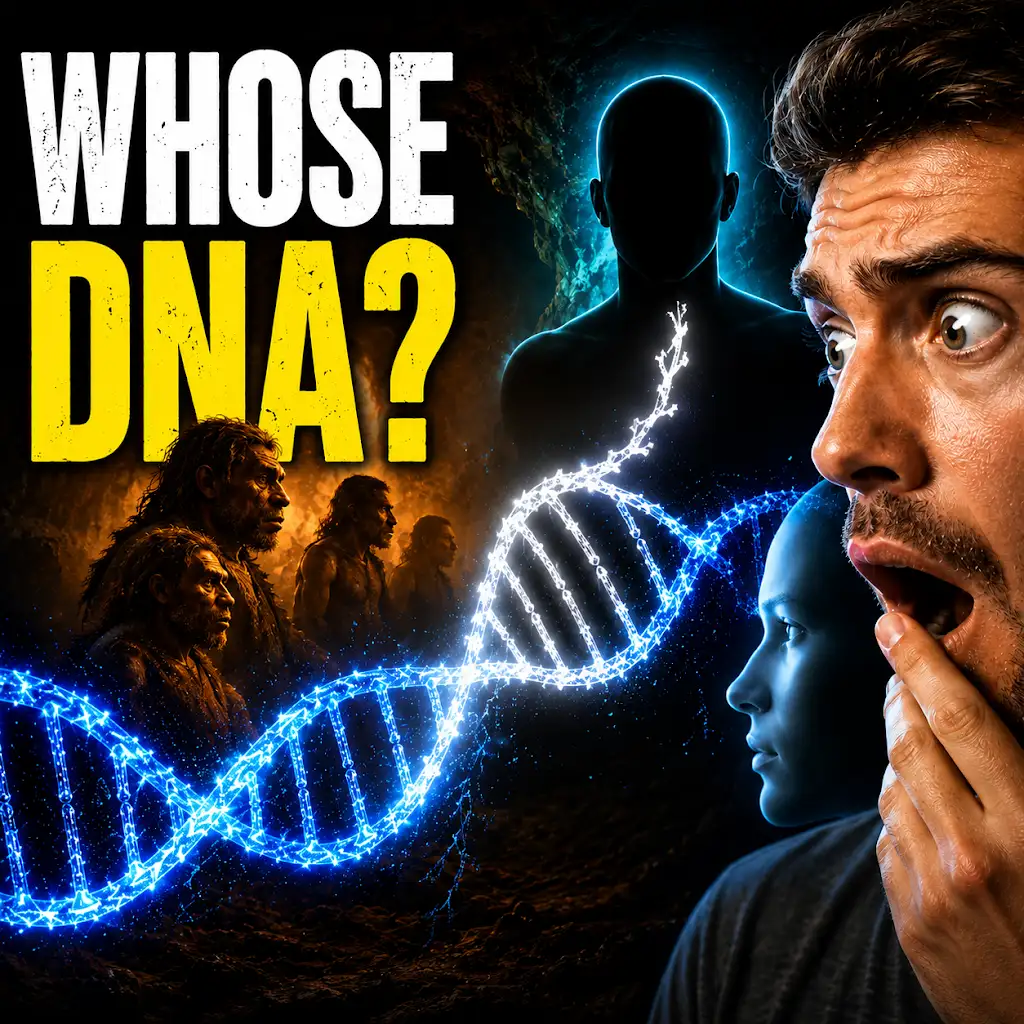
Scientists Found Two Unknown Human Ancestors Hiding in Your DNA
FAQs
What are the “lost branches” of human evolution?
The “lost branches” of human evolution refer to the various hominin species that have existed throughout history but are not direct ancestors of modern humans. These species include Homo habilis, Homo erectus, Homo naledi, and others.
How do these “lost branches” contribute to our understanding of human evolution?
Studying these “lost branches” provides valuable insights into the diversity of early human species, their behaviors, and their adaptations to different environments. It also helps scientists piece together the complex evolutionary tree of the Homo genus.
What are some key characteristics of these “lost branches” of human evolution?
These early hominin species exhibited a range of physical and behavioral traits, such as tool use, bipedalism, and different brain sizes. They lived in various habitats across Africa and Eurasia and adapted to different ecological niches.
How do scientists study and identify these “lost branches” of human evolution?
Scientists use a combination of fossil evidence, genetic analysis, and archaeological findings to study and identify these early hominin species. This includes analyzing skeletal remains, ancient DNA, and artifacts left behind by these ancient human relatives.
What can we learn from the study of these “lost branches” in human evolution?
Studying these “lost branches” helps us understand the complex and dynamic nature of human evolution, including the factors that led to the success and eventual dominance of Homo sapiens. It also sheds light on the diversity of human ancestors and the challenges they faced in their respective environments.