
The vast, unforgiving Arctic wilderness has long held a potent allure for explorers, its icy expanse a canvas for ambition and a graveyard for the ill-fated. Among the most enduring mysteries to emerge from this frozen frontier is the vanishing of Sir John Franklin’s 1845 expedition, a tragedy that has captivated imaginations for over a century and a half, sparking countless theories and fueling an insatiable quest for answers.
The allure of the Northwest Passage, a hypothetical sea route connecting the Atlantic and Pacific Oceans through the Arctic archipelago, had long captivated the maritime powers of Europe. For centuries, it had remained an elusive dream, a tantalizing promise of shorter trade routes and unprecedented global connectivity. By the mid-19th century, the British Royal Navy, with its unparalleled maritime prowess, was at the forefront of this ambitious endeavor. Sir John Franklin, a veteran explorer with a distinguished record in Arctic exploration, was chosen to lead what was intended to be a triumphant expedition to finally conquer this legendary passage.
A Distinguished Commander and His Crew
Sir John Franklin was no stranger to the challenges of the Arctic. He had participated in previous expeditions, including one to the Arctic coast of North America in the 1820s, where he earned a reputation for his resilience and leadership. By 1845, however, he was 59 years old, and some historians have questioned whether he was the most suitable choice for such a demanding undertaking, given his age and prior experiences. Nevertheless, his appointment was met with considerable enthusiasm, and the expedition was outfitted with the best resources available.
The HMS Erebus and HMS Terror, two stout bomb vessels retrofitted for Arctic exploration, formed the backbone of the fleet. These ships were equipped with steam engines, a relatively new technology for Arctic voyages, offering a potential advantage in navigating ice-choked waters. A crew of 129 men, a mix of seasoned sailors and officers, embarked on this perilous journey, their spirits high with the promise of glory and discovery. Among them were seasoned officers like Captain Francis Rawdon Moira Crozier, second-in-command, and James Fitzjames, captain of the Erebus, both highly respected figures.
The Promise of Scientific Advancement and National Pride
Beyond the immediate goal of finding the Northwest Passage, the Franklin expedition was also imbued with a broader purpose. The Victorian era was a period of immense scientific curiosity and nationalistic fervor. The Royal Society had a keen interest in the expedition’s potential to contribute to scientific knowledge, including studies of magnetism, meteorology, and the natural history of the Arctic. Furthermore, the successful completion of the Northwest Passage would have been a significant propaganda victory for Great Britain, solidifying its position as the preeminent global power. The expedition was, therefore, not merely a scientific or geographical undertaking, but a symbol of British ingenuity and imperial ambition.
The mysterious disappearance of Sir John Franklin’s lost expedition in the Arctic has captivated historians and adventurers alike for centuries. This tragic journey, which aimed to navigate the Northwest Passage, ended in disaster, leading to numerous theories and explorations in search of the truth. For those interested in exploring the broader context of historical explorations and their impact on modern understanding, a related article discussing the Battle of Belgium and its significance can be found at this link.
The Last Known Sighting: A Fading Hope
The expedition set sail from Greenhithe, England, on May 19, 1845, with much fanfare and public optimism. Their initial progress was well-documented. They reached Greenland in June and, after resupplying, entered the Arctic waters with the intention of sailing west through Lancaster Sound. The last confirmed sighting of the ships was by a whaling captain, the Reverend John Parker, off the coast of Baffin Island on July 26, 1845. This brief encounter, and the messages exchanged with Franklin’s crew, would become the last tangible link to the lost expedition for many years.
Whispers of Difficulty: Early Signs of Trouble
While the initial reports from the whaling ships painted a picture of a confident and well-provisioned expedition, subtle hints of future difficulties began to emerge. The whalers noted that the ice conditions were more severe than anticipated that year, a recurring theme in Arctic exploration. However, these were considered minor challenges that a seasoned commander like Franklin would undoubtedly overcome. The prevailing sentiment was one of confident expectation, with little inkling of the grim fate that awaited the sailors.
The Unanswered Silence: A Growing Concern
As the months turned into a year, and then another, the silence from the Franklin expedition grew deafening. Regular reports were expected, but none arrived. Initially, the Royal Navy and the public remained hopeful, attributing the lack of communication to the inherent difficulties of Arctic travel. However, as the years passed without any word, a gnawing anxiety began to set in. The initial optimism gave way to a profound sense of unease. The possibility of disaster, once unthinkable, started to loom larger.
The Search Begins: A Desperate Undertaking

The growing silence from Sir John Franklin’s expedition soon galvanized the British Admiralty into action. The initial absence of contact was concerning, but as months stretched into years with no word, the concern escalated into a full-blown crisis. The Royal Navy, having commissioned the expedition, felt a profound responsibility to discover its fate and, if possible, rescue any survivors. Thus began one of the most extensive and prolonged search efforts in the history of exploration.
The First Expeditions: Hope and Disappointment
The first search expeditions were launched in the early 1850s. These were not a unified, centrally organized effort in the beginning, but rather a series of private and governmental endeavors driven by a mixture of humanitarian concern and the persistent allure of the Northwest Passage. Lady Jane Franklin, Sir John’s devoted wife, became a tireless advocate for her husband, personally funding several expeditions and imploring the government to do more. These early searches, though brave and determined, met with little success. They scoured known routes, interviewed Inuit communities, and pieced together fragmented reports, but the fate of the Erebus and Terror remained shrouded in mystery.
The Role of the Inuit: Essential Witnesses
The indigenous Inuit people of the Arctic played a crucial, albeit often underestimated, role in the search for Franklin. Their intimate knowledge of the land and sea, their survival skills, and their observations were invaluable to the bewildered European search parties. While communication was often hampered by linguistic and cultural barriers, the Inuit provided eyewitness accounts and evidence that would gradually, and tragically, reveal the fate of the expedition. However, their accounts were often met with skepticism or misinterpretation by the British authorities, who struggled to reconcile the harsh realities described with their own preconceived notions of exploration and heroism.
Lady Jane Franklin’s Unwavering Resolve
Lady Jane Franklin’s dedication to finding her husband was extraordinary. She refused to accept the official pronouncements of the Admiralty and tirelessly lobbied for further searches. She poured her personal fortune into sponsoring expeditions, believing that somewhere in the vast Arctic, Sir John and his crew might still be alive. Her persistent efforts were instrumental in keeping the mystery of Franklin’s disappearance alive and in funding crucial investigations that eventually yielded important clues.
Tragic Revelations: The Grim Truth Emerges

For years, the fate of Franklin’s expedition remained a complete enigma. Then, through a series of discoveries and the invaluable testimony of the Inuit, the tragic truth began to surface. The pieces of the puzzle were agonizingly slow to fall into place, revealing a story of extreme hardship, starvation, and desperate survival.
The McClintock Expedition: Unearthing the Evidence
Perhaps the most significant expedition in unraveling the mystery was led by Captain Sir Leopold McClintock in 1857-1859. Armed with detailed information gathered from Inuit accounts, McClintock sailed aboard the Fox with the specific aim of finding definitive proof of the expedition’s fate. His voyage proved to be a watershed moment.
The King William Island Discovery
McClintock’s expedition made a crucial discovery on King William Island. There, they found a record left behind by the Franklin expedition, a simple tin containing written messages. This document, penned by Captain Fitzjames and Captain Crozier, revealed the dire straits of the crews. It detailed their decision to abandon the ships, trapped in the ice north of King William Island in the spring of 1848, and their attempt to march south to the Canadian mainland.
The Abandoned Ships and the Dying Men
The records further revealed that the Erebus and Terror had been beset by ice in the Victoria Strait in 1846 and remained frozen in place. The men, facing dwindling supplies and the realization that rescue was unlikely, made the fateful decision to abandon the vessels and attempt to walk to safety. The messages spoke of illness, starvation, and the overwhelming despair that had gripped the remaining crew. The discovery of remnants of the ships, including their scattered contents, provided further grim confirmation of the story.
Inuit Testimonies: The Human Cost
The Inuit testimonies were crucial in painting a more complete and harrowing picture. They spoke of encountering starving European men, their bodies emaciated and their spirits broken. Stories emerged of cannibalism, a desperate measure born out of unimaginable hunger, a taboo that few would have considered in less dire circumstances. These accounts, though deeply disturbing, provided the most direct evidence of the final days of the expedition and the immense suffering endured. They spoke of finding bodies scattered across the ice and on the shores, testament to the failed march for survival.
The mysterious disappearance of Sir John Franklin’s lost expedition in the Arctic has captivated historians and adventurers alike for centuries, prompting numerous theories and explorations to uncover the truth behind their fate. A fascinating aspect of this story is how it parallels modern challenges in logistics and supply chains, particularly in remote regions. For a deeper understanding of the complexities involved in navigating difficult terrains, you might find this article on supply chain risks insightful, as it highlights the importance of planning and adaptability in the face of uncertainty.
Lingering Questions and Enduring Theories: The Unfinished Puzzle
| Expedition Name | Year | Objective | Outcome |
|---|---|---|---|
| Sir John Franklin lost expedition | 1845 | Search for the Northwest Passage | Lost without a trace, all crew members perished |
Despite the significant discoveries made, the disappearance of Sir John Franklin’s expedition continues to hold a certain mystique. The official narrative, pieced together from records and Inuit testimonies, provides a clear and tragic account of their demise. However, several lingering questions and the sheer scale of the tragedy have spawned numerous alternative theories and ongoing debates.
The Role of Scurvy and Lead Poisoning: Medical Mysteries
One of the persistent theories surrounding the expedition’s demise is the impact of scurvy, a disease caused by vitamin C deficiency, which was rampant in long sea voyages. The preserved preserved food supplies likely lacked sufficient vitamin C, and the reliance on canned goods, often soldered with lead, has also raised concerns about lead poisoning.
The Contaminated Cans
The canned provisions were a marvel of the era, but their manufacturing process was flawed. The solder used to seal the cans contained a significant amount of lead. As the canned food was consumed, the lead would leach into the food, leading to chronic lead poisoning. Symptoms of lead poisoning can include neurological damage, abdominal pain, and anemia, all of which would have severely debilitated the crew and hindered their ability to survive.
The Debilitating Effects of Scurvy
Scurvy was a well-known scourge of maritime expeditions. Symptoms include fatigue, bleeding gums, tooth loss, and joint pain. In its advanced stages, scurvy is fatal. The prolonged reliance on preserved food, lacking fresh fruit and vegetables, would have made the crew highly susceptible to this debilitating disease. The combination of scurvy and lead poisoning would have rendered the men incredibly vulnerable to the harsh Arctic environment.
The Northwest Passage Achieved: A Pyrrhic Victory?
Ironically, the expedition, in its pursuit of the Northwest Passage, ultimately achieved it, albeit in the most tragic circumstances. The Erebus and Terror were discovered to be trapped in ice that, over time, would have allowed passage. The expedition’s final movements, as pieced together from records and Inuit accounts, indicate they were attempting to reach the mainland from the south of King William Island. Had they survived, they would have indeed been the first to chart a viable Northwest Passage.
Modern Investigations and Future Discoveries: The Unfolding Narrative
In recent decades, advanced technologies and renewed scientific interest have led to further investigations into the Franklin expedition. Underwater archaeology has played a significant role, with the discovery of the wrecks of HMS Erebus and HMS Terror in the Canadian Arctic in 2014 and 2016, respectively. These discoveries have provided invaluable insights into the ships’ condition and the final days of the crew.
The Wrecks of Erebus and Terror
The discovery of the two ships, remarkably well-preserved in the frigid Arctic waters, has been a monumental achievement. Sonar technology and remotely operated vehicles (ROVs) have allowed researchers to explore the wrecks, revealing details about their condition, the objects left behind, and even skeletal remains of some of the crew. These underwater sites are now considered national historic sites and are crucial for understanding the final moments of the expedition.
Ongoing Research and Unanswered Questions
Despite these incredible advancements, the mystery of the Franklin expedition is far from fully solved. Ongoing research continues to analyze artifacts recovered from the wrecks and surrounding areas, as well as further examination of historical records and oral traditions. The possibility of new discoveries, shedding even more light on the expedition’s fate, remains an exciting prospect. The enduring fascination with Sir John Franklin’s lost crew speaks to the timeless human desire to understand the unknown, to solve puzzles, and to honor the courage and resilience of those who venture into the uncharted territories of our world.
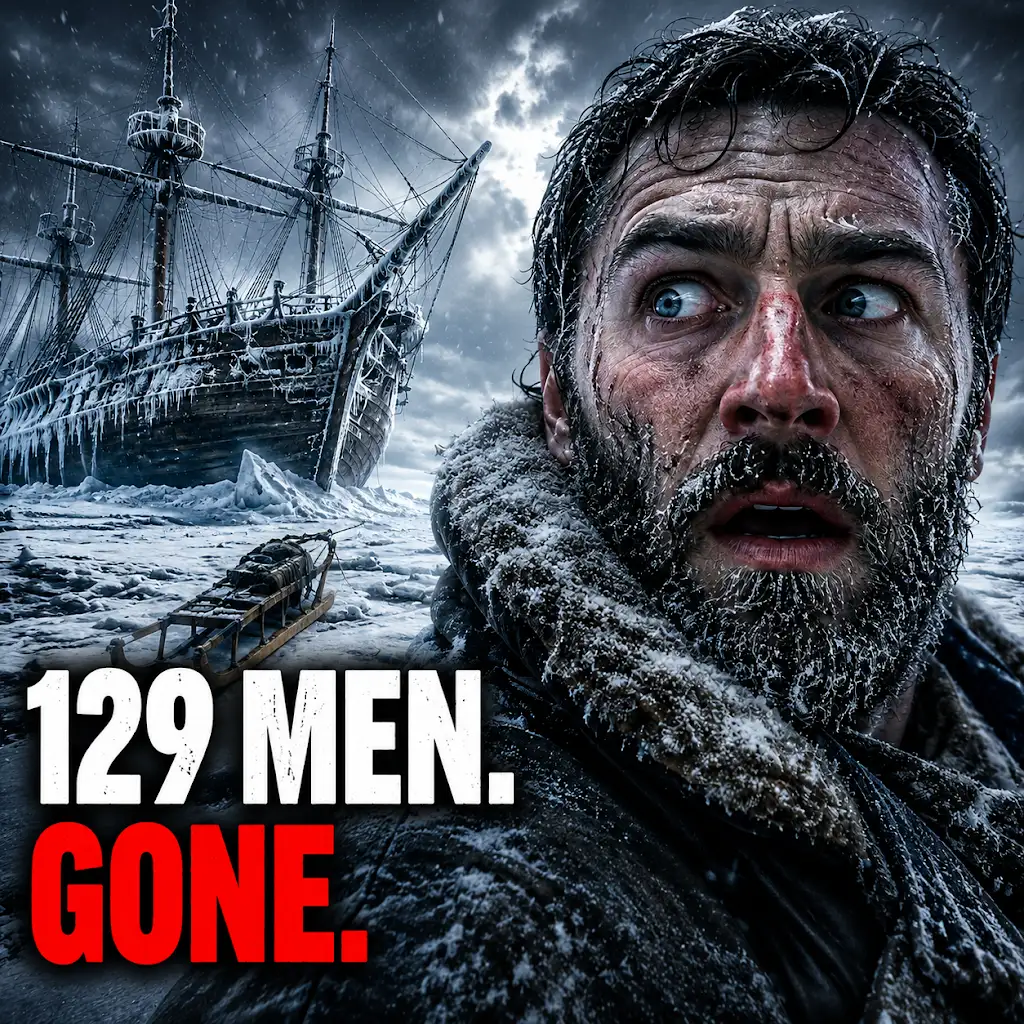
129 Men Vanished in the Arctic. Then We Found Their Ships.
FAQs
What was the Sir John Franklin lost expedition?
The Sir John Franklin lost expedition was a British voyage led by Captain Sir John Franklin in 1845 to navigate the Northwest Passage. The expedition consisted of two ships, HMS Erebus and HMS Terror, and aimed to explore and chart the last unnavigated section of the Northwest Passage.
What happened to the expedition?
The expedition encountered difficulties and became trapped in ice off King William Island in the Canadian Arctic. The crew eventually abandoned the ships and attempted to trek overland to safety. Unfortunately, none of the crew survived and the exact fate of the expedition remained a mystery for many years.
When was the fate of the expedition discovered?
The fate of the expedition remained unknown for over 150 years until the wrecks of HMS Erebus and HMS Terror were discovered in 2014 and 2016, respectively. The discovery shed light on the final moments of the ill-fated expedition and provided valuable insight into the challenges faced by the crew.
What were the contributing factors to the expedition’s failure?
Several factors contributed to the failure of the Sir John Franklin lost expedition, including harsh Arctic conditions, inadequate provisions, and lead poisoning from poorly sealed food tins. The crew’s lack of experience in Arctic exploration and the leadership of Sir John Franklin also played a role in the expedition’s tragic outcome.
What is the significance of the Sir John Franklin lost expedition?
The Sir John Franklin lost expedition is significant for its impact on Arctic exploration and the search for the Northwest Passage. The discovery of the wrecks has provided valuable historical and scientific insights, and the expedition’s story continues to capture the imagination of people around the world.