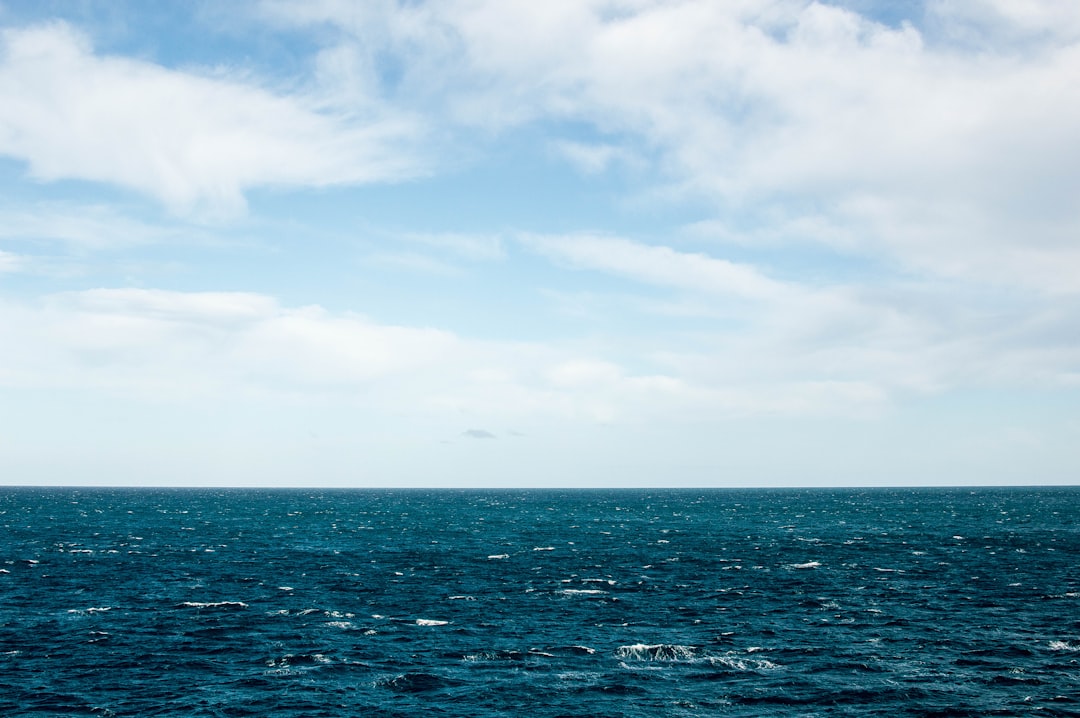
The sea, a vast and ancient entity, has long held secrets that defy human comprehension. Among its many enigmas, none has captured the imagination quite like the phenomenon of the disappearing and reappearing sea. This peculiar event, whispered about in hushed tones by coastal communities and documented in cryptic maritime logs, refers to stretches of ocean that, under specific and rare circumstances, vanish from sight, only to return days, weeks, or even months later as if nothing had occurred. It is a spectacle that challenges our understanding of geology, oceanography, and the very fabric of our planet.
The earliest recorded instances of the disappearing sea are not found in scientific journals but in the oral traditions and folklore of coastal peoples. These stories, passed down through generations, speak of places where the tide simply stopped coming in, where the seabed became exposed for miles, and where the water eventually returned with a surge that reshaped shorelines.
Legends of the Sunken Cities and Lost Shores
Many of these ancient tales are intertwined with myths of sunken cities and lost civilizations. It is said that during these periods of oceanic recession, the remnants of these forgotten metropolises would be revealed, their marble structures and intricate carvings shimmering under the sun before being reclaimed by the returning tide. For instance, in the Baltic region, there are legends of “Vineta,” a mythical island city that periodically vanishes beneath the waves, its treasures and echoes of its past life surfacing during prolonged periods of low sea levels. These stories, while fantastical, hint at a recurring natural event that deeply impacted the lives and beliefs of those who lived by the sea.
The Fisherman’s Tale: A Chronicle of the Unseen
Beyond the grander myths, there are countless anecdotal accounts from fishermen and sailors who claim to have witnessed these strange oceanic withdrawals. These are not tales of mere low tide, but of a dramatic and inexplicable absence of water. One recurring motif is the sudden exposure of vast, previously unseen terrains – strange rock formations, ancient forests, and even what appear to be the remains of shipwrecks that were not known to be lost in those waters. These accounts, often dismissed as exaggeration or misinterpretation, nonetheless form a consistent thread throughout maritime history, suggesting a phenomenon that has been observed for centuries.
The Psychological Impact: Fear and Reverence
The psychological impact of witnessing the sea disappear and then return cannot be overstated. For communities whose livelihoods depend on the sea, such an event would be both terrifying and awe-inspiring. It would foster a deep sense of reverence for the ocean’s power and an understanding that its moods were not always predictable or easily explained. This respect, perhaps bordering on fear, likely contributed to the embellished nature of some of the folklore, as people struggled to rationalize an event that seemed to defy the fundamental laws of nature as they understood them.
In recent discussions about climate change and its impact on communities, the phenomenon of disappearing and reappearing seas has garnered significant attention. This intriguing topic is closely related to the plight of climate refugees, who are forced to leave their homes due to rising sea levels and extreme weather events. For a deeper understanding of this pressing issue, you can read more in the article on climate refugees and the growing crisis of displacement at this link.
Scientific Scrutiny: From Skepticism to Theory
For centuries, the disappearing sea remained firmly in the realm of myth and legend. Scientific inquiry, bound by empirical evidence and established principles, found it difficult to reconcile these anecdotal accounts with known geological and oceanic processes. However, as scientific understanding advanced, and more sophisticated methods of observation became available, a closer examination of these peculiar events began.
The Challenge of Measurement and Observation
Early scientific investigations were hampered by the sheer rarity and unpredictability of the phenomenon. Without consistent observation points and reliable measurement tools, it was challenging to collect data that could be scientifically validated. Many accounts were dismissed as misinterpretations of extreme tidal events, storm surges, or localized geological shifts. The lack of concrete, reproducible evidence made it difficult to convince the scientific community of the phenomenon’s existence.
The Role of Extreme Tidal Forces
As oceanography and seismology developed, scientists began to consider extreme tidal forces as a potential explanation. The gravitational pull of the moon and sun can create significant tidal bulges, and in rare instances, particularly in enclosed or semi-enclosed bodies of water, these forces, combined with specific seabed topography, could theoretically lead to dramatic shifts in water levels. However, this explanation often fell short of accounting for the complete disappearance of water from vast areas.
Tectonic Activity and Submarine Landslides
The role of tectonic activity also came under scrutiny. Submarine earthquakes and volcanic eruptions can cause massive displacement of water, leading to tsunamis. It was theorized that in certain geological settings, a significant submarine landslide or a sudden subsidence of the seabed could temporarily “trap” or divert large volumes of water, leading to its apparent disappearance from certain regions. The subsequent release of this trapped water could then explain its reappearance.
The Influence of Ocean Currents and Gyres
Another area of investigation focused on the complex interplay of ocean currents and gyres. These massive circulating water masses can influence sea levels over vast distances. It was hypothesized that a disruption or significant shift in these currents, perhaps triggered by an unusual combination of atmospheric and oceanic conditions, could lead to a temporary and localized drawdown of water.
Documented Incidents: When Science Met the Unexplained

Despite the challenges, a growing number of documented incidents, supported by more rigorous observation and even some early technological means, began to lend credence to the idea of a disappearing and reappearing sea. These events, though still rare, provided crucial case studies for scientific investigation.
The ‘Great Tide’ of 1930: A Coastal Community Bewildered
One of the most frequently cited and well-documented incidents occurred in 1930 along a stretch of the coast of Newfoundland, Canada. Locals reported that for several days, the sea retreated an astonishing distance, exposing miles of seabed that had never been seen before. Fishermen found their boats stranded on muddy flats, and the usual rhythmic ebb and flow of the tide vanished. The event culminated in a rapid and powerful surge of water, which returned the sea to its normal levels, leaving behind a sense of bewildered awe and a coastline subtly altered. This event was documented by local authorities and later became a subject of interest for oceanographers studying extreme tidal phenomena.
The ‘Silent Withdrawal’ of the North Sea: A Maritime Mystery
In the mid-20th century, several reports emerged from mariners in the North Sea describing a peculiar “silent withdrawal” of water. Instead of a dramatic recession, the sea level seemed to subtly but steadily decrease over a period of days, exposing sandbanks and wrecks that were usually submerged. This was followed by a gradual return to normal levels. These accounts, though less sensational than the Newfoundland incident, suggested a different manifestation of the same phenomenon, perhaps a more gradual and less visually dramatic process.
The Arctic Anomaly: A Frozen Disappearance
Perhaps the most perplexing accounts come from the Arctic regions, where the sea ice often complicates observations. There are reports, albeit fewer and often harder to verify, of large areas of open water inexplicably freezing over and then thawing rapidly, as if the water itself had momentarily ceased to exist. While the freezing and thawing of the Arctic Ocean are natural processes, the speed and suddenness described in some of these accounts suggest a deviation from the norm, hinting at a more profound interaction with geological or atmospheric forces.
Modern Satellite Data: A Glimmer of Confirmation
In recent decades, the advent of sophisticated satellite technology has provided a new lens through which to view oceanic phenomena. While no satellite has definitively captured a full-scale disappearing and reappearing sea event in progress, high-resolution satellite imagery has revealed subtle and localized anomalies in sea levels that, when analyzed in conjunction with other data, could potentially be indicative of the underlying processes. Scientists are increasingly using satellite altimetry to monitor sea level changes and to identify unusual drawdown events that might warrant further investigation.
Explaining the Unexplainable: Emerging Scientific Theories

The accumulated evidence, from ancient folklore to modern scientific observation, has spurred the development of more comprehensive theories to explain the disappearing and reappearing sea. These theories often involve a complex interplay of geological, oceanic, and atmospheric factors.
The Lunar Resonance Theory: A Cosmic Dance
One of the more captivating theories posits a phenomenon known as “lunar resonance.” This theory suggests that under very specific astronomical alignments and geographical conditions, the gravitational pull of the moon could, in rare instances, interact with the Earth’s crust and oceanic basin in a way that creates a temporary “hollowing out” of the ocean. This would cause a significant drawdown of water from a particular region, with the water eventually returning as the celestial alignment changes. This theory, while still requiring further validation, offers a potential explanation for the dramatic and seemingly inexplicable nature of these events.
Subterranean Water Reservoirs and Release Mechanisms
Another line of inquiry focuses on the possibility of vast, previously undiscovered subterranean water reservoirs beneath the ocean floor. The theory suggests that geological fault lines or seismic activity could, at specific junctures, open or close pathways to these reservoirs. A temporary drainage of the sea into these subterranean systems, followed by a later release, could account for the disappearance and reappearance. The identification and mapping of such reservoirs remain a significant challenge.
Atmospheric Pressure Anomalies and Extreme Weather Patterns
The role of extreme and unusual atmospheric pressure systems cannot be discounted. While often associated with storms, unprecedented and prolonged periods of exceptionally low or high atmospheric pressure over specific oceanic regions could, in theory, influence sea levels. A sudden shift or collapse of such a pressure system might lead to a rapid influx of water, causing its apparent reappearance.
The “Oceanic Siphon” Hypothesis: A Gravity-Driven Drain
A more imaginative, yet scientifically plausible, hypothesis is the “oceanic siphon” theory. This theory proposes that in certain geological configurations, a combination of seabed topography and specific water density variations could create a natural siphon effect. This could draw water away from a region into deeper, more remote parts of the ocean, only to be released later when the conditions that created the siphon are disrupted. This is analogous to how water can be siphoned from one container to another.
In recent discussions about environmental changes, the phenomenon of the sea that disappeared and later returned has captured significant attention. This intriguing event highlights the dynamic nature of our planet’s ecosystems and the potential impacts of climate change. For those interested in understanding how such changes can affect our financial stability, there is a related article that discusses the importance of protecting your investments during uncertain times. You can read more about it in this insightful piece on protecting your 401k in an economic collapse.
The Future of Understanding: Research and Continued Exploration
| Sea Name | Location | Disappearance Period | Cause of Disappearance | Return Period | Current Status |
|---|---|---|---|---|---|
| Aral Sea | Central Asia (Kazakhstan, Uzbekistan) | 1960s – 2000s | Water diversion for irrigation | 2010s – Present (partial recovery) | Partially restored, still significantly reduced |
| Lake Urmia | Iran | 1990s – 2010s | Dams and water diversion | 2015 – Present (partial recovery) | Water levels rising, but below historical levels |
| Dead Sea | Border of Jordan and Israel | Ongoing decline since 1960s | Water diversion and mineral extraction | Efforts ongoing, no full return yet | Water level continues to drop, restoration projects underway |
The disappearing and reappearing sea remains one of Earth’s most compelling mysteries, a testament to the vast unknowns that still lie within our oceans. While scientific understanding has progressed, much remains to be discovered.
Advanced Oceanographic Monitoring
The future of understanding this phenomenon lies in enhanced oceanographic monitoring. The deployment of more sophisticated sensors, autonomous underwater vehicles (AUVs), and advanced satellite observation systems will be crucial in capturing future events in detail. This will provide the data necessary to test existing theories and develop new ones.
Interdisciplinary Collaboration: Geology, Oceanography, and Astronomy
A truly comprehensive understanding will likely require unprecedented collaboration between geologists, oceanographers, atmospheric scientists, and even astronomers. The complex interplay of forces involved suggests that a single discipline may not hold all the answers. Bringing together diverse expertise could unlock new insights.
The Search for Analogous Phenomena
Scientists are also looking for analogous phenomena in other fluid systems, both on Earth and potentially on other celestial bodies. Studying similar unusual fluid dynamics in different environments could provide clues and refine theoretical models for the disappearing sea.
Preserving the Mystery: A Reminder of Nature’s Power
Ultimately, the disappearing and reappearing sea serves as a powerful reminder of nature’s immense power and the limits of human knowledge. It is a phenomenon that continues to inspire awe and wonder, a testament to the fact that even in our modern age, the Earth still holds secrets that captivate and confound us, beckoning us to continue our quest for understanding. The ocean, in its boundless depths, may yet reveal more of its extraordinary tales.

A Dam Brought the Aral Sea Back—But Only Part of It
FAQs
What is the article about?
The article is about a sea that mysteriously disappeared and then reappeared.
Where did this event take place?
The event took place in the Aral Sea, located in Central Asia between Kazakhstan and Uzbekistan.
How did the sea disappear?
The sea disappeared due to large-scale irrigation projects that diverted water from the two rivers that fed into the Aral Sea, causing it to shrink significantly.
What were the consequences of the sea disappearing?
The disappearance of the sea led to environmental and economic consequences, including the loss of fishing industry, increased salinity levels, and the emergence of health issues due to the exposure of toxic chemicals in the dried-up seabed.
How did the sea come back?
Efforts to restore the Aral Sea involved redirecting water from the rivers back into the sea, leading to a gradual increase in water levels and the partial restoration of the sea.