
The frigid winds of the Arctic have long held secrets, whispered tales of lost ships and vanished crews. Among these enduring mysteries, the fate of Sir John Franklin’s Arctic expedition stands as one of the most poignant and perplexing. Tasked with charting the elusive Northwest Passage, Franklin’s two ships, HMS Erebus and HMS Terror, sailed into the icy embrace of the Canadian Arctic in 1845, never to be seen again. The subsequent decades were consumed by a relentless search, a saga of courage and heartbreak, culminating in the haunting discovery that the ships met their end in the treacherous waters surrounding King William Island. This desolate, windswept island, stark and unforgiving, became the final resting place for over a hundred brave souls, and the stage for a tragedy that continues to captivate and confound.
The allure of the Northwest Passage, a sea route connecting the Atlantic and Pacific Oceans through the Arctic, had captivated explorers for centuries. For Great Britain, it represented not only a lucrative trade route but also a paramount symbol of imperial ambition and naval prowess. In the mid-19th century, with a substantial portion of the passage still uncharted, the Royal Navy was eager to complete this final frontier of maritime exploration. It was in this atmosphere of nationalistic fervor and scientific curiosity that Sir John Franklin, a seasoned but arguably past-his-prime Arctic veteran, was appointed to lead the expedition.
Franklin’s Leadership and the Naval Establishment
Sir John Franklin was a man of considerable experience, having undertaken several Arctic voyages. He was known for his quiet determination and gentlemanly demeanor. However, critics would later point to his age (he was 59 at the outset of the expedition) and a perceived lack of decisive leadership in his previous expeditions. Despite these reservations, he was chosen by the Admiralty, a powerful body within the British government responsible for naval affairs. The selection process itself was steeped in tradition and patronage, with experienced officers like Franklin being favored for such prestigious and perilous undertakings. The Admiralty provided him with two state-of-the-art vessels, HMS Erebus and HMS Terror, specially reinforced and equipped for Arctic service, including a library of books, a surgeon, and ample provisions. The expedition was intended to be a triumph of British engineering, seamanship, and endurance.
The Ships: Technological Marvels of Their Time
HMS Erebus and HMS Terror were purpose-built bomb vessels, originally designed for bombarding fortified positions. Their robust construction and reinforced hulls made them ideal candidates for navigating the formidable Arctic ice. They were also equipped with the latest technology of the era, including steam engines, a novel addition for Arctic exploration that offered a degree of maneuverability previously unavailable. The engines, though powerful, were an experiment and consumed vast amounts of coal, a resource that would prove to be a critical factor in their eventual demise. The ships were provisioned with an abundance of food, including tins of preserved meat, soup, and vegetables, which were considered a significant advancement in food preservation. However, the long-term effectiveness of these provisions, particularly the tinning process, would tragically come into question in the years that followed. The expedition was also equipped with an array of scientific instruments for meteorological observations, magnetic surveys, and charting the coastline.
The mysterious fate of the Franklin Expedition, which sought to navigate the treacherous Arctic waters around King William Island, has captivated historians and adventurers alike for centuries. For those interested in exploring the broader context of ancient navigation techniques that may have influenced such expeditions, a related article titled “Unraveling the Ancient Navigation Mystery” provides fascinating insights. You can read it here: Unraveling the Ancient Navigation Mystery.
The Ice’s Embrace: The Final Encounters
The expedition sailed from Greenhithe, England, on May 19, 1845, with a crew of 129 men, including Sir John Franklin and his wife, Lady Jane Franklin, who famously saw him off. Initial reports indicated progress, with the ships sighted by a whaler in Baffin Bay in late July of that year. However, as the months turned into years, and no word was received, a gnawing unease began to spread through Britain. The Royal Navy, accustomed to receiving regular updates from its ships, found the silence deeply unsettling. The vastness of the Arctic, combined with the immense challenge of breaking through the ice, meant that the expedition could have encountered any number of unforeseen circumstances.
The Icy Prison: Caught in the Pack Ice
The precise moment when the expedition’s fate was sealed remains shrouded in mystery, but evidence gathered years later suggests that HMS Erebus and HMS Terror became trapped in the pack ice of the Beaufort Sea in the late summer or early autumn of 1846. The Arctic ice is a formidable and unpredictable force, capable of crushing even the strongest ships. Once ensnared, the vessels were at the mercy of the shifting floes, unable to break free. Reports from Inuit hunters, crucial sources of information in the subsequent decades, spoke of seeing two ships stuck in the ice, their masts visible above the frozen expanse. This chilling image of two majestic vessels rendered helpless by nature’s raw power painted a grim picture of their predicament.
The Growing Desperation: Awaiting a Thaw That Never Came
As winter descended, the situation for the trapped crews would have become increasingly dire. The limited space on board, the dwindling supplies of fresh food, and the psychological toll of prolonged confinement in a frozen environment would have taken their. The steam engines, vital for maneuvering, were likely rendered useless as the ice compressed around the hulls, and the ships became essentially immobile. The hope of a thaw that would free them would have diminished with each passing day. The men were facing starvation, scurvy, and the creeping despair that accompanies such a hopeless situation. The resilience and camaraderie that had sustained them in the initial stages of the voyage would have been severely tested.
The Harrowing March: King William Island and Its Tragic Legacy
The most compelling and tragic evidence regarding the fate of Franklin’s expedition emerged from the shores of King William Island. This large, uninhabited island, located in the Canadian Arctic Archipelago, lies in a region notorious for its treacherous ice conditions and the severe challenges it presents to navigation. Over the years, Inuit accounts, archaeological discoveries, and the deciphering of cryptic messages left behind by the expedition members painted a stark and heartbreaking picture of the final days of the men.
The Inuit Testimony: Echoes of Survival and Tragedy
The Inuit people, the indigenous inhabitants of the Arctic, were the first to encounter the survivors and the remnants of the Franklin expedition. Their oral histories, passed down through generations, provided invaluable, albeit often fragmented, insights into the expedition’s demise. Tales spoke of starving white men, their ships abandoned, dragging sledges across the ice. Some accounts described encounters with desperate survivors, their bodies emaciated and their faces etched with suffering. The Inuit also spoke of finding the remains of the men, scattered across the landscape, and of the grim evidence of cannibalism, a desperate measure born out of extreme starvation. These testimonies, initially met with skepticism by some, were later corroborated by archaeological finds, solidifying their authenticity and the horrifying reality of the expedition’s end.
The Archaeological Evidence: Frozen in Time
The decades of search expeditions, driven by Lady Jane Franklin’s unwavering determination, gradually uncovered tangible evidence of the expedition’s fate. Archaeological digs and surveys on King William Island and surrounding areas yielded a wealth of artifacts that confirmed the Inuit accounts and provided chilling details. These included:
- Human Remains: Skeletal remains, bearing the marks of cut and fracture consistent with attempts to extract marrow and flesh, provided undeniable proof of cannibalism. The discovery of these remains, often found scattered and poorly buried, spoke of a desperate struggle for survival.
- Campsites and Artifacts: The remnants of makeshift camps, along with personal belongings such as buttons, fragments of clothing, and tools, revealed the arduous journey of the survivors as they attempted to escape the frozen ships and trek south. The presence of large numbers of empty tin cans, many showing signs of being pried open, further underscored their desperate need for sustenance.
- The Message in the Ice: Perhaps the most significant discovery was the inscription found on a cairn on King William Island in 1859. This message, left by the expedition’s officers, revealed that the ships had been ice-bound for over a year and that the surviving crew had abandoned them, attempting to march south to the Canadian mainland. It detailed the mounting casualties from scurvy and starvation and provided the last known official communication from the expedition. The message also indicated the deaths of Sir John Franklin and many of his officers.
The Specter of Lead Poisoning: A Silent Killer
Beyond the immediate horrors of starvation and the elements, a more insidious threat may have contributed to the expedition’s demise: lead poisoning. The revolutionary tinning process used to preserve the food, while groundbreaking, inadvertently introduced lead into the expedition’s diet.
The Tinned Provisions: A Double-Edged Sword
The practice of canning food was relatively new in the mid-19th century. While it significantly improved the ability to provision long voyages, the cans were often sealed with solder containing a high percentage of lead. Over time, especially in the acidic environment of the preserved food, this lead could leach into the contents. The sheer volume of tinned goods consumed by the Franklin expedition meant that the cumulative exposure to lead could have been substantial.
The Symptoms and Their Devastating Impact
Lead poisoning, even in its chronic form, can have debilitating effects on the human body. Symptoms include severe abdominal pain, muscle weakness, neurological damage, and cognitive impairment. In the context of the Franklin expedition, this poisoning could have exacerbated the already dire conditions. It may have weakened the men’s immune systems, made them more susceptible to scurvy, and impaired their judgment and ability to make critical decisions. The psychological effects of lead poisoning could have further contributed to the breakdown of discipline and morale. Modern analysis of bone samples from discovered remains has provided further evidence of elevated lead levels, lending significant weight to this theory.
The mystery surrounding the Franklin Expedition on King William Island continues to captivate historians and adventurers alike, shedding light on the challenges faced by early explorers in the Arctic. As we delve into the complexities of historical exploration, it is interesting to consider how modern economies are evolving in different parts of the world. For instance, a recent article discusses the potential of Mexico as a new economic superpower, highlighting the shifts in global dynamics. You can read more about this intriguing topic in the article here.
The Enduring Enigma: Unanswered Questions and Modern Investigations
| Expedition Name | King William Island Franklin Expedition |
|---|---|
| Expedition Leader | Sir John Franklin |
| Departure Date | 1845 |
| Number of Crew | 129 |
| Purpose | Search for the Northwest Passage |
| Outcome | Entire crew perished |
Despite decades of dedicated search efforts and the wealth of information uncovered, the Franklin expedition remains a potent symbol of the Arctic’s enduring mystery. The story is a stark reminder of the unforgiving nature of the Arctic environment and the immense courage and resilience of those who ventured into its depths.
The Missing Pieces: Where Did the Ships Finally Lie?
While the fate of the crews is now largely understood, the precise location of HMS Erebus and HMS Terror remained elusive for over a century and a half. Their discovery would provide a final, tangible link to the lost men and offer invaluable insights into the conditions they faced. The Royal Canadian Navy, in partnership with Parks Canada and various research institutions, has conducted numerous search operations utilizing advanced sonar and underwater imaging technology. These efforts have been met with numerous false leads and heartbreaking near-misses.
The Revelation: The Discovery of the Wrecks
In 2014, a significant breakthrough occurred when an underwater search team, funded by the Arctic Research Foundation, discovered the wreck of HMS Erebus in Terror Bay, King William Island. The discovery was hailed as a monumental achievement, ending a 160-year search. Subsequent explorations in 2016 led to the discovery of HMS Terror in the waters of the Canadian Arctic, further north and remarkably well-preserved in the frigid depths. These discoveries have opened a new chapter in the investigation, allowing for detailed study of the ships themselves, offering unparalleled opportunities to understand the final days of the expedition. The wrecks are now protected as a National Historic Site of Canada, a testament to their historical and cultural significance.
The Legacy of Loss and the Spirit of Exploration
The Franklin expedition’s tragic end serves as a somber yet powerful reminder of the human cost of exploration. It underscores the immense risks involved in venturing into uncharted territories and the importance of learning from past mistakes. The story of Sir John Franklin and his doomed crew continues to inspire awe and a profound respect for the indomitable spirit of human curiosity and the relentless pursuit of knowledge, even in the face of overwhelming adversity. The mystery of King William Island has been partially unveiled, but the echoes of the Franklin expedition will forever resonate in the icy winds of the North, a poignant testament to a quest for discovery that ended in profound loss.
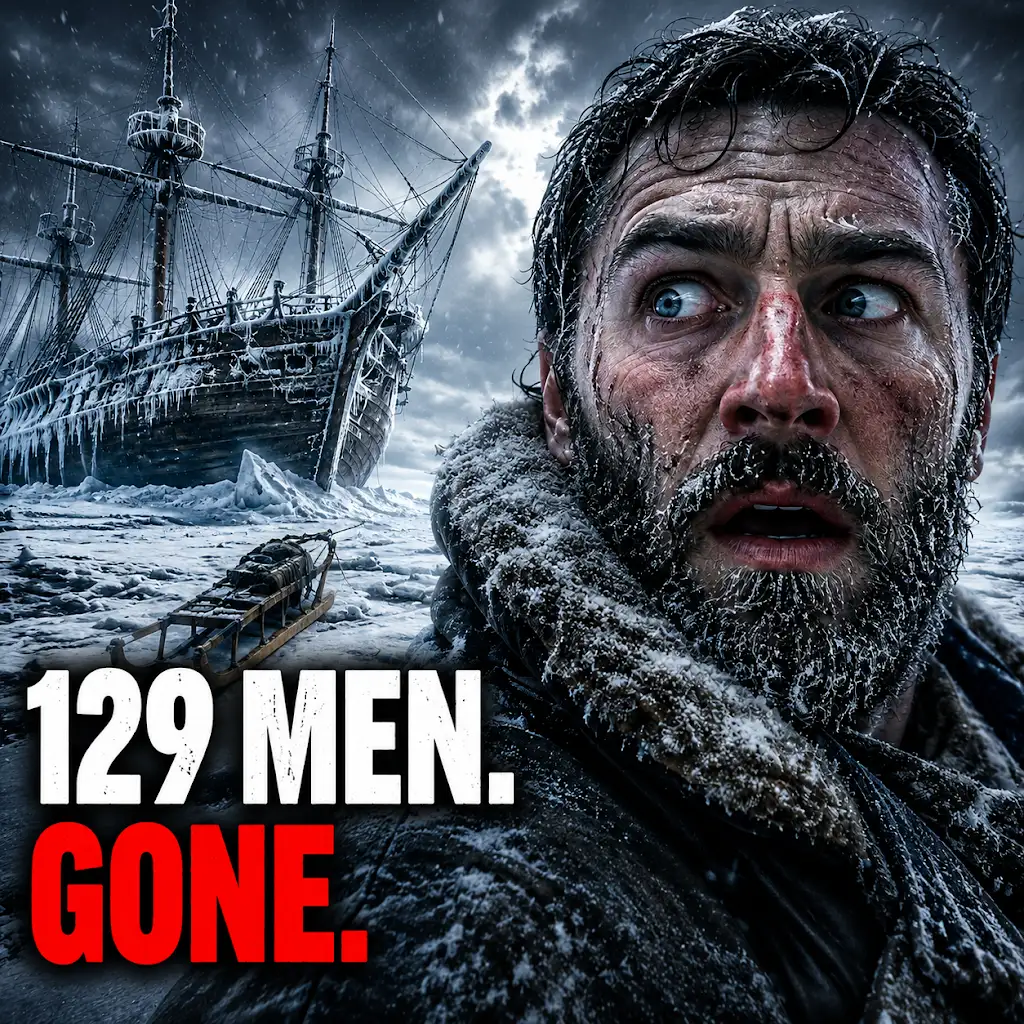
129 Men Vanished in the Arctic. Then We Found Their Ships.
FAQs
What is the Franklin Expedition?
The Franklin Expedition was a British voyage led by Captain Sir John Franklin in 1845 to find the Northwest Passage. The expedition’s two ships, HMS Erebus and HMS Terror, became trapped in ice and the entire crew perished.
Where is King William Island located?
King William Island is located in the Canadian Arctic Archipelago, in the territory of Nunavut, Canada. It is situated between the Canadian mainland and Victoria Island.
What happened to the crew of the Franklin Expedition?
After the ships became trapped in ice, the crew attempted to trek overland to safety. However, they were unprepared for the harsh Arctic conditions and many succumbed to exposure, starvation, and disease. There were no survivors from the expedition.
What is the significance of King William Island in the Franklin Expedition?
King William Island is significant in the Franklin Expedition as it is where the crew abandoned their ships and attempted to make their way to safety. The island is also where many of the crew’s remains and artifacts have been discovered.
What is the current status of the Franklin Expedition’s ships?
The wreck of HMS Erebus was discovered in 2014, and the wreck of HMS Terror was found in 2016. Both ships are now protected as national historic sites and efforts are ongoing to preserve and study the artifacts found at the wreck sites.