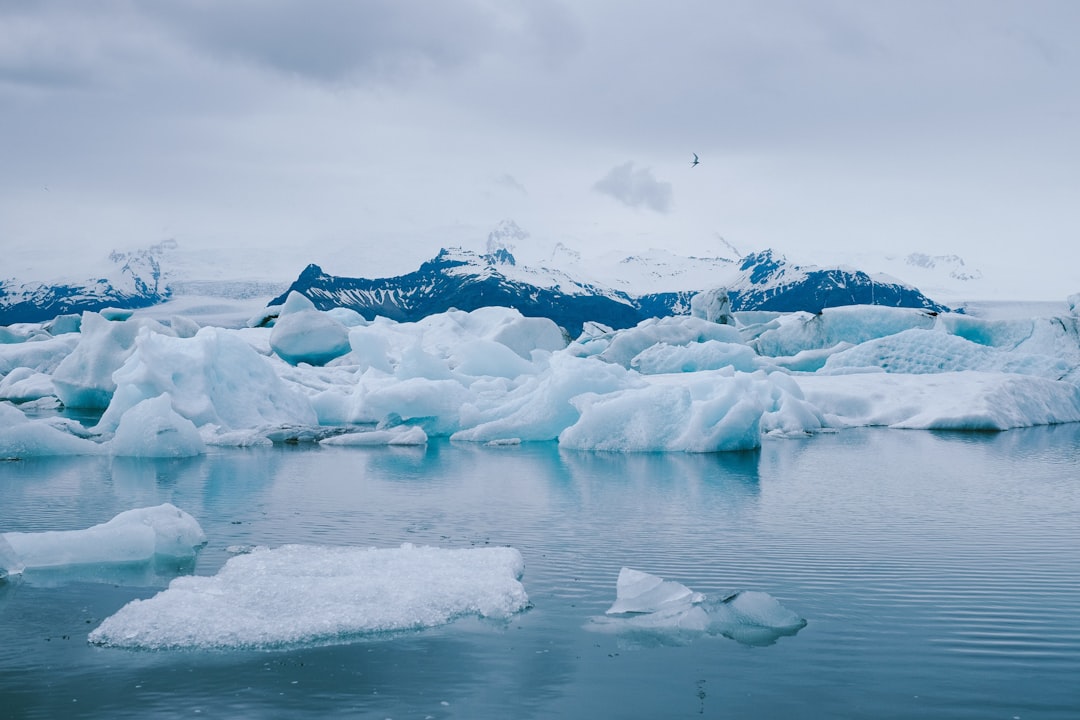
The unassuming hulks dotting landscapes worldwide, from Scandinavian fjords to the sweeping plains of North America, are silent witnesses to an epic journey. These colossal rocks, some weighing as much as a small house, lie incongruously far from their presumed origins, hinting at powerful forces that shaped the Earth. Their presence is a geological riddle, a testament to the mind-boggling capacity of ice to move mountains, or at least, their fragments. This is the enduring mystery of glacial boulders.
Glacial boulders, often referred to as glacial erratics, are rocks that have been transported and deposited by glaciers. The term “erratic” itself speaks to their peculiar placement. They are out of place, often standing alone in fields, perched precariously on hillsides, or embedded in the bedrock of areas where the surrounding geology offers no hint of their parent material. This incongruity is the very essence of their mystery. A granite boulder might be found resting on a sandstone plain, or a piece of volcanic rock might lie miles from any known volcanic activity. Their existence demands an explanation for how such massive objects could be moved, often over vast distances, and deposited with such singularity.
The Geological Fingerprint: Identifying the Origin
The first step in unraveling the mystery is to understand where these stones came from. Geologists employ a variety of techniques to trace the provenance of glacial boulders.
Mineralogical Analysis: A Rock’s Autobiography
Each rock type possesses a unique mineralogical composition, like a fingerprint. By examining the types of minerals present, their proportions, and their specific characteristics, geologists can often determine the general rock family to which the erratic belongs. Is it igneous, sedimentary, or metamorphic? Does it contain quartz, feldspar, mica, or more exotic minerals? This initial assessment narrows down the potential source regions.
Petrographic Examination: Unpacking the Details
Under a microscope, a petrographic analysis delves deeper, revealing the texture and relationships between the minerals. This can provide even more specific clues about the rock’s formation environment. For instance, the presence of certain crystal structures or the way minerals are intergrown can indicate whether the rock formed from molten magma cooling slowly deep within the Earth, or from a more rapid cooling process.
Geochemical Signatures: The Isotopic Clues
More advanced techniques involve geochemical analysis, particularly isotopic dating. Different rock formations have distinct ratios of stable and radioactive isotopes. By measuring these ratios within a glacial boulder, geologists can often match it to a specific geological formation elsewhere. This is akin to matching a suspect’s DNA to a database.
Field Reconnaissance: The Search for the Parent Rock
Once a potential source region is identified through laboratory analysis, geologists embark on field expeditions. The aim is to find the bedrock formation that matches the erratics’ characteristics. This can be a painstaking process, involving traversing vast areas, mapping geological formations, and collecting samples for comparison. Success in finding the parent rock solidifies the connection and confirms the boulder’s journey.
The Enigma of Distance: How Far Have They Traveled?
The distance traveled by glacial erratics is a significant factor in the mystery. Some have been moved only a few miles, while others have been ferried hundreds, even thousands, of miles from their origin. This capacity for long-distance transport is directly linked to the immense power of glaciers.
Local Erratic Transport: The Immediate Neighborhood
Many erratics are found relatively close to their source. These are typically moved during the advance and retreat of a glacier, picked up and deposited within the same general region. The local topography and the direction of ice flow play a significant role in determining where these shorter-distance travelers end up.
Continental-Scale Migrations: The True Giants
The most awe-inspiring erratics are those that have undertaken continental journeys. These boulders are the result of massive ice sheets that once covered vast swathes of continents. Their movement is a testament to the sheer scale of glacial activity, with ice masses behaving like slow-moving rivers of unimaginable power, capable of carving landscapes and transporting anything in their path.
Glaciers are fascinating natural phenomena that not only shape landscapes but also transport massive boulders over great distances. This process, known as glacial plucking, occurs when glaciers freeze onto rocks and pull them away as they move. For a deeper understanding of how natural forces can influence economies and environments, you might find it interesting to read about the potential rise of Mexico as an economic superpower in the article found here: Is Mexico the New Economic Superpower?. This article explores the interplay between geography, resources, and economic development, much like how glaciers shape the physical world around us.
The Unstoppable Force: Glacial Dynamics and Boulder Transport
The primary mechanism behind glacial boulders’ remarkable journeys lies in the very nature of glaciers. Far from being static blocks of ice, glaciers are dynamic, flowing masses that exert immense erosional and transportational power. Understanding how they move is key to demystifying these geological anomalies.
Glacier Formation: The Genesis of Ice Giants
Glaciers begin their lives in regions where snow accumulates over many years, far exceeding the rate of melting. This persistent accumulation compresses the snow under its own weight, transforming it into granular ice and eventually into a dense, interlocking mass of ice crystals.
Snowfall Accumulation: The Starting Point
The process begins in high-altitude or high-latitude regions where temperatures remain consistently cold enough for snow to persist. Seasonal snowfall that doesn’t melt completely in summer acts as the raw material.
Compression and Transformation: From Fluffy to Solid
As more snow falls, the accumulated layers are compressed. The delicate, star-shaped crystals lose their air pockets, becoming more rounded and densely packed. This process, called firnification, gradually transforms the snow into a more solid form.
Glacial Ice Formation: The Birth of a Glacier
Eventually, under immense pressure and through a process of regelation (the melting and refreezing of ice), the firn coalesces into a solid, crystalline ice mass – glacial ice. This ice is often bluish in color due to the way it absorbs light.
Glacier Movement: The Mighty Flow
Once formed, glacial ice is not static. Under the influence of gravity and its own weight, it begins to flow. This movement, though often imperceptible to the naked eye, is a powerful force shaping the Earth’s surface.
Basal Slip: Sliding on a Watery Cushion
One of the primary mechanisms of glacier movement is basal slip. Layers of meltwater can form at the base of a glacier, either from geothermal heat or from the pressure of the overlying ice. This layer of water acts as a lubricant, allowing the glacier to slide over the bedrock.
Internal Deformation: The Creeping Flow
Even without basal slip, glacial ice can deform internally. The ice crystals themselves can slide past each other, and under immense pressure, the ice can flow like a very viscous fluid. This internal deformation contributes significantly to the glacier’s overall movement.
Crevasses and Seracs: Visible Evidence of Strain
The immense forces at play within a glacier are often visible on its surface in the form of crevasses (deep cracks) and seracs (jagged blocks of ice). These features are evidence of the differential movement and stress within the ice mass.
Boulder Entrapment: How Rocks Become Passengers
As glaciers move, they relentlessly sculpt the landscape. Rocks and soil on the ground are eroded and incorporated into the glacial ice. Larger fragments, including boulders, are particularly effective at this process, acting like bulldozers, plowing through the terrain.
Plucking and Quarrying: The Glacier’s Grip
One of the most effective ways glaciers entrain boulders is through a process called plucking or quarrying. Meltwater seeps into cracks in the bedrock beneath the glacier. When the meltwater refreezes, it expands, widening the cracks. As the glacier moves, it pulls away fragments of rock, including large boulders, locking them into the ice.
Basal Loading: The Weight of the World
As glaciers flow, they pick up debris from the ground. Larger rocks, like boulders, are often incorporated into the basal layers of the ice. The immense pressure of the overlying ice can even deform softer rocks, embedding them firmly within the glacial mass.
####englacial Debris: Buried Treasures
Boulders can also be carried within the ice itself (englacial debris) rather than just at the base. These are rocks that were picked up by earlier glacier movements, potentially from avalanches or rockfalls, and were then buried as new layers of snow and ice accumulated.
The Retreat and Revelation: Glacial Deposition
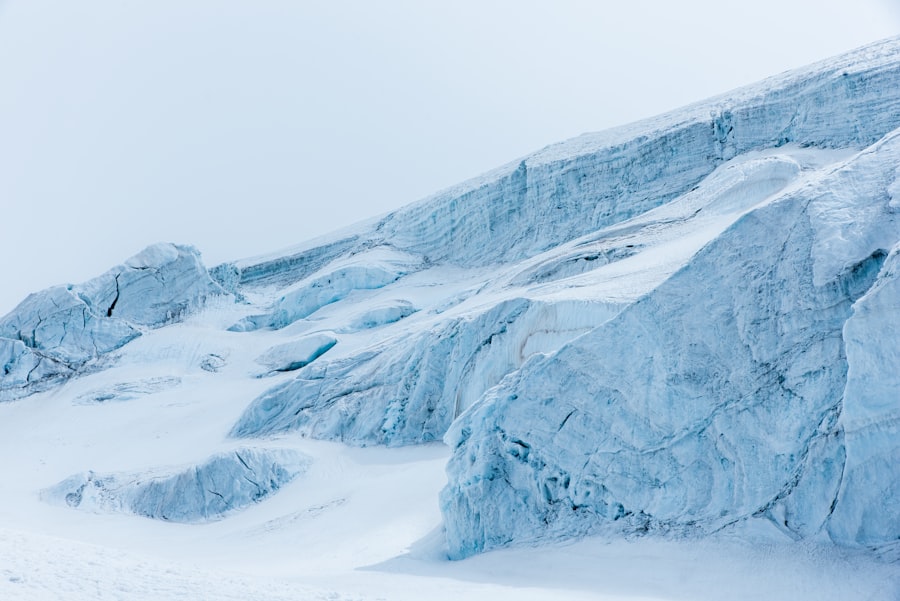
The journey of a glacial boulder doesn’t end with its entrapment. When glaciers melt and retreat, they release their accumulated debris, leaving behind the enigmatic erratics that have puzzled observers for centuries.
The Meltdown: Releasing the Load
As glacial ice melts, the rocks and debris it carries are deposited. The rate of melting and the dynamics of the retreating glacier dictate how and where these materials are laid down.
Ice-Contact Deposits: The Immediate Aftermath
When a glacier melts rapidly, large masses of ice can break off and persist for some time. Boulders that were part of these detached ice blocks are often dropped directly onto the underlying landscape as the ice melts away. This can result in boulders being deposited in seemingly precarious positions.
Outwash Plains: The Rivers of Meltwater
Meltwater from glaciers often forms braided rivers that carry sediment and debris away from the ice front. Larger rocks, including boulders, can be transported considerable distances by these powerful meltwater streams before being deposited on broad outwash plains. These deposits are often stratified and sorted by size.
Till: The Unsorted Hoard
Till is a type of glacial deposit that is characterized by its unsorted mixture of sediment, from fine clay to large boulders. It is formed directly by the movement of glacial ice, which deposits everything it carries without significant sorting or stratification. Glacial boulders found within till are a common sight and indicate that they were carried directly by the ice and then deposited as it melted.
The Legacy of Deposition: Landscape Storytellers
The way glacial boulders are deposited provides crucial clues about the history of glaciation in a region. Their type, size, location, and association with other glacial features help geologists reconstruct the past.
Lone Giants: Striking and Significant
Single, large boulders perched in prominent locations often represent a dramatic deposition event. They may have been carried by a particularly powerful tongue of ice or deposited as a large chunk of ice melted. Their isolation makes them all the more striking and ignites curiosity.
Boulder Fields: A Jumbled Tapestry
Extensive fields of boulders signify areas where glaciers deposited a significant amount of debris. These fields can vary in density and size of the erratics, offering insights into the erosional capacity of the ice and the types of rock it encountered.
Perched Boulders: defying Gravity
The sight of a large boulder balanced precariously on a smaller rock or bedrock outcropping is particularly intriguing. These “perched boulders” are often the result of selective melting of the supporting ice or sediment, leaving the harder rock in place.
Theories and Evidence: Piecing Together the Past
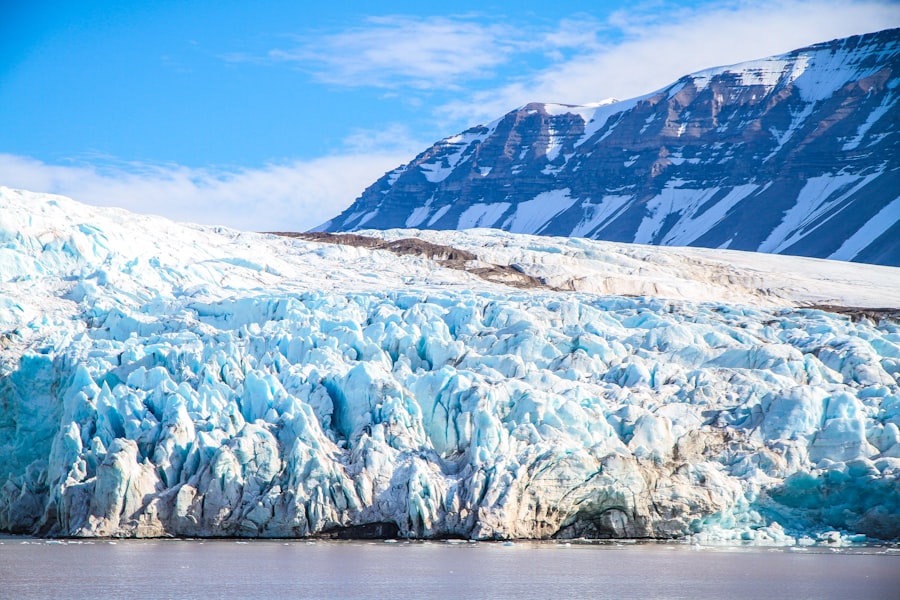
The mystery of glacial boulders has captivated scientists for centuries, leading to the development of various theories and the accumulation of extensive evidence to explain their origin and transport.
Early Observations and Ideas: The Dawn of Geological Inquiry
Before the formalization of glacial theory, various explanations were proposed for the presence of erratics. These ranged from biblical floods to the actions of unknown giants.
The Great Flood Hypothesis: A Universal Catalyst
In earlier times, many geological phenomena were attributed to a universal flood. Floods, the thinking went, could carry and deposit large rocks. However, the scale and specificity of erratic distribution challenged this notion.
Dispersal by Icebergs: a Partial Explanation
As the understanding of geological processes evolved, the idea of icebergs carrying rocks was proposed. While icebergs do transport rocks, especially in marine environments, this explanation struggled to account for the vast number of erratics found far inland on continents.
The Birth of Glacial Theory: Louis Agassiz’s Vision
The modern understanding of glacial erratics owes a significant debt to the work of Swiss geologist Louis Agassiz. In the mid-19th century, Agassiz championed the idea that much of Europe and North America had once been covered by enormous ice sheets.
The Alpine Evidence: Observing Ice in Motion
Agassiz conducted extensive studies of the Alps, observing the movement of glaciers and their erosional features. He noted how rocks became embedded in the ice and were transported as the glaciers flowed.
Extrapolating to Past Ice Ages: The Continental Vision
Agassiz extrapolated his findings from the Alps to explain the presence of erratics across vast continental landscapes. He proposed that similar, albeit much larger, ice sheets had once covered these areas, actively transporting rocks over immense distances.
Supporting Evidence: The Cornerstones of Understanding
Agassiz’s revolutionary ideas were met with skepticism, but a growing body of evidence from geologists around the world provided compelling support for glacial theory.
Striations and U-Shaped Valleys: The Ice’s Carving Marks
Geologists observed glacial striations – parallel grooves and scratches – on bedrock surfaces, consistent with rocks being dragged by moving ice. They also identified U-shaped valleys, a distinct landform carved by glaciers, as opposed to the V-shaped valleys carved by rivers.
Moraines: The Piles of Glacial Debris
Moraines, which are ridges or mounds of unsorted glacial debris, are direct evidence of glacial deposition. The presence of erratics within moraines further solidified the link between these formations and the transport of rocks by ice.
Till Deposits: The Unsorted Signature
The widespread occurrence of till, as described earlier, provided undeniable proof of glacial deposition. Boulders within till deposits were direct remnants of the ice’s transport capabilities.
Glaciers are fascinating natural phenomena that not only shape landscapes but also transport massive boulders over great distances. The process of glacial movement involves the slow flow of ice, which can pick up and carry large rocks, depositing them in new locations as the glacier retreats. For a deeper understanding of how such natural processes can impact our environment and technology, you might find it interesting to read about securing communication lines in space, as discussed in this article on best practices for cislunar communication. You can explore it further by following this link: securing communication lines.
Modern Insights and Ongoing Research: Refining the Picture
| Glacier Movement Metric | Measurement |
|---|---|
| Glacier Speed | 1-5 meters per day |
| Boulder Size | Several meters in diameter |
| Distance Traveled | Up to several kilometers |
| Force Exerted | Thousands of tons |
While the fundamental principles of glacial transport are well-established, modern research continues to refine our understanding of the intricate processes involved and to explore the nuances of glacial boulder movement.
The Role of Subglacial Environments: Beneath the Ice
Much of the action of boulder transport occurs in the subglacial environment – the complex zone between the glacier’s base and the underlying bedrock.
Meltwater Channels and Sedimentary Basins
The dynamics of meltwater flow beneath glaciers can significantly influence debris transport. Understanding the development of subglacial channels and the formation of sedimentary basins provides insights into how rocks are eroded, entrained, and transported.
Ice-Subsidence and Sediment Loading
The weight of the ice can cause the underlying land to subside. This subsidence, coupled with the accumulation of sediment, can create conditions conducive to the incorporation of boulders into the ice in surprising ways.
Glacial Hydrology: The Water Beneath the Ice
The presence and movement of water at the base of glaciers are critical factors in their flow and erosional capacity.
Subglacial Water Systems: Lubrication and Erosion
The intricate network of subglacial water systems acts as a lubricant, facilitating basal slip. This water also plays a crucial role in eroding the bedrock and plucking rock fragments, including boulders.
Proglacial Lakes and Meltwater Streams: The Outwash Story
The lakes and streams that form in front of retreating glaciers (proglacial environments) are equally important. They continue the transport and deposition of sediment, creating the landscapes where many erratics are found today.
Computer Modeling and Paleoglaciology: Recreating the Ice Ages
Modern technology allows geologists to create sophisticated computer models that simulate glacial processes. These models help to test hypotheses and to visualize the scale and dynamics of past ice sheets.
Simulating Ice Sheet Dynamics: Virtual Glaciers
Paleoglaciologists use these models to reconstruct the extent and behavior of ancient ice sheets, exploring how they might have transported specific types of boulders over vast distances.
Understanding Ice Sheet Collapse: The Final Release
Modeling also helps researchers understand the processes of ice sheet collapse and the subsequent deposition of glacial debris, shedding light on the final moments of a boulder’s journey.
The Continuing Mystery: Unanswered Questions
Despite centuries of research, some aspects of glacial boulder transport remain subjects of ongoing inquiry. The exact mechanisms of entrainment for the largest boulders, the precise pathways taken by ice sheets, and the long-term stability of erratic deposits are all areas where further research is ongoing. The mystery of glacial boulders, while largely demystified by the science of glaciology, continues to inspire awe and wonder, reminding us of the immense power of nature to sculpt our planet and leave behind its silent, stony witnesses.

The Boulder That Shouldn’t Exist
FAQs
1. How do glaciers move giant boulders?
Glaciers move giant boulders through a process called glacial plucking, where the ice freezes around the boulder and then carries it along as the glacier moves.
2. What factors contribute to the movement of giant boulders by glaciers?
The movement of giant boulders by glaciers is influenced by factors such as the weight and size of the boulders, the speed and direction of the glacier’s movement, and the presence of meltwater that can lubricate the glacier’s base.
3. Can glaciers transport boulders over long distances?
Yes, glaciers can transport giant boulders over long distances, sometimes hundreds of kilometers, as they flow and carve through the landscape.
4. What evidence supports the theory of glaciers moving giant boulders?
The presence of giant boulders in areas that were once covered by glaciers, as well as the distinct patterns of glacial striations and moraines, provide evidence of glaciers moving and depositing boulders.
5. How do scientists study the movement of giant boulders by glaciers?
Scientists study the movement of giant boulders by glaciers through field observations, satellite imagery, and the analysis of glacial deposits and landforms to understand the processes and mechanisms involved in boulder transport by glaciers.