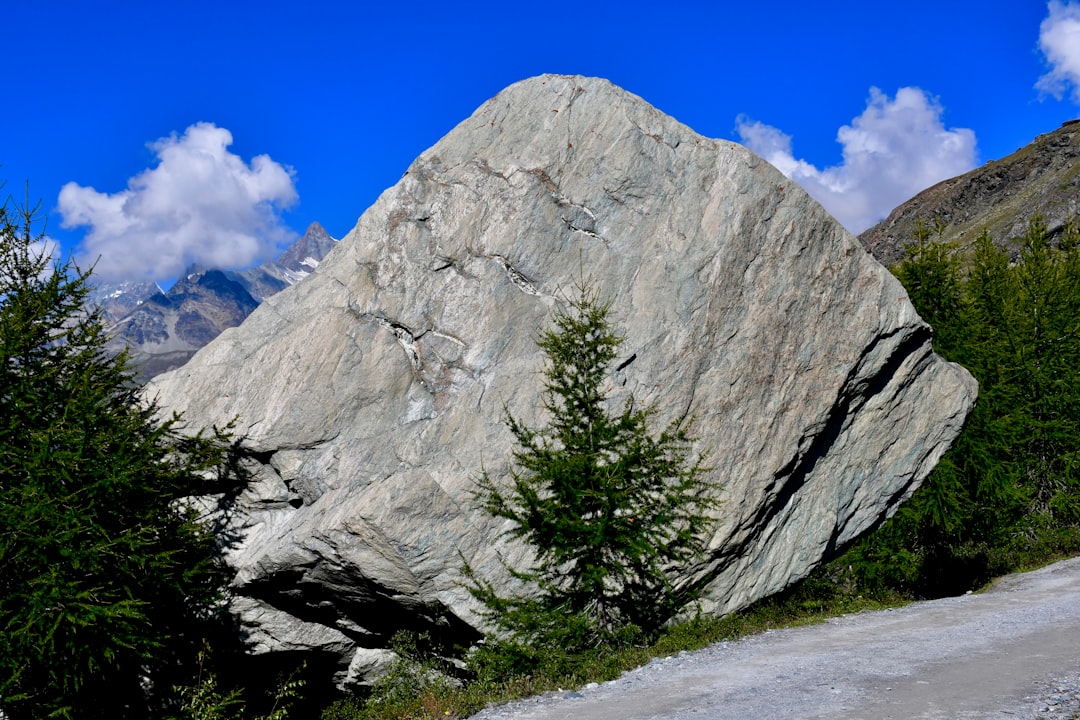
The colossal boulders, often weighing hundreds or even thousands of tons, sat incongruously upon the landscape. These geological anomalies, scattered across continents and islands alike, defied any local explanation for their presence. They were the glacial erratics, silent witnesses to a past so profound and powerful that it reshaped the very face of the Earth. Their existence, for centuries, posed a perplexing riddle, a tantalizing puzzle that challenged the understanding of natural philosophers and eventually ignited the curiosity of scientists across generations. The discovery and eventual unraveling of the mystery of glacial erratics is a story of keen observation, daring hypothesis, and the slow but steady march of scientific progress.
For millennia, humans have encountered these colossal stones. They dotted the rolling hills of New England, perched precariously on mountain slopes in the Alps, and lay embedded in the plains of North America and Europe. Their very nature was a stark contradiction to their surroundings.
An Unnatural Arrangement
Imagine the bewilderment of early settlers or inhabitants. A massive granite boulder, ripped from a mountain range hundreds of miles away, might sit atop a bedrock of entirely different composition, perhaps limestone or sandstone. There was no conceivable local quarry, no geological force strong enough within the immediate vicinity to transport and deposit such immense objects. The common wisdom of the time offered little to explain these out-of-place behemoths. Local legends often attributed their placement to giants or supernatural beings, a testament to the sheer impossibility of a natural explanation within their frame of reference.
The Challenge to Existing Theories
The prevailing geological theories of the era focused on the immediate, observable forces shaping the Earth. Volcanic activity, earthquakes, and erosion were understood, but none could account for the deliberate, widespread placement of such gargantuan stones. The idea of a cataclysmic flood, while capable of moving debris, struggled to explain the precise and often isolated nature of erratics, or their specific lithological origins. It was not until a more profound understanding of Earth’s history began to emerge that the true nature of these rogue rocks could be contemplated.
A glacial erratic is a large boulder that has been transported and deposited by glacial ice, often found in areas where the surrounding rock is different from the erratic itself. These fascinating geological features can provide insights into past glacial movements and the history of the Earth’s climate. For more intriguing information about ancient civilizations and their advanced technologies, which may have interacted with such natural phenomena, you can read this related article: Lost Secrets of Ancient Civilizations: Advanced Technology.
Early Hypotheses and the Seeds of Doubt
Long before the widespread acceptance of glaciers as powerful geological agents, thinkers grappled with the evidence presented by erratics. Their observations, though often incomplete or misattributed, laid the groundwork for future discoveries. It was a process of elimination, of discarding inadequate explanations in favor of something… bigger.
The “Deluge” Theory and its Limitations
One of the most enduring explanations for erratics, and for many other geological features, was the biblical Flood. Proponents of this theory suggested that the immense waters of the global deluge could have mobilized and transported vast quantities of rock, depositing them in their current, scattered locations. While this explanation offered a singular, grand event that could account for the movement of large objects, it failed to reconcile several key observations.
The Peculiar Placement
The Flood theory struggled to explain why erratics were not uniformly distributed. Why were they concentrated in certain regions and absent in others? Furthermore, the specific rock types of many erratics could be traced back to distinct mountain ranges, often far from any significant water body that would have existed during Noah’s time, even assuming a global flood. The idea of a slow, deliberate placement, rather than a chaotic wash, began to take root.
The Evidence of Abrasion
Another crucial observation that eluded the Flood theory was the characteristic abrasion and polishing often found on erratics. Many of these boulders bore smooth surfaces and distinctive striations, marks that suggested a grinding, scraping motion against other surfaces. The tumultuous currents of a flood, while capable of erosion, did not readily explain this specific type of wear and tear.
Early Thinkers and Their Bold Suggestions
Despite the dominance of the Flood narrative, a few persistent observers began to question the established dogma. They noticed patterns, connections, and anomalies that pointed towards a less familiar, more powerful force.
Jean-Antoine de Luc and the Alps
The French geologist and naturalist Jean-Antoine de Luc, in the late 18th century, was one of the first to propose a non-flood explanation for erratics found in the Alps. He observed that many of these boulders originated from specific peaks in the high Alps and appeared to have been transported downwards. He theorized that large bodies of ice, perhaps from ancient ice sheets, might have been responsible for their movement. His ideas, however, were largely dismissed by the scientific establishment of his time, who favored the more conventional explanations.
William Buckland and the Glacial Connection
The English geologist William Buckland, a prominent figure in early 19th-century geology, also studied erratics. While he initially favored theories involving the upheaval of land or powerful currents, his later work began to acknowledge the possibility of ice as a transport mechanism, particularly in the context of his studies of ancient glacier activity. He noted the presence of smoothed and striated rock surfaces, which he recognized as similar to those produced by modern glaciers.
The Rise of the Glacier Theory
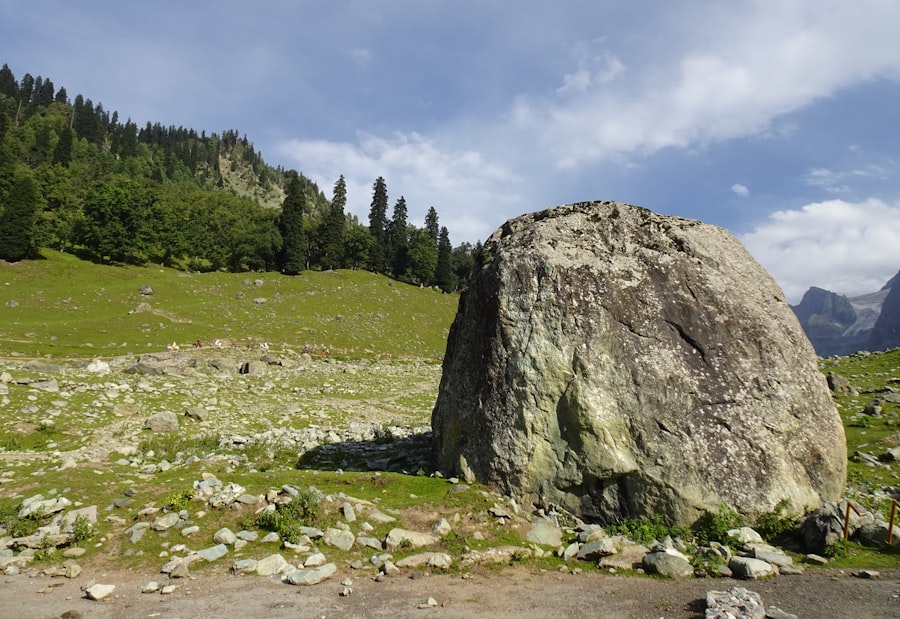
The persistent observations of individuals like de Luc and Buckland, coupled with a growing body of geological evidence, slowly began to shift the scientific consensus. The idea of a frozen past, of vast ice sheets that once covered much of the planet, began to take hold.
Louis Agassiz: The Champion of the Ice Age
The Swiss-born naturalist Louis Agassiz is widely credited with popularizing and providing compelling evidence for the “Ice Age” theory. His extensive fieldwork in the Alps in the 1830s and 1840s led him to observe firsthand the erosional power of glaciers – their ability to carve valleys, polish bedrock, and transport enormous rocks.
Field Observations in the Alps
Agassiz spent years meticulously studying the glaciers of the Alps. He observed how ice flowed and carried sediment, how it ground down the underlying rock, and how it deposited debris at its edges. He saw boulders perched in surprising locations, with scratch marks on their surfaces that perfectly matched the striations he found on rocks beneath the glaciers. He documented the “moraines” – accumulations of glacial debris – that provided clear evidence of ice movement.
Connecting the Dots: From Alps to Continents
Crucially, Agassiz recognized that the features he observed in the Alps were not unique. He saw similar evidence of glacial action – smoothed and striated bedrock, scattered large boulders, and distinct depositional landforms – in the Jura Mountains and in other regions that had no active glaciers. He began to hypothesize that these features were the remnants of a much larger, past glacial event that had once covered vast swathes of Europe.
The Wider Acceptance of Glacial Epochs
Agassiz’s groundbreaking work, presented with fervor and conviction, gradually began to sway the scientific community. His meticulously gathered evidence and compelling arguments provided a coherent explanation for the existence of glacial erratics and a host of other puzzling geological phenomena. The concept of an “Ice Age,” or “Glacial Epoch,” moved from the realm of speculative hypothesis to established scientific fact.
The Lithological Connection
A key piece of evidence that cemented the glacier theory was the ability to trace the lithology – the rock type and geological origin – of many erratics. Geologists could identify a specific granite erratic in Scotland and trace its origin to a particular granite formation in Scandinavia, hundreds of miles away. This precise lithological correlation, impossible to explain by any other mechanism at the time, strongly supported the idea of large-scale ice transport.
Striations and Polishing: The Fingerprints of Ice
The characteristic striations and polished surfaces on erratics became universally recognized as indelible fingerprints of glacial movement. These marks were not random; they often ran in consistent directions, mirroring the paths of ancient ice flows. The sheer force and grinding action of moving ice, laden with sediment and debris, were now understood to be the architects of these peculiar rock surfaces.
How Did These Giants Move? The Mechanics of Glacial Transport
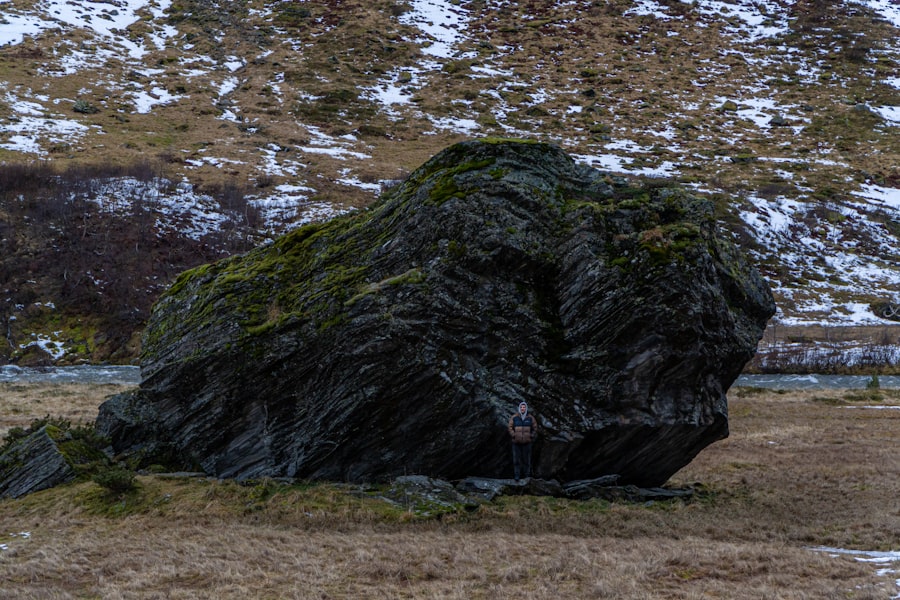
Understanding how glaciers moved colossal boulders was the next significant hurdle. It required a grasp of the immense power and dynamics of these frozen rivers. The process was not a simple matter of floating or rolling; it was a testament to the slow, inexorable force of ice.
The Formation and Scale of Ice Sheets
The Ice Age was not characterized by isolated mountain glaciers alone. It involved the formation of massive ice sheets, continental in scale, that covered entire landmasses. These ice sheets, kilometers thick in places, exerted immense pressure and flowed under their own weight.
Continental Glaciation
During the Pleistocene epoch, periods of intense glaciation occurred, during which ice sheets repeatedly advanced and retreated across North America, Europe, and Asia. These ice sheets were not static; they acted like enormous, slow-moving conveyor belts, carrying with them everything in their path.
The “Grinding” Power of Ice
As these ice sheets moved, they scraped and scoured the underlying bedrock. Embedded rocks and debris within the ice acted as a powerful abrasive, carving valleys, creating moraines, and picking up and transporting smaller rocks and boulders. The immense weight of the ice also played a crucial role in pressing and forcing larger rocks along the landscape.
The Transport Mechanisms
Several distinct mechanisms were responsible for the transport of erratics by glaciers:
Entrainment and Plucking
Glaciers would entrain, or pick up, rocks by freezing around them and then pulling them away from the bedrock as the ice moved. This “plucking” action is particularly effective at fractured or jointed rock formations, allowing ice to detach and carry large chunks.
Subglacial Transport
Once picked up, rocks were carried within or beneath the ice. Larger boulders might rest on the base of the glacier, being pushed and dragged along the ground. Sediment and smaller debris were carried within the ice itself, contributing to its abrasive power.
Basal Sliding and Till Deposition
The movement of glaciers is often facilitated by basal sliding, where the ice slides over a layer of meltwater or saturated sediment. This process allows the entire ice mass, including its embedded load of rocks, to move more readily. As the ice melts, it deposits its load of debris, including erratics, in a relatively unsorted mixture known as till.
A glacial erratic is a large boulder that has been transported and deposited by glacial ice, often found far from its original location. These fascinating geological features provide insight into the movement of glaciers and the history of the Earth’s climate. For those interested in exploring how natural landscapes can influence human development, a related article discusses the thriving industrial real estate market in Mexico and its connection to geographical features. You can read more about it in this article.
The Legacy of the Ice Age: Erratics as Historical Markers
| Aspect | Description |
|---|---|
| Definition | A glacial erratic is a piece of rock that differs from the size and type of rock native to the area in which it rests. It was transported by a glacier, and left behind when the glacier melted. |
| Formation | Glacial erratics are formed when glaciers pick up rocks and boulders as they move, and then deposit them in a different location when the glacier melts. |
| Size | Glacial erratics can range in size from small pebbles to large boulders, and can be found in a variety of landscapes. |
| Geological Significance | Glacial erratics can provide valuable information about the movement and behavior of glaciers in the past, and can also help geologists understand the geological history of an area. |
Today, glacial erratics are no longer a baffling mystery but rather invaluable historical markers, providing crucial insights into Earth’s past climatic conditions and geological processes. They serve as tangible evidence of a time when the planet was a vastly different place.
Reconstructing Past Ice Flows
By studying the lithology and known geological sources of erratics, geologists can reconstruct the direction and extent of past ice flows. The distribution patterns of erratics originating from specific rock formations allow scientists to map the paths of ancient ice sheets and understand their dynamics.
Mapping Ancient Glacial Boundaries
The presence of erratics in a region clearly indicates that it was once covered by ice. By mapping the outermost limits of erratic distribution, scientists can delineate the boundaries of past ice sheets and understand the extent of glacial coverage during different periods of the Ice Age.
Understanding Ice Sheet Dynamics
The types and sizes of erratics found in specific locations, along with their depositional context (e.g., in moraines), provide clues about the processes of ice movement and debris transport. Scientists can infer the thickness of ice sheets, the rate of ice flow, and the amount of material that was transported.
Insights into Climate Change and Geological History
The study of erratics also contributes to our broader understanding of Earth’s climate history and geological processes. They are silent witnesses to periods of profound global cooling and offer evidence of the immense power of natural forces to reshape landscapes over vast timescales.
Evidence of Past Climates
The existence of widespread glaciation, as evidenced by erratics, is a clear indicator of past periods of significantly colder global temperatures. Studying the timing and extent of these glacial periods helps scientists understand the natural cycles of Earth’s climate and the factors that drive them.
The Slow but Powerful Forces of Nature
Glacial erratics serve as a powerful reminder that geological processes can operate over immense timescales and with incredible force. The movement of these colossal stones, driven by the immense power of ice, underscores the transformative capabilities of natural phenomena and the slow, enduring nature of geological change. The mystery of the erratics, once a source of wonder and confusion, has now become a testament to the power of scientific inquiry and the profound revelations hidden within the Earth’s ancient history. They are not just rocks; they are storytellers of a lost world, waiting to be read by those who seek to understand the planet’s deep past.

The Boulder That Shouldn’t Exist
FAQs
What is a glacial erratic?
A glacial erratic is a large rock or boulder that has been transported and deposited by a glacier, often far from its original source.
How are glacial erratics formed?
Glacial erratics are formed when a glacier picks up rocks and boulders as it moves, and then deposits them in a different location as the glacier melts and retreats.
Where can glacial erratics be found?
Glacial erratics can be found in many different environments, including mountainous regions, coastal areas, and even in urban areas where glaciers once existed.
What are some examples of famous glacial erratics?
Some famous glacial erratics include the Madison Boulder in New Hampshire, USA, and the Big Rock in Alberta, Canada.
Why are glacial erratics important to study?
Studying glacial erratics can provide valuable information about the movement and behavior of glaciers in the past, as well as the geological history of a particular area.