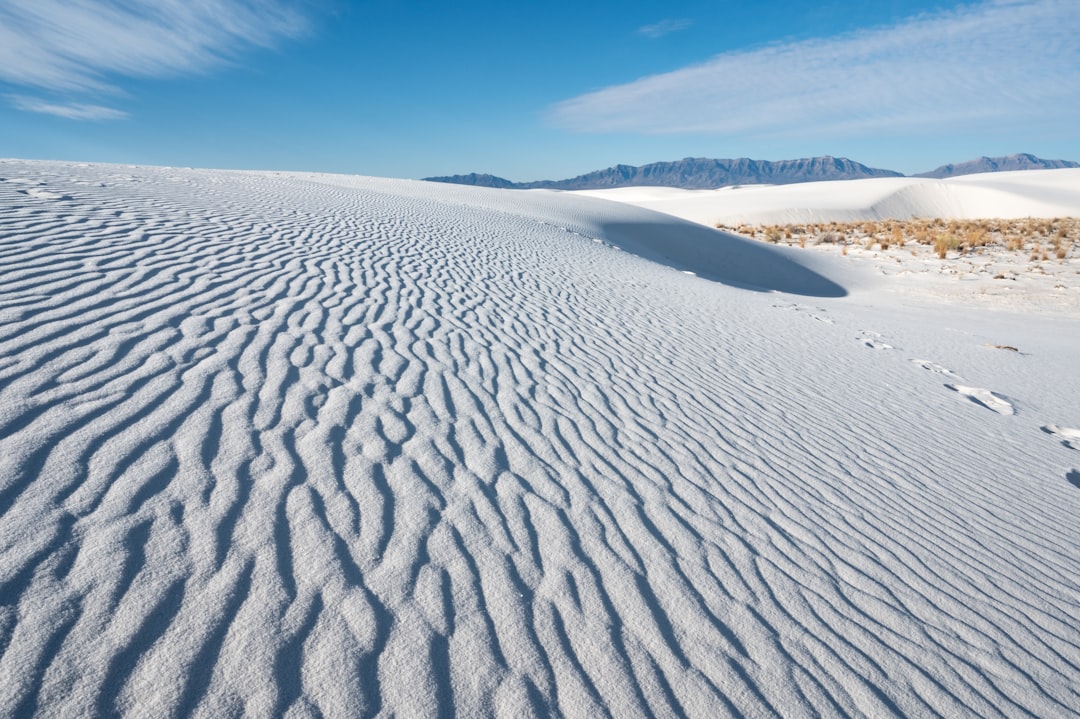
The pale dunes of White Sands National Park, a landscape sculpted by wind and time, have long held secrets. Among its most captivating enigmas were the ancient footprints, preserved in the gypsum sands, offering tantalizing glimpses into a prehistoric past. For decades, these ethereal impressions sparked debate, speculation, and a relentless quest for understanding. Then, a breakthrough occurred, a convergence of meticulous scientific inquiry and a touch of serendipity, that began to unravel the profound mystery of these ancient human and animal trails.
The gypsum dunes of White Sands National Park in New Mexico present a landscape unlike any other. Vast expanses of shimmering white sand stretch towards the horizon, creating an otherworldly panorama. But beneath this stunning beauty lies a geological and archaeological treasure trove. Embedded within the ancient lakebeds that once covered this region are fossilized footprints, a silent testament to life that roamed these lands millennia ago. These are not merely impressions in loose sand; they are preserved in layers of gypsum that, under specific conditions, harden and capture ephemeral moments in time.
A Glimpse into Deep Time
The discovery of these footprints was not a singular event, but rather a gradual accumulation of sightings and research. Early park rangers and visitors occasionally stumbled upon these remarkable traces, but it was the systematic archaeological surveys that truly brought them to light. The sheer number and variety of footprints were astounding. Some were clearly human, others belonged to ancient megafauna, and a significant portion were attributed to other now-extinct mammals. The significance lay not just in their existence, but in their depth and preservation, suggesting they were made when the ground was wet and pliable, later dried and hardened by the sun, and then subsequently covered and protected by accumulating gypsum.
The Initial Puzzles
The initial interpretations of these footprints were fraught with challenges. Dating the layers of gypsum in which they were found proved difficult, leading to a wide range of estimated ages. Some scientists posited that the footprints belonged to early humans who arrived in the Americas much earlier than widely accepted scientific consensus. Others focused on the animal tracks, using them to reconstruct the paleoecology of the region, identifying species that were no longer present. The interplay between human and animal footprints also raised intriguing questions about their interactions, potential prey-predator relationships, and the shared landscape they occupied. The lack of associated artifacts, beyond the footprints themselves, further deepened the mystery, leaving scientists to piece together narratives from fragmented evidence.
The discovery of ancient footprints at White Sands has sparked significant interest in understanding early human activity in North America. For those looking to explore related topics, an insightful article titled “The Shift to Southern US Manufacturing” delves into the broader implications of historical developments in the region, highlighting how past events shape current trends. You can read more about it here: The Shift to Southern US Manufacturing.
Dating the Past: A Chronological Quandary
The most significant hurdle in understanding the White Sands footprints was accurately dating them. Without a reliable timeline, contextualizing their presence and drawing meaningful conclusions about the inhabitants of the region remained elusive. Initial estimations, based on geological context and comparative studies, varied widely, creating a scientific debate that spanned years.
Radiocarbon’s Limitations
For many archaeological sites, radiocarbon dating is the gold standard. However, the gypsum environment presented a unique challenge. Gypsum itself contains carbon, and the process of its formation and deposition can incorporate carbon from various sources, both ancient and modern. This contamination can skew radiocarbon dates, making them unreliable for directly dating the gypsum layers or the organic material that might be associated with the footprints. Early attempts to use radiocarbon dating on organic material found in the vicinity yielded inconsistent and often problematic results, contributing to the uncertainty surrounding the age of the tracks.
Stratigraphy and Sedimentology: Building Blocks of Time
Archaeologists and geologists turned to more traditional, albeit complex, methods to establish a chronology. Stratigraphy, the study of layered rock or sediment, became crucial. By meticulously analyzing the sequence of sediment layers, researchers could infer the relative ages of the footprints – that is, which layers were deposited before or after others. Sedimentological analysis, focusing on the physical characteristics of the gypsum and surrounding sediments, provided further clues about the environmental conditions at the time the footprints were made, such as the presence of a shallow lake or ephemeral water bodies. These studies allowed for a more robust understanding of the sequence of events, even if absolute dates remained elusive.
The Breakthrough: Optically Stimulated Luminescence (OSL)

The true turning point in unraveling the White Sands mystery came with the application of advanced dating techniques, most notably Optically Stimulated Luminescence (OSL) dating. This method offered a way to directly date the sediments that preserved the footprints, bypassing the contamination issues associated with radiocarbon dating in this specific environment.
How OSL Works
OSL dating works by measuring the accumulated dose of natural radiation that mineral grains, such as quartz and feldspar, have absorbed since they were last exposed to sunlight. When these minerals are buried, they begin to absorb energy from radioactive elements in the surrounding soil. Sunlight effectively “zeroes out” this accumulated energy by releasing trapped electrons. When sediment is excavated, scientists can expose a sample to a laboratory light source and measure the light (luminescence) emitted. The intensity of this luminescence is directly proportional to the amount of radiation the sediment has absorbed since it was last exposed to sunlight, allowing for a precise calculation of the time elapsed.
Applying OSL to White Sands
Researchers meticulously collected samples of the gypsum sand layers directly above and below the human footprints. These layers, having been buried and protected from sunlight by subsequent sedimentation, provided the ideal conditions for OSL dating. The results were revolutionary. OSL dating provided a consistent and remarkably precise age range for the human footprints, placing them at approximately 21,000 to 23,000 years old. This was significantly older than many previous estimates and firmly placed these footprints within the Last Glacial Maximum, a period when large ice sheets covered much of North America.
Reconstructing Life at the Last Glacial Maximum

The new, precise dating of the White Sands footprints painted a vivid picture of human presence in North America at a time when the continent was dramatically different. The discovery shifted the scientific understanding of human migration and adaptation.
Humans in a Frozen World
The Last Glacial Maximum was a period of intense cold and significant sea-level drop. During this time, a land bridge, known as Beringia, connected Asia and North America, providing a potential route for early human migration. The White Sands footprints, dating to this period, suggested that humans were not only present but were actively inhabiting inland regions of North America, far from the hypothetical coastal migration routes. This raised questions about their resourcefulness and adaptability to a challenging environment.
The Animal Kingdom of Ancient White Sands
The footprints also revealed the presence of a fascinating array of now-extinct animals. These included giant ground sloths, dire wolves, saber-toothed cats, and mammoths. The tracks often intertwined with human footprints, offering direct evidence of cohabitation and potential interactions. Imagine a landscape where humans navigated alongside these colossal creatures, a stark contrast to the modern fauna of the region. The preservation of these tracks provided invaluable data for paleoecologists, allowing them to reconstruct the food webs, migration patterns, and ecological dynamics of this ancient ecosystem.
The Human Story Unfolds
The human footprints themselves told stories. Some were clearly made by adults, while others were undoubtedly from children. The gait and stride length provided insights into their physical characteristics and movement. The discovery of groups of footprints traveling together suggested communal activity, perhaps hunting parties or families on the move. The presence of footprints leading into and out of water bodies hinted at their interaction with the ancient lakes and rivers that characterized the region during the wetter climate of the glacial period. Each impression was a fragment of a lost narrative, waiting to be deciphered.
The discovery of ancient footprints at White Sands has sparked significant interest in understanding the early human presence in North America. These findings not only shed light on our ancestors but also raise questions about how climate changes have historically influenced human migration patterns. For a deeper insight into the ongoing challenges of displacement due to environmental factors, you can read about the current issues faced by climate refugees in this related article. The complexities of these situations highlight the interconnectedness of our past and present, making it essential to explore how such phenomena continue to shape human experiences. Check out the article on climate refugees for more information.
The Implications: A New Chapter in Human Migration History
| Category | Metrics |
|---|---|
| Location | New Mexico, United States |
| Area | 275 square miles |
| Footprints | Disappear quickly due to wind and weather |
| Visitor Center | Yes |
The unraveling of the White Sands footprint mystery has profound implications for our understanding of human migration into the Americas, demanding a re-evaluation of existing theories and opening new avenues of research.
Challenging the “Clovis First” Model
For decades, the prevailing theory for the peopling of the Americas was the “Clovis First” model, which proposed that the Clovis culture, characterized by distinctive fluted projectile points, represented the earliest widespread human presence in North America, dating to around 13,000 years ago. The White Sands footprints, dating to over 20,000 years ago, directly challenge this paradigm. They provide compelling evidence for pre-Clovis human occupation of the continent, pushing back the timeline of human arrival significantly.
Rethinking Migration Routes
The existence of early human populations in the interior of North America during the Last Glacial Maximum necessitates a re-evaluation of migration routes. While the Beringia land bridge remains a plausible pathway, the White Sands findings suggest that humans may have also utilized other routes or that their dispersal within the continent was more rapid and widespread than previously assumed. Some theories propose that humans may have arrived via coastal routes, hugging the Pacific coastline, and then moved inland. Others suggest a potential eastern migration route. The evidence from White Sands adds a crucial piece to this complex puzzle.
The Ongoing Search for Evidence
The White Sands discovery has ignited a renewed fervor in the search for other pre-Clovis sites across the Americas. Archaeologists are now more actively looking for evidence that predates the Clovis culture, revisiting existing sites with new dating techniques and exploring previously overlooked regions. The success at White Sands serves as a powerful incentive, demonstrating that definitive evidence for early human presence exists and can be found with the right approaches and technologies. The quest to understand the full scope of early human migration into the Americas is far from over, but the mystery of White Sands has undoubtedly provided a pivotal new chapter.

These Footprints Could Rewrite the Story of the First Americans
FAQs
What are the White Sands footprints?
The White Sands footprints are a series of human footprints preserved in the gypsum sand dunes of White Sands National Park in New Mexico. These footprints date back over 10,000 years and provide valuable insights into the lives of early inhabitants of the area.
How were the White Sands footprints preserved?
The footprints were preserved due to the unique geological conditions at White Sands. The gypsum sand dunes have a high level of calcium sulfate, which helped to solidify and preserve the footprints over thousands of years.
What do the White Sands footprints tell us about early inhabitants?
The footprints provide valuable information about the size, gait, and activities of the early inhabitants of the area. They offer insights into their hunting and gathering practices, as well as their interactions with the environment.
How were the White Sands footprints studied and analyzed?
Researchers used a combination of traditional archaeological methods and modern technology, such as 3D scanning and photogrammetry, to study and analyze the footprints. This allowed them to create detailed digital models and analyze the footprints without causing damage to the fragile gypsum surface.
What is the significance of the White Sands footprints?
The White Sands footprints are significant because they provide a rare and valuable glimpse into the lives of early inhabitants of North America. They offer important insights into human migration patterns, behavior, and adaptation to different environments. Additionally, they contribute to our understanding of the prehistoric cultural landscape of the region.