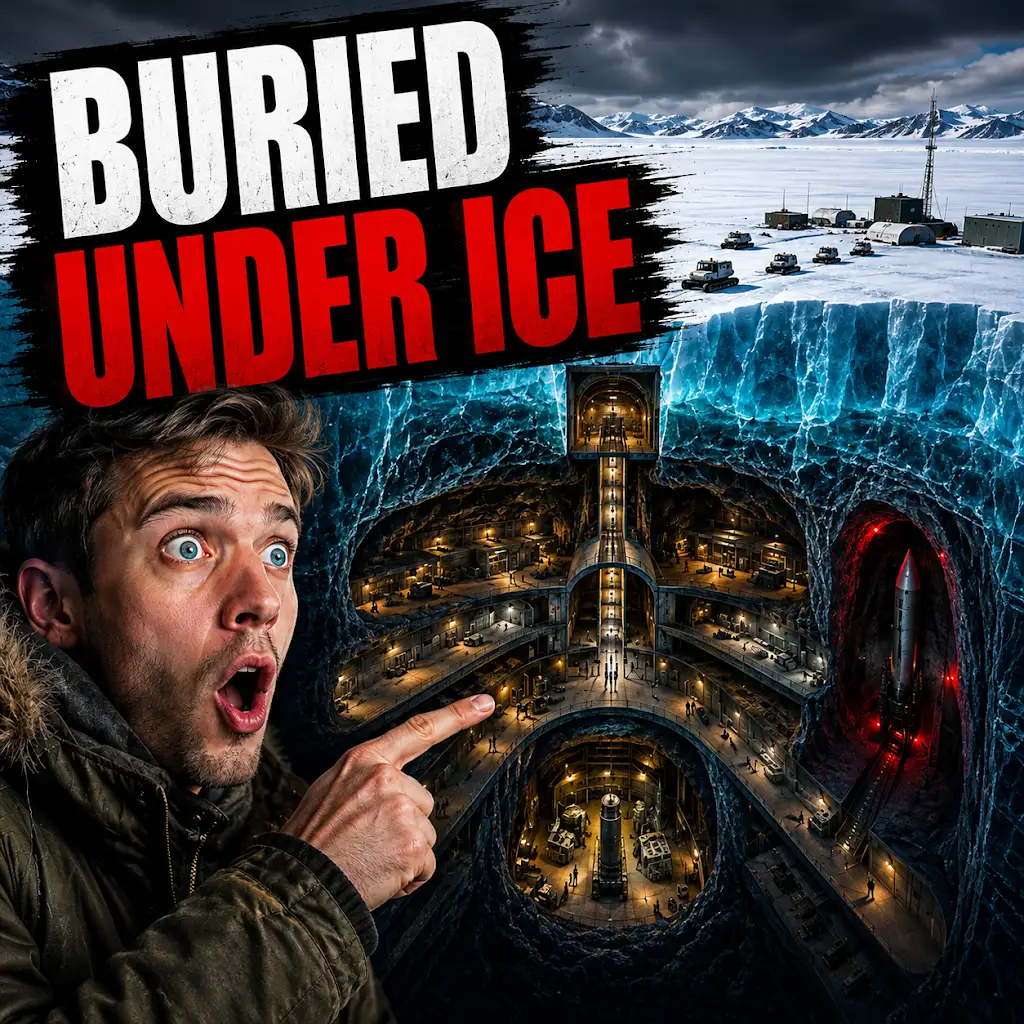
The whispers of a hidden metropolis, powered by the atom’s core and nestled deep beneath the Greenlandic ice, have long circulated in hushed tones. This is not a myth born of modern sci-fi, but a tantalizing historical reality, a testament to human ambition and the geopolitical currents of the Cold War. The story of Camp Century, and its underlying nuclear heart, is a saga of ingenuity, secrecy, and the ephemeral nature of even the most ambitious engineering feats.
The Strategic Imperative: A Forward Operating Base
The genesis of Camp Century, often referred to as the “city beneath the ice,” lies squarely in the heart of the Cold War. The United States, in an era of escalating tensions with the Soviet Union, sought to establish a formidable presence in the Arctic. This vast, frozen frontier, once an icy wasteland, was rapidly becoming a critical theatre of operations. The Arctic offered potential launch sites for intercontinental ballistic missiles and strategic bomber routes, making it a crucial battleground for strategic advantage. A permanent, operational base in Greenland, strategically positioned within striking distance of Soviet targets, was deemed essential. The concept was to create a facility that was not only functional but also largely invisible to Soviet reconnaissance, a hidden dagger poised in the north.
Project Iceworm: The Ambitious Plan
To realize this vision, the U.S. Army Corps of Engineers, in conjunction with the Danish government (as Greenland is an autonomous territory of Denmark), conceived Project Iceworm. The sheer audacity of the plan was breathtaking: to construct a sprawling military base kilometers beneath the surface of the Greenland ice sheet. The ice, a seemingly impenetrable shield, offered natural camouflage and insulation. The vision was to create a self-sustaining city, a veritable underground metropolis capable of housing thousands of personnel and housing critical military infrastructure. It was envisioned as a network of interconnected tunnels, fabricated on the surface and then pushed into the ice, creating a stable and concealed environment.
The Promise of Nuclear Power: Unlimited Energy for an Arctic Outpost
The greatest challenge in establishing a remote, frigid outpost like Camp Century was the seemingly insatiable demand for energy. Heating, lighting, and powering complex military systems in such an extreme environment would require a constant and substantial power source. Traditional fossil fuels would be logistically nightmarish to transport and store in such quantities and under such harsh conditions. The answer, revolutionary for its time, lay in the burgeoning field of nuclear energy. The U.S. Army envisioned a portable, compact nuclear reactor that could provide a virtually limitless supply of power to the base, ensuring its sustained operation without the need for constant resupply of fuel. This was the promise of the PM-2A reactor, the beating heart of the underground city.
The concept of a nuclear-powered city beneath Greenland raises intriguing questions about the future of energy and urban development in extreme environments. This idea parallels discussions in other regions, such as the militarization of the Moon’s South Pole, where strategic interests and resource management are becoming increasingly relevant. For more insights on this topic, you can read the article on the militarization of the Moon’s South Pole at this link.
The Technical Marvel: Unveiling the PM-2A Reactor
Design and Purpose: A Submarine-Inspired Solution
The Portable Medium Power Reactor, Model 2A (PM-2A) was a marvel of mid-20th-century engineering. Its design was heavily influenced by the technology developed for nuclear-powered submarines, which had already proven the viability of compact nuclear reactors for mobile applications. The primary objective for Camp Century was to provide reliable and abundant electricity and heat. The reactor was designed to be relatively small and modular, allowing for its transport and installation in a challenging Arctic environment. It was intended to be a closed-loop system, minimizing the risk of radiation leaks and environmental contamination, a paramount concern given its location.
Installation and Operation: A Feat of Engineering Under Pressure
The installation of the PM-2A reactor was an immense undertaking. The reactor, along with its shielding and support systems, had to be transported to the site and then carefully lowered into a specially excavated cavern beneath the ice. Construction crews worked under extreme conditions, battling sub-zero temperatures and the constant threat of ice movement. The operation required precision and expertise, as any misstep could have had catastrophic consequences. Once operational, the PM-2A provided the vital lifeblood for Camp Century, powering everything from the heating systems that kept the tunnels habitable to the communication equipment that linked the base to the outside world.
Safety and Security: Mitigating the Risks of Nuclear Technology
In an era still grappling with the profound implications of nuclear technology, safety and security were of paramount importance for the PM-2A. Extensive shielding was incorporated to protect personnel from radiation. The reactor was designed with multiple safety features and redundant systems to prevent accidents. Furthermore, the remote and isolated location of Camp Century provided an inherent layer of security, limiting access and reducing the risk of external interference or sabotage. The ice itself, in a way, acted as an additional, albeit natural, barrier.
Life Beneath the Ice: More Than Just a Military Outpost

A City Built of Ice: Tunnels and Habitats
Camp Century was not a single, monolithic structure, but rather an intricate network of tunnels carved out of the ice. These tunnels, some extending for kilometers, housed barracks, laboratories, a hospital, a recreational area, and even a barber shop and a cinema. The walls of these subterranean passages were the frozen ice itself, offering a unique and albeit stark living environment. The sheer scale of the excavation and construction required to create these habitable spaces within the unforgiving ice sheet is a testament to the ingenuity and perseverance of the engineers and soldiers involved.
Daily Life: Routine and Resilience in the Arctic
Life at Camp Century was characterized by a unique blend of military routine and the challenges of an extreme environment. Soldiers and scientists lived and worked in a world of perpetual twilight, illuminated by artificial light. The constant hum of the nuclear reactor was a constant reminder of the power that sustained their existence. Despite the isolation and the challenging conditions, a sense of community and camaraderie developed among the inhabitants. They were pioneers, living at the forefront of both military strategy and scientific exploration in one of the planet’s most inhospitable regions.
Scientific Pursuits: Beyond the Military Mission
While primarily a military installation, Camp Century also served as a valuable hub for scientific research. The unique environment provided unparalleled opportunities for glaciology, meteorology, and even the study of cosmic rays. Scientists stationed at the base collected vital data on ice core samples, contributing significantly to our understanding of past climate change and the dynamics of ice sheets. This dual purpose, military and scientific, underscored the multifaceted nature of the project and its broader contributions beyond its strategic objectives.
The Inevitable Melt: The Downfall of the Ice City
The Shifting Ice: A Dynamic and Unpredictable Foundation
The very foundation of Camp Century, the Greenland ice sheet, proved to be its ultimate undoing. While the ice was initially perceived as a stable, permanent structure, it is a dynamic and ever-shifting entity. Over time, the immense pressure of the ice, coupled with subtle changes in temperature and ice flow, began to exert a significant force on the constructed tunnels. The initial calculations for the base’s longevity did not fully account for the long-term plasticity and movement of glacial ice.
Structural Degradation: The Ice Claims Its Own
As the years passed, the ice began to warp and deform, causing structural damage to the prefabricated modules and tunnels. Cracks appeared, and sections of the base started to buckle and sag. The relentless pressure of the ice sheet was a constant, unseen force that slowly but surely eroded the integrity of the man-made structures. What was once a robust and secure underground city began to deteriorate from within, its very framework being reclaimed by the natural forces that created it.
Decommissioning and Abandonment: A Silent Retreat
By the late 1960s, it became clear that Camp Century was no longer sustainable. The cost and effort required to maintain and repair the deteriorating structures became prohibitive. In 1966, the U.S. Army decided to abandon the base. The decommissioning process was complicated by the presence of the nuclear reactor and the vast amount of waste and equipment left behind. The decision was made to leave much of the infrastructure, including the reactor, entombed within the ice, with the hope that the glacier would eventually bury it deep enough to pose no immediate threat.
The concept of a nuclear-powered city beneath Greenland has sparked significant interest in sustainable energy solutions, particularly in the context of climate change and resource management. This innovative approach could potentially address energy needs while minimizing environmental impact. For those interested in exploring related challenges and opportunities in energy sustainability, a compelling article can be found here: Tuvalu’s Future: Challenges and Opportunities Ahead, which discusses the broader implications of energy strategies in vulnerable regions.
Legacy and Lingering Concerns: Echoes of an Arctic Endeavor
| Metrics | Data |
|---|---|
| Location | Beneath Greenland |
| Power Source | Nuclear |
| Population | Unknown |
| Facilities | Unknown |
| Environmental Impact | Unknown |
A Ghost City Beneath the Ice: The Unseen Remnants
Today, Camp Century lies dormant, a ghost city preserved beneath meters of ice. The prefabricated modules, the tunnels, and the remnants of its once-vibrant life are still there, entombed in their frozen tomb. The ice sheet, however, is not static. Scientists have observed that the glacier continues to move, and the melting of the Greenland ice sheet, driven by climate change, is an ongoing concern. This raises the unsettling possibility that the buried infrastructure, including potentially hazardous materials, could eventually be exposed.
Environmental Risks: The Unresolved Future of Nuclear Waste
The most significant lingering concern is the fate of the PM-2A reactor and the associated nuclear waste. While the initial decommissioning aimed to seal it off, the long-term stability of the ice and the accelerating rate of glacial melt present a potential environmental risk. As the ice recedes and melts, the buried materials could be released into the Arctic environment, with unknown consequences for ecosystems and potentially human health. The precise location of the reactor and the extent of any leakage are subjects of ongoing scientific study and international concern.
A Symbol of Ambition and Impermanence: Lessons from the Past
The story of Camp Century and its nuclear heart is a powerful reminder of human ambition and the inherent challenges of taming nature. It stands as a testament to the engineering prowess and strategic thinking of the Cold War era, a bold attempt to establish an unassailable presence in a hostile environment. Yet, it also serves as a stark lesson in the impermanence of even the most ambitious human endeavors when pitted against the vast and inexorable forces of nature. The city beneath the ice, a dream powered by the atom, now sleeps, its future uncertain, a silent sentinel in a changing Arctic.
The U.S. Built a Nuclear City Under Greenland. The Ice Won.
FAQs
What is the concept of a nuclear powered city beneath Greenland?
The concept involves building a self-sustaining city powered by nuclear energy beneath the ice of Greenland. This city would be designed to withstand the extreme conditions of the Arctic and provide a safe and sustainable living environment for its inhabitants.
What are the potential benefits of a nuclear powered city beneath Greenland?
Some potential benefits include reduced reliance on fossil fuels, lower carbon emissions, and the ability to support scientific research and exploration in the Arctic region. Additionally, the city could provide a unique opportunity for testing and developing advanced technologies for sustainable living in extreme environments.
What are the challenges and concerns associated with this concept?
Challenges and concerns include the technical and logistical difficulties of constructing and maintaining a city beneath the ice, as well as potential environmental and safety risks associated with nuclear power. There are also ethical considerations regarding the impact on the local environment and indigenous communities.
Is this concept currently being pursued or implemented?
As of now, the concept of a nuclear powered city beneath Greenland is largely speculative and has not been actively pursued or implemented. However, it has generated interest and discussion within the scientific and engineering communities as a potential solution for sustainable living in extreme environments.
What are some alternative solutions for sustainable living in the Arctic region?
Alternative solutions include renewable energy sources such as solar and wind power, as well as innovative architectural and engineering designs that can withstand the harsh conditions of the Arctic. Additionally, there is ongoing research into sustainable food production and waste management systems for remote and extreme environments.