
The oldest tales humans tell, the ones whispered around fires long before written language, are the stories of their origins. These creation myths, found across every culture and continent, serve as humanity’s earliest attempts to grapple with the profound mysteries of existence: where did we come from, why are we here, and what is our place in the cosmos? Far from mere fantastical narratives, these stories reveal deep-seated human needs for order, meaning, and connection to something greater than themselves. They are the foundational blueprints of worldview, shaping ethical frameworks, societal structures, and the very understanding of human nature for millennia. Exploring these ancient narratives is not just an academic pursuit; it is a journey into the collective unconscious of our species, a window into the shared human experience of wonder and inquiry that has persisted through the ages.
The Primordial Void and the Emergence of Being
Across many of the earliest known creation myths, a common theme emerges: the universe, and humanity with it, did not spring forth from nothingness but rather from a pre-existing, often chaotic or undifferentiated state. This primordial condition, variously described as a void, a watery abyss, or a formless expanse, sets the stage for the act of creation itself. The transition from this state of potential to the ordered reality we inhabit is a pivotal moment, often driven by divine intervention, cosmic processes, or the very will of a nascent creator.
The Cosmic Egg: A Seed of the Universe
Several ancient traditions envision the origin of the cosmos within a cosmic egg. In ancient Greek mythology, the Orphic tradition speaks of Chronos (Time) and Ananke (Necessity) producing a silver egg from which the universe hatched. This egg contained the fundamental elements that would coalesce into the cosmos. Similarly, in some Hindu traditions, the Hiranyagarbha, or golden egg, floated in the primordial waters, and from it emerged Brahma, the creator god, who then brought forth the universe. The symbolism of the egg is potent, representing containment, potential, and a self-contained, perfect beginning. It suggests that the universe was not assembled haphazardly but was conceived as a whole, a nascent entity with the blueprint for all that would follow.
The Primordial Waters: The Deep Unknown
Another pervasive motif is the existence of a vast, dark, and often turbulent body of water before the advent of creation. In Mesopotamian mythology, the Tiamat, a monstrous embodiment of saltwater, represents the primordial chaos from which the ordered world was eventually carved. The Babylonian epic Enuma Elish recounts the creation of the heavens and the earth through the violent slaying of Tiamat by the god Marduk, who then used her divided body to fashion the cosmos. Similarly, in ancient Egyptian beliefs, the Nun was the primeval watery abyss, a boundless, dark ocean of nothingness. From this watery chaos, the first land, the Benben, rose, and upon it, the creator god Atum spontaneously generated himself. These watery origins emphasize the vast, untamed forces that preceded order and the significant effort and often struggle required to bring forth a stable, habitable world.
The Separation of Elements: Establishing Cosmic Boundaries
Following the initial emergence from the void or waters, many myths describe a fundamental act of separation. This often involves the division of a primeval, unified entity or the separation of distinct cosmic elements. In Norse mythology, the realm of Ginnungagap, the yawning void, was bordered by the fiery Muspelheim and the icy Niflheim. The interaction of these opposing forces created the first being, the giant Ymir, and from his body, the gods Odin, Vils, and Ve shaped the cosmos, separating the sky from the earth, and the earth from the underworld. The Greek Titanomachy, the war between the Titans and the Olympian gods, resulted in the Olympians overthrowing their predecessors and establishing a new cosmic order, with Zeus ruling the heavens, Poseidon the seas, and Hades the underworld. These acts of separation are crucial for defining distinct realms and establishing a hierarchical structure within the cosmos, providing a framework for the existence of all beings.
The exploration of ancient narratives surrounding human creation has long fascinated scholars and enthusiasts alike. One of the oldest written stories can be found in the Epic of Gilgamesh, which not only delves into themes of creation but also addresses the quest for immortality. For those interested in the intersection of ancient literature and modern economic discussions, a related article can be found here: Will Mexico’s Economy Surpass the US?. This article provides a contemporary perspective that complements the timeless themes found in ancient creation stories.
Divine Architects and the Shaping of Humanity
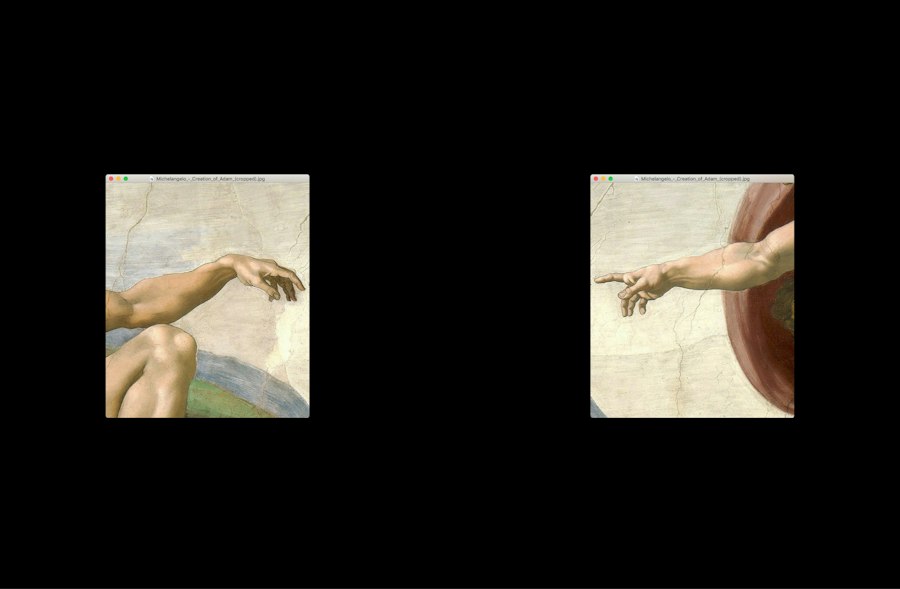
Once the cosmic stage was set, the focus often shifts to the deliberate creation of humanity. Unlike the emergent beings of the primordial state, humans are frequently depicted as being intentionally fashioned by divine hands, imbued with specific purposes, characteristics, and even flaws, reflecting the nature and intentions of their creators.
The Divine Craftsmen: Fashioning from Clay and Breath
The image of the creator god as a craftsman, meticulously shaping humanity from raw materials, is widespread. In the Abrahamic traditions, particularly in the Book of Genesis, God forms Adam from the dust of the earth and breathes life into his nostrils, signifying a direct, intimate connection between the divine and the human. Similar themes appear in ancient Sumerian and Babylonian myths, where the gods, weary from labor, decide to create humans from clay mixed with the blood of a slain god, intended to bear the burden of work and to appease the divine. In ancient Greek mythology, Prometheus famously sculpted humans from clay, imbuing them with fire stolen from the gods, a gift that brought both knowledge and suffering. These narratives highlight the notion of humanity as a deliberate creation, often born out of a need or desire on the part of the divine.
The Breath of Life: Bestowing Consciousness and Soul
Beyond mere physical form, many creation myths emphasize the bestowal of consciousness, spirit, or a soul. The “breath of life” motif, as seen in the Genesis account, is a powerful symbol of animation and the imparting of an inner essence. This divine spark is often what distinguishes humans from other creatures, granting them sentience, reason, and the capacity for moral understanding. In ancient Egyptian mythology, the god Khnum is often depicted as shaping humans on his potter’s wheel, and the god Ptah, as a creator deity, breathes life into his creations. This breath or spirit is not just a biological necessity but a divine gift, connecting humanity to the sacred realm and providing the foundation for their unique place in the universe.
The Purpose of Humanity: Service, Dominion, or Companionship
The purpose for which humanity was created varies significantly across cultures. In some myths, humans are created to serve the gods, to toil the land, and to offer sacrifices, thereby relieving the deities of their burdens. The Mesopotamian Enuma Elish explicitly states this purpose, with Marduk creating humans to carry the yoke of the gods. In other traditions, humanity is given dominion over the earth, tasked with managing and nurturing creation. The Genesis narrative, for example, grants Adam and Eve “dominion over the fish of the sea and over the birds of the sky and over every living thing that moves on the earth.” Yet other myths suggest a desire for companionship or a reflection of the divine, with humans being created in the image of the gods, meant to partake in their divine nature or to simply exist alongside them. These varied purposes reveal different cultural values and understandings of the human role in the grand cosmic order.
The Role of Chaos and the Shadow of Imperfection
While creation myths often celebrate the emergence of order and life, they also frequently acknowledge the lingering presence of chaos and the inherent imperfections of the created world and its inhabitants. These elements are not necessarily seen as failures of creation but as integral parts of the cosmic balance, often giving rise to conflict, struggle, and the very foundations of moral and ethical dilemmas.
The Persistent Shadow of Chaos
Even after the initial act of creation, the forces of chaos rarely disappear entirely. In many traditions, these forces manifest as monstrous entities, natural disasters, or internal struggles within the divine realm that impact the human world. The serpent in the Garden of Eden, a symbol of temptation and the disruption of divine order, represents the intrusion of chaos into a pristine existence. The ongoing battles between gods and titans, or between order-bringing deities and their chaotic adversaries, like the Greek Titans or the Norse Jotnar, suggest that the cosmos is in a perpetual state of tension, requiring constant vigilance and effort to maintain balance. This acknowledgment of chaos highlights a nuanced understanding of existence, one that recognizes the inherent fragility of order and the ever-present possibility of disruption.
The Introduction of Suffering and Mortality
A common thread in creation myths is the explanation for human suffering and mortality. These are rarely presented as arbitrary occurrences but as direct consequences of specific events or choices. The concept of original sin in Abrahamic traditions, stemming from Adam and Eve’s disobedience, is a prime example of how a foundational act leads to the introduction of suffering and death into the human experience. In Greek mythology, Pandora’s Box, opened out of curiosity, unleashes all evils upon humanity, leaving only hope within. These narratives suggest that a state of innocence or perfection was lost, and that the current human condition is a result of transgressions, curiosity, or a cosmic decree. This imbues human life with a sense of tragedy but also provides a framework for understanding and navigating hardship.
The Double-Edged Sword of Knowledge
The acquisition of knowledge, often through divine bestowal or forbidden exploration, is frequently depicted as a pivotal moment that irrevocably changes the human condition. The gift of fire by Prometheus, while enabling progress and civilization, also brought with it the potential for destruction and conflict. The tree of knowledge in the Garden of Eden, when partaken of, bestows awareness of good and evil, leading to shame and expulsion from paradise. These stories explore the complex relationship between knowledge and ignorance, highlighting that enlightenment often comes at a cost, leading to a more complex and challenging existence. This duality underscores the idea that humanity’s journey is one of learning and growth, marked by both triumphs and significant difficulties.
The Enduring Legacy of Creation Stories
The ancient creation myths, despite their diverse origins and narratives, share a profound and enduring legacy. They have shaped the cultural, religious, and philosophical landscapes of civilizations for thousands of years, providing a common ground for understanding humanity’s place in the universe and influencing societal values and individual beliefs.
Foundation of Worldviews and Ethical Systems
These origin stories have served as the bedrock upon which entire worldviews have been constructed. They provide answers to fundamental questions about existence, purpose, and the nature of reality, establishing a framework for understanding the cosmos and one’s role within it. The moral codes and ethical injunctions found in many religions are directly derived from their creation narratives, often outlining the divine will and the consequences of adhering to or transgressing it. For instance, the Hebrew creation story emphasizes a covenant between God and humanity, shaping Jewish law and ethics, while the concept of dharma in Hinduism, tied to creation’s inherent order, guides Hindu moral philosophy.
The Human Search for Meaning and Belonging
At their core, creation myths are about the human search for meaning and a sense of belonging. They offer a narrative that connects individuals to a grander, timeless story, providing solace in the face of mortality and the vastness of the universe. By understanding their origins as part of a divine plan or a cosmic unfolding, individuals can find a sense of purpose and identity. These stories create a sense of community, linking people through shared beliefs and ancestral narratives, fostering a collective identity that transcends individual differences.
Evolution and Adaptation of Mythological Narratives
It is crucial to recognize that creation myths are not static texts but dynamic narratives that have evolved and adapted over time. As cultures interacted, encountered new ideas, and faced changing circumstances, their origin stories were reinterpreted, modified, and sometimes blended with other traditions. The syncretism seen in the Hellenistic period, where Greek mythology absorbed elements from Egyptian and Near Eastern traditions, exemplifies this ongoing process. Furthermore, modern interpretations of these ancient tales continue to find relevance, offering new insights into human psychology, societal structures, and the enduring questions that continue to perplex us. The scientific endeavor, while offering different explanations for our origins, often finds itself in dialogue with the deeper existential questions that these myths first attempted to answer.
The exploration of ancient narratives surrounding human creation has fascinated scholars for centuries, revealing the diverse ways cultures interpret their origins. One particularly insightful article discusses the implications of these stories on modern society and how they shape our understanding of existence. For a deeper dive into the intricate connections between ancient texts and contemporary issues, you can read more about it in this related article.
Threads of Universality in Human Storytelling
| Story | Culture | Approximate Date | Medium | Key Themes |
|---|---|---|---|---|
| Enuma Elish | Babylonian | c. 18th century BCE | Clay tablets | Creation of the world from chaos, gods creating humans to serve them |
| Epic of Gilgamesh | Sumerian/Akkadian | c. 2100 BCE (earliest versions) | Clay tablets | Human origins, mortality, quest for immortality |
| Genesis (Bible) | Hebrew | c. 10th–5th century BCE | Scrolls, manuscripts | Creation of the world and humans by God, Garden of Eden |
| Rigveda | Ancient Indian | c. 1500–1200 BCE | Oral tradition, later written on palm leaves | Cosmic creation, emergence of the universe and humans |
| Popol Vuh | Mayan | c. 16th century CE (written), oral tradition older | Codex manuscript | Creation of humans from maize, gods shaping the world |
Despite the vast diversity in their specific details, a remarkable set of common threads can be identified running through humanity’s earliest creation myths. These shared elements suggest a universal human experience, a common set of cognitive and emotional responses to the fundamental mysteries of existence that have manifested in surprisingly similar ways across disparate cultures.
The Great Mother and the Sky Father
A recurring archetypal pairing in creation myths is the Great Mother, often representing the primordial earth, fertility, and nurturing, and the Sky Father, embodying the heavens, authority, and the active principle of creation. In many Indo-European traditions, these figures are clearly delineated. The union of Mother Earth (Gaia) and Sky Father (Ouranos) in Greek mythology is the source of the Titans and the subsequent generations of gods. Similarly, in some indigenous Australian creation stories, the Sky-Woman falls to Earth, bringing life and order. This duality reflects the fundamental polarity of male and female principles, the earth and sky, and the complementary forces necessary for procreation and the establishment of the cosmos.
The Trickster and the Transgressor
Intertwined with the divine architects and the established order are figures of the trickster or the transgressor. These characters, often embodying cunning, humor, and a disregard for rules, play a crucial role in shaping the narrative and the human condition. The trickster, like Coyote in some Native American myths or Loki in Norse lore, can be a catalyst for change, introducing new elements or revealing hidden truths, often through mischievous or morally ambiguous actions. The transgressor, such as Prometheus or Eve, by challenging divine authority or succumbing to temptation, introduces knowledge, suffering, or a new phase of existence for humanity. These figures highlight the inherent tension between order and chaos, and the complex, often paradoxical, nature of human behavior.
The Quest for Order and Meaning in a Vast Universe
Ultimately, all creation myths are deeply concerned with humanity’s quest for order and meaning in what can often feel like a vast, indifferent, and chaotic universe. They provide a narrative structure that makes sense of the world, offering explanations for natural phenomena, human emotions, and the cycle of life and death. These stories are not just explanations but also comfort, assuring humans that they are part of something larger, that their existence has a purpose, and that there is a discernible pattern to reality, even if that pattern involves struggle and imperfection. The enduring power of these myths lies in their ability to tap into these fundamental human needs, providing a timeless framework for understanding ourselves and our place in the grand tapestry of existence. They are the echoes of our earliest inquiries, the whispers of our ancestors, reminding us of the profound human impulse to understand, to connect, and to find meaning in the unfolding mystery of being.
The Anunnaki Origin Story Changes When You Read the Tablets
FAQs
What are the oldest written stories about human creation?
The oldest written stories about human creation include the Sumerian creation myth known as the “Epic of Atrahasis,” the Babylonian creation myth called the “Enuma Elish,” and the ancient Egyptian creation myth known as the “Heliopolitan Theology.”
When were these stories written?
The Sumerian creation myth “Epic of Atrahasis” dates back to around 1700 BCE, the Babylonian creation myth “Enuma Elish” was written around 1200 BCE, and the ancient Egyptian creation myth “Heliopolitan Theology” was recorded in the Pyramid Texts around 2400 BCE.
What do these stories generally depict?
These stories generally depict the creation of the world, the gods and goddesses involved in the creation process, and the origins of humanity. They often involve themes of chaos, order, divine intervention, and the establishment of the natural world.
Are there any similarities between these ancient creation myths?
Yes, there are some similarities between these ancient creation myths, such as the concept of a primordial chaos from which the world is created, the involvement of multiple gods and goddesses in the creation process, and the idea of humans being created to serve the gods.
Why are these stories important in understanding ancient cultures?
These stories are important in understanding ancient cultures because they provide insights into the beliefs, values, and cosmologies of these civilizations. They offer a glimpse into how ancient societies viewed the origins of the world, humanity, and the role of gods in shaping their existence.