The human impulse to understand origins is as ancient as consciousness itself. Before the advent of scientific inquiry, before telescopes peered into the cosmos and microscopes revealed the infinitesimal, humanity grappled with the fundamental questions: Where did we come from? How did the world begin? The answers, deeply interwoven with the fabric of culture, morality, and social order, are preserved in the earliest narratives passed down through generations – the creation stories. These ancient tales, far from being mere curiosities, offer a profound window into the minds of our ancestors, revealing their understanding of the divine, the natural world, and humanity’s place within it. They speak of primal chaos and cosmic order, of divine beings shaping existence from nothingness or from primordial elements, and of the intricate relationships between humanity and the forces that govern reality.
Echoes from the Dawn of Time
The sheer diversity of creation narratives across disparate cultures, often developed in isolation, hints at a universal human need to contextualize existence. While the specifics vary wildly, common threads emerge, reflecting shared anxieties and aspirations. The concept of a primordial state – a void, an abyss, a boundless ocean – is almost ubiquitous. From this undifferentiated mass, or through the act of a supreme being, the ordered universe is brought forth. These stories are not simply factual accounts; they are imbued with meaning, purpose, and a moral framework. They often explain the origin of natural phenomena, the establishment of social hierarchies, and the very essence of what it means to be human. Examining these earliest accounts is akin to deciphering an ancient map of human thought, a testament to our enduring quest for understanding.
The Unfathomable Void and Primordial Waters
Many of the oldest creation myths begin with a state of formless chaos or a boundless, undifferentiated expanse. The Egyptian worldview, for instance, starts with Nun, the primordial watery abyss, a concept that predates the gods themselves. From Nun emerged Atum, the self-created god, who brought forth the first pair of deities, Shu (air) and Tefnut (moisture), initiating the process of creation through emanation and interaction. Similarly, in Mesopotamian mythology, the Enuma Elish depicts a world born from the Tiamat, a monstrous goddess embodying the primeval saltwater, and Apsu, the freshwater god. The conflict between these primordial entities and their offspring sets the stage for the creation of the heavens, the earth, and ultimately, humanity. These watery beginnings symbolize fluidity, potential, and the raw, untamed forces from which order is eventually wrested.
The Emergence of Divine Architects
Central to most creation narratives is the presence of one or more divine beings who act as the architects of existence. These deities are not always anthropomorphic; they can be abstract forces, cosmic eggs, or even non-sentient natural elements that miraculously give rise to life. In the Vedic tradition of ancient India, the universe is often depicted as emerging from a cosmic egg, the Hiranyagarbha, from which Brahma, the creator god, is born. He then proceeds to fashion the cosmos and all its inhabitants. The Greek myth of Gaia, the primordial goddess of the Earth, who gives birth to Uranus (the sky) and Pontus (the sea), and subsequently fathers the Titans, also highlights the earth itself as a primary creative force. These divine architects embody power, intent, and a deliberate act of bringing order to the formless.
The Cosmic Dance of Duality and Balance
Another recurring theme is the interplay of opposing forces. Creation is often the result of a tension or a balance between fundamental dualities: light and darkness, male and female, order and chaos, or even the cosmic breath and silence. The Yin and Yang principle in ancient Chinese philosophy, though not strictly a creation myth in the narrative sense, illustrates this concept of complementary opposites that give rise to all phenomena. The Zoroastrian creation myth, which pits the benevolent Ahura Mazda against the malevolent Angra Mainyu, presents a universe shaped by an ongoing cosmic struggle, with creation arising from the interplay of good and evil. These dualistic frameworks suggest that existence is not a static entity but a dynamic process, constantly negotiated and sustained by opposing forces.
The exploration of ancient narratives reveals fascinating insights into humanity’s understanding of creation, with some of the oldest surviving written creation stories originating from various cultures around the world. For a deeper dive into the complexities of human civilization and the stories that shape our understanding of existence, you can read the article on fragile states and their global challenges at this link. This article provides a broader context for understanding how these ancient tales continue to influence modern societies.
Genesis in the Fertile Crescent
The cradles of civilization, particularly the Mesopotamian region, have yielded some of the oldest and most influential creation narratives known to humanity. These stories, inscribed on clay tablets, offer a glimpse into the worldview of societies that laid the groundwork for much of subsequent human thought. Their tales of gods, monsters, and the very shaping of the cosmos have resonated through millennia, influencing later religious and philosophical traditions.
The Mesopotamian Tapestry: From Chaos to Humanity’s Labor
The Sumerian, Akkadian, and Babylonian creation myths are remarkably complex and rich. The Epic of Gilgamesh, while not solely a creation epic, contains echoes of a flood narrative and the creation of humanity from clay, a theme that would echo in later traditions. The Enuma Elish stands as a monumental Babylonian creation account. It describes the initial state of watery chaos personified by Tiamat and Apsu. The younger gods, led by Marduk, engage in a titanic battle with Tiamat, from whose dismembered corpse Marduk creates the heavens and the earth. Marduk then fashions humanity from the blood of Tiamat’s slain general, Kingu, imbuing them with the essence of the gods and decreeing that their purpose is to serve the gods, easing their divine labor. This narrative not only explains the origin of the cosmos but also establishes a hierarchy and the fundamental purpose of humanity as subservient to the divine.
The Egyptian Pantheon and the Sun’s Dominion
Ancient Egyptian creation myths are deeply intertwined with their cosmology, particularly the cult of the sun god Ra. The emergence of Ra from the primeval waters of Nun is a central theme. Different traditions offer variations: Atum, self-created, spits out Shu and Tefnut; or Ra emerges from a lotus flower or a cosmic egg. The creation of humanity is often attributed to Ra’s tears, which solidify into men and women. The Egyptians believed that the pharaoh was a divine intermediary, tasked with maintaining Ma’at – cosmic order, truth, and justice – a concept vital to their understanding of the world’s continuity. The cyclical nature of the sun’s journey across the sky and its daily rebirth served as a powerful metaphor for the ongoing process of creation and renewal.
The Birth of Worlds in the East
Across the vast expanse of Asia, ancient cultures developed their own unique and profound cosmogonies, often reflecting a deep connection to nature and the cyclical rhythms of existence. These narratives, passed down through oral traditions and sacred texts, offer a rich tapestry of divine beings, primal forces, and the intricate pathways of creation.
The Vedic Hymns: Sacrifice and Cosmic Order
The ancient Vedic literature of India provides some of the oldest and most philosophically complex creation narratives. The Rigveda, particularly the hymn known as the Purusha Sukta, describes the universe as being created from the sacrifice of a cosmic being, Purusha. His body is dismembered, and from its various parts arise the different classes of society, the earth, the heavens, and the cardinal directions. This concept of creation through sacrifice underscores a worldview where existence is sustained by a continuous, albeit sometimes painful, cycle of giving and renewal. The later Brahmanical tradition further developed these ideas, with Brahma emerging as the supreme creator god, responsible for fashioning the universe through his own meditative will and divine emanations.
Chinese Cosmogony: Pangu and the Cosmic Egg
The most prominent Chinese creation myth features Pangu, a primordial giant who emerged from the chaotic Yin and Yang forces. He spent eighteen thousand years growing within a cosmic egg. When he broke the egg, the light, clear Yang rose to become the heavens (Tian), and the heavy, turbid Yin descended to become the earth (Di). Pangu then stood between the heaven and earth, holding them apart with his body, growing taller each day for another eighteen thousand years. When he finally died, his body parts transformed into the elements of the natural world: his breath became the wind, his voice the thunder, his eyes the sun and moon, his limbs the mountains, his blood the rivers, and his hair the stars. This myth emphasizes the immense effort and sacrifice required for the establishment of the ordered world and highlights the intimate connection between the cosmic order and the physical landscape.
Creation Beyond the Known Worlds
The human imagination has not been confined to the terrestrial or the immediately observable. Across continents and through millennia, stories of creation have also sprung from cultures with rich oral traditions, reflecting a deep engagement with their environments and a sophisticated understanding of the interconnectedness of all things.
Indigenous Australian Narratives: The Dreaming and Ancestral Beings
The creation stories of Indigenous Australians, known as the Dreaming or the Dreamtime, are not merely historical accounts but living traditions that continue to shape cultural practices and spiritual beliefs. These narratives describe a time when Ancestral Beings, powerful spiritual entities, emerged from the earth and traveled across the land, shaping its features, creating its flora and fauna, and establishing the laws and customs that govern human life. These Ancestral Beings are not distant gods but immanent forces, whose presence can still be felt in the land, in sacred sites, and in the totemic relationships between people and the natural world. Creation is an ongoing process, continuously renewed through ritual and the adherence to ancestral laws.
The Norse Cosmology: From Frost and Fire to Human Life
The Norse creation myth, as recorded in the Poetic Edda and the Prose Edda, begins with Ginnungagap, a vast, primordial void. In the north lay Niflheim, a realm of ice and mist, and in the south lay Muspelheim, a realm of fire and heat. Where these two realms met, the ice began to melt, and from the primordial dew, the giant Ymir was formed. From Ymir’s sweat, the first man and woman were born, and from his body, Odin and his brothers created the world. They fashioned the sky from Ymir’s skull, the earth from his flesh, the seas from his blood, and the mountains from his bones. This myth emphasizes a universe born from elemental conflict and the subsequent act of divine shaping, with a strong focus on the harsh realities of the Nordic environment.
The exploration of ancient narratives often leads us to fascinating discussions about the oldest surviving written creation stories, which provide insight into the beliefs and values of early civilizations. For those interested in understanding how these stories have influenced modern thought, a related article can be found that delves into the implications of historical narratives on contemporary society. You can read more about this intriguing connection in the article here.
The Enduring Legacy of Origin Tales
| Creation Story | Culture/Origin | Approximate Date | Language | Medium | Key Elements |
|---|---|---|---|---|---|
| Enuma Elish | Babylonian | c. 18th century BCE | Akkadian | Clay tablets | Creation from primordial waters, battle between gods Marduk and Tiamat |
| Eridu Genesis | Sumerian | c. 17th century BCE | Sumerian | Clay tablets | Creation of humans, flood narrative, divine intervention |
| Rigveda Creation Hymn (Nasadiya Sukta) | Vedic (Ancient India) | c. 1500–1200 BCE | Sanskrit | Oral tradition, later written in manuscripts | Cosmic creation, uncertainty about origins, primordial waters |
| Genesis Creation Narrative | Hebrew (Ancient Israel) | c. 10th–6th century BCE | Hebrew | Scrolls and manuscripts | Creation in six days, divine command, creation of humans in God’s image |
| Popol Vuh | Maya (Quiché) | c. 16th century CE (written), oral tradition older | Quiché Maya | Codex manuscript | Creation from primordial sea, gods Tepeu and Gucumatz, creation of humans from maize |
The enduring power of creation stories lies not in their scientific accuracy, but in their profound exploration of the human condition. They provide answers to fundamental questions, offer a sense of belonging and purpose, and establish the moral and ethical frameworks that guide societies. While scientific understanding of our origins continues to evolve, these ancient narratives remain vital repositories of human wisdom, imagination, and our ceaseless quest to understand who we are and how we came to be.
More Than Just Myths: Meaning and Morality
Creation stories are more than just ancient folklore; they are foundational texts that have shaped civilizations. They provide a shared cosmology, a common understanding of the universe, and a sense of collective identity. The narratives often imbue the natural world with sacredness, dictating humanity’s relationship with the environment and with each other. They establish moral codes, outlining what is right and wrong, and the consequences of transgressing these boundaries. The very act of storytelling, of recounting these origin tales, served to reinforce social bonds and transmit cultural values across generations.
The Human Drive for Narrative and Meaning
The universal presence of creation stories speaks to a fundamental human need for narrative and meaning. We are beings who seek to understand our place in the grand scheme of things. These tales, born from a time when empirical observation was nascent, offered a coherent framework for understanding the world’s complexities. They provided explanations for the inexplicable, comfort in the face of uncertainty, and a sense of purpose in the face of mortality. Even as scientific explanations become more sophisticated, the human impulse to create and engage with origin stories remains, manifesting in new forms of narrative that continue to explore our deepest questions about existence.
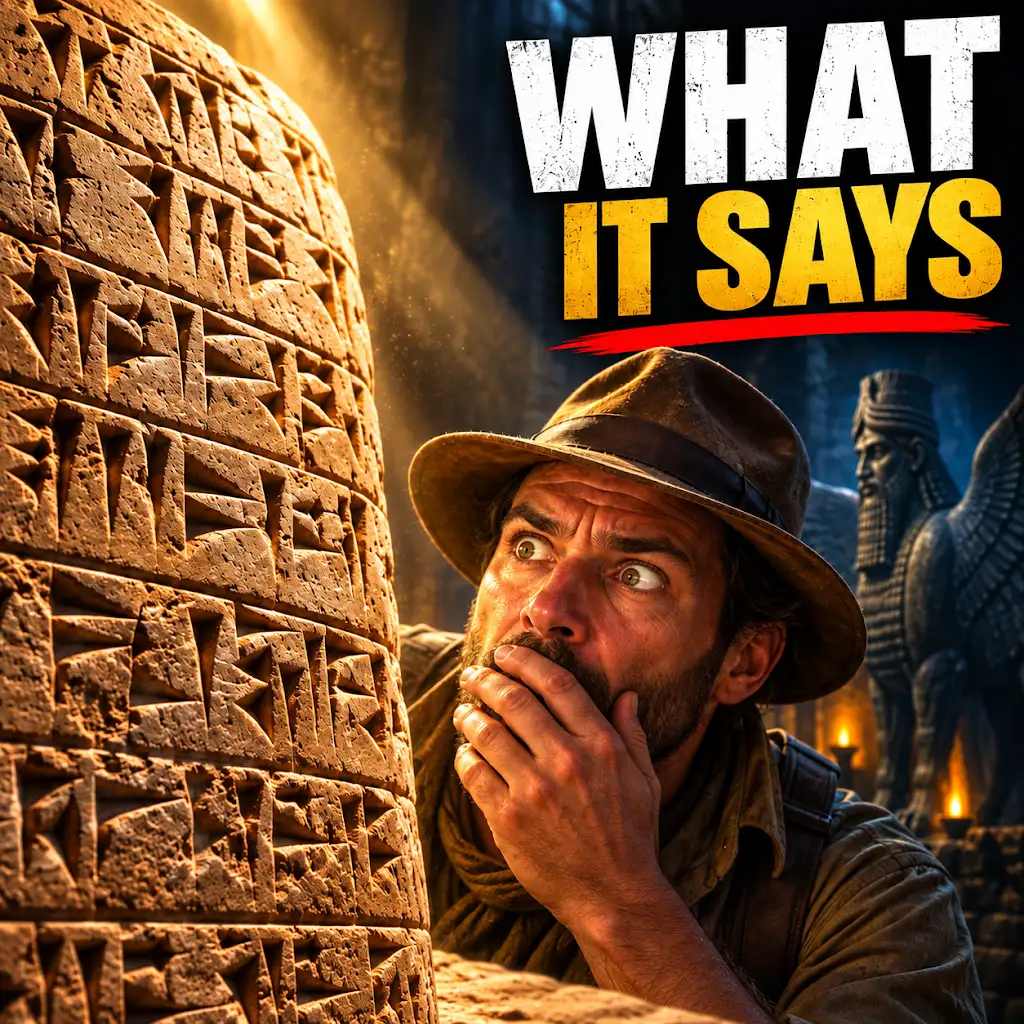
The Anunnaki Origin Story Changes When You Read the Tablets
FAQs
What are creation stories?
Creation stories are narratives that explain how the world and everything in it came to be. They often involve supernatural beings or forces and are found in various cultures and religions around the world.
Why are creation stories important?
Creation stories are important because they provide insight into a culture’s beliefs, values, and worldview. They help to explain the origins of the universe, humanity, and the natural world, and often serve as a foundation for religious or spiritual practices.
What are some of the oldest surviving written creation stories?
Some of the oldest surviving written creation stories include the Enuma Elish from ancient Mesopotamia, the Atrahasis Epic from Sumer, the Popol Vuh from the Maya civilization, and the Rigveda from ancient India.
How do creation stories differ across cultures?
Creation stories differ across cultures in terms of the characters involved, the events that take place, and the explanations for how the world was created. They reflect the unique beliefs, traditions, and cosmologies of each culture.
What themes are common in creation stories?
Common themes in creation stories include the emergence of order from chaos, the role of gods or supernatural beings in creation, the separation of heaven and earth, the creation of humans, and the establishment of natural laws and cycles.