The tapestry of North African history is vast, intricate, and profoundly influential, stretching back to the dawn of humanity and echoing through millennia of human civilization. Far from a mere geographic appendage to the Mediterranean world, this region has consistently been a crucible of innovation, a crossroads of cultures, and a vital stage for pivotal historical events. Its story is one of early human ingenuity, the rise and fall of empires, the persistent influence of trade and faith, and a vibrant cultural identity forged through millennia of interaction and adaptation.
The narrative of North Africa begins not with written records, but with the very origins of our species. Recent archaeological revelations have cemented the region’s status as a paramount center for human evolution. The whispers of our earliest ancestors are particularly loud in Morocco, where groundbreaking discoveries are continuously reshaping our understanding of human origins.
The Dawn of Homo Sapiens and the African Genesis
The fossils unearthed at Jebel Irhoud in Morocco represent a monumental leap in our understanding of human evolution. Advanced dating techniques have confirmed these remains to be the earliest securely identified evidence of Homo sapiens. This discovery, pushing back the timeline of our species’ origins, strongly supports the theory that North Africa served as a crucial, perhaps even primary, departure point for the “Out of Africa” migration that eventually populated the globe. This suggests that the story of humanity is intrinsically linked to this north-western corner of the African continent.
Prehistoric Ingenuity: Tools and Art
Beyond our evolutionary lineage, evidence of sophisticated cognitive and cultural development in prehistoric North Africa is abundant. Thirty-thousand-year-old cave paintings, discovered in Moroccan caves, speak to a rich spiritual and symbolic life, challenging long-held assumptions about the perceived simplicity of prehistoric societies. These artistic expressions, alongside the discovery of remarkably sophisticated stone tools dating back 300,000 years, indicate a complex cultural and intellectual tradition that existed long before the advent of settled agriculture or urban centers. These findings paint a picture of intelligent, creative beings actively shaping their environment and expressing themselves through art and advanced toolmaking.
The Green Sahara: A Lost World of Human Activity
For decades, the Sahara Desert has been characterized as an insurmountable barrier. However, ancient human DNA studies are revealing a dramatically different past. Between 15,000 and 5,000 years ago, the Sahara was not an arid wasteland but a verdant expanse dotted with rivers and supporting diverse human populations. This period, often referred to as the “Green Sahara,” was a time of significant human activity and interaction across the region. Genetic analysis from this era highlights a mosaic of human groups that thrived in this once-lush environment, demonstrating that the Sahara acted as a connective tissue rather than a divider for a substantial period of prehistory. The subsequent rapid desertification, which transformed this habitable zone into the vast desert we know today, created a geographical barrier that profoundly impacted subsequent migration and settlement patterns.
The Roots of Agriculture in the Maghreb
Adding another layer to North Africa’s foundational importance, the discovery of the earliest known farming complex in northwest Africa (the Maghreb) has further revolutionized our understanding of Mediterranean agricultural origins. Dating between 3400 BC and 2900 BC, this site in Oued Beht is comparable in scale to early Bronze Age settlements like Troy. Its identification suggests that independent agricultural development occurred in North Africa, contributing significantly to the broader spread of farming practices across the Mediterranean. This challenges the notion of a singular origin point for agriculture in the Near East and highlights the independent innovations emerging from the African continent.
North Africa has a rich and complex history that is often intertwined with the narratives of ancient civilizations and their contributions to human knowledge. For a deeper understanding of how ancient wisdom has been deliberately overlooked or erased throughout history, you can explore the article titled “The Deliberate Erasure of Ancient Wisdom” available at this link. This article delves into the historical context and implications of lost knowledge, shedding light on the significance of North Africa’s past in shaping contemporary thought.
The Empires That Shaped the Mediterranean
As the millennia turned, North Africa became a nexus of power, trade, and cultural exchange, playing host to some of the ancient world’s most influential civilizations. The echoes of these powerful entities continue to resonate, shaping the region’s identity and its relationship with the broader Mediterranean world.
The Phoenician and Punic Legacy: Masters of the Sea
The Phoenicians, renowned seafarers and traders from the Levant, established a formidable presence along the North African coast from the 12th century BC onwards. Their entrepreneurial spirit and maritime prowess led to the founding of numerous colonies, the most legendary of which was Carthage. While initially a Phoenician outpost, Carthage rapidly grew into a dominant independent power, forging its own distinct Punic identity. This civilization became a formidable rival to the burgeoning Roman Republic, engaging in a series of legendary conflicts known as the Punic Wars.
Carthage: A Punic Powerhouse and African Empire
New educational initiatives and a renewed archaeological focus on Carthage, located in modern-day Tunisia, are illuminating the profound significance of this Punic metropolis. Carthage was not merely a trading post; it evolved into a vast empire with extensive trade networks, a powerful navy, and a complex political structure. Its influence stretched across the western Mediterranean, controlling vital trade routes and developing sophisticated agricultural and urban systems. The ongoing excavations and reinterpretations of its history are revealing a deeper understanding of the Carthaginian Empire’s role in Africa’s history and its complex rivalry with Rome, challenging earlier Eurocentric narratives.
The Roman Conquest and Administration
Following Carthage’s eventual defeat, North Africa became a vital province of the Roman Empire, known as Africa Proconsularis. The Romans brought their administrative prowess, infrastructure, and legal systems to the region, leaving an indelible mark on its landscape and society. They constructed impressive cities, aqueducts, roads, and public buildings, many of which remain remarkably preserved today. The port city of Rabat, now the capital of Morocco, offers tantalizing glimpses of this Roman past, with new excavations at the Chellah site unearthing extensive ruins of an ancient Roman port city, previously settled by Phoenicians. This Roman presence not only integrated North Africa into the Roman economic and political sphere but also fostered a significant degree of Romanization.
Byzantine Revival and Islamic Dawn
After the decline of the Western Roman Empire, North Africa experienced a period of Byzantine rule, seeking to reassert Roman authority. However, this era was relatively short-lived, as the tide of history was about to shift dramatically with the arrival of a new faith and a new imperial power. The 7th century AD marked a watershed moment with the Islamic conquests, which swept across North Africa, fundamentally transforming its demographic, religious, and cultural landscape.
The Arab and Islamic Influence: A New Era
The advent of Islam brought about a profound and lasting transformation of North Africa, weaving it inextricably into the fabric of the wider Islamic world. This period witnessed the rise of new dynasties, the flourishing of intellectual and artistic endeavors, and the establishment of vibrant urban centers.
The Umayyad and Abbasid Caliphates
The early Islamic conquests saw North Africa integrated into the expanding Umayyad Caliphate, and later the Abbasid Caliphate. This brought Arabic language, Islamic law, and new administrative structures to the region. Mosques, madrasas, and libraries were established, fostering a culture of learning and scholarship. The region became a crucial base for further Islamic expansion into Europe, particularly through the Iberian Peninsula, where North African scholars and warriors played a significant role.
The Rise of Powerful North African Dynasties
The broad caliphates eventually gave way to the emergence of powerful independent dynasties that ruled vast swathes of North Africa. These included the Aghlabids, who consolidated power in Ifriqiya (modern-day Tunisia and eastern Algeria), and the Fatimids, a Shi’a Caliphate that rose to prominence and eventually conquered Egypt, establishing Cairo as their capital. Later, the Almoravid and Almohad dynasties, originating from the Sahara, extended their influence across North Africa and into al-Andalus (Muslim Spain), creating vast empires that were centers of scientific, artistic, and architectural innovation.
The Moors and Al-Andalus: A Transcontinental Legacy
The influence of North Africa on the Iberian Peninsula, under Muslim rule known as Al-Andalus, was profound and enduring. Often referred to as Moors, the people of North African descent played a pivotal role as rulers, scholars, artisans, and soldiers in this sophisticated civilization. Cities like Cordoba, Seville, and Granada became centers of learning and culture, boasting impressive architecture and a vibrant intellectual life deeply influenced by North African traditions. The exchange of knowledge and goods between North Africa and al-Andalus enriched both regions and left a lasting legacy on European culture and science.
Trade, Culture, and Endurance

Throughout its history, North Africa has been a dynamic hub of trade and cultural exchange, its societies constantly adapting and evolving through interaction with diverse peoples and ideas. This enduring spirit of resilience and adaptation is a hallmark of its rich historical narrative.
The Sahara Trade: Connecting Continents
The Sahara Desert, despite its challenges, was never an impenetrable barrier to commerce. For centuries, trans-Saharan trade routes served as vital arteries connecting North Africa with sub-Saharan Africa and beyond. Caravans laden with gold, salt, slaves, ivory, and manufactured goods traversed these routes, fostering economic interdependence and cultural diffusion. Cities like Timbuktu and Gao, though technically south of the traditional North African definition, were deeply integrated into this network, serving as vital entrepots.
The Mediterranean Marketplace
The Mediterranean Sea itself was the primary highway for trade and interaction for North Africa. From the Phoenicians and Romans to the Arabs and later European powers, control of maritime trade routes was a constant source of conflict and cooperation. North African ports served as crucial stops for goods traveling between Europe, Asia, and sub-Saharan Africa, facilitating the exchange of not only commodities but also ideas, technologies, and artistic styles.
The Bell Beaker Culture Connection: Prehistoric Networks
Recent findings have added another fascinating dimension to North Africa’s early history, suggesting connections with cultures far beyond its immediate neighbors. The discovery of links to the 2,500 BC Bell Beaker culture in Morocco and Algeria indicates that North Africans were part of a wider Western European and British Isles network. This challenges previously held views of the region as isolated in prehistory and suggests a level of transatlantic or at least extensive pan-European interaction that is only now beginning to be fully understood. This connection highlights the interconnectedness of prehistoric societies and the surprising reach of ancient cultural diffusion.
A Mosaic of Languages and Identities
The historical record of North Africa is one of constant linguistic and cultural evolution. From the ancient Berber languages that predated the arrival of external influences, to the Latin of the Roman era, the Arabic of the Islamic conquests, and later influences from Ottoman Turkish and European colonial powers, the region has always been a meeting point for diverse tongues. This linguistic mosaic has contributed to the rich and varied cultural identities that characterize North Africa today.
The rich tapestry of North Africa’s history is intricately woven with tales of ancient civilizations, trade routes, and cultural exchanges that shaped the region. For those interested in exploring the broader context of historical geography, a fascinating article titled “Navigating the Unknown: Mapping the World Before Discovery” delves into how early maps influenced our understanding of different regions, including North Africa. You can read more about this intriguing subject by following this link: navigating the unknown.
Contemporary Echoes of a Glorious Past
| Time Period | Significant Events |
|---|---|
| Ancient Times | Phoenician and Carthaginian civilizations, Roman conquest, Arab conquest |
| Medieval Period | Islamic Caliphates, Berber dynasties, Ottoman rule |
| Colonial Era | European colonization by France, Italy, Spain, and the United Kingdom |
| Modern Times | Independence movements, Arab Spring, political and social changes |
Modern North Africa continues to grapple with and celebrate its extraordinary history. The immense wealth of archaeological sites, the enduring cultural traditions, and the complex geopolitical landscape all bear the indelible imprint of millennia of human endeavor.
Archaeological Tourism and Heritage Preservation
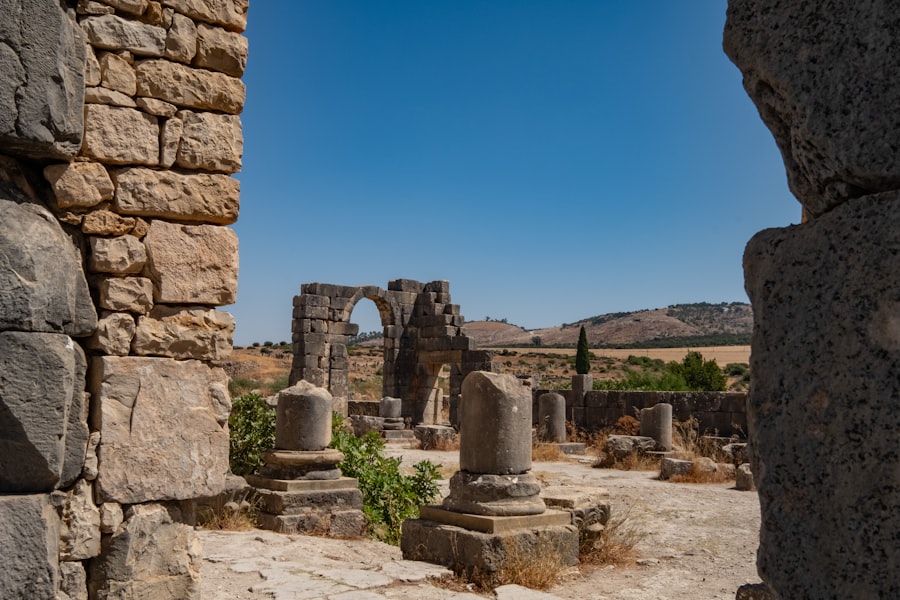
The discoveries at Jebel Irhoud, Chellah, and other sites are not merely academic curiosities; they are increasingly vital to the region’s tourism sector. As the world learns more about the depth and significance of North African history, there is a growing interest in exploring these ancient landscapes. Archaeological sites like Carthage, Volubilis, and the Roman ruins in Algeria and Libya are attracting global attention, highlighting the need for continued heritage preservation and responsible tourism development.
Rethinking Narratives and Regional Identity
The revised understanding of North Africa’s role in early human evolution, its independent agricultural innovations, and its extensive prehistoric networks challenges traditional, often Eurocentric, historical narratives. The ongoing research into Carthaginian history, the Bell Beaker connections, and the pre-desertification Sahara all contribute to a more nuanced and complex picture of the region’s past. This evolving historical understanding is crucial for shaping contemporary regional identity and fostering a sense of shared heritage.
The Ongoing Story
The rich history of North Africa is not a closed chapter. New discoveries are constantly being made, and existing knowledge is continuously reinterpreted. From the earliest stirrings of human consciousness to the sophisticated empires that shaped the Mediterranean world, and the enduring cultural legacies that persist today, North Africa’s story is a testament to the resilience, ingenuity, and interconnectedness of humanity. It is a history that continues to unfold, promising further revelations and enriching our collective understanding of the human journey.

The Sahara Won’t Stay a Desert Forever
FAQs
What is the history of North Africa?
North Africa has a rich and diverse history that dates back to ancient times. It has been influenced by various civilizations, including the Phoenicians, Romans, Byzantines, and Arabs. The region has also been shaped by trade routes, conquests, and the spread of Islam.
What are some key events in North Africa’s history?
Some key events in North Africa’s history include the spread of Islam in the 7th century, the Arab conquests, the establishment of the Fatimid Caliphate, the arrival of the Ottomans, and European colonization during the 19th and 20th centuries. These events have had a significant impact on the region’s culture, religion, and politics.
How has North Africa’s history influenced its present-day culture?
North Africa’s history has had a profound influence on its present-day culture. The region’s diverse heritage is reflected in its architecture, cuisine, music, and language. The legacy of ancient civilizations, Islamic traditions, and European colonialism continues to shape the cultural identity of North Africa.
What role has North Africa played in global trade and commerce throughout history?
North Africa has been a key player in global trade and commerce throughout history. Its strategic location along the Mediterranean Sea and proximity to Europe, the Middle East, and Sub-Saharan Africa has made it a hub for trade routes. The region has been known for its production of goods such as textiles, spices, and precious metals.
How has North Africa’s history shaped its political landscape?
North Africa’s history has played a significant role in shaping its political landscape. The region has experienced various forms of governance, including empires, caliphates, and colonial rule. These historical influences have contributed to the complex political dynamics and challenges faced by modern North African countries.