
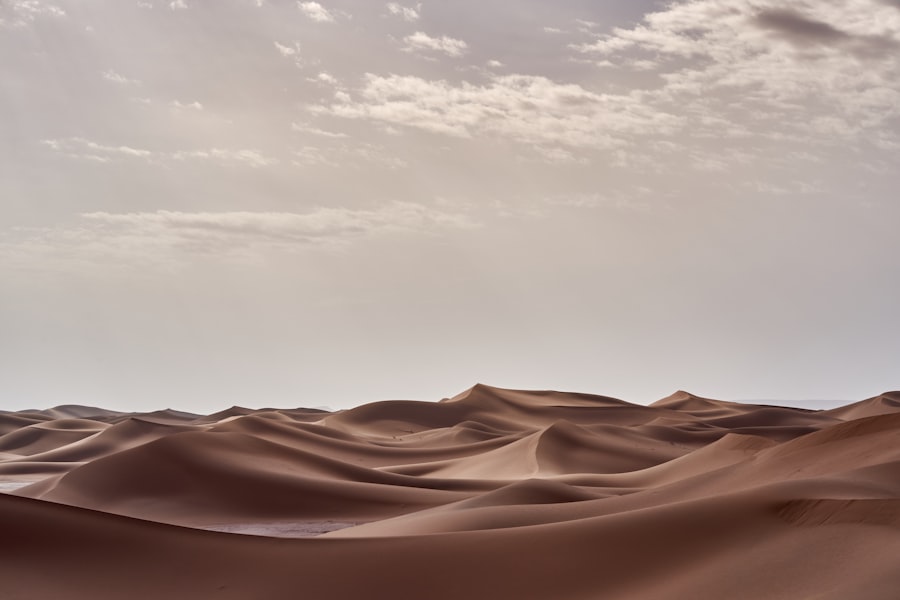
The vast expanse of the Sahara Desert, a name that conjures images of endless sand dunes and scorching sun, is far more than a barren wasteland. It is a landscape imbued with a rich and complex history, a tapestry woven with the threads of human migration, trade, conquest, and cultural exchange. For millennia, this seemingly inhospitable environment has not only shaped the lives of those who call it home but has also played a pivotal role in the broader narrative of human civilization. From ancient river valleys teeming with life to the rise and fall of powerful empires, the Sahara’s past is a testament to resilience, adaptation, and the enduring spirit of humanity.
For many, the Sahara of today – a vast desert stretching across North Africa – is an immutable geological feature. However, this perception only reflects a fraction of its long and dynamic history. The Sahara has experienced dramatic climatic shifts throughout its existence, and for significant periods, it was a starkly different place. The concept of a “Green Sahara” is not a myth but a scientifically validated reality, painting a picture of a vastly more habitable and vibrant landscape than what exists today.
The African Humid Period and its Lifeblood
The most significant period of moisture and vegetation in the Sahara occurred during the African Humid Period, also known as the Holocene Climatic Optimum. This era, spanning roughly from 11,000 to 5,000 years ago, saw monsoon systems extend much further north than they do now. This brought substantial rainfall to regions that are now arid, transforming the landscape. Vast savannahs, dotted with acacia trees and grasses, began to flourish. Rivers, many of which are now dry wadis, flowed powerfully, sustaining diverse ecosystems. Lakes, some of considerable size, formed across the landscape, providing vital water sources for both wildlife and early human populations.
Evidence of a Thriving Past
The archaeological record provides irrefutable evidence of this verdant past. Rock art sites, found scattered throughout the Sahara, depict a wealth of fauna that has long since vanished from the region. These petroglyphs and rock paintings showcase giraffes, elephants, antelopes, lions, hippos, and crocodiles, animals that require abundant water and vegetation to survive. These artistic expressions are not mere fantasies; they are snapshots of a lost reality, a testament to the ecological richness that once characterized the Sahara. Furthermore, the discovery of fish fossils and freshwater mollusks in ancient lakebeds further substantiates the presence of substantial bodies of water. Human settlements, dating back to this period, have been found in areas that are now barren, indicating that people thrived in these once-fertile regions.
The Transition to Aridity
The decline of the Green Sahara was a gradual process, driven by cyclical shifts in Earth’s orbit and atmospheric patterns, known as Milankovitch cycles. As these cycles changed, the monsoon rains that nourished the Sahara began to recede. The once lush vegetation withered, the rivers dried up, and the lakes evaporated. This transition was likely a slow but relentless process, forcing the inhabitants of the Sahara to adapt or migrate. This period of increasing aridity would have been a significant challenge, shaping the subsistence strategies and settlement patterns of the populations that remained.
The Sahara Desert, often perceived as a barren wasteland, has a rich and complex history that reflects the interplay of various cultures and civilizations over millennia. For a deeper understanding of the historical significance of regions like the Sahara and the importance of regional autonomy in shaping their narratives, you can explore the article titled “Empowering Regions: The Case for Regional Autonomy” available at this link. This article delves into how regional identities and governance can influence historical perspectives and development in areas such as the Sahara.
Early Human Migrations and Adaptations
The Sahara, in its various climatic phases, has been a crucial corridor and cradle for human migration and development. As the climate shifted, so too did the human presence, with early hominids and later Homo sapiens navigating its evolving landscapes and developing remarkable adaptations.
The Cradle of Humankind: Early Hominid Presence
While the Sahara is distant from the most famous East African hominid sites, evidence suggests early human ancestors also traversed and inhabited parts of its vastness. Fossils and stone tools unearthed in North Africa indicate that hominids were present in the region tens of thousands, and possibly hundreds of thousands, of years ago. These early inhabitants would have encountered a more hospitable environment than today’s desert, with more abundant water and game. Their survival would have depended on their ability to exploit these resources, developing basic tool-making skills and social structures.
The Neolithic Revolution in the Sahara
The Neolithic Revolution, a period characterized by the development of agriculture and settled lifestyles, had a unique trajectory in the Sahara. As the Green Sahara began to recede, populations that had previously relied on hunting and gathering were forced to adapt. They transitioned to domestication, cultivating crops suited to the emerging arid conditions and herding animals that could withstand drier climes. This period saw the development of early pottery, indicating more settled communities, and sophisticated toolkits for farming and food processing. The rock art from this period often depicts herding scenes, further illustrating this shift in subsistence.
The Nomadic Way of Life Emerges
The increasing aridity of the Sahara played a pivotal role in the development and eventual dominance of nomadic pastoralism. As fixed settlements became unsustainable in many areas due to water scarcity, communities learned to follow rainfall and grazing lands, migrating with their livestock. This nomadic lifestyle, characterized by mobility and a deep understanding of the desert’s rhythms, became a defining feature of Saharan cultures. These early nomads were pioneers of adaptation, their lives dictated by the ever-changing landscape and the need for resourcefulness.
The Age of Trans-Saharan Trade

As the Sahara solidified into its current arid form, it did not become a barrier to human interaction but rather a challenging yet vital conduit for commerce and cultural exchange. The trans-Saharan trade routes, established over millennia, became arteries of connection, linking sub-Saharan Africa with the Mediterranean world and beyond.
The Camel Revolution: Unlocking the Desert
The introduction of the dromedary camel to North Africa, most likely around the 3rd century CE, was a revolutionary event for Saharan transit. Camels are exceptionally well-suited to desert conditions, able to endure long periods without water, traverse vast distances, and carry heavy loads. This “ship of the desert” made regular and extensive travel across the Sahara feasible for the first time on a large scale. Caravans, laden with goods, could now undertake arduous journeys, transforming the desert from a formidable obstacle into a navigable trade highway.
Empires and Commodities: The Rise of Dynasties
The wealth generated by trans-Saharan trade fueled the rise of powerful empires in both North and West Africa. Kingdoms like Ghana, Mali, and Songhai, situated strategically along the trade routes, flourished by controlling the flow of goods and levying taxes on passing caravans. These empires amassed considerable wealth, primarily from the trade in gold, salt, ivory, slaves, and textiles. The demand for these commodities, particularly gold from sub-Saharan Africa and salt from Saharan mines, drove the complex networks of exchange.
The Gold and Salt Exchange: Pillars of Commerce
The exchange of gold and salt was particularly significant. Sub-Saharan Africa, particularly the region that is now Ghana and Mali, was a major source of gold. This precious metal was highly sought after in the Mediterranean world for coinage and luxury goods. Conversely, salt was a vital commodity in sub-Saharan Africa, where it was scarce and essential for preserving food and for human health. Saharan salt mines, such as those at Taghaza, became crucial extraction points, and salt blocks were transported northwards and southwards in exchange for gold and other goods. This intricate barter system formed the backbone of the trans-Saharan economy for centuries.
Islamic Influence and the Spread of Faith
The advent of Islam in the 7th century CE marked another profound turning point in Saharan history, not only in terms of religious and cultural transformation but also in further solidifying its role as a bridge between continents.
The Arab Conquest and its Aftermath
Following the Islamic conquests, Arab peoples and their faith began to expand into North Africa. This expansion brought with it a new language, a new legal system, and a new religious ideology. The Berber populations of the Sahara, who had previously practiced various indigenous beliefs or adopted elements of Roman and later Christianity, gradually converted to Islam. This process was not always immediate or uniform, but over centuries, Islam became the dominant religion across the Sahara.
Timbuktu: A Center of Learning and Faith
Perhaps the most iconic symbol of Islamic influence in the Saharan region is the city of Timbuktu. Once a small settlement, Timbuktu rose to prominence as a major center of Muslim scholarship and trade during the Mali and Songhai empires. Its universities and libraries attracted scholars from across the Islamic world, and it became renowned for its vast collections of manuscripts on subjects ranging from theology and law to astronomy and medicine. The Sankore Mosque, a UNESCO World Heritage site, stands as a testament to this intellectual and spiritual legacy.
Sufism and the Desert Monks
Within the broader Islamic tradition, Sufism, the mystical dimension of Islam, found fertile ground in the Sahara. Nomadic communities, often in isolated areas, developed their own unique spiritual practices and devotional traditions. Sufi brotherhoods played a significant role in the Islamization of the region and in the preservation of religious knowledge. Some scholars even refer to certain Saharan mystics as “desert monks,” highlighting their asceticism and deep connection to the spiritual landscape of the Sahara.
The Sahara Desert, often perceived as a vast expanse of sand, has a rich and complex history that reveals much about climate change and human civilization. Recent studies have shown that this region was once a lush landscape teeming with life, which is a fascinating aspect of its transformation over millennia. For those interested in exploring how ancient environments have changed, a related article discusses the discovery of ancient maps that provide insights into other significant geographical transformations, such as the ice-free state of Antarctica. You can read more about this intriguing topic by visiting this article.
Colonialism, Resistance, and Modern Sahara
| Time Period | Description |
|---|---|
| 7 million years ago | The Sahara Desert was a lush and green landscape with rivers, lakes, and abundant wildlife. |
| 5,000-10,000 years ago | The Sahara experienced a shift to a more arid climate, leading to the desertification of the region. |
| 1000 BC | The Sahara was home to various ancient civilizations, including the Garamantes and the Berbers. |
| 7th century AD | The spread of Islam brought new cultural and economic influences to the Sahara region. |
| 20th century | Exploration and discovery of ancient rock art and archaeological sites in the Sahara shed light on its rich history. |
The historical narrative of the Sahara did not end with the great empires. The arrival of European colonial powers in the 19th and 20th centuries introduced new dynamics of power, exploitation, and resistance, shaping the region into the political and social landscape we see today.
The Scramble for Africa and Saharan Territories
As European powers vied for control of African territories, the Sahara, with its strategic locations and potential (though often exaggerated) mineral resources, became a target. Colonial powers like France, Spain, and Italy carved up the Sahara into their respective colonial possessions. This era saw the imposition of new borders, the disruption of traditional social structures, and the exploitation of local resources for the benefit of the colonial metropoles.
Resistance Movements and the Fight for Independence
Despite the overwhelming military might of the colonial powers, the people of the Sahara did not passively accept foreign rule. Numerous resistance movements emerged, employing various strategies, from armed rebellion to political activism, to assert their right to self-determination. Figures like Omar Mukhtar in Libya and Abd el-Kader in Algeria became symbols of this struggle for independence. The fight for liberation was long and arduous, often marked by significant sacrifice.
Post-Colonial Challenges and the Modern Landscape
Following decolonization, the Sahara’s constituent nations faced the monumental task of building their own futures. Many inherited artificial borders that cut across traditional tribal lands, leading to ongoing political and social challenges. The desert’s arid nature continues to present significant economic hurdles, with many nations grappling with issues of poverty, resource management, and the impacts of climate change. However, the modern Sahara is also a region of immense untapped potential, particularly in renewable energy, and its people continue to forge a future while honoring their rich and enduring history. The legacy of ancient migrations, thriving green landscapes, vibrant trade routes, and profound spiritual legacies continues to shape the identity of this extraordinary desert.

The Ancient World Buried Beneath the Sahara
FAQs
What is the real history of the Sahara Desert?
The Sahara Desert has a rich history that dates back thousands of years. It was not always a desert; in fact, it was once a lush and fertile region with abundant vegetation and wildlife.
How did the Sahara Desert become a desert?
The transformation of the Sahara Desert into a barren and arid landscape began around 5,000 years ago due to a combination of natural climate change and human activities. The gradual shift in the Earth’s orbit and tilt led to a decrease in rainfall, while overgrazing and deforestation by early human populations further contributed to the desertification process.
What evidence supports the real history of the Sahara Desert?
Archaeological and geological evidence, such as rock art, ancient settlements, and fossilized remains of plants and animals, provide insights into the prehistoric environment of the Sahara Desert. Additionally, scientific studies of sediment cores and climate models help reconstruct the region’s past climate and vegetation patterns.
How did ancient civilizations adapt to the changing environment of the Sahara Desert?
Ancient civilizations in the Sahara Desert, such as the Garamantes and the ancient Egyptians, developed innovative techniques to harness water resources and sustain agricultural practices in the midst of the changing environment. They constructed elaborate irrigation systems, utilized underground aquifers, and traded goods to survive in the harsh desert conditions.
What is the significance of understanding the real history of the Sahara Desert?
Studying the real history of the Sahara Desert provides valuable insights into the complex interactions between human societies and the environment. It also sheds light on the long-term impacts of climate change and human activities on landscapes, ecosystems, and the sustainability of civilizations.