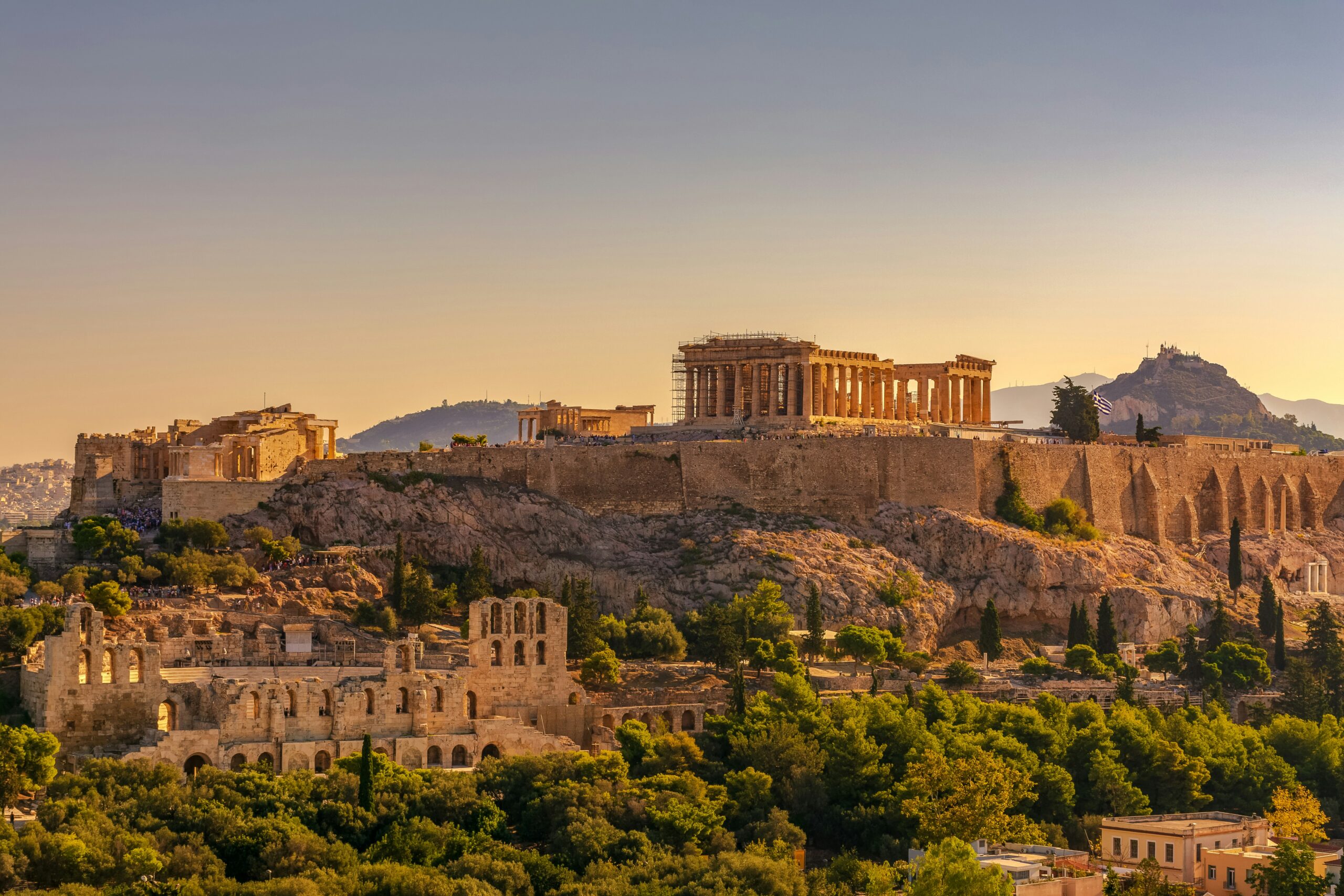
The cradle of Western civilization, ancient Greece, boasts a history of remarkable innovation, philosophical inquiry, and artistic achievement. Its rise, a slow burn across centuries, was fueled by a unique blend of geography, social structures, and intellectual curiosity. Yet, like all great empires, its glory was not immutable. The seeds of its decline were sown even during its zenith, culminating in eventual subjugation. This is the saga of ancient Greece – its luminous ascent and its inevitable descent.
The story of ancient Greece is not a singular narrative but a tapestry woven from the threads of several distinct periods, each contributing to the rich cultural and political landscape that would come to define the Hellenic world.
The Minoan and Mycenaean Precursors
Before the classical flourish, two prominent Bronze Age civilizations laid the groundwork for what would become Greek culture. The Minoans, centered on the island of Crete, flourished from roughly 2700 to 1450 BCE. Their society, revealed through the magnificent palace complexes like Knossos, was maritime, artistic, and seemingly peaceful, with evident trade networks spanning the Aegean. Their Linear A script remains largely undeciphered, hinting at a civilization both sophisticated and enigmatic.
Following the Minoans, the Mycenaeans rose to prominence on mainland Greece from around 1600 to 1100 BCE. These were warrior-kings, their fortified citadels like Mycenae and Tiryns, studded with impressive Cyclopean walls, speaking of a more militaristic society. They adopted and adapted elements of Minoan culture, including their writing system, which evolved into Linear B, a form of early Greek. The Trojan War, immortalized in Homer’s epics, is traditionally placed within this era, offering a glimpse into their worldview, though its historical accuracy is debated.
The Greek Dark Ages and the Archaic Awakening
A cataclysmic collapse of Bronze Age civilizations around 1100 BCE plunged the Aegean into a period often referred to as the “Dark Ages.” Trade dwindled, writing disappeared, and societal structures fragmented. However, this period of decline was not an end but a necessary prelude to a renewed blossoming.
Around the 8th century BCE, the Archaic period dawned. This era witnessed the re-emergence of literacy with the adoption of the Phoenician alphabet, which they adapted to create the Greek alphabet. Crucially, this period saw the genesis of the polis – the independent city-state. This decentralized political structure, a defining characteristic of ancient Greece, fostered intense local identities and fierce competition, driving innovation and cultural development.
The invention of the polis was not a sudden event but a gradual evolution born from the need for security and efficient resource management in isolated communities. Each polis developed its own governance, laws, and customs, leading to a remarkable diversity of political systems, from the nascent democracy of Athens to the oligarchic rule of Sparta. This fragmentation was both a source of strength, allowing for diverse experimentation, and a weakness, often leading to internal conflict.
The Rise of the Polis and Early Colonization
The development of the polis led to a surge in population and economic activity, necessitating westward and eastward expansion. Beginning in the 8th century BCE, Greek city-states established colonies across the Mediterranean and Black Seas, from Sicily and Southern Italy (Magna Graecia) to the shores of Asia Minor and further afield. These colonies, while often bearing the cultural and religious imprint of their mother cities, developed their own distinct identities and contributed to the diffusion of Greek language, culture, and political ideas.
This outward expansion was driven by various factors: population pressure, the search for new trade routes and resources, and sometimes internal political strife that led to groups seeking a new start elsewhere. The success of these colonies, many of which grew into prosperous cities in their own right, further solidified the reach and influence of Hellenic civilization, spreading its nascent ideas and artistic styles to distant lands.
The history of ancient Greece is a fascinating subject that encompasses various aspects, including migration patterns influenced by climate stress. For a deeper understanding of how environmental factors affected the movement of ancient populations, you can explore the article titled “Ancient Migration, Climate Stress, and Movement” available at this link. This article provides insights into the relationship between climate changes and the migratory behaviors of ancient communities, shedding light on the broader context of Greek history.
The Golden Age of Athens and the Hellenic Renaissance
The 5th century BCE is widely regarded as the zenith of ancient Greek civilization, particularly for the city-state of Athens. This era, often called the Classical Period, witnessed an explosion of artistic, philosophical, and political achievements that continue to resonate today.
The Persian Wars: A Defining Struggle
The burgeoning power of Athens and its growing influence in the Aegean inevitably clashed with the vast Persian Empire. The Persian Wars (499-449 BCE) were a series of conflicts that tested the resolve and unity of the Greek city-states. Though vastly outnumbered, the Greeks, particularly the Athenians and the Spartans, demonstrated extraordinary courage and military prowess.
The Battle of Marathon in 490 BCE, where Athenian hoplites repelled a Persian invasion, became a legendary victory, symbolizing Greek resilience against overwhelming odds. Ten years later, Xerxes’ massive invasion saw further Persian triumphs, including the heroic stand of the Spartans at Thermopylae. However, decisive naval victories at Salamis and Plataea effectively ended the Persian threat to mainland Greece.
The Athenian Empire and its Cultural Flourishing
The victory in the Persian Wars propelled Athens to a position of unprecedented power and prestige. Under the leadership of Pericles, Athens forged the Delian League, ostensibly an alliance to protect against further Persian aggression, but which effectively transformed into an Athenian empire. Athens’ dominance allowed for a period of immense prosperity and cultural flourishing, often referred to as Athens’ Golden Age.
Democracy’s Apex
Athens developed a radical form of direct democracy, where male citizens could participate directly in the Assembly, proposing and voting on laws. This vibrant democratic experiment, while excluding women, slaves, and foreigners, was a groundbreaking moment in political history. Citizens served in juries, held public office, and debated public policy with remarkable freedom and passion.
The Birth of Philosophy and Drama
It was during this era that many of the foundational figures of Western philosophy emerged. Socrates, through his relentless questioning, challenged conventional wisdom and laid the groundwork for ethical inquiry. His student, Plato, further developed these ideas, exploring concepts of justice, beauty, and the ideal state in his dialogues. Aristotle, another luminary, systematized philosophical thought and made significant contributions to logic, ethics, politics, and the natural sciences.
Classical Athens also became the crucible of Western drama. The tragedies of Aeschylus, Sophocles, and Euripides explored profound themes of fate, human suffering, and the gods, while the comedies of Aristophanes satirized political figures and societal absurdities. These plays, performed in grand open-air theaters, were not mere entertainment but powerful vehicles for civic and religious expression.
Architectural Marvels
The ambition and wealth of Athens during the Golden Age were epitomized by its monumental architecture. The Acropolis, crowned by the majestic Parthenon dedicated to Athena, stood as a testament to Athenian power, piety, and artistic mastery. The Erechtheion and the Propylaea further adorned this sacred site, showcasing the architectural innovations and artistic prowess of the period.
The Peloponnesian War and the Shifting Tides

The dominance of Athens, however, bred resentment and fear among other Greek city-states, most notably Sparta. This rivalry culminated in the devastating Peloponnesian War, a protracted conflict that fundamentally altered the political landscape of the Greek world.
Sparta’s Rise and the Fear of Athenian Hegemony
Sparta, a militaristic oligarchy with a highly disciplined society, viewed Athens’ growing imperial power and democratic ideals with suspicion and alarm. The other Peloponnesian League states, led by Sparta, formed a powerful counter-alliance, setting the stage for a conflict that would engulf the entire Hellenic world.
The Long and Brutal Conflict
The Peloponnesian War (431-404 BCE) was characterized by brutal sieges, naval battles, and internal strife within city-states. Pericles’ initial strategy of relying on Athens’ naval superiority and fortified walls ultimately proved unsustainable. A devastating plague struck Athens early in the war, claiming the lives of Pericles and a significant portion of the population, severely weakening the city.
The war saw periods of intense fighting, truces, and betrayals. Neither side could achieve a decisive victory for an extended period. The conflict was marked by the ambitious, and ultimately disastrous, Sicilian Expedition launched by Athens, which resulted in the loss of a large fleet and army.
The Fall of Athens and the Rise of Spartan Hegemony
Ultimately, with the crucial aid of Persia, who supplied funds for a Spartan navy, Sparta achieved victory. The Athenian fleet was destroyed at the Battle of Aegospotami in 405 BCE, and Athens was forced to surrender in 404 BCE. The great Athenian Empire was dismantled, its walls torn down, and a Spartan-imposed oligarchy, the Thirty Tyrants, briefly ruled the city.
While Sparta emerged as the dominant power, its reign was short-lived and marked by a failure to replicate Athens’ cultural magnetism or its inclusive governance. Spartan hegemony proved unpopular and unsustainable, paving the way for further conflict and instability within the Greek world.
The Hellenistic Era and the Macedonian Ascendancy

Following the Peloponnesian War and the subsequent struggles between various Greek city-states for dominance, a new external power began to emerge: Macedon, a kingdom to the north of the traditional Greek heartland.
The Rise of Macedon
The kingdom of Macedon, once considered a peripheral and somewhat uncivilized entity by the southern Greek city-states, unified under the shrewd leadership of its kings, particularly Philip II. Philip was a masterful military strategist and a shrewd politician. He modernized the Macedonian army, introducing the formidable phalanx formation, and leveraged diplomatic marriages and alliances to assert Macedonian influence.
Philip gradually brought the northern Greek city-states under his control, often through conquest. He then set his sights on the south. Following a lengthy campaign and the decisive Battle of Chaeronea in 338 BCE, Philip effectively crushed the combined forces of Athens and Thebes, establishing Macedonian dominance over Greece.
Alexander the Great and the Conquest of the East
Philip’s ambition did not end with the subjugation of Greece. He envisioned a grand crusade against the Persian Empire, seeking revenge for the Persian invasions of Greece a century earlier. However, before he could embark on this campaign, Philip was assassinated in 336 BCE. His son, the brilliant and charismatic Alexander the Great, inherited both the Macedonian throne and his father’s grand vision.
Alexander’s reign was a whirlwind of conquest. From 334 to 323 BCE, he led his Macedonian and Greek armies on an astonishing military campaign, conquering the vast Persian Empire, extending his dominion from Greece to India. His conquests were not merely military; they led to the dissemination of Greek culture, language, and ideas across a vast swathe of the ancient world, ushering in the Hellenistic Age.
The Spread of Hellenistic Culture
The Hellenistic Age, named after the Greek word Hellas (Greece), was a period characterized by the widespread diffusion of Greek culture and influence throughout the conquered territories. Greek became the lingua franca of the eastern Mediterranean and beyond. New cities, bearing Greek names and adopting Greek architectural styles and civic customs, were founded across the empire, the most famous being Alexandria in Egypt.
This era witnessed a fusion of Greek culture with local traditions, creating vibrant new forms of art, philosophy, and science. Intellectual centers like the Library of Alexandria became hubs of learning, attracting scholars from across the known world.
The history of ancient Greece is a fascinating subject that has shaped much of Western civilization, influencing art, philosophy, and politics. For those interested in exploring the intricate details of this period, a related article can provide valuable insights into the cultural and historical context of ancient Greece. You can read more about this captivating topic in the article found here.
The Shadow of Decline and Roman Domination
| Time Period | Significant Events |
|---|---|
| Bronze Age (c. 3000–1100 BCE) | Mycenaean civilization, Trojan War |
| Dark Age (c. 1100–800 BCE) | Decline of Mycenaean civilization, emergence of Greek city-states |
| Archaic Period (c. 800–480 BCE) | Rise of democracy in Athens, Persian Wars |
| Classical Period (c. 480–323 BCE) | Golden Age of Athens, Peloponnesian War, conquests of Alexander the Great |
| Hellenistic Period (c. 323–31 BCE) | Spread of Greek culture under Alexander’s empire, Roman conquest of Greece |
Despite its glorious achievements, the inherent political fragmentation of the Greek world and the rise of powerful external forces ultimately led to its submersion.
The Legacy of Political Instability
Even during the Hellenistic period, the Greek city-states, while granted a degree of autonomy, remained largely subservient to Macedonian power. Internal rivalries and power struggles continued to plague the region. The Greek world, once a collection of independent poleis, struggled to maintain a unified political front against external threats.
The divisions between the various Hellenistic kingdoms that emerged after Alexander’s death, such as those founded by his generals Ptolemy in Egypt and Seleucus in Asia, weakened the overall Greek influence. These kingdoms engaged in constant warfare with each other, draining resources and preventing a cohesive defense of the region.
The Rise of Rome
While Greece was grappling with internal divisions and the challenges of managing vast empires, a new power was steadily rising in the west: Rome. The Roman Republic, with its disciplined military, pragmatic governance, and insatiable ambition, began to expand its influence across the Italian peninsula and then into the eastern Mediterranean.
Through a series of wars and strategic alliances, Rome gradually encroached upon the Hellenistic kingdoms. The Achaean League, a confederation of Greek city-states, made a last stand against Roman expansion, but ultimately failed. The Battle of Corinth in 146 BCE marked the final subjugation of mainland Greece by Rome.
The Enduring Hellenic Influence
Though Greece lost its political independence, its cultural and intellectual legacy continued to thrive under Roman rule. Roman elites deeply admired Greek culture, art, philosophy, and literature, often adopting and adapting these elements into their own society. Greek became the language of scholarship and culture within the Roman Empire, and many Greek thinkers, artists, and intellectuals continued to flourish in Roman cities.
The enduring influence of ancient Greece can be seen in countless aspects of Western civilization, from its political ideals and philosophical inquiries to its artistic styles and literary traditions. The rise and fall of ancient Greece is a timeless narrative of human achievement, ambition, and the inexorable currents of history. Its story serves as a profound reminder of both the brilliance that humanity can achieve and the fragility of even the most glorious civilizations.

The Ancient Computer Nobody Could Read
FAQs
What is the history of ancient Greece?
The history of ancient Greece spans from the Bronze Age to the Roman conquest in the 1st century BCE. It is known for its contributions to philosophy, art, science, and politics.
What were the major city-states of ancient Greece?
The major city-states of ancient Greece included Athens, Sparta, Thebes, Corinth, and Delphi. Each city-state had its own government, laws, and customs.
What were the major achievements of ancient Greece?
Ancient Greece made significant contributions to the fields of philosophy, mathematics, architecture, drama, and government. Notable figures such as Socrates, Plato, Aristotle, and Pythagoras emerged during this time.
What were the major wars in ancient Greece?
The major wars in ancient Greece included the Persian Wars, the Peloponnesian War, and the conquests of Alexander the Great. These conflicts shaped the political and military landscape of the region.
How did ancient Greece influence modern society?
The legacy of ancient Greece can be seen in modern democracy, philosophy, literature, art, and architecture. Many aspects of Western culture and civilization have been influenced by ancient Greek ideas and innovations.