
The story of Cahokia is a testament to human ingenuity and the fleeting nature of even the most powerful civilizations. It was a metropolis that once rivaled the great cities of Europe, a center of trade, culture, and complex social organization that flourished in the heart of what is now the United States. Its rise was meteoric, its peak awe-inspiring, and its eventual decline a profound mystery that continues to intrigue archaeologists and historians. This is the narrative of Cahokia, the ancient city that once stood as the undisputed capital of a vast Mississippian world.
The emergence of Cahokia was not a sudden event, but rather a gradual process rooted in the rich agricultural traditions of the Mississippian culture. For centuries, the fertile lands along the Mississippi River had supported scattered settlements, their inhabitants cultivating maize, beans, and squash, crops that would fuel the growth of larger communities. The Late Woodland period, roughly A.D. 700-1000, saw increasing social complexity and the development of distinct cultural practices that laid the groundwork for the monumental achievements to come.
The Agricultural Revolution and its Impact
The adoption and refinement of intensive maize agriculture was a pivotal turning point. This surplus of food allowed for larger populations to be sustained, freeing up individuals from the constant need for subsistence and enabling the specialization of labor. Farmers could dedicate their efforts to growing crops, while others could focus on craft production, construction, and leadership. This economic shift was the bedrock upon which Cahokia’s grandeur was built.
Early Settlement Patterns and Social Stratification
Even before the full flowering of Cahokia, evidence points to the beginnings of social stratification. Burial mounds, often accompanied by grave goods, suggest a hierarchical society where certain individuals held greater status and wealth. These early settlements, while smaller than the later metropolis, demonstrate the emerging organizational capacity of Mississippian peoples. They were the ancestors of those who would eventually converge to create something truly extraordinary.
The Influence of Trade Networks
Long-distance trade was another crucial element in Cahokia’s ascendance. Shells from the Gulf Coast, copper from the Great Lakes region, and exotic stones from further afield were all found within Cahokia’s archaeological record. These trade routes not only brought valuable materials but also facilitated the exchange of ideas, technologies, and cultural practices, fostering a sense of shared identity and interconnectedness among diverse groups. This dynamic exchange fueled innovation and contributed to the development of a complex and sophisticated society.
Cahokia, the ancient city located near present-day St. Louis, is a fascinating subject of study due to its complex society and impressive earthen mounds. For those interested in exploring the broader implications of historical civilizations and their impact on modern society, a related article can be found at this link: The New Space Race: Nations’ Moon Grab Tactics. This article delves into how contemporary nations are vying for resources and territory, drawing parallels to the competitive dynamics that may have existed among ancient cultures like Cahokia.
The Zenith of Power: A City on the Mississippi
The period between A.D. 1050 and 1200 marked the absolute zenith of Cahokia’s power and influence. During these centuries, the city transformed into a sprawling urban center, covering an estimated six square miles and housing a population that may have reached between 10,000 and 20,000 people, with the surrounding hinterland supporting tens of thousands more. It was a hub of activity, a beacon of Mississippian culture that dominated the landscape for hundreds of miles.
Monks Mound: The Heart of the City
Dominating the Cahokian skyline was Monks Mound, a colossal earthen structure that stands as the largest prehistoric earthwork in the Americas. Its base covers over 14 acres, and it rises to a height of 100 feet, encompassing an estimated volume of more than 22 million cubic feet of earth. Building such a monumental structure would have required an immense labor force, meticulously organized and directed, a testament to the sophisticated leadership and engineering prowess of the Cahokians. The summit of Monks Mound likely hosted important structures, perhaps residences for elites or ceremonial platforms, offering a commanding view of the entire city and its environs.
The Grand Plaza and Ceremonial Precincts
Adjacent to Monks Mound lay the Grand Plaza, a vast open space that served as the civic and ceremonial heart of the city. This expansive area, devoid of permanent structures, was likely a gathering place for public ceremonies, markets, and important political events. Surrounding the plaza were numerous smaller mounds, some conical, some platform-shaped, each likely serving specific purposes, from burials of important individuals to stages for ritual performances. These ceremonial precincts underscore the deeply ingrained spiritual and ritualistic aspects of Cahokian life.
Woodhenges: Celestial Observatories
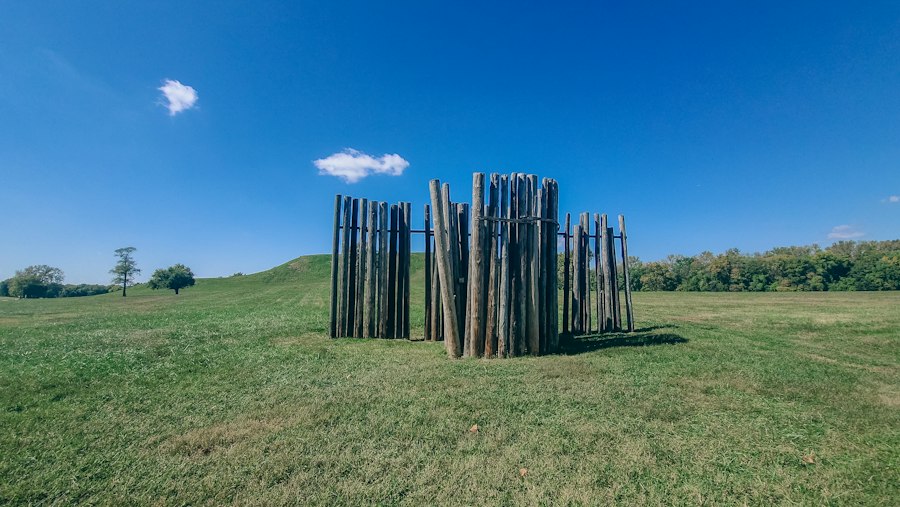
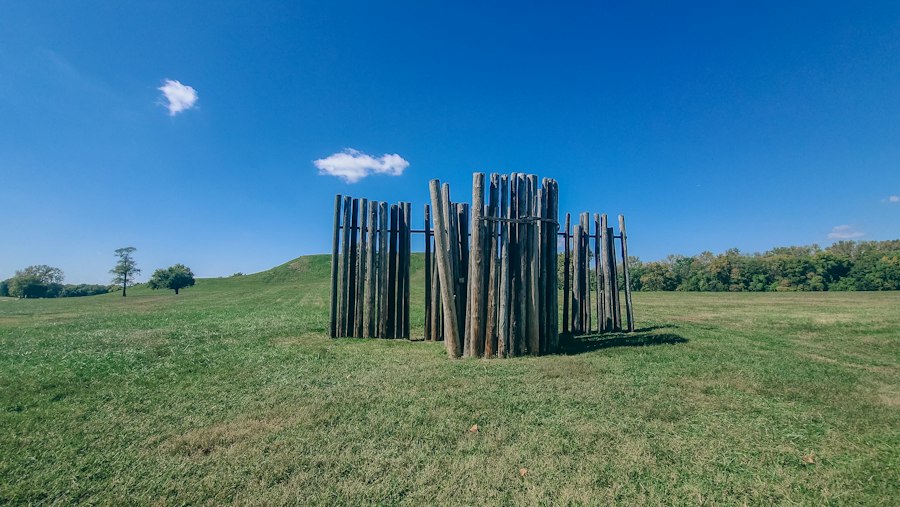
One of the most remarkable discoveries at Cahokia was the series of “Woodhenges.” These were large, circular arrangements of wooden posts, with a central post and radiating markers. Archaeologists have identified several such structures, the most famous being the “Big Circle,” a construction of 48 posts with a diameter of over 400 feet. These Woodhenges are believed to have functioned as sophisticated astronomical calendars, allowing the Cahokians to track the solstices, equinoxes, and other celestial events. This demonstrates a profound understanding of astronomy and a sophisticated ability to apply this knowledge to practical matters, such as agricultural planning.
The Economic Engine: Trade and Craftsmanship
Cahokia was not just a political and religious center; it was also a vibrant economic powerhouse. Its strategic location on the Mississippi River made it a nexus for extensive trade networks. Goods flowed in from far and wide, and Cahokia itself produced a wealth of finely crafted artifacts. Copper ornaments, intricately carved shell gorgets, polished stone tools, and distinctive pottery were all hallmarks of Cahokian craftsmanship. This economic prosperity supported the large population and funded the ambitious construction projects.
A Society of Order and Hierarchy
The sheer scale and complexity of Cahokia necessitate the existence of a highly organized and stratified society. The construction of Monks Mound alone would have required immense coordination and a substantial workforce, implying a clear hierarchy of power and authority. While much remains unknown about the precise social structure, archaeological evidence offers compelling insights.
Elite Residences and Burial Practices
The presence of elaborate burial mounds, often containing rich grave goods such as copper jewelry, polished stone axes, and exotic beads, points to a powerful elite class. These individuals, likely rulers, priests, or distinguished warriors, were buried with the wealth and status they held in life, signaling a belief in an afterlife where such distinctions might persist. Evidence also suggests the existence of larger, more elaborate structures interpreted as residences for these elites, situated in prominent locations within the city.
Commoners and Laborers
Below the elite, a substantial population of commoners would have formed the backbone of Cahokian society. These individuals were likely farmers, artisans, and laborers who contributed to the city’s sustenance and development. Their housing, typically smaller, more rudimentary dwellings, and their burial practices, often less elaborate than those of the elite, reflect their social standing. However, their collective efforts were essential to the functioning and growth of the metropolis.
The Role of Religion and Ritual
Religion and ritual likely played a central role in maintaining social cohesion and reinforcing the authority of the ruling class. The numerous mounds, ceremonial plazas, and the careful placement of artifacts suggest a complex belief system deeply intertwined with the daily lives of the Cahokians. Chiefly figures, perhaps seen as intermediaries between the earthly and spiritual realms, would have wielded considerable influence, their actions legitimized by religious doctrine and public ceremony.
The Mysterious Decline: Echoes of a Vanished City
Around the 13th century A.D., a significant shift began to occur at Cahokia. The population started to dwindle, construction projects ceased, and the vibrant urban center began to fade. The reasons for this decline are not entirely understood and remain a subject of intense debate among scholars, with several compelling theories emerging.
Environmental Stress and Resource Depletion
One prominent theory suggests that Cahokia may have fallen victim to its own success, leading to environmental strain. The intensive agriculture required to feed such a large population could have depleted soil nutrients, leading to reduced crop yields and food shortages. Deforestation for construction and fuel could have exacerbated erosion and altered local weather patterns. This environmental degradation could have made the region less sustainable, forcing inhabitants to seek new lands.
Social and Political Instability
Another possibility is that internal social or political strife played a role in Cahokia’s decline. As the population grew and resources became strained, tensions between different social groups or factions may have escalated. Warfare with neighboring groups, although direct evidence is limited, could also have been a contributing factor. A breakdown in leadership or a loss of faith in the ruling elite could have led to the dispersal of the population.
Disease and Natural Disasters
While direct archaeological evidence is scarce, it is plausible that widespread disease outbreaks or significant natural disasters, such as prolonged droughts or major floods, could have contributed to the decline. Such events could have decimated the population and disrupted the social order, making it impossible for the city to recover.
Gradual Abandonment and Dispersal
It is also likely that Cahokia’s decline was not a sudden collapse but rather a gradual process of abandonment and dispersal. As conditions became more challenging, people may have begun to migrate away in search of better opportunities and resources. Over time, the once bustling metropolis would have been left to the winds and the elements, its impressive structures slowly succumbing to decay.
Cahokia, the ancient city that thrived near present-day St. Louis, offers a fascinating glimpse into pre-Columbian urban life and societal organization. Researchers continue to uncover the complexities of its society, including trade networks that extended far beyond its borders. For a broader understanding of how ancient civilizations influenced modern economies, you might find it interesting to explore this related article on economic comparisons, which can be found here. The connections between past and present are often more intertwined than we realize.
The Legacy of Cahokia: Lessons from the Past
| Aspect | Details |
|---|---|
| Location | Illinois, United States |
| Period | Approximately 1050-1350 AD |
| Population | Estimated 10,000-20,000 inhabitants at its peak |
| Significance | One of the largest pre-Columbian cities in North America |
| Structures | Mounds, plazas, and residential areas |
| Decline | Abandoned by the 14th century for unknown reasons |
Despite its eventual demise, the legacy of Cahokia continues to resonate today. It stands as a powerful reminder of the remarkable achievements of indigenous peoples in North America, a civilization that developed complex societies, monumental architecture, and sophisticated knowledge systems long before European contact.
Archaeological Discoveries and Ongoing Research
Modern archaeology has unearthed a wealth of information about Cahokia, revealing its intricate urban planning, its advanced understanding of astronomy, and the richness of its material culture. Excavations continue to reveal new insights, constantly refining our understanding of this ancient metropolis. The ongoing research is crucial for piecing together the fragmented story of Cahokia and its people.
A Window into Mississippian Culture
Cahokia provides an unparalleled window into the Mississippian culture, illuminating the social structures, religious beliefs, and economic practices of its inhabitants. It demonstrates that sophisticated urbanism and complex societal organization were not solely a European phenomenon but existed independently in the Americas. Its story challenges Eurocentric narratives and highlights the diversity of human history.
Preserving a Vital Heritage
The Cahokia Mounds State Historic Site is a UNESCO World Heritage Site, a testament to its global significance. Preserving this site is paramount for safeguarding the memory of this remarkable civilization and educating future generations about the rich cultural heritage of North America. It serves as a tangible link to a past that shaped the landscape and the people who inhabited it. Cahokia, though gone, continues to speak to us through the earth, through the stones, and through the enduring mysteries that still captivate our imaginations.

A City Bigger Than London Once Stood in America. Then It Vanished.
FAQs
What is Cahokia?
Cahokia was an ancient city located in present-day Illinois, near the Mississippi River. It was the largest pre-Columbian settlement north of Mexico and was inhabited from about 700 to 1400 AD.
What was the significance of Cahokia?
Cahokia was a major center for trade, religion, and culture in the Mississippian culture. It had a complex society with large earthen mounds, plazas, and a sophisticated agricultural system. It was also a hub for regional and long-distance trade.
How large was Cahokia?
At its peak, Cahokia covered nearly six square miles and had a population of 10,000 to 20,000 people. It was the largest city in what is now the United States until the 1780s.
What happened to Cahokia?
Cahokia declined and was abandoned by the 1400s for reasons that are still not fully understood. Factors such as environmental degradation, political instability, and resource depletion may have contributed to its decline.
What is the significance of Cahokia today?
Cahokia is a UNESCO World Heritage Site and is considered one of the most important archaeological sites in the United States. It provides valuable insights into the pre-Columbian history of North America and the complex societies that existed in the region.