The story of the Ancient Roman Empire is an epic saga of unparalleled ambition, brilliant innovation, and ultimately, profound decline. From its humble beginnings as a small city-state in Italy, Rome rose to dominate the Mediterranean world, crafting an empire that would leave an indelible mark on Western civilization. Its legacy, woven into the fabric of law, language, architecture, and governance, continues to resonate today.
The origins of Rome are steeped in legend and myth, a romanticized account of twin brothers, Romulus and Remus, raised by a she-wolf. While the precise historical truth of these tales remains elusive, they speak to a deep-seated Roman identity centered on strength, resilience, and a divinely ordained destiny. Archeological evidence suggests that the area around the Palatine Hill was settled as early as the 8th century BCE, with a gradual consolidation of power and influence among neighboring villages.
Early Monarchy and the Birth of Roman Society
The traditional narrative outlines a period of seven kings ruling Rome, a phase characterized by the establishment of foundational social structures and religious practices. This early monarchy was a crucial period for defining the rudimentary political and social hierarchy that would later be refined into the Republic. The distinct social classes, the patricians (the aristocratic elite) and the plebeians (the common citizens), began to emerge, laying the groundwork for future internal struggles.
The Etruscan Influence and the Founding of the Republic
The Etruscans, a sophisticated civilization to the north, wielded considerable influence over early Rome, contributing significantly to its development in areas such as urban planning, religious rites, and military organization. The expulsion of the last Etruscan king, Lucius Tarquinius Superbus, in 509 BCE, marked a pivotal moment: the end of monarchy and the dawn of the Roman Republic. This transition was not merely a change in leadership but a fundamental ideological shift, emphasizing citizen participation and collective governance.
The Struggle of the Orders: Plebeians Versus Patricians
The early Republic was far from a unified entity. The patricians, descendants of the original senatorial families, held a near-monopoly on political power and social prestige. The plebeians, though contributing to the army and the economy, were largely excluded from meaningful political participation. This inequality sparked a protracted struggle, known as the “Struggle of the Orders.”
The Creation of Tribunes and the Twelve Tables
Through sustained pressure and periods of secession, the plebeians managed to secure crucial concessions. The appointment of tribunes, elected officials empowered to protect plebeian interests and veto laws, was a significant victory. The codification of Roman law in the Twelve Tables, publicly displayed for all to see, was another landmark achievement, ensuring greater legal transparency and fairness for all citizens, regardless of social standing.
The Piri Reis map has long fascinated historians and enthusiasts of ancient history due to its intricate details and the controversies surrounding its accuracy. For a deeper exploration of this intriguing topic, you can read the article titled “The Piri Reis Map Accuracy Debate,” which delves into the various interpretations and implications of this historical artifact. To access the article, click here: The Piri Reis Map Accuracy Debate.
The Expansionist Drive: The Republican Conquests
The Roman Republic, forged in internal strife but unified in its external ambition, embarked on a relentless path of expansion. The disciplined Roman legions, coupled with astute diplomatic strategies, proved to be an unstoppable force. This era witnessed Rome transform from a regional power into the dominant force in the Italian peninsula and beyond.
The Punic Wars: A Clash of Titans
Perhaps the most defining conflicts of the Republican expansion were the three Punic Wars against Carthage, a formidable Phoenician city-state in North Africa. These wars, fought over a century, tested Rome’s resolve and necessitated unprecedented military innovation.
The First Punic War and the Birth of a Navy
Initially, Rome was primarily a land power, with little naval experience. The First Punic War, fought mainly for control of Sicily, forced Rome to develop a formidable navy, learning shipbuilding and naval tactics from the Carthaginians. The eventual Roman victory secured their dominance in the Western Mediterranean.
Hannibal and the Second Punic War: A Near Catastrophe
The Second Punic War saw the legendary Carthaginian general Hannibal unleash his military genius, famously crossing the Alps with his army and elephants to invade Italy. His tactical brilliance inflicted devastating defeats on the Romans, most notably at Cannae. However, Roman tenacity and the strategic brilliance of Scipio Africanus, who took the war to North Africa, ultimately led to Carthage’s defeat at the Battle of Zama.
The Destruction of Carthage: Rome’s Undisputed Hegemony
The Third Punic War, though seemingly a foregone conclusion, demonstrated Rome’s unforgiving nature. In 146 BCE, Carthage was utterly destroyed, its land sown with salt, a stark message to any who might challenge Roman supremacy. This victory solidified Rome’s position as the undisputed master of the Mediterranean.
Conquest of the Hellenistic World
Beyond North Africa, Roman legions marched east, engaging and eventually conquering the fragmented Hellenistic kingdoms that had emerged after the death of Alexander the Great. The rich cultures and resources of Greece and the Near East fell under Roman control, further fueling the empire’s wealth and influence, but also introducing new complexities and challenges.
The Transformation into Empire: Cracks in the Republic
The immense wealth and power generated by Roman conquests, while fueling expansion, also sowed the seeds of the Republic’s demise. The traditional agrarian economy was strained, and social inequalities deepened. The influx of slaves, the rise of powerful generals, and the corruption within the political system created a volatile environment.
The Gracchi Brothers and Agrarian Reform
The attempts by the Gracchi brothers, Tiberius and Gaius, to address land redistribution and the plight of the landless poor highlighted the growing tensions within Roman society. Their radical reforms, met with fierce opposition from the senatorial elite, ultimately led to their violent deaths, signaling a dangerous shift towards political violence as a tool for resolving disputes.
The Rise of Powerful Generals and Private Armies
The military reforms of Gaius Marius, which opened the ranks of the army to landless citizens, created a professional fighting force loyal not to the Republic, but to their generals, who provided pay, land, and plunder. This paved the way for ambitious commanders like Sulla, Pompey, and Caesar to amass personal power and command private armies, effectively challenging the authority of the Senate.
Julius Caesar and the End of the Republic
Gaius Julius Caesar, a brilliant general and charismatic politician, emerged as the dominant figure of this tumultuous period. His conquest of Gaul cemented his military reputation, and his subsequent crossing of the Rubicon River with his army initiated a civil war against his rival Pompey. Victorious, Caesar became dictator for life, effectively ending the Republic. His assassination in 44 BCE by a group of senators, who feared his monarchical ambitions, plunged Rome back into chaos.
The Pax Romana: The Golden Age of Empire
Following Caesar’s assassination and a period of further civil war, his adopted son Octavian emerged victorious, eventually becoming Emperor Augustus. This marked the beginning of the Roman Empire and the initiation of the Pax Romana, a period of unprecedented peace, prosperity, and stability that lasted for over two centuries.
Augustus: Architect of the Imperial System
Augustus was a master of political maneuvering and propaganda. He carefully cultivated the image of restoring the Republic while consolidating absolute power. He reformed the administration, reorganized the military, and initiated ambitious public works projects, laying the foundations for centuries of imperial rule.
The Principate: A New Form of Governance
Augustus established the Principate, a system where the emperor, the “princeps” or “first citizen,” held ultimate authority, but ostensibly with the cooperation of the Senate. This carefully crafted illusion allowed for a smoother transition and masked the reality of autocratic rule.
Economic Prosperity and Expansion
Under Augustus and his successors, the empire experienced remarkable economic growth. Trade flourished along well-maintained roads and sea lanes, and agriculture benefited from improved techniques and stability. The empire reached its greatest territorial extent, encompassing much of Europe, North Africa, and the Middle East.
Cultural Flourishing and Romanization
The Pax Romana was also an era of immense cultural achievement. Roman literature, architecture, and art reached their zenith. Latin became the lingua franca of the Western Empire, and Roman laws and customs spread, creating a sense of shared identity – Romanization – across diverse populations.
The Great Builders: Aqueducts, Roads, and Amphitheaters
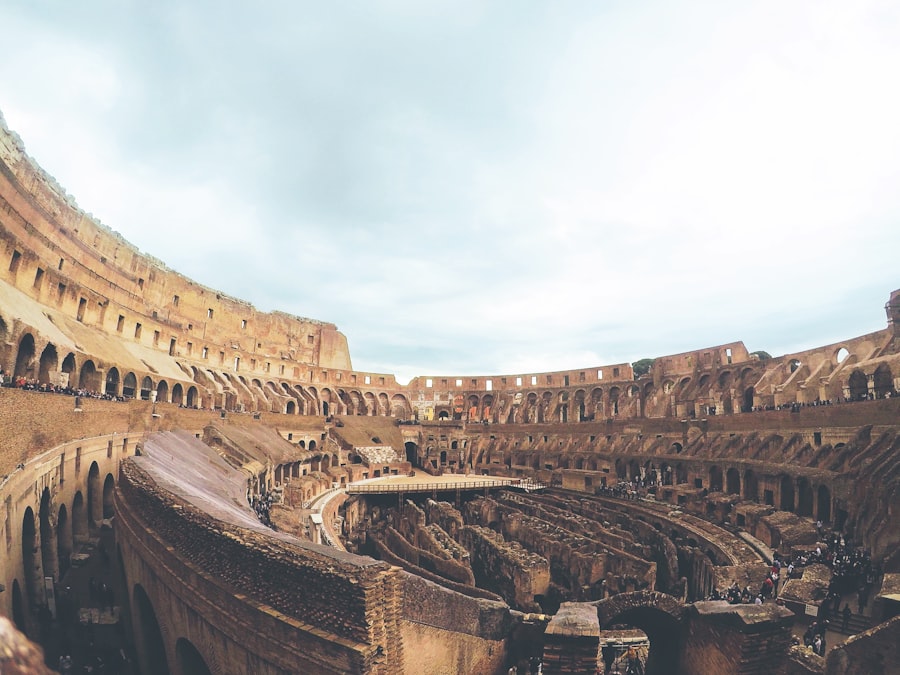
Roman engineering prowess was on full display during this period. The construction of vast networks of aqueducts brought fresh water to cities, while meticulously laid roads facilitated trade and troop movement. Magnificent amphitheaters, like the Colosseum, and public baths became symbols of Roman urban life and leisure.
The Spread of Roman Law and Language
Roman law, characterized by its logic and emphasis on fairness, formed the basis of many modern legal systems. Latin, the language of the Romans, evolved into the Romance languages of today, including Italian, Spanish, French, and Portuguese, demonstrating its enduring linguistic legacy.
The exploration of ancient civilizations often leads to intriguing theories about lost lands and forgotten histories. A fascinating article discusses the possibility of a lost continent in Antarctica, exploring how this theory could reshape our understanding of ancient human migration and settlement patterns. To delve deeper into this captivating subject, you can read more about it in this article.
The Decline and Fall: Internal Strife and External Pressures
| Event | Date | Location |
|---|---|---|
| Construction of the Great Pyramid of Giza | 2580–2560 BC | Egypt |
| Founding of Rome | 753 BC | Italy |
| Battle of Marathon | 490 BC | Greece |
| Julius Caesar’s assassination | 44 BC | Rome |
| Construction of the Great Wall of China | 7th century BC | China |
Despite its impressive achievements, the Roman Empire, like all great powers, was not immune to eventual decline. A complex interplay of internal weaknesses and external threats gradually eroded its strength, leading to its ultimate fragmentation and collapse.
The Crisis of the Third Century: A Period of Anarchy
The 3rd century CE proved to be a period of immense turmoil. Political instability became rampant, with frequent civil wars and a rapid succession of emperors, often placed and deposed by their own armies. Economic hardship, inflation, and barbarian incursions intensified, pushing the empire to the brink of collapse.
Military Overextension and Financial Strain
The vast borders of the empire proved increasingly difficult and expensive to defend. Constant warfare, both internal and external, drained the imperial coffers, leading to heavy taxation and debasement of currency, which fueled inflation.
The Rise of Internal Threats and Corrupt Governance
Corruption became endemic within the imperial bureaucracy and the military. Self-serving generals and officials prioritized personal gain over the welfare of the empire, further weakening its ability to respond to challenges.
The Division of the Empire: A Necessary Evil?
In an attempt to manage the unwieldy empire, Emperor Diocletian implemented the Tetrarchy, dividing rule among four co-emperors. Later, Emperor Constantine moved the capital to Constantinople in the East. While these measures offered temporary stability, they ultimately contributed to the permanent division of the empire into the Western and Eastern Roman Empires.
The Western Roman Empire: The Inevitable Collapse
The Western Roman Empire, facing more direct and persistent barbarian invasions and suffering from deeper internal decay, proved unable to withstand the mounting pressures. A series of invasions by Germanic tribes, such as the Goths, Vandals, and Franks, gradually chipped away at its territories.
The Sack of Rome and the Deposition of the Last Emperor
The symbolic end of the Western Roman Empire is often marked by the sack of Rome by the Visigoths in 410 CE and the deposition of the last Roman emperor in the West, Romulus Augustulus, by the Germanic chieftain Odoacer in 476 CE. Though the empire itself had been weakening for decades, this event represented a profound shift in the political landscape of Europe.
The Eastern Roman Empire (Byzantine Empire): A Lingering Legacy
The Eastern Roman Empire, with its capital in Constantinople, proved more resilient. It maintained Roman traditions, laws, and administration for another thousand years, evolving into what historians refer to as the Byzantine Empire. While distinct from its Western counterpart, it preserved much of the Roman legacy and played a crucial role in the development of Eastern Orthodox Christianity and medieval Europe.
The fall of the Western Roman Empire was not a sudden event but a gradual process of erosion. It was a testament to the challenges of maintaining a vast and diverse empire in the face of internal divisions, economic pressures, and external threats. Yet, the legacy of Rome endured, shaping the course of Western civilization in profound and lasting ways, a testament to its remarkable rise and enduring influence.

The Greatest Technology Humanity Ever Lost
FAQs
What is real lore and order ancient history?
Real lore and order ancient history refers to the study and exploration of historical events, cultures, and civilizations from ancient times. It involves the examination of primary sources, artifacts, and archaeological evidence to understand the development of human societies in the ancient world.
What are some examples of ancient civilizations studied in real lore and order ancient history?
Some examples of ancient civilizations studied in real lore and order ancient history include the Mesopotamian civilizations such as Sumer, Akkad, and Babylon, the ancient Egyptian civilization, the Indus Valley civilization, the ancient Greek and Roman civilizations, and the civilizations of ancient China and Mesoamerica.
What methods are used to study real lore and order ancient history?
Historians and archaeologists use a variety of methods to study real lore and order ancient history, including the analysis of written records, the examination of archaeological sites and artifacts, the study of ancient languages and scripts, and the use of scientific techniques such as carbon dating and DNA analysis.
Why is the study of real lore and order ancient history important?
The study of real lore and order ancient history is important because it provides valuable insights into the origins of human societies, the development of technology and culture, and the interactions between different ancient civilizations. It also helps us understand the roots of modern-day social, political, and economic systems.
What are some challenges in studying real lore and order ancient history?
Some challenges in studying real lore and order ancient history include the scarcity of written records from ancient times, the preservation of archaeological sites and artifacts, the decipherment of ancient languages and scripts, and the interpretation of historical events and cultural practices within their proper context.