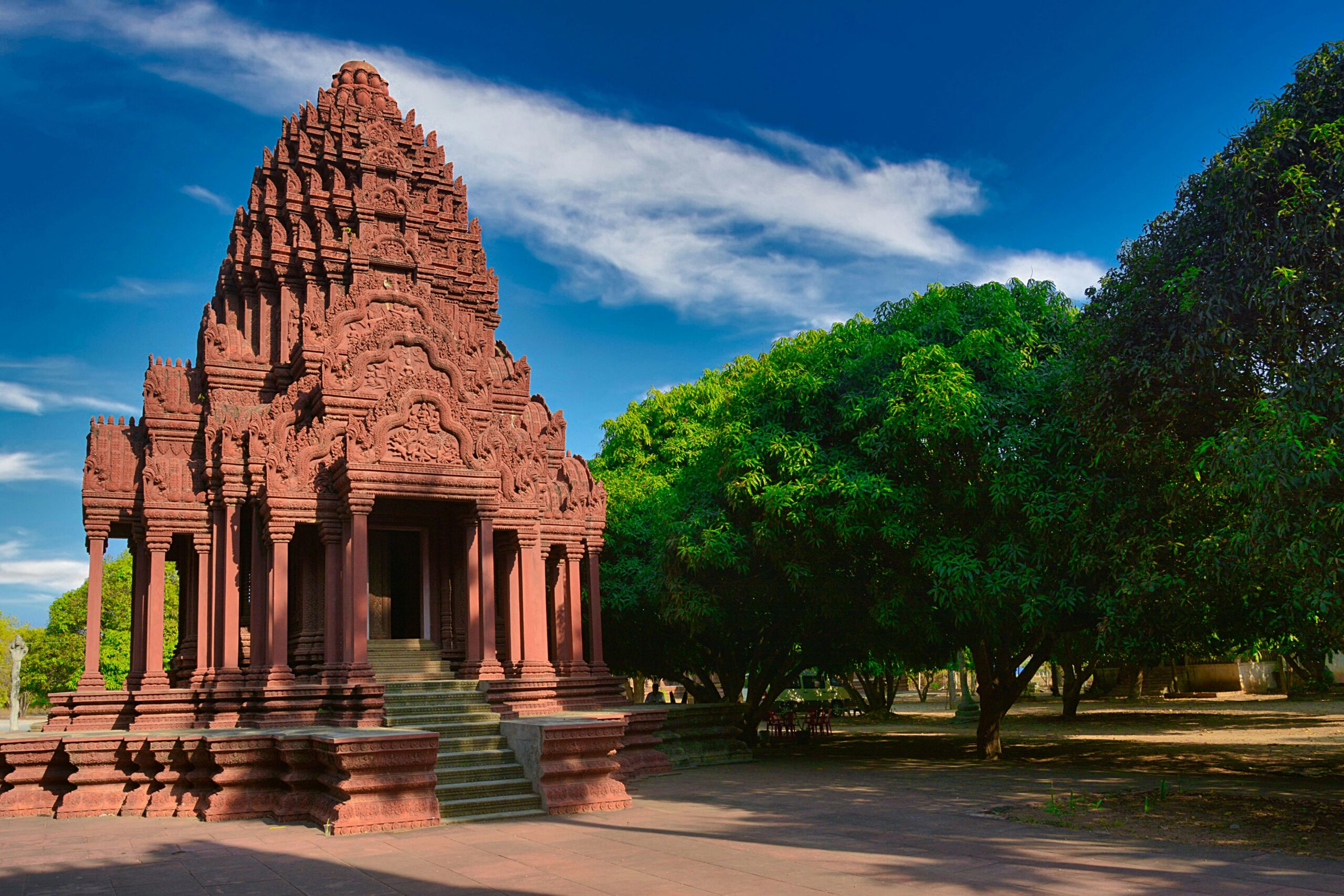
The story of the Khmer civilization is a grand and tragic epic, a testament to human ingenuity and ambition, and a sobering reminder of its fragility. From its humble beginnings, it ascended to become one of Southeast Asia’s most powerful and influential empires, leaving behind a legacy etched in stone and a history shadowed by dramatic collapse. Understanding this rise and fall requires delving into the intricate tapestry of its political, social, religious, and environmental transformations.
The seeds of the Khmer civilization were sown from the ashes of earlier kingdoms, most notably the Funan and Chenla polities that dominated the Mekong Delta and central Cambodia. While the precise lineage is complex and often debated by historians, the unified Khmer state emerged as a distinct entity around the 9th century CE, with the consolidation of power under King Jayavarman II. This period marked a crucial transition, laying the groundwork for the empire’s eventual grandeur.
The Legacy of Pre-Angkorian Kingdoms
Before the dazzling reign of Angkor, the region was shaped by the influences of Indianized kingdoms.
Funan: The Early Maritime Power
Funan, flourishing from the 1st to the 6th century CE, was a vital early state that fostered extensive trade networks. Its strategic location allowed it to control waterways and engage in a thriving maritime commerce that connected Southeast Asia to India and China. Archaeological evidence suggests a sophisticated administration and a blend of indigenous beliefs with Hindu and Buddhist influences. This early exposure to external ideas and technologies proved formative.
Chenla: Unification and Transition
Following the decline of Funan, the Chenla kingdoms rose to prominence, eventually coalescing and consolidating territorial control. Chenla, often described as comprising “land Chenla” and “water Chenla,” exerted influence over significant portions of modern-day Cambodia, Laos, and Thailand. This period witnessed the gradual development of a distinct Khmer identity and a growing centralization of political power, setting the stage for Jayavarman II’s monumental achievements.
Jayavarman II and the Devaraja Cult
The true genesis of the Angkorian Empire is inextricably linked to King Jayavarman II (reigned 802-850 CE). His reign is considered a pivotal moment, marking the end of the Chenla period and the birth of a unified Khmer state.
The Proclamation of Independence and the Devaraja
Jayavarman II’s most significant act was his proclamation of independence from what was likely Javanese suzerainty, often attributed to a ritual performed on Mount Kulen. He established the “Devaraja” cult, envisioning the Khmer king as a divine monarch, a god-king, whose reign legitimized and secured the prosperity of the land. This concept of divine kingship became a cornerstone of Khmer political and religious ideology for centuries.
Unifying the Khmer Lands
Through military prowess and shrewd diplomacy, Jayavarman II consolidated control over various Khmer principalities, forging a unified kingdom that would expand and dominate the region. His legacy was the establishment of an empire that would not only endure but thrive for over 500 years.
The history of the Khmer civilization is a fascinating subject that delves into the rich cultural and architectural achievements of this ancient society. For those interested in exploring more about the untold stories and significant events that shaped the Khmer Empire, I recommend checking out the article titled “Uncovering Untold Histories: A Revealing Documentary.” This insightful piece provides a deeper understanding of the Khmer civilization’s legacy and its impact on Southeast Asia. You can read it here: Uncovering Untold Histories: A Revealing Documentary.
The Golden Age of Angkor: Architectural Marvels and Imperial Grandeur
The era of Angkor, spanning roughly from the 9th to the 15th centuries CE, represents the zenith of Khmer civilization. This period is synonymous with the construction of breathtaking temples and sophisticated urban planning, most famously exemplified by the city of Angkor.
The City of Angkor: A Hydraulic Metropolis
Angkor was not merely a collection of temples; it was a sprawling, meticulously planned urban center that harnessed the power of water to sustain its vast population and agricultural output.
The Barays and Irrigation Systems
The Khmer engineers were masters of hydraulic engineering. They constructed enormous reservoirs, known as barays, and intricate networks of canals, dykes, and sluices. These systems were crucial for managing water – storing it during the monsoon season for use during the dry periods, irrigating vast rice paddies, and providing water for the city’s inhabitants. The scale of these projects is staggering, demonstrating a deep understanding of both engineering and environmental management.
Urban Planning and Social Organization
The city itself was organized around the royal palace and the great temples, with residential areas and markets integrated into the landscape. The concentric rings of moats and walls, the precisely aligned avenues, and the deliberate placement of religious structures all speak to a highly ordered society with a strong sense of cosmology and hierarchy.
The Architectural Masterpieces: Symbolism and Spirituality
The temples of Angkor are enduring testaments to the Khmer people’s artistic skill, religious devotion, and mathematical precision. Each structure is imbued with symbolic meaning, reflecting their cosmology and beliefs.
Angkor Wat: The Pinnacle of Khmer Architecture
Undoubtedly the most famous and iconic of the Angkorian temples, Angkor Wat, built in the early 12th century by King Suryavarman II, is a monument of unparalleled beauty and architectural genius. Originally dedicated to the Hindu god Vishnu, it later transformed into a Buddhist temple. Its vast scale, intricate bas-reliefs depicting epic mythological tales and historical events, and its iconic lotus-bud towers make it a truly awe-inspiring sight. It stands as a representation of Mount Meru, the cosmic mountain at the center of the Hindu universe.
Angkor Thom and the Bayon
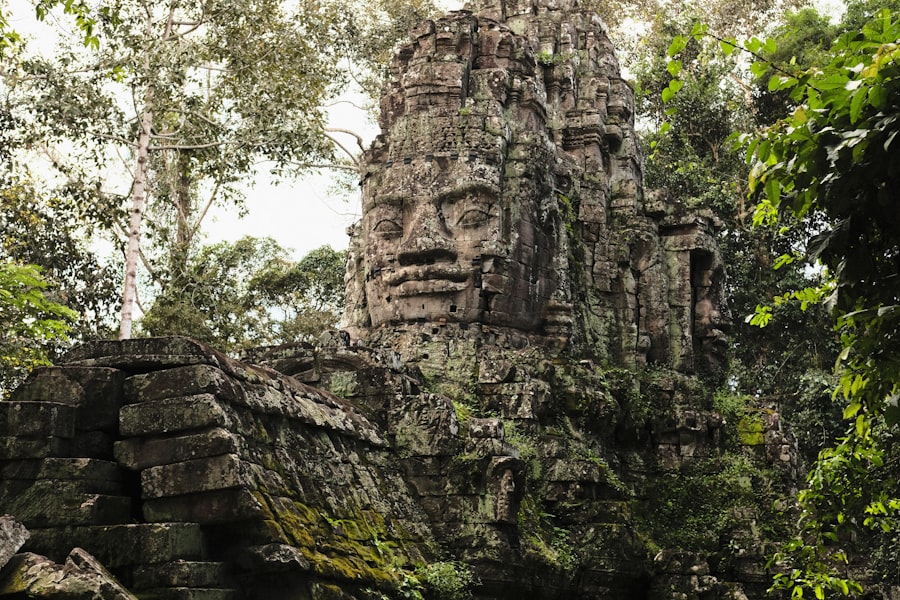
Angkor Thom, the last great capital city of the Angkorian Empire, established by Jayavarman VII in the late 12th century, is another remarkable achievement. At its heart lies the Bayon temple, famous for its enigmatic smiling faces carved into its towers. These faces, believed to represent the Bodhisattva Avalokiteśvara or perhaps even traits of Jayavarman VII himself, exude a sense of serenity and compassion, offering a different spiritual and artistic expression compared to the grandeur of Angkor Wat.
Other Significant Temples
Beyond Angkor Wat and Angkor Thom, numerous other temples dot the landscape, each with its own unique character and significance. Ta Prohm, famously left largely in its natural state with trees growing through its ruins, offers a hauntingly beautiful glimpse into nature’s reclamation. Banteay Srei, known for its intricate and delicate carvings in pink sandstone, showcases an exceptional level of artistry.
The Pillars of Khmer Society: Religion, Politics, and Economy
The longevity and prosperity of the Khmer civilization were built upon a complex interplay of social, religious, and economic structures. These interwoven elements provided the stability and resources necessary for the empire’s expansion and its monumental achievements.
The Dominance of Hinduism and Mahayana Buddhism
Religion played a central and pervasive role in Khmer life, shaping its art, architecture, and social order. Initially, Hinduism, particularly Shaivism and Vishnuism, held sway, but Mahayana Buddhism gained significant influence, especially under Jayavarman VII.
Hindu Deities and Mythology
The incorporation of Hindu deities like Shiva, Vishnu, and Brahma, along with their associated mythology, is evident in the iconography and narratives found in Khmer temples. The Ramayana and the Mahabharata were popular epic tales, their stories vividly depicted in the bas-reliefs. The concept of karma and reincarnation also permeated Khmer beliefs.
The Rise of Mahayana Buddhism
Jayavarman VII was a devout Mahayana Buddhist, and his reign saw a significant shift in the empire’s religious landscape. He promoted the worship of Avalokiteśvara, the Bodhisattva of compassion, and commissioned numerous public works, including hospitals and rest houses, reflecting Buddhist ideals of altruism and service to humanity. This period marked a synthesis of existing beliefs and the embrace of new spiritual dimensions.
The Role of the Monarchy and the Priesthood
The divine kingship of the Devaraja cult ensured that the monarch was the ultimate intermediary between the divine and the human realm. The priesthood, composed of Brahmins and Buddhist monks, held considerable influence over religious rituals, education, and the administration of temples. They played a crucial role in maintaining social order and the ideological framework of the empire.
A Hierarchical Social Structure
Khmer society was characterized by a rigid hierarchical structure, with the king at the apex.
The Royal Family and Nobility
The royal family and the elite nobility occupied the highest strata of society, enjoying privileges and holding significant political and economic power. They were often closely tied to the administration of the empire and the management of temple estates.
Commoners and Laborers
The vast majority of the population consisted of commoners, primarily farmers and laborers. Their lives were largely dictated by agricultural cycles and the demands of corvée labor for constructing temples and hydraulic systems. While they endured hardship, their labor was essential for the empire’s sustenance.
Slaves and Foreigners
Slavery existed within Khmer society, though its extent and nature are subjects of ongoing research. Foreign merchants and artisans also played a role, contributing to the empire’s economic dynamism and cultural exchange.
The Power of the Rice Economy and Trade
The Khmer economy was fundamentally agrarian, with rice cultivation forming its bedrock.
Monsoon Agriculture and Royal Control
The sophisticated irrigation systems allowed for intensive rice cultivation, producing surpluses that supported a large population and the monumental construction projects. The control of water resources and agricultural land was a key source of royal power and revenue.
Regional and International Trade
While agriculture was paramount, the Khmer Empire also engaged in extensive trade. Angkor commanded a strategic position in regional trade routes, exchanging rice, timber, precious stones, and other commodities with neighboring kingdoms and distant lands like China and India. This trade contributed to the empire’s wealth and the influx of foreign goods and ideas.
The Seeds of Decline: Internal Stresses and External Pressures

Despite its immense power and achievements, the Khmer civilization began to weaken, paving the way for its eventual decline. This fall was not a sudden cataclysm but a gradual erosion caused by a confluence of internal vulnerabilities and mounting external pressures.
Environmental Degradation and Resource Strain
The very systems that enabled Angkor’s prosperity also sowed the seeds of its eventual downfall.
Over-exploitation of Water Resources
The extensive hydraulic systems, while vital, may have also led to environmental degradation. Over-reliance on these systems, coupled with potential changes in rainfall patterns or climatic shifts, could have disrupted water availability and led to increased salinization of the soil, impacting agricultural yields.
Deforestation and Soil Erosion
The constant demand for timber for construction and fuel, coupled with agricultural expansion, likely led to widespread deforestation. This, in turn, could have exacerbated soil erosion, further diminishing the land’s fertility and the sustainability of the agricultural base.
Political Instability and Succession Crises
Internal political dynamics also played a significant role in weakening the empire.
Royal Succession Disputes
Like many ancient empires, the Khmer faced recurring problems with royal succession. Disputes over inheritance and power struggles among royal claimants could lead to internal conflicts, weakening the central authority and diverting resources from essential state functions.
The Burden of Monumental Construction
The sheer scale of monumental construction, particularly during the reign of Jayavarman VII, while a testament to the empire’s power, may have placed an unsustainable burden on the populace. The corvée labor system and the resources required for these projects could have led to widespread discontent and economic strain.
The Rise of Neighboring Powers and Shifting Trade Routes
External factors also contributed to the decline of Angkor.
The Resurgence of Siam (Ayutthaya)
The most significant external threat emerged from the rising Siamese kingdom of Ayutthaya, located to the west. Beginning in the 13th century, Ayutthayan pressure on the Khmer borders gradually increased, leading to territorial losses and eventual invasions.
Competition for Trade and Resources
As other powers in Southeast Asia grew stronger, competition for trade routes and resources intensified. The decline of Angkor’s dominance in regional trade may have further weakened its economic standing and its ability to maintain its impressive infrastructure and military.
The history of the Khmer civilization is a fascinating topic that reveals the complexities of ancient Southeast Asian societies. One interesting aspect is how resource management played a crucial role in their development and sustainability. For a deeper understanding of how resource conflicts can shape civilizations, you can explore this related article on resource wars, which discusses the fight for scarce supplies and its implications on societies throughout history. This connection highlights the importance of resources in the rise and fall of great civilizations, including the Khmer. You can read more about it in this resource wars article.
The Fall of Angkor and the Legacy of a Lost Empire
| Time Period | Key Events |
|---|---|
| 9th-15th century | Angkor Empire, construction of Angkor Wat, flourishing of Khmer art and architecture |
| 15th-19th century | Decline of Angkor, rise of Ayutthaya Kingdom, colonization by France |
| 20th century | Independence from France, Khmer Rouge regime, Vietnamese occupation |
| 21st century | Reconstruction and preservation of Khmer heritage, economic development |
The precise date of the “fall” of Angkor is difficult to pinpoint, as it was a protracted process of decline rather than a singular event. However, the sack of Angkor by Ayutthayan forces in the 15th century is often considered a pivotal moment, marking the end of the empire’s dominance and the abandonment of the once-magnificent capital.
The Sack of Angkor and the Abandonment of the Capital
The Siamese invasions, particularly the one in 1431, are historically significant. These invasions led to the looting of the city, the capture of royals and valuable artifacts, and the eventual decision by the Khmer court to relocate their capital.
The Moving Capital: From Angkor to the Southeast
Following the decline of Angkor, the Khmer capital was moved several times, generally migrating southward towards the Mekong Delta and the coast, seeking more defensible and economically viable locations. Cities like Lovek and then Oudong became the new centers of Khmer power.
The Dispersal of Knowledge and Tradition
The abandonment of Angkor resulted in a dispersal of Khmer scholars, artisans, and administrators. While the empire’s political power waned, its cultural and religious influence persisted in fragmented forms.
The Enduring Mystery and the Rediscovery of Angkor
The jungle eventually encroached upon Angkor, shrouding its magnificent structures in a veil of mystery. For centuries, the once-great city was largely forgotten by the outside world, becoming a subject of legend and speculation.
Colonial Exploration and Preservation Efforts
It was not until the 19th century, with French colonial exploration, that Angkor was brought back to global attention. French scholars and archaeologists began the arduous task of clearing the vegetation, documenting the ruins, and initiating preservation efforts.
The Khmer Rouge and the Ravages of Modern Conflict
The 20th century brought new challenges. The rise of the Khmer Rouge regime in the 1970s and the subsequent civil war caused immense destruction and loss of life, impacting the preservation of Khmer heritage. Many intellectuals and custodians of tradition were targeted, leading to a significant cultural setback.
The Reconstruction of Khmer Identity
Despite the traumas of its past, the Khmer people have demonstrated remarkable resilience. The legacy of Angkor remains a profound source of national pride and a driving force in the reconstruction of Khmer identity.
Cultural Revival and Tourism
Today, Angkor Wat and the surrounding temple complexes are Cambodia’s most iconic symbols and its most significant tourist attraction. This influx of visitors provides crucial economic benefits, but it also presents challenges in managing preservation and ensuring responsible tourism.
The Ongoing Quest for Understanding
The study of the Khmer civilization, its rise and fall, continues. Archaeologists, historians, and epigraphers are constantly unearthing new evidence and refining our understanding of this complex and fascinating society. The lessons learned from its accomplishments and its eventual decline offer valuable insights into the dynamics of civilizations, the intricate relationship between humanity and its environment, and the enduring power of human ingenuity. The story of the Khmer civilization is a powerful reminder that even the most magnificent empires are subject to the tides of time, and that the echoes of their past can profoundly shape the present and the future.

The Machine That Kept Angkor Alive
FAQs
What is the Khmer civilization?
The Khmer civilization was a powerful and influential civilization that existed in Southeast Asia, particularly in the region of present-day Cambodia, from the 9th to the 15th century.
What are the major achievements of the Khmer civilization?
The Khmer civilization is best known for its impressive architectural and artistic achievements, particularly the construction of the Angkor Wat temple complex, which is the largest religious monument in the world. The civilization also made significant advancements in agriculture, water management, and trade.
What was the religion of the Khmer civilization?
The Khmer civilization was predominantly influenced by Hinduism and later Buddhism. The rulers of the civilization were known for their patronage of these religions, and many of the architectural and artistic achievements of the civilization were dedicated to Hindu and Buddhist deities.
What led to the decline of the Khmer civilization?
The decline of the Khmer civilization is attributed to a combination of factors, including environmental degradation, political instability, and invasions from neighboring empires. The civilization eventually fell to the Siamese and was absorbed into the Ayutthaya Kingdom.
What is the legacy of the Khmer civilization?
The Khmer civilization left a lasting legacy in the form of its architectural masterpieces, particularly the Angkor Wat temple complex, which continues to be a symbol of national pride for Cambodia. The civilization also contributed to the cultural and religious heritage of Southeast Asia, and its influence can still be seen in the region today.