Camp Century, a name that whispers of forgotten ambitions and frozen secrets, lies buried beneath the Greenland ice sheet, a testament to a bygone era of Cold War intrigue. This subterranean city, once envisioned as a beacon of scientific advancement and strategic military might, has now faded into legend, its existence known only to a select few and the unforgiving Arctic environment. The story of Camp Century is not merely one of a failed outpost; it is a complex narrative woven with threads of geopolitical tension, technological hubris, and the profound impact of human endeavors on a fragile ecosystem. To truly understand Camp Century, one must delve into its origins, its ambitious construction, its brief but eventful operational period, its eventual abandonment, and the lingering questions that its frozen remains continue to pose.
The genesis of Camp Century can be traced directly to the chilling geopolitical climate of the Cold War. As the United States and the Soviet Union engaged in a protracted struggle for global dominance, the Arctic region emerged as a strategic frontier. Its vastness, its proximity to both continents, and its seemingly impenetrable ice sheet presented both opportunities and challenges. The United States, in particular, harbored a growing concern about Soviet advancements in missile technology and the potential for Soviet bombers to traverse the Arctic on their way to American targets. This fear fueled a desire to establish a permanent presence in the region, a foothold from which to monitor Soviet activities and project American power.
The Strategic Imperative of Arctic Surveillance
The expansive and largely uncharted Arctic offered a unique vantage point for surveillance. Radar installations and listening posts strategically placed within the ice could provide early warning of incoming aircraft and missiles. The vast distances involved meant that any detection of an approaching threat would grant precious minutes, potentially crucial for defensive responses. This strategic imperative was a driving force behind numerous Cold War-era projects that sought to exploit the Arctic’s unique characteristics, and Camp Century was a prime example of this thinking.
The Technological Race and the Promise of Nuclear Power
Beyond surveillance, the Cold War was also characterized by a fierce technological race. Both superpowers sought to demonstrate their technological superiority, and this extended to the harsh environments of the Arctic. The development of portable and resilient technologies capable of functioning in extreme cold was a significant challenge and a source of national pride. Furthermore, the promise of nuclear power, a relatively new and powerful energy source, offered a solution to the logistical nightmares of supplying fuel to remote Arctic outposts. The prospect of a self-sustaining, nuclear-powered base resonated with the ambitions of American engineers and military planners.
Early Explorations and the Growing Interest in Greenland
Prior to the formal conception of Camp Century, various American expeditions had already begun to explore and survey Greenland. These early ventures, often driven by scientific curiosity and a growing understanding of the ice sheet’s dynamics, also served to identify potential sites for military installations. The sheer scale of the Greenland ice cap presented a unique canvas upon which to construct even the most ambitious of projects, a realization that would eventually lead to the concept of a city beneath the ice.
The hidden history of Camp Century in Greenland, a secret U.S. military base established during the Cold War, reveals fascinating insights into the intersection of technology and geopolitics. For those interested in exploring the craftsmanship and historical significance of materials used in various military applications, a related article on the art of crafting Damascus steel can be found at this link. This article delves into the intricate techniques and historical context of Damascus steel, which has been utilized in weaponry throughout history, paralleling the technological advancements seen at Camp Century.
Beneath the Ice: The Ambitious Construction of Camp Century
The decision to build Camp Century was an audacious one, a testament to American engineering prowess and a willingness to push the boundaries of what was considered possible. The idea was to create a self-sufficient, year-round military and scientific facility entirely beneath the surface of the Greenland ice sheet. This subterranean approach was conceived to shield the camp from the brutal Arctic weather and to provide a stable environment for operations. The construction process itself was a monumental undertaking, a symphony of specialized equipment, innovative techniques, and the unyielding will of its human architects.
The Concept of a Subglacial City
The core concept behind Camp Century was to excavate a vast network of tunnels and chambers within the ice, creating a sheltered environment that could house personnel, equipment, and facilities. This subterranean city was envisioned as a marvel of modern engineering, a testament to humanity’s ability to conquer even the most extreme natural environments. The ice itself, while presenting significant challenges, was also seen as a readily available building material and an insulating layer against the harsh elements.
Tunneling Through the Frozen Frontier
The primary method of construction involved the use of specialized tunneling machines, essentially giant rotary drills designed to bore through the compacted ice. These machines, operating in conditions that would be deadly to unprotected humans, carved out the main arteries of the camp. The excavated ice was then used to construct the tunnel walls and ceilings, creating a stable and insulated structure. The process was slow and arduous, demanding constant maintenance and adaptation to the unpredictable nature of the ice.
The Heart of the Operation: The Nuclear Reactor
A crucial element of Camp Century’s self-sufficiency was its power source: a portable nuclear reactor. This state-of-the-art technology, a symbol of American scientific advancement, was designed to provide a continuous and abundant supply of electricity to the entire base. The reactor was housed in a heavily shielded chamber, its operation a closely guarded secret. The successful deployment and operation of this reactor were seen as a major triumph, enabling the camp to function independently of external supply lines for extended periods.
The Challenges of an Icy Environment
Building and maintaining any structure in Greenland’s icy interior was fraught with peril. The constant pressure of the ice sheet, the extreme temperatures, and the potential for avalanches and glacial shifts presented ongoing threats. Engineers had to contend with the ice’s tendency to creep and deform, requiring continuous monitoring and reinforcement of the structures. The logistical challenges of transporting materials and personnel to such a remote location were also immense, demanding a sophisticated supply chain and unwavering dedication.
Life in the Frozen Metropolis: Operations and Scientific Endeavors
Once established, Camp Century became a hub of both military and scientific activity. For the men and women stationed there, life was a unique blend of the mundane and the extraordinary, dictated by the confines of their subterranean world and the vast, silent expanse of the ice outside. The camp was designed to be a self-contained ecosystem, a testament to human ingenuity in the face of extreme adversity.
The Daily Grind of Military Personnel
For the soldiers and support staff stationed at Camp Century, daily life revolved around maintaining the camp’s infrastructure, conducting drills, and performing their assigned duties. The enclosed environment necessitated a strict routine and a strong sense of camaraderie. Recreation was limited, with activities often confined to the camp’s common areas. The psychological impact of living underground, isolated from the natural world for extended periods, was a significant factor in the lives of its inhabitants.
Scientific Exploration Under the Ice
Camp Century was not solely a military outpost; it was also a vital center for scientific research. The unique environment offered unparalleled opportunities to study the Greenland ice sheet, its composition, its history, and its impact on the global climate. Scientists from various disciplines conducted groundbreaking research, drilling ice cores to extract invaluable data about past climate conditions and the Earth’s atmospheric history.
Ice Core Analysis: A Window to the Past
One of the most significant scientific contributions of Camp Century was its ice core drilling program. By extracting long columns of ice, scientists were able to analyze trapped air bubbles and chemical signatures that provided a detailed record of Earth’s climate spanning hundreds of thousands of years. These cores offered invaluable insights into past temperature fluctuations, atmospheric composition, and volcanic activity, contributing significantly to our understanding of climate change.
Glaciological Studies and Permafrost Research
Beyond ice cores, glaciologists at Camp Century studied the dynamics of the ice sheet itself. They investigated ice flow, melt rates, and the interaction of the ice with the underlying bedrock. Research into permafrost, the permanently frozen ground beneath the ice, also provided crucial data about the geological history of the region and potential impacts of future warming.
The Strategic Importance and Covert Operations
While the scientific endeavors were publicly acknowledged, the strategic importance of Camp Century as a military installation remained a key aspect of its purpose. The camp served as a reconnaissance base, its location offering a strategic advantage for monitoring Soviet activities in the Arctic. Rumors and speculation persist about potential covert operations conducted from Camp Century, adding a layer of intrigue to its history.
The Inevitable Retreat: Abandonment and the Creeping Ice
Despite its initial promise and ambitious construction, Camp Century’s reign as a subterranean marvel was destined to be short-lived. The very element that provided its shelter, the Greenland ice sheet, would ultimately prove to be its undoing. The relentless forces of nature, combined with shifting strategic priorities, led to the gradual but inevitable abandonment of the frozen city.
The Unforeseen Threat of Ice Creep
The most significant challenge that led to Camp Century’s demise was the dynamic nature of the ice sheet. The constant pressure from the immense weight of the ice caused it to slowly flow and deform. This “ice creep” meant that the tunnels and structures of Camp Century were continuously being compressed and distorted. What was once a stable subterranean environment gradually became a precarious and ever-shifting maze.
The Growing Logistical Burden and Declining Strategic Value
As the ice creep worsened, the cost and effort required to maintain the camp’s infrastructure escalated dramatically. Constant repairs and reinforcements became necessary, transforming Camp Century into a logistical drain. Concurrently, advancements in missile technology and reconnaissance capabilities reduced the unique strategic advantage that Camp Century once offered. The need for such a costly and difficult-to-maintain outpost diminished.
The Decision to Withdraw: Operation Cold Harbor
By the late 1960s, it became clear that Camp Century was no longer a viable long-term facility. The decision was made to withdraw personnel and valuable equipment, leaving the majority of the base to be slowly consumed by the ice. This process, known as Operation Cold Harbor, was a testament to the difficult choices faced by military planners when confronted with the overwhelming power of nature.
The Ghost City Under the Ice
The abandonment of Camp Century left behind a spectral city, a testament to a bold but ultimately unsustainable endeavor. The tunnels, once bustling with activity, were slowly filled with snow and ice. The buildings, the vehicles, and the scientific equipment were entombed, preserved in the frozen depths. Camp Century became a ghost city, a poignant reminder of human ambition and the impermanence of even the most impressive constructions in the face of geological time.
The hidden history of Camp Century in Greenland reveals a fascinating chapter of Cold War-era military strategy, where the U.S. constructed an underground base to test the feasibility of nuclear missile launches from the Arctic. This intriguing site has recently gained attention, shedding light on the environmental and historical implications of such military endeavors. For those interested in exploring more astonishing discoveries related to hidden histories, you can read about them in this article on unbelievable maps and shocking revelations found throughout the world. Check it out here.
Echoes from the Ice: Legacy and the Lingering Questions
| Aspect | Details |
|---|---|
| Location | Greenland |
| Construction | Started in 1959 |
| Purpose | Research and testing of ice cap stability |
| Abandonment | 1967 due to ice movement |
| Revelation | Declassified in 1997 |
The story of Camp Century does not end with its abandonment. Its legacy continues to resonate, offering valuable lessons and posing intriguing questions that continue to captivate researchers and the public alike. The frozen remnants of this Cold War outpost serve as a potent symbol of human ingenuity, the challenges of operating in extreme environments, and the profound impact of our actions on the planet.
The Environmental Implications of a Warming World
One of the most significant contemporary concerns surrounding Camp Century relates to the accelerating pace of climate change. As the Greenland ice sheet melts at an unprecedented rate, the possibility of Camp Century’s contents becoming exposed to the environment grows. The camp contained a nuclear reactor, fuel, and various hazardous materials, raising concerns about potential contamination if they are released into the ecosystem.
The Threat of Nuclear Contamination
The presence of the nuclear reactor and associated fuel rods within Camp Century is a primary source of environmental anxiety. While the reactor was shut down and the fuel removed before abandonment, residual radioactive materials and the potential for leaks remain a concern. As the ice recedes, these materials could be exposed, posing a threat to the delicate Arctic environment and potentially impacting global ocean currents and ecosystems.
Other Hazardous Materials and Waste
Beyond the nuclear reactor, Camp Century also housed a significant amount of other potentially hazardous materials, including fuel, lubricants, and waste products. As the ice melts, these substances could leach into the environment, contaminating soil and water sources. The long-term consequences of such contamination are a subject of ongoing study and concern.
A Monument to Cold War Hubris and Ingenuity
Camp Century stands as a dual monument to both the technological hubris and the remarkable ingenuity of the Cold War era. It exemplifies the ambition to conquer nature and to assert dominance through technological might. At the same time, it showcases the extraordinary engineering feats and the dedication of the individuals who built and operated such a facility in one of the world’s harshest environments.
Ongoing Scientific Research and Future Prospects
The scientific legacy of Camp Century continues to be explored. The ice cores extracted from its vicinity remain invaluable resources for climate research. Furthermore, ongoing glaciological studies of the Greenland ice sheet, spurred by the research initiated at Camp Century, provide critical data for understanding climate change. As technology advances, the possibility of future expeditions to study the frozen remnants of Camp Century, perhaps even to recover valuable artifacts or to mitigate potential environmental risks, remains a possibility.
The Enduring Mystery and the Power of the Unknown
Even decades after its abandonment, Camp Century retains an aura of mystery. Its hidden location, its buried structures, and the stories whispered about its operational history contribute to its enduring fascination. The secrets held within the ice continue to intrigue, reminding us that even in the modern age, there are still frontiers to explore and the unknown continues to beckon. The story of Camp Century, a secret history buried beneath the ice, serves as a powerful reminder of humanity’s complex relationship with both technology and the natural world.
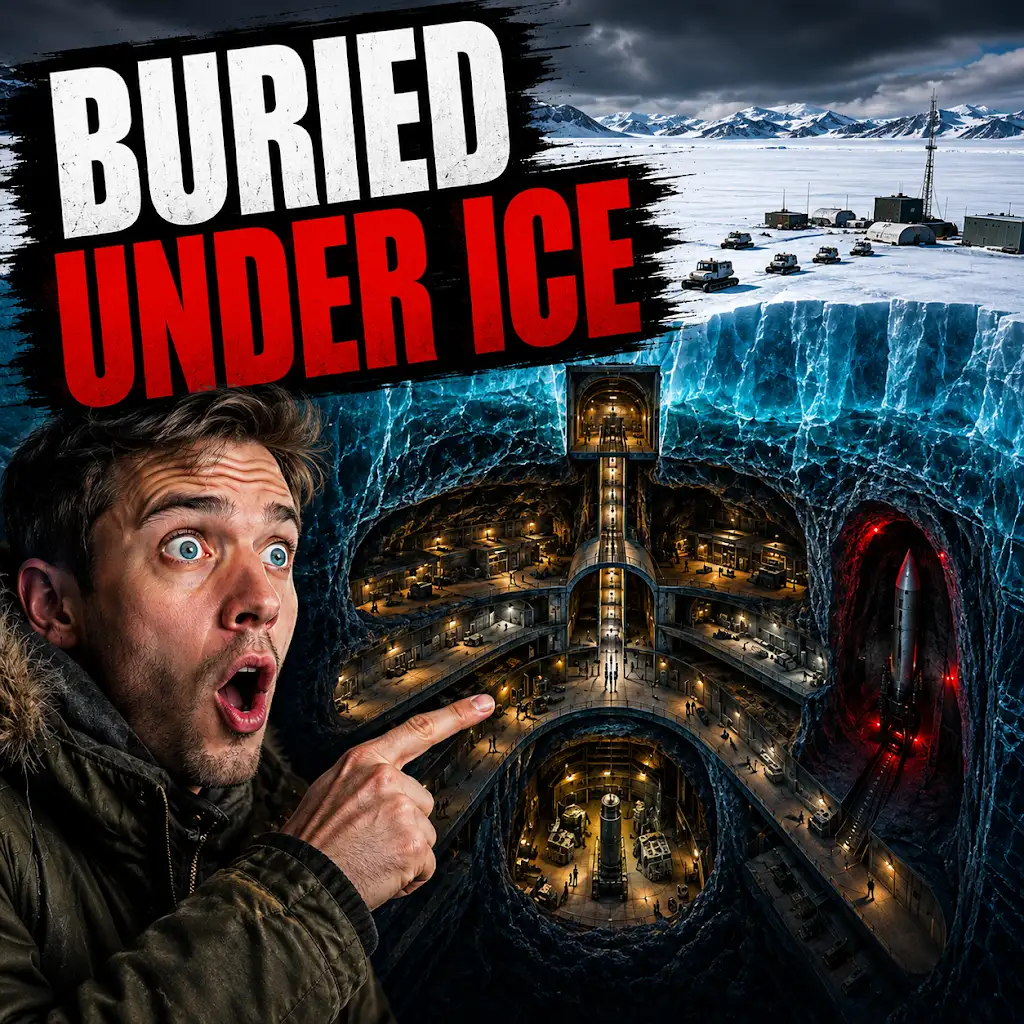
The U.S. Built a Nuclear City Under Greenland. The Ice Won.
FAQs
What is Camp Century Greenland?
Camp Century Greenland was a secret Cold War-era military base built by the United States Army Corps of Engineers in 1959. It was located beneath the ice of the Greenland ice sheet and was intended to house up to 200 soldiers and scientists.
What was the purpose of Camp Century Greenland?
The primary purpose of Camp Century Greenland was to conduct research on ice and snow, as well as to test the feasibility of deploying nuclear missiles from within the ice sheet. It was also intended to serve as a cover for the construction of a network of tunnels and chambers for potential use in the event of a nuclear war.
Why was Camp Century Greenland abandoned?
Camp Century Greenland was abandoned in 1967 due to the unstable nature of the ice sheet. The constant movement and shifting of the ice posed a significant risk to the structural integrity of the base, making it unsafe for continued use.
What were the environmental concerns surrounding Camp Century Greenland?
The abandonment of Camp Century Greenland raised concerns about the environmental impact of the base. The presence of various pollutants, including diesel fuel, sewage, and radioactive coolant, posed a potential threat to the surrounding environment as the ice sheet continued to melt.
What is the current status of Camp Century Greenland?
Camp Century Greenland remains abandoned beneath the ice sheet. In recent years, there have been discussions about the potential environmental and geopolitical implications of the base as the ice continues to melt due to climate change.