
The vast, unforgiving expanse of the Arctic, a realm of ethereal beauty and brutal realities, has long held a magnetic pull for explorers. Among the most ambitious and ultimately tragic endeavors was the search for the Northwest Passage, a legendary sea route that promised to shorten trade voyages between Europe and Asia. At the forefront of this pursuit stood Sir John Franklin, a seasoned British naval officer whose final expedition in 1845 would become synonymous with one of history’s most profound Arctic disasters. The story of the Franklin Expedition is a chilling testament to the indomitable human spirit pitted against the overwhelming power of nature, a narrative woven with threads of courage, ambition, miscalculation, and ultimately, profound loss.
The allure of the Northwest Passage had captivated European minds for centuries. The dream of a navigable all-sea route through the Arctic archipelago of North America offered immense economic and strategic advantages. By the mid-19th century, while much of the Arctic had been charted, the elusive passage remained unconfirmed. Britain, a dominant naval power, felt a keen responsibility and desire to be the nation that finally unlocked this geographical puzzle. It was in this climate of exploration and national pride that Sir John Franklin, then 59 years old, was appointed to lead a new, grand expedition.
A Commander of Experience, Yet Doubts
Sir John Franklin was not a novice in Arctic exploration. He had participated in several previous expeditions, including voyages to the Canadian Arctic and the north coast of Alaska, and had even served in the Royal Navy during the Napoleonic Wars. His resilience and leadership qualities were generally acknowledged. However, by the time of the 1845 expedition, Franklin was considered by some to be past his prime for such a demanding undertaking. Concerns were raised about his fitness for prolonged Arctic service, but his reputation and the Admiralty’s desire for a decisive commander ultimately prevailed. His selection, while seemingly logical given his experience, would later be scrutinized as a potential contributing factor to the expedition’s tragic end.
The State of Arctic Exploration in 1845
By the mid-1840s, significant progress had been made in mapping portions of the Arctic. Explorers like Sir George Back and Sir James Ross had undertaken daring voyages, pushing the boundaries of known geography. Yet, large tracts of the Canadian Arctic remained a blank on the map. The prevailing scientific understanding of Arctic conditions, while growing, was still rudimentary. Knowledge of ice dynamics, prevailing winds, and the potential for long-term entrapment was not as sophisticated as it is today. Furthermore, the technology available for such expeditions, while advanced for its time, lacked the redundancy and immediate communication capabilities of modern vessels.
The Franklin Expedition Arctic disaster, which took place in the mid-19th century, remains one of the most haunting maritime mysteries in history. As researchers continue to uncover the tragic fate of the crew, parallels can be drawn to other historical enigmas, such as the alignment of the Giza Pyramids. For an intriguing exploration of this ancient mystery and its potential connections to navigation and exploration, you can read more in the article available at The Giza Pyramid Alignment Mystery.
The Ill-Fated Voyage: A Promising Departure
In May 1845, HMS Erebus and HMS Terror, two robust bomb vessels refitted for Arctic exploration, departed from Greenhithe, England, carrying 134 officers and men. The expedition was well-equipped, boasting a significant supply of provisions, including an unprecedented amount of tinned food, a relatively new innovation intended to sustain the crew for an extended period. The mood was one of optimism and confidence. The men were skilled sailors and navigators, and the ships were considered the finest naval vessels of their kind. The initial stages of the voyage were uneventful, and the expedition successfully reached the waters north of Canada, poised to begin its search for the passage.
The Advanced Technology: Steam Power and Tinned Rations
A notable innovation of the Franklin Expedition was the addition of steam engines to both HMS Erebus and HMS Terror. This was a significant technological advancement, intended to provide greater maneuverability in the often-treacherous ice-choked waters. The steam power was expected to offer a crucial advantage in navigating through ice floes and overcoming unfavorable winds. Equally important was the extensive reliance on tinned provisions. The Admiralty, having learned from previous expeditions’ struggles with spoiled or insufficient food, had invested heavily in this new preservation method. It was believed that these rations would ensure the crew had an adequate and safe food supply for several years.
The Last Sightings: Whispers of Hope and Growing Concern
The last confirmed sighting of the Franklin Expedition was by Captain Thomas Dannett of the whaler Enterprise on July 26, 1845. Dannett encountered the two ships navigating through Lancaster Sound, heading west. He reported that the expedition appeared to be in good spirits and well-provisioned. This sighting provided a brief moment of reassurance, a confirmation that the mission was proceeding as planned. However, as weeks turned into months and then years with no further word, a gnawing anxiety began to spread through Britain. The Royal Navy, accustomed to receiving regular dispatches from its far-flung vessels, found the silence deafening.
The Grim Reality: Entrapment and Despair
The optimism surrounding the initial departure of the Franklin Expedition gradually gave way to a chilling silence, a silence that would echo for over a decade. The ships, it is now understood, became trapped in the ice of Victoria Strait in the autumn of 1846. The dream of traversing the Northwest Passage dissolved into a desperate struggle for survival against the relentless grip of the Arctic winter. The initial confidence of the crew eroded, replaced by the grim reality of their predicament.
The Ice: An Unyielding Prison
The vast, dynamic nature of Arctic sea ice proved to be the expedition’s ultimate undoing. The ships, despite their robust construction, were no match for the immense pressure and grinding power of the frozen ocean. Reports from later archaeological and ethnographic research suggest that HMS Erebus and HMS Terror became locked in ice in the autumn of 1846 and never broke free. The immobility of the ships meant that the crew was stranded, their planned westward journey halted indefinitely. The ice, a beautiful but deadly force, had become their prison.
The Slow Erosion of Hope: Years of Waiting and Rationing
As the months turned into years, the initial hope of breaking free from the ice began to dwindle. The crew was forced to endure successive Arctic winters, their lives dictated by the dwindling provisions and the unforgiving environment. The tinned food, initially hailed as a miracle of modern science, began to reveal its sinister side. The soldering used in the tinning process may have leached lead into the food, leading to chronic lead poisoning. This insidious poisoning would have weakened the men physically and mentally, exacerbating their already dire situation.
The Peril of Lead Poisoning
The widespread use of lead in the canning process of the era is now considered a significant factor in the expedition’s demise. Lead is a highly toxic metal that can accumulate in the body over time, leading to a range of severe health problems. Symptoms of lead poisoning include neurological damage, cognitive impairment, abdominal pain, and in severe cases, death. The prolonged consumption of lead-contaminated food would have severely compromised the crew’s health, making them less resilient to the harsh Arctic conditions and less capable of making rational decisions for survival.
The Final Journals: A Glimpse into Desperation
In the years that followed, fragmented pieces of information began to emerge, painting a picture of the expedition’s tragic fate. The discovery of a record left by Captain Fitzjames and Sir John Franklin at Beechey Island in 1845 provided the first indication that the ships had wintered there. Later discoveries, particularly those involving Inuit testimony and archaeological finds, revealed the full extent of the disaster. A crucial document, found at Victory Point on King William Island, contained a chilling message detailing the ships’ entrapment and the crew’s decision to abandon them in April 1848. This message, penned by Captain Francis Crozier, Franklin’s second-in-command, spoke of a desperate march southward in search of rescue.
The Search for Answers: A Decade of Growing Concern
The silence from the Franklin Expedition was not met with immediate panic, but as the years passed without any sign of the ships or crew, a profound sense of unease settled over Britain and the wider world. The Royal Navy, despite its immense resources, faced a formidable challenge in locating a lost expedition in the vast, uncharted Arctic. Numerous search parties were mounted, fueled by a mixture of duty, compassion, and a deep-seated desire to unravel the mystery. These searches, while often heroic in their own right, would prove to be largely unsuccessful in their primary objective of finding the lost explorers alive.
The Lady Franklin’s Relentless Pursuit
Perhaps the most unwavering advocate for finding her husband was Lady Jane Franklin. Despite the passing of years and the mounting evidence that her husband was lost, she refused to give up hope. Lady Franklin dedicated a substantial portion of her personal fortune and tireless energy to organizing and funding multiple search expeditions. Her unwavering resolve, though ultimately unable to bring her husband home, played a crucial role in illuminating the fate of the Franklin Expedition and bringing closure to many families.
The Role of Inuit Testimony: Uncovering the Truth
The key to understanding the Franklin Expedition’s fate lay not only in naval searches but also in the knowledge and oral traditions of the Inuit people who inhabited the Arctic. For centuries, they had navigated and survived in this challenging environment. While initial naval searches often overlooked or dismissed Inuit accounts, later expeditions and ethnographic research began to recognize the invaluable insights they provided. Inuit elders and hunters shared stories of encountering starving white men, of finding abandoned ships, and of the tragic end of the expedition. These testimonies, often pieced together through interpreters and cross-referenced with archaeological evidence, proved to be instrumental in piecing together the final chapter of Franklin’s ill-fated voyage.
The Whispers of the Inuit: Stories of Starvation and Cannibalism
The accounts provided by the Inuit were often harrowing. They spoke of desperate encounters with the starving survivors of the expedition, who were evidentially resorting to extreme measures to survive. The presence of cut marks on human bones discovered at various archaeological sites, consistent with butchery, has led to the grim conclusion that cannibalism was likely practiced by the starving crew members. This deeply disturbing aspect of the expedition’s end highlights the absolute desperation and the breakdown of normal societal norms under unimaginable duress.
The Royal Navy’s Extensive Search Efforts
The Royal Navy launched a series of expeditions specifically tasked with finding the Franklin Expedition. These efforts, while valiant, were hampered by the vastness of the Arctic, the unpredictable nature of the ice, and the limited knowledge of the region. Expeditions led by figures such as Sir Robert McClure, Sir Edward Belcher, and Captain Leopold McClintock undertook extensive searches across the Arctic archipelago. While these expeditions charted new territories and made significant geographical discoveries, they were unable to find any survivors of the original Franklin party.
The Franklin Expedition Arctic disaster remains one of the most haunting tales of exploration gone awry, as the ill-fated journey of Sir John Franklin and his crew in search of the Northwest Passage ended in tragedy. This historical event has inspired numerous studies and articles that delve into the mysteries surrounding their disappearance. For those interested in related topics, an intriguing article on the challenges of securing resources in extreme environments can be found here, which highlights the importance of understanding logistics in harsh conditions. You can read more about it in this article.
The Legacy of Loss: Lessons Learned and Enduring Mystery
| Event | Details |
|---|---|
| Expedition | Franklin Expedition Arctic disaster |
| Year | 1845-1848 |
| Leader | Sir John Franklin |
| Ships | HMS Erebus, HMS Terror |
| Outcome | Lost with all crew |
The tragic fate of the Franklin Expedition left an indelible mark on British maritime history and the annals of Arctic exploration. It served as a stark reminder of the immense power of nature and the limits of human ambition when confronted with such overwhelming forces. The expedition’s demise led to significant advancements in naval Arctic exploration strategy, emphasizing the importance of better communication, more robust supplies, and a deeper understanding of Arctic conditions. While much of the mystery surrounding the exact sequence of events has been unraveled through archaeological discoveries and Inuit accounts, a sense of profound loss and enduring fascination continues to surround the Franklin Expedition.
Rethinking Arctic Strategy: The Admiralty’s Response
The immense cost in human lives and resources associated with the Franklin Expedition prompted a significant reassessment of British naval policy regarding Arctic exploration. The Admiralty implemented stricter protocols for future expeditions, including improved provisioning, more sophisticated navigation equipment, and a greater emphasis on understanding ice conditions and potential dangers. The loss also highlighted the need for better search and rescue capabilities in remote regions. The lessons learned from this tragedy indirectly contributed to a more cautious yet ultimately more successful approach to Arctic exploration in subsequent decades.
Archaeological Discoveries: Unearthing the Past
In the 21st century, advanced archaeological techniques and underwater exploration have begun to provide new insights into the final resting places of HMS Erebus and HMS Terror. The discovery of the wreck of HMS Erebus in 2014 and HMS Terror in 2016, meticulously preserved in the Arctic seabed, has been a monumental achievement. These discoveries have provided a tangible link to the lost expedition, allowing researchers to examine the ships themselves, recover artifacts, and gain a deeper understanding of the conditions the crew faced. These ongoing investigations continue to shed light on the daily lives, struggles, and ultimate demise of Sir John Franklin and his brave, but ultimately doomed, crew.
The Enduring Fascination: A Story of Human Resilience and Vulnerability
The Franklin Expedition remains a potent symbol of human ambition and vulnerability. It is a story that continues to capture the imagination, prompting questions about courage, leadership, and the very nature of survival. The vastness of the Arctic, the silent witnesses of the Inuit, and the haunting discoveries of the past all contribute to the enduring mystique of this tragic chapter in exploration history. The story of Sir John Franklin and his lost crew serves as a perpetual reminder of the unforgiving beauty of the Arctic and the profound respect it demands from all who venture into its icy embrace. The Northwest Passage may have eventually been charted, but the human cost of that discovery, embodied by the Franklin Expedition, will forever be etched in the annals of history.
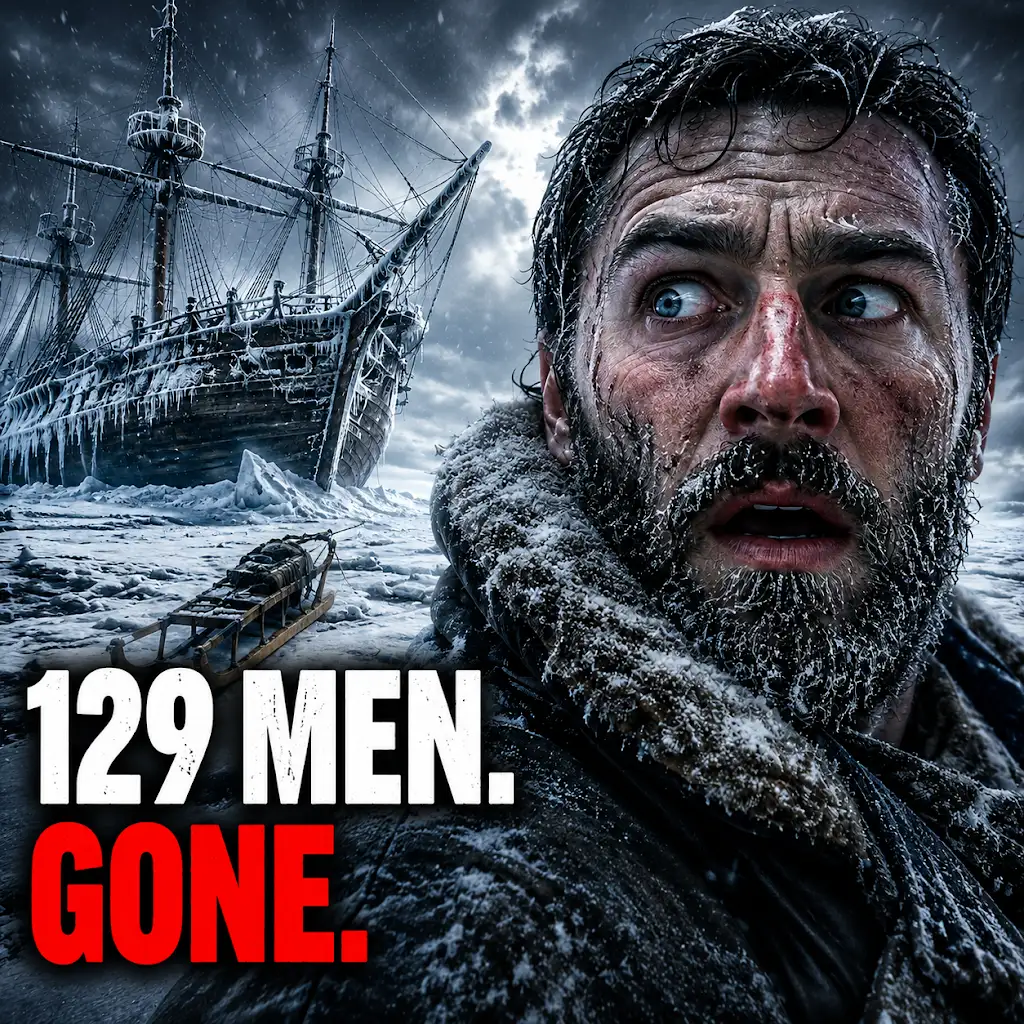
129 Men Vanished in the Arctic. Then We Found Their Ships.
FAQs
What was the Franklin Expedition?
The Franklin Expedition was a British voyage led by Captain Sir John Franklin in 1845 to find the Northwest Passage through the Arctic. The expedition consisted of two ships, HMS Erebus and HMS Terror, and a crew of 129 men.
What happened to the Franklin Expedition?
The fate of the Franklin Expedition was a mystery for many years. The ships became trapped in ice and eventually abandoned. The crew attempted to trek overland to safety, but all perished from exposure, starvation, and lead poisoning from poorly preserved food.
When were the remains of the Franklin Expedition discovered?
The remains of the Franklin Expedition were discovered in recent years. The wreck of HMS Erebus was found in 2014, and the wreck of HMS Terror was found in 2016. These discoveries shed light on the final days of the ill-fated expedition.
What were the contributing factors to the disaster of the Franklin Expedition?
Several factors contributed to the disaster, including harsh Arctic conditions, lead poisoning from canned food, and a lack of experience in Arctic exploration. The crew’s reliance on outdated technology and inadequate provisions also played a role in the tragedy.
What is the significance of the Franklin Expedition disaster?
The Franklin Expedition disaster is significant for its impact on Arctic exploration and the search for the Northwest Passage. The discovery of the wrecks has provided valuable historical and scientific insights into the expedition and its tragic outcome.