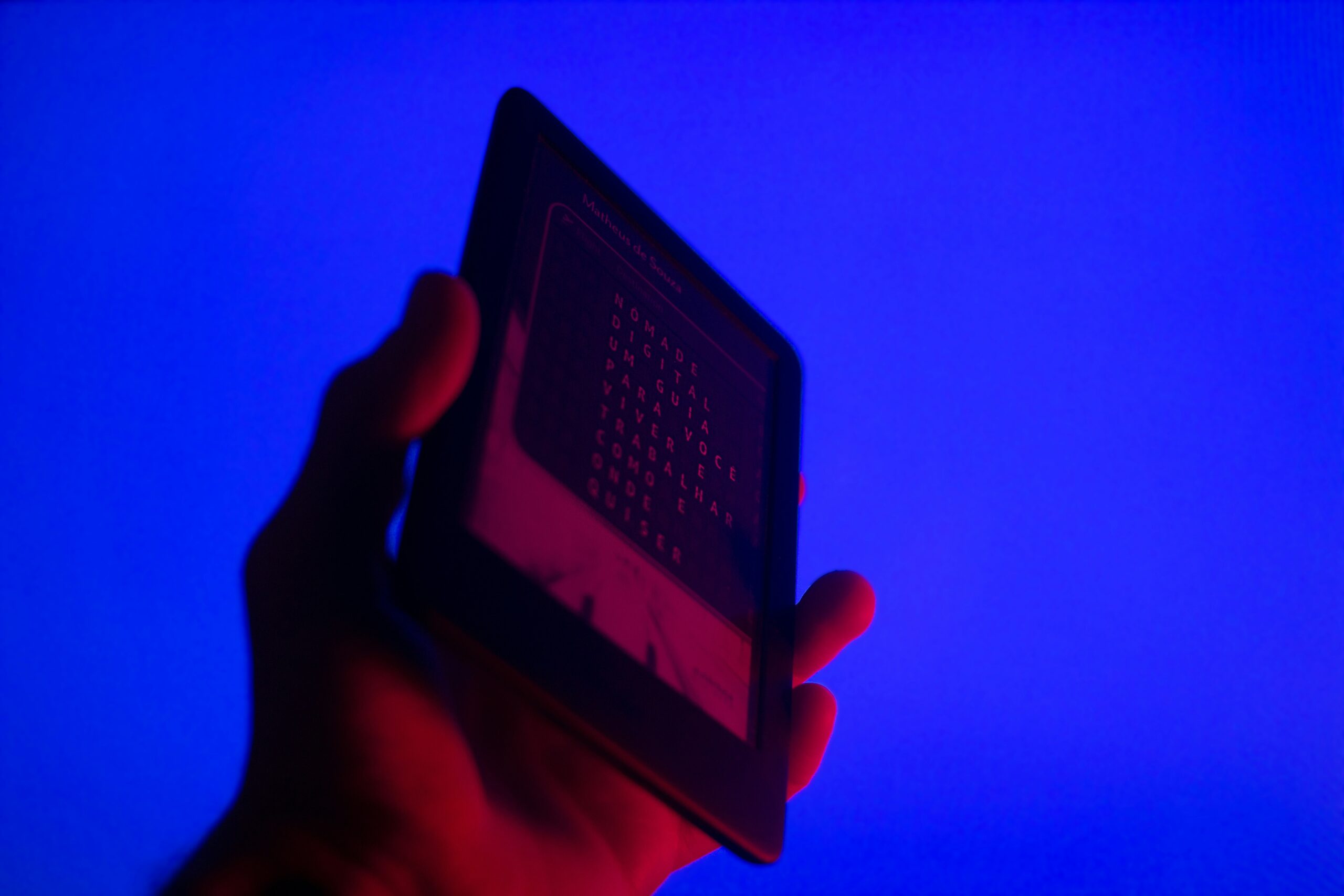
The relentless march of technological progress is often characterized by its dazzling displays of innovation. Devices grow faster, smarter, and more capable with each iteration, seemingly appearing out of thin air to revolutionize our lives. Yet, beneath this visible evolution lies a subtler, equally significant phenomenon: the vanishing act of technology. It doesn’t just disappear in a puff of smoke; rather, it recedes, becomes invisible, and seamlessly integrates into the fabric of our existence, often to the point of being taken for granted. Understanding why technology disappears offers profound insights into its impact on society, human behavior, and the very nature of progress itself.
One of the most significant ways technology vanishes is through the dissolution of its physical form and the interfaces users once needed to interact with it. Early computing, for instance, was a highly tactile experience. Users wrestled with bulky keyboards, navigated complex command-line interfaces, and meticulously managed floppy disks and cables. The machine was a distinct, often obtrusive entity. Today, this tangibility has largely eroded.
From Knobs and Switches to Touchscreens and Gestures
The transition from physical knobs, buttons, and switches to touch-sensitive screens and gestural interfaces marks a profound disappearance of the direct, mechanical interaction that defined earlier technologies. Think of the difference between tuning a radio with a physical dial versus swiping to change a station on a smartphone. The latter is far more fluid, intuitive, and disembodied. The “action” of changing the station is no longer tied to a physical manipulation but to a digital command, mediated by a glass surface. This shift abstracts the underlying mechanics, making the device feel less like a collection of components and more like a direct conduit to information or a service.
Voice Control as the Ultimate Interface Abstraction
The advent of sophisticated voice assistants represents a further leap in this vanishing act. Devices like smart speakers and even smartphones are increasingly becoming subservient to spoken commands. The need to physically interact with a device, even to tap or swipe, diminishes as users can simply speak their intentions. This allows for hands-free operation, seamless multitasking, and a more natural, conversational mode of interaction. The technology itself recedes further into the background, becoming an invisible assistant rather than a tangible object requiring specific input methods. The focus shifts from operating the device to achieving the task, with the technology serving as an unobtrusive facilitator.
Embedded and Ambient Computing
Beyond direct interaction, the trend towards embedding technology into everyday objects and environments also contributes to its disappearance. Smart homes, for example, integrate sensors, actuators, and connectivity into thermostats, lighting systems, and appliances. These devices operate autonomously or respond to subtle triggers, often without direct user intervention. The technology is no longer a standalone unit; it’s woven into the very fabric of the home. This ambient computing environment allows technology to perform its functions without demanding explicit attention, making it feel less like something we use and more like something that simply is. The smart thermostat doesn’t need us to operate it directly; it learns our preferences and adjusts accordingly, vanishing into the background of our comfort.
The phenomenon of technology disappearing over time can often be attributed to various factors, including societal shifts and the evolution of user needs. For a deeper understanding of how historical advancements have shaped our current technological landscape, you can explore the article “Uncovering Ancient Secrets: Revealed Wisdom from the Past.” This insightful piece delves into the lessons we can learn from ancient technologies and their eventual obsolescence. To read more, visit this link.
The Blurring of Boundaries Between Devices
Technology also disappears by shedding its identity as a singular, distinct entity. Once, a device was clearly defined: a phone was for calling, a camera for taking pictures, and a computer for processing information. The convergence of functionality has blurred these lines, leading to devices that do everything, effectively becoming less of what they were and more of what they enable.
The Smartphone as the Ultimate Convergence Device
The smartphone is the quintessential example of this phenomenon. It has absorbed the functions of personal digital assistants, portable music players, GPS navigators, cameras, and even rudimentary computers into a single, pocket-sized device. Instead of carrying multiple single-purpose gadgets, users now carry one multi-purpose device that handles a vast array of tasks. This convergence means that the distinct “camera” or “MP3 player” has vanished, replaced by a feature within a larger, more integrated system. The specialized hardware is still present, but its standalone identity is subsumed by the overarching capabilities of the smartphone.
The Internet of Things: A Network of Invisible Nodes
The Internet of Things (IoT) takes this blurring a step further by connecting a vast network of disparate devices to the internet, often with minimal or no direct user interface. Smart refrigerators, connected appliances, autonomous vehicles, and wearable sensors all contribute to a technology ecosystem that operates largely in the background. The individual devices may be physically present, but their technological essence is amplified by their connectivity and their ability to communicate and collaborate without explicit human direction. The individual node, in its technological function, becomes part of a larger, invisible network, its distinctiveness fading as it contributes to a shared objective.
Cloud Computing: The Invisible Engine
Cloud computing represents a significant abstracting force, rendering the physical location and management of computing resources virtually invisible to the end-user. Instead of owning and maintaining powerful servers, individuals and businesses access computing power, storage, and software over the internet. The “computer” is no longer a physical box on a desk or in a server room; it’s an abstract collection of resources accessible from anywhere. This allows for incredible scalability and flexibility, but it also means that a significant portion of the technological infrastructure supporting our digital lives is entirely out of sight, operating in distributed data centers around the globe.
The Rise of Algorithmic Opacity

As technology becomes more sophisticated, its internal workings often become increasingly opaque, even to its creators. Complex algorithms, artificial intelligence, and machine learning operate in ways that are not always easily understood or transparent, contributing to a sense of technological disappearance.
The “Black Box” of Artificial Intelligence
Modern AI systems, particularly deep learning models, are often described as “black boxes.” While they can achieve remarkable feats in areas like image recognition, natural language processing, and prediction, the exact step-by-step reasoning behind their decisions can be incredibly difficult to decipher. This opacity means that users are interacting with a system whose internal logic is largely hidden, even from the experts who built it. The technology’s decision-making process vanishes into the complexity of the algorithms.
Predictive Algorithms and Personalized Experiences
The pervasive use of predictive algorithms in everything from search engine results to streaming service recommendations further contributes to technological disappearance. These algorithms analyze user behavior and data to anticipate needs and preferences, delivering personalized experiences. While this can be incredibly convenient, it also means that the content and services we encounter are often curated by unseen forces, shaping our digital world in ways we may not fully comprehend. The “search” for information feels less like a conscious effort and more like a natural unfolding of relevant results, the underlying algorithmic machinations hidden from view.
Automation and the Vanishing Human Element
The increasing automation of tasks, driven by sophisticated software and robotics, also leads to a disappearance of the human element in certain processes. Consider self-checkout kiosks at grocery stores or automated customer service chatbots. The human cashier or customer service representative, once the visible interface for these interactions, is replaced by technology. The task is still performed, but the human intermediary, and thus a tangible aspect of the service delivery, has vanished.
The Normalization and Integration into Daily Life

Perhaps the most profound reason technology disappears is its relentless normalization and seamless integration into the fabric of our daily lives. What was once novel and attention-grabbing becomes mundane and indispensable.
From Novelty to Necessity
Consider the internet itself. In its early days, accessing the internet was a deliberate act, often requiring specialized knowledge and equipment. Today, it’s an assumed utility, as essential as electricity or running water for many. The internet has vanished from our conscious awareness as a distinct technology; it is simply how we do things. Similarly, the personal computer, once a remarkable innovation, is now a common household item, its presence expected and its functions deeply ingrained in our routines.
The Background Presence of Connectivity
Ubiquitous wireless connectivity – Wi-Fi, cellular data – has made constant access to the digital world a given. We are perpetually connected, often without consciously thinking about the underlying infrastructure. The blinking lights of routers, the bars on our phone signal indicator – these are subtle reminders, but the act of being connected is largely backgrounded. The technology that enables this connectivity has become so pervasive that it’s easier to forget it’s there than to acknowledge its presence.
Habitual Reliance Replaces Conscious Engagement
As technology becomes more ingrained, our reliance on it shifts from conscious engagement to habitual action. We reach for our phones not just to make a call, but out of habit, to check notifications, to pass the time, or to access information, even when we haven’t consciously decided to do so. This habitual reliance means we are less likely to critically examine the technology or its impact; it has simply become an extension of ourselves, its presence so constant that it blends into the background of our existence.
As we explore the reasons behind the disappearance of certain technologies, it’s intriguing to consider how environmental changes can impact our technological landscape. For instance, the phenomenon of isostatic rebound, which is discussed in a related article, highlights how shifts in the Earth’s crust can influence various aspects of our lives, including the infrastructure we rely on. You can read more about this fascinating topic in the article on isostatic rebound and Antarctic topography. Understanding these connections can provide valuable insights into why some technologies fade away while others emerge in response to our changing world.
The Future Scenarios: Even Deeper Disappearance
| Reasons | Examples |
|---|---|
| Obsolete | VHS tapes, floppy disks |
| Advancements | CDs replacing cassette tapes |
| Discontinued | Blackberry phones |
| Market demand | HD-DVD vs Blu-ray |
Looking ahead, the trends suggest a future where technology will continue to disappear, becoming even more integrated and invisible.
Bio-Integrated and Neural Interfaces
The development of bio-integrated technologies and neural interfaces promises to blur the lines between human and machine even further. Imagine prosthetics that feel and function like natural limbs, or brain-computer interfaces that allow direct thought control of devices. In such scenarios, the technology won’t just be invisible; it will be an inseparable part of our biological selves, its technological nature entirely masked by its seamless integration.
Self-Optimizing and Autonomous Systems
The ongoing development of self-optimizing and autonomous systems will lead to technologies that manage themselves and their environments with minimal human oversight. Smart cities that regulate traffic flow, energy grids that self-balance, and robotic systems that perform complex maintenance tasks will all operate in a largely invisible, behind-the-scenes manner. The technological intervention will be so pervasive and autonomous that it will feel less like interaction and more like natural processes.
The Ultimate Goal: Technology as Extension of Thought, Not Tool
The ultimate trajectory of technological disappearance seems to be towards becoming an extension of human thought rather than a distinct tool to be operated. As interfaces become more intuitive, intelligence more pervasive, and integration more profound, the technology itself will recede, leaving behind only the enhanced capabilities and experiences it provides. This “vanishing act” is not a decline or a loss, but rather a testament to technology’s success in becoming so utterly interwoven with our lives that it ceases to be a distinct object and becomes, instead, an inherent part of our reality. The challenge for humanity will be to remain aware of the underlying technological structures that shape our world, even as they fade from conscious perception.

The Greatest Technology Humanity Ever Lost
FAQs
What is the concept of “technological disappearance”?
The concept of technological disappearance refers to the phenomenon where a once prominent technology becomes obsolete and is eventually replaced by newer, more advanced technologies. This can happen due to various factors such as changes in consumer preferences, advancements in technology, or shifts in market demand.
What are some examples of technologies that have disappeared over time?
Some examples of technologies that have disappeared over time include VHS tapes, cassette tapes, floppy disks, and dial-up internet. These technologies were once widely used but have been replaced by more advanced and efficient alternatives.
What factors contribute to the disappearance of technology?
Several factors contribute to the disappearance of technology, including advancements in innovation, changes in consumer behavior, shifts in market demand, and the emergence of more efficient and cost-effective alternatives. Additionally, the lifecycle of technology plays a significant role in its disappearance as newer technologies often render older ones obsolete.
How does the disappearance of technology impact society?
The disappearance of technology can have a significant impact on society, as it often requires individuals and businesses to adapt to new ways of doing things. While the disappearance of outdated technology can lead to increased efficiency and improved capabilities, it can also create challenges for those who are not able to keep up with the rapid pace of technological change.
What can be done to prepare for the disappearance of technology?
To prepare for the disappearance of technology, individuals and businesses can stay informed about emerging trends and advancements in technology. This can involve investing in ongoing education and training, staying adaptable and open to change, and being proactive in adopting new technologies that can help to stay ahead of the curve.