The air in White Sands National Park, New Mexico, is thick with the scent of gypsum and whispers of ancient history. For decades, these ethereal dunes have held a profound secret, etched into the very fabric of their landscape: human footprints. These aren’t just any footprints; they are claims to some of the earliest evidence of human presence in the Americas, a claim that has ignited a fervent debate among scientists, scholars, and enthusiasts alike. The “White Sands Footprint Age Debate” is a complex tapestry woven from paleontology, archaeology, geology, and the very nature of scientific inquiry itself.
The journey into the heart of the White Sands footprint debate began with a serendipitous discovery. In the summer of 2009, geologist Jeffrey Pigati, while conducting research on ancient water levels at White Sands, stumbled upon a series of remarkable tracks embedded within the compacted sediments. These footprints, preserved with uncanny clarity, appeared to be undeniably human. What immediately set them apart was their potential age. Initial assessments, based on the geological context and the weathering of the surrounding sediments, suggested an antiquity far greater than most accepted timelines for human arrival in North America.
The Initial Findings and Early Hypotheses
The initial findings were electrifying. The footprints seemed to indicate that humans had been present in North America at a time when many mainstream theories placed their arrival much later, well after the retreat of the massive glaciers of the Last Glacial Maximum. This challenged the prevailing “Clovis First” model, which posited that the Clovis culture, characterized by distinctive stone projectile points, represented the earliest widespread human occupation of the continent, dating back to around 13,500 years ago. The White Sands footprints, if their initial dating was accurate, pushed this timeline back by thousands of years, opening up a radical new understanding of early American history.
The Significance of the White Sands Footprints
The potential implications of a significantly older date for human arrival in North America were immense. It would necessitate a re-evaluation of migration routes, technological advancements, and the overall pace of human colonization of the Americas. Were there earlier waves of migration? Did humans possess the necessary technology and resilience to traverse Beringia and spread across the continent much earlier than previously thought? The White Sands footprints held the key to unlocking these profound questions.
The ongoing debate regarding the age of the footprints found at White Sands has sparked significant interest in the scientific community, particularly in relation to ancient human activity in North America. For those looking to explore more about the implications of such discoveries and their connection to lost technologies, the article “Unlocking the Mysteries of Lost Tech” provides intriguing insights. You can read it here: Unlocking the Mysteries of Lost Tech. This article delves into the broader context of ancient civilizations and their potential technological advancements, which may shed light on the significance of the White Sands footprints.
The Radiometric Dating: The Heart of the Controversy
The core of the White Sands footprint debate lies in the dating of these ancient impressions. The initial interpretations were based on indirect evidence, but subsequent research aimed to provide more robust, direct dating methods. This is where the scientific community began to diverge, with different research teams arriving at starkly contrasting conclusions.
The 2021 Publication and Its Claims
In 2021, a landmark paper published in the journal Science by Matthew Bennett and his colleagues presented what they believed to be conclusive evidence for the age of the White Sands footprints. They employed radiocarbon dating of seeds found within the sediment layers containing the footprints. This method, which measures the decay of radioactive carbon isotopes, is a standard technique in archaeology for dating organic materials. The results from this study suggested that the footprints were between 21,000 and 23,000 years old. This placed human presence in North America firmly within the Last Glacial Maximum, a period when much of the continent was covered in ice, making migration extremely challenging.
The Use of Radiocarbon Dating
Radiocarbon dating works by analyzing the amount of carbon-14, a radioactive isotope of carbon, remaining in an organic sample. Living organisms absorb carbon-14 from the atmosphere. When they die, the carbon-14 begins to decay at a known rate. By measuring the ratio of carbon-14 to stable carbon isotopes, scientists can estimate how long ago the organism died. In the case of the White Sands footprints, the researchers dated seeds that were present in the same sedimentary layers as the tracks, effectively dating the sediment itself.
Contamination and Interpretation Issues
However, the application of radiocarbon dating to such ancient samples is not without its complexities. Critics pointed to potential issues of contamination. For instance, younger plant roots could have grown into older sediment layers, introducing younger carbon into the sample and skewing the results. Furthermore, the interpretation of sediment layers can be challenging. It’s crucial to ensure that the dated material is unequivocally associated with the footprints and not from a different depositional event.
Counter-Arguments and Alternative Dating Methods
The 2021 findings were met with both excitement and skepticism. Several research groups voiced concerns and proposed alternative interpretations of the data, or employed different dating methods that yielded different results. This led to a vigorous scientific debate, with researchers on both sides meticulously scrutinizing the evidence and methodology.
Optically Stimulated Luminescence (OSL) Dating
Some researchers proposed the use of Optically Stimulated Luminescence (OSL) dating. This technique dates sediments by measuring the trapped energy of electrons within quartz or feldspar grains. This energy is accumulated from background radiation over time. When exposed to light, these grains release their trapped energy as light, and the amount of light emitted is proportional to the time since the sediment was last exposed to sunlight. Proponents of OSL argued it could provide an independent verification of the age of the footprint layers.
Other Geological and Stratigraphic Analyses
Beyond dating techniques, other geologists and archaeologists focused on the stratigraphic context of the footprints. They examined the layering of sediments, the erosion patterns, and the presence of other fossils or artifacts to build a more comprehensive picture of the ancient environment and the timeline of events. These analyses sometimes led to different conclusions about the precise age and depositional environment of the tracks.
The Geochemical Evidence: A Deeper Look
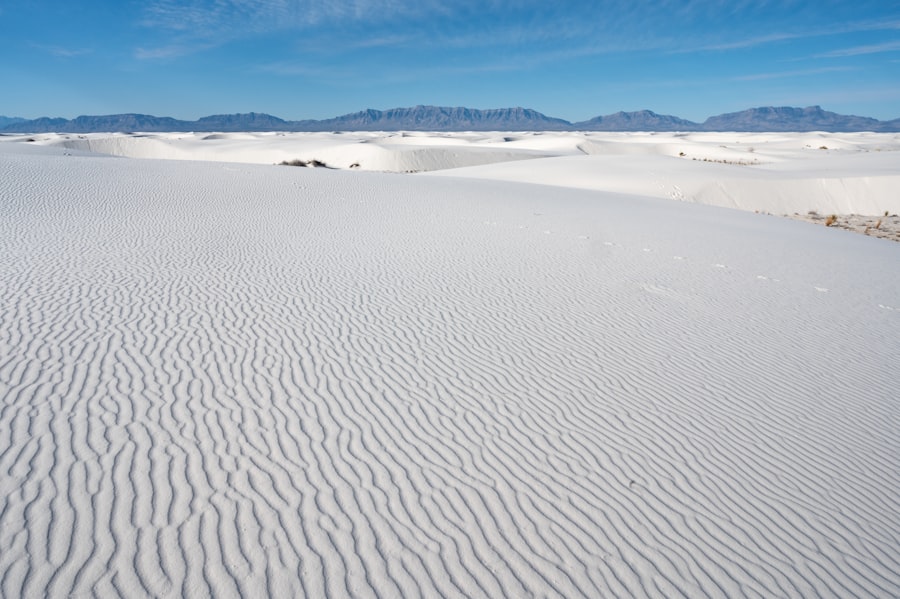
The geological makeup of White Sands itself plays a crucial role in understanding the context of the footprints. The gypsum dunes are not static; they are part of a dynamic hydrological system that has shaped the landscape over millennia. Geochemical analyses of the sediment layers and the footprints themselves have provided further clues, but also added layers of complexity to the dating debate.
The Role of Water and Sediment Deposition
White Sands is characterized by a delicate interplay of water and wind. Ancient lakes and ephemeral water bodies have repeatedly formed and dried up in the basin, leaving behind layers of gypsum sediment. The footprints were likely made in the moist sand of these lakebeds or along their shorelines. The subsequent drying and hardening of these sediments, followed by burial under more gypsum, preserved the tracks. The rate and timing of these depositional events are critical for accurate dating.
Layering and Stratigraphy
The order and thickness of sedimentary layers, known as stratigraphy, provide a chronological framework. Scientists meticulously examine these layers to understand the sequence of events. If footprints are found within a specific layer, their age is intrinsically linked to the age of that layer. Disagreements often arise from differing interpretations of how these layers were formed and the duration of time represented by each.
Evidence of Drying and Compaction
The way the sediment dried and compacted around the footprints can also offer clues about their age. Over time, these sediments undergo geological processes that alter their physical properties. Some researchers argue that certain features within the footprints suggest a level of compaction and weathering that aligns with much older dates, while others interpret these features differently.
Isotopic Analysis and Environmental Reconstruction
Beyond dating, geochemical analyses can also help reconstruct the ancient environment. Isotopic analysis of the gypsum and water trapped within the sediments can reveal information about past climate conditions, water sources, and even the presence of certain microbial communities. This environmental context is vital for understanding whether the conditions were conducive to human habitation at the proposed ancient dates.
The Human Element: Reconsidering Early American Migrations

The White Sands footprint debate is not just about rocks and carbon; it’s fundamentally about understanding the earliest chapters of human history in the Americas. The implications of the older dates are profound, forcing a re-evaluation of established migration theories and the capabilities of ancient peoples.
Challenging the “Clovis First” Paradigm
For decades, the “Clovis First” model dominated our understanding of North American prehistory. This model proposed that the Clovis culture, circa 13,500 years ago, was the first widespread human culture to inhabit the continent, arriving via a land bridge in Beringia. The White Sands footprints, with their purported age of over 20,000 years, directly challenge this long-held theory. If humans were present during the Last Glacial Maximum, it suggests earlier migration routes and potentially different technologies and adaptation strategies.
The Bering Land Bridge Theory
The traditional understanding of human migration into the Americas centers on the Bering Land Bridge, a landmass that connected Siberia and Alaska during periods of lower sea levels, particularly during the Last Glacial Maximum. The ice sheets covering much of North America would have presented a formidable barrier to passage, leading many to believe that humans could not have crossed until the ice began to retreat and create open corridors.
Pre-Clovis Sites and Their Impact
The discovery of pre-Clovis sites, such as Monte Verde in Chile (dating to around 14,500 years ago) and Paisley Caves in Oregon (with evidence of human occupation around 14,300 years ago), had already begun to chip away at the “Clovis First” model. However, the White Sands footprints, if their older dates are confirmed, would represent a seismic shift, pushing the human presence back by several millennia and suggesting a much more complex and earlier colonization of the continent.
Alternative Migration Routes and Models
The potential for older human presence in the Americas necessitates the exploration of alternative migration routes and models.
The Pacific Coastal Migration Route
One prominent hypothesis is the “Pacific Coastal Migration Route.” This theory suggests that early humans may have traveled along the Pacific coast of North America, using watercraft to navigate the coastline. This route would have been more accessible earlier, as the ice sheets might not have entirely blocked passage along the coast. The older dates from White Sands could lend significant support to this theory, as it would imply humans were present at a time when the coastal route might have been a viable option.
The “Ice-Free Corridor” Debate
The traditional “ice-free corridor” that eventually opened between the Cordilleran and Laurentide ice sheets is another area of intense study. The timing of its opening and its habitability are crucial. If humans arrived significantly before the corridor was fully open, it strengthens the case for alternative routes.
The ongoing debate regarding the age of the footprints found at White Sands has sparked significant interest in the scientific community, particularly as researchers continue to explore the implications of these ancient tracks. A related article discusses the fascinating discoveries made in a new documentary that sheds light on the secrets of our past. For those interested in learning more about these revelations, you can read the full story in this article.
The Future of the Debate: Continued Research and Unanswered Questions
| Debate Topic | Metrics |
|---|---|
| White Sands footprint age debate | Carbon dating results |
| White Sands footprint age debate | Stratigraphic analysis |
| White Sands footprint age debate | Comparison with other archaeological sites |
The White Sands footprint age debate is far from settled. The scientific community thrives on rigorous testing and re-evaluation, and this complex puzzle is no exception. Future research will undoubtedly build upon existing findings, employing new technologies and interdisciplinary approaches to shed further light on this ancient mystery.
The Need for Consensus and Interdisciplinary Collaboration
Ultimately, a scientific consensus on the age of the White Sands footprints will likely emerge through continued interdisciplinary collaboration. Archaeologists, geologists, paleoclimatologists, and dating specialists must work together, sharing data, refining methodologies, and critically evaluating each other’s findings. The more independent lines of evidence that converge on a particular age, the stronger the case becomes.
Rigorous Peer Review and Replication
The scientific process relies heavily on rigorous peer review and the ability for findings to be replicated by other researchers. This ensures that discoveries are robust and not based on flawed methodology or interpretation. The ongoing debate highlights the importance of this process, as different interpretations of the same evidence emerge and are subjected to scrutiny.
New Technologies and Analytical Techniques
As technology advances, new analytical techniques will become available that can provide even more precise dating and environmental reconstructions. The application of these new tools to the White Sands site could be crucial in resolving the remaining ambiguities.
The Enduring Mystery of Early Americans
Regardless of the precise age of the White Sands footprints, their discovery has undoubtedly revitalized the study of early American migrations. They serve as a powerful reminder that our understanding of the past is constantly evolving, and that the story of human presence in the Americas is likely far more intricate and ancient than we once believed. The dunes of White Sands continue to hold their secrets, but with each new investigation, humanity inches closer to unraveling the remarkable journey of its earliest ancestors across a vast and challenging continent. The debate itself is a testament to the dynamic and ever-evolving nature of scientific discovery, a process driven by curiosity, critical thinking, and the relentless pursuit of truth.

These Footprints Could Rewrite the Story of the First Americans
FAQs
What is the White Sands footprint age debate?
The White Sands footprint age debate refers to the controversy surrounding the age of human footprints found in White Sands, New Mexico. The debate centers around whether the footprints are as old as 23,000 years, as some researchers claim, or if they are much younger, as others argue.
What evidence supports the claim that the footprints are 23,000 years old?
Researchers who argue that the footprints are 23,000 years old point to various pieces of evidence, including radiocarbon dating of the surrounding sediment and the presence of mammoth tracks near the human footprints. They also cite the geological context of the footprints as supporting evidence.
What evidence supports the claim that the footprints are much younger?
Those who argue that the footprints are much younger point to alternative dating methods and the potential for natural processes, such as wind and water erosion, to have altered the appearance of the footprints over time. They also question the reliability of the radiocarbon dating results.
Why is the age of the footprints significant?
The age of the footprints is significant because it has implications for our understanding of the peopling of the Americas. If the footprints are indeed 23,000 years old, it would suggest that humans arrived in North America much earlier than previously thought, challenging existing theories about the timing and routes of human migration.
What are the implications of the White Sands footprint age debate?
The implications of the White Sands footprint age debate extend beyond the specific site in New Mexico. The outcome of the debate could potentially reshape our understanding of human history in the Americas and prompt a reevaluation of existing archaeological and anthropological theories.