
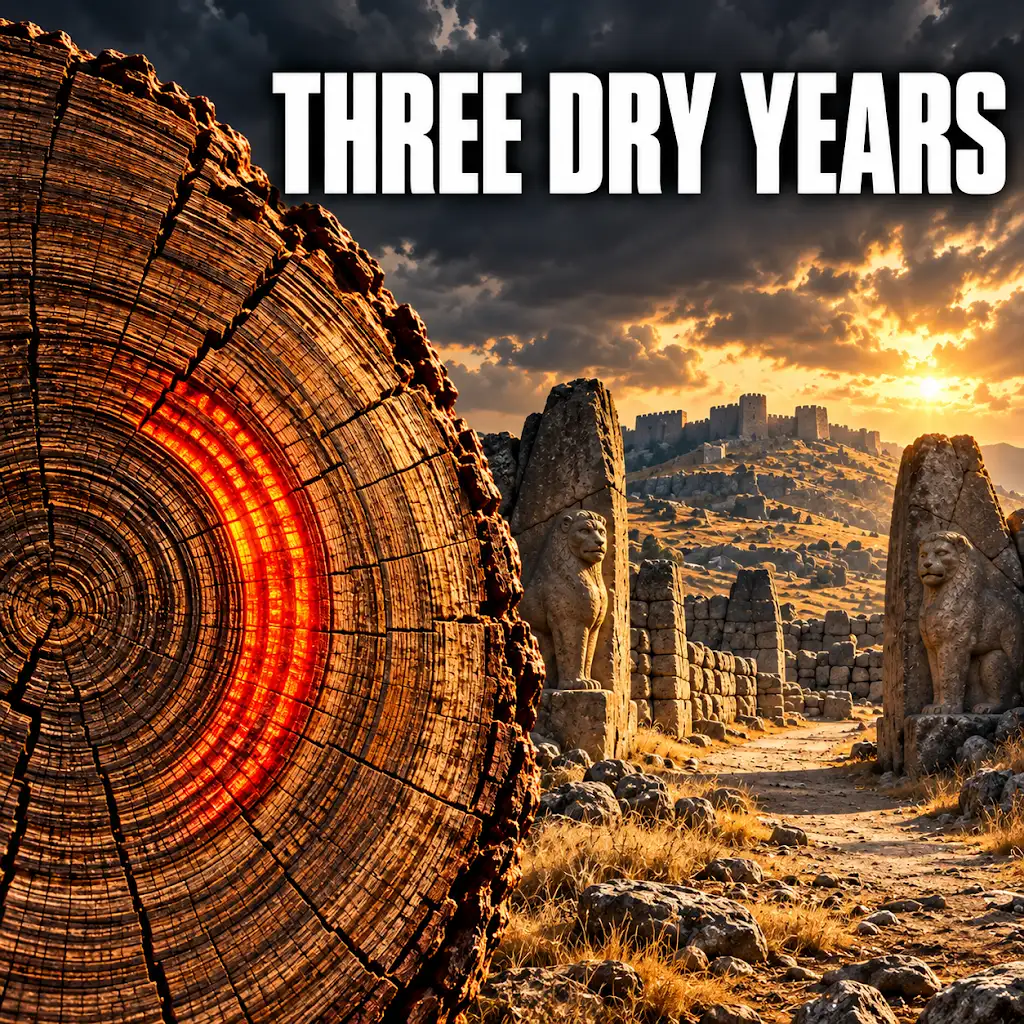
The scorching sun beat down relentlessly on the fertile lands of the Hittite Empire, its fury unyielding for three long years. What began as a dry spell, easily dismissed by seasoned farmers as a cyclical inconvenience, had blossomed into a full-blown catastrophe. The once vibrant Anatolian plateau, the breadbasket of one of the ancient world’s most formidable powers, lay parched and cracked. Rivers, the lifeblood of civilization, dwindled to mere trickles, their banks lined with the skeletal remains of once-proud boats. Grain silos, the ultimate symbol of Hittite prosperity, stood empty, their contents long since consumed or spoiled. This prolonged drought, a silent but brutal antagonist, waged a war of attrition against the Hittite people, their infrastructure, and ultimately, their very existence as a dominant empire. The historical impact of this climatic crisis was profound, rippling through the social, economic, and political fabric of the empire, leaving behind a legacy of decline and the eventual collapse that would reshape the geopolitical landscape of the Late Bronze Age.
The Unseen Enemy: Understanding the Drought’s Onset and Nature
The Anatolian plateau, while often experiencing arid periods, was not inherently predisposed to such prolonged and devastating droughts. The Hittite civilization had flourished for centuries, demonstrating a remarkable ability to adapt to the region’s climatic vagaries. However, this particular drought, occurring in the later stages of the Hittite Empire’s reign, proved to be a different beast entirely. Archeological evidence, paleoclimatological data, and textual analysis of Hittite records paint a grim picture of a gradual but inexorable drying of the land, the effects of which were amplified by a lack of adequate preparation or perhaps, an underestimation of its severity.
Shifting Weather Patterns and Ecological Strain
While definitive instrumental records from the Late Bronze Age are absent, the cumulative evidence suggests a significant shift in regional weather patterns. Theories abound, ranging from prolonged periods of high-pressure systems over the Mediterranean that blocked moisture-laden winds from reaching Anatolia, to subtle changes in ocean currents that affected atmospheric circulation. Regardless of the precise meteorological cause, the result was a consistent deficit in rainfall over an extended period. This ecological strain was not immediately apparent but built gradually. Initially, farmers might have experienced slightly reduced yields, but as the years passed, the soil’s capacity to retain moisture diminished. Vegetation withered, impacting grazing lands for livestock and reducing the availability of wild game. The delicate balance of the ecosystem, upon which the Hittite economy and sustenance heavily relied, was irrevocably disrupted. The Hittites, like many ancient civilizations, were deeply connected to their environment, and the gradual degradation of this environment directly translated into hardship for its people.
The Hittite Agrarian System Under Siege
The Hittite economy was fundamentally agrarian, with the vast majority of its population engaged in farming and animal husbandry. Their sophisticated irrigation systems, while impressive for their time, were primarily designed to manage seasonal rainfall and river flows, not to compensate for a multi-year absence of precipitation. When the rivers began to recede and the wells ran dry, the effectiveness of these systems was severely compromised. Crop failures became widespread, with staple grains like wheat and barley failing to mature. The impact extended beyond subsistence farming; the surplus produce that fueled trade and supported the Hittite military and administration likely vanished. This agricultural collapse meant a dwindling food supply, leading to widespread famine and significantly weakening the empire from its very foundations.
The Hittite Empire, known for its remarkable achievements in ancient history, faced a significant challenge during a three-year drought that severely impacted its agricultural productivity and societal stability. This environmental crisis is explored in depth in various scholarly articles, shedding light on how such climatic changes influenced the rise and fall of ancient civilizations. For a fascinating perspective on the intersection of strategy and environmental factors, you can read about military tactics in relation to lunar cycles in the article “Guardians of the Moon: A Documentary on Lunar Military Strategy” available at this link.
The Rippling Effects: Social and Economic Devastation
The physical manifestation of the drought – parched fields and empty granaries – translated into immense human suffering and economic unraveling. The complex social structure of the Hittite Empire, accustomed to a degree of stability and prosperity, buckled under the strain. The economic repercussions were immediate and far-reaching, impacting everything from the daily lives of commoners to the wealth of the elite.
Famine, Migration, and Social Unrest
The most immediate and devastating consequence of the agricultural collapse was widespread famine. With food supplies dwindling, starvation became a grim reality for many. Accounts from neighboring civilizations, and hints within Hittite administrative texts that survive, suggest that the Hittites faced severe food shortages. This desperation likely fueled social unrest. As resources became scarce, competition for what remained intensified. Evidence of increased banditry and localized conflicts, potentially stemming from competition over dwindling water sources or food supplies, might have emerged. Furthermore, the drought likely triggered internal migration. People would have abandoned their parched ancestral lands in search of more hospitable regions, placing further strain on already burdened communities and potentially creating friction with existing populations in areas that might have been less severely affected. This exodus, while offering a desperate hope for survival for some, further weakened the core of the empire.
Economic Collapse and Disruption of Trade
The Hittite Empire was not merely an agricultural power; it was also a significant player in regional trade networks. They controlled vital trade routes and exchanged goods with neighboring empires such as Egypt, Assyria, and various Canaanite city-states. The drought would have crippled their ability to produce goods for export and to sustain their own internal economy. The lack of agricultural surplus meant less to trade, reducing their income and weakening their diplomatic leverage. Furthermore, the internal economic disruption would have made it difficult to maintain the infrastructure necessary for trade, such as roads and waystations. The decline in trade would have deprived the empire of essential resources and luxury goods, further eroding the wealth of the ruling class and contributing to a general decline in living standards across the empire. The economic backbone of the Hittite state, built on agricultural productivity and robust trade, was severely compromised.
The Shifting Sands of Power: Political Fragmentation and External Threats
The internal turmoil and economic weakness brought about by the drought created fertile ground for political instability. The centralized authority of the Hittite king, accustomed to projecting power and maintaining order, would have been severely tested. This internal vulnerability coincided with the rise of external pressures, ultimately contributing to the empire’s decline.
Weakened Central Authority and Provincial Rebellions
A weakened economy and widespread internal hardship inevitably undermine the authority of the central government. The Hittite king’s ability to command resources, enforce laws, and provide for his subjects would have been diminished. This could have led to a decline in the loyalty of provincial governors and local leaders, who might have found it increasingly difficult to govern their own regions effectively or felt less beholden to a distant and struggling capital. Instances of increased autonomy or outright rebellion within the vast Hittite territories might have become more prevalent. The empire, once a cohesive unit, could have begun to fracture under the immense pressure, with individual regions attempting to fend for themselves or asserting their independence. The drought, in essence, acted as a catalyst, exposing and exacerbating pre-existing fissures within the Hittite political structure.
The “Sea Peoples” and the Final Blow
While the drought undeniably weakened the Hittite Empire from within, it is crucial to acknowledge the role of external factors in its ultimate demise. The late 13th and early 12th centuries BCE witnessed the emergence of the enigmatic “Sea Peoples,” a confederation of maritime raiders who swept across the Eastern Mediterranean, leaving a trail of destruction in their wake. The weakened Hittite state, depleted by famine, internal strife, and economic collapse, would have been far more vulnerable to these external assaults. Their once formidable army, likely depleted and poorly supplied due to the drought’s impact on resources, would have struggled to mount an effective defense against these determined invaders. The combination of a long-term environmental catastrophe and a sudden, violent external threat proved to be a fatal combination for the Hittite Empire, leading to its eventual collapse and the destruction of its major cities.
Reconstructing the Narrative: Archeological and Textual Clues
The story of the Hittite drought and its impact is not a tale told in a single, definitive chronicle. Instead, it is a mosaic pieced together from fragmented evidence. Archeological excavations of Hittite cities reveal a pattern of sudden abandonment and destruction, often coinciding with the period of the drought and the Sea Peoples’ invasions. Simultaneously, surviving Hittite texts, though often administrative or religious in nature, offer tantalizing glimpses into the challenges and anxieties of the time.
Evidence of Abandonment and Destruction
Archeological sites across Anatolia associated with the Hittite Empire show a marked shift in the late 13th and early 12th centuries BCE. Many major centers, such as Hattusa, the Hittite capital, and Carchemish, exhibit signs of hurried abandonment or violent destruction. Layers of ash and debris, alongside hastily discarded artifacts, suggest sudden and chaotic departures. The absence of extensive building activity in the immediate post-collapse period further indicates a significant demographic and political decline. The destruction often bears the hallmarks of widespread conflict, aligning with accounts of the Sea Peoples’ incursions. However, the underlying economic and social fragility created by the drought undoubtedly made these cities easier targets and hastened their downfall. The archeological record thus provides a tangible testament to the empire’s vulnerability and its ultimate demise.
Insights from Hittite Archives and Neighboring Records
While comprehensive historical accounts of the drought itself are scarce, Hittite cuneiform tablets offer indirect evidence. Royal decrees, administrative records, and religious texts sometimes allude to difficult times, crop failures, and the need for rationing or divine intervention. For instance, pleas to deities for rain and accounts of sacrifices aimed at appeasing the gods in times of hardship can be found. Beyond Hittite borders, records from Egypt and the Levant also mention the presence of the “Sea Peoples” and the widespread disruption they caused. While these records rarely explicitly link the Hittite decline to a specific drought, they provide a broader context of a turbulent period marked by environmental instability and large-scale migrations and conflicts that would have certainly impacted the Hittite Empire. The convergence of these disparate pieces of evidence allows historians to reconstruct a plausible narrative of the drought’s devastating influence.
The Hittite Empire, known for its advanced civilization and significant contributions to history, faced a devastating three-year drought that severely impacted its agricultural output and societal stability. This environmental crisis is often linked to the broader patterns of climate change that have affected ancient civilizations. For a deeper understanding of how such environmental factors can influence societal development, you might find it interesting to explore this article on suppressed inventions and their potential impact on human progress.
The Long Shadow: Legacy and Historical Significance
| Metric | Data / Description |
|---|---|
| Event | Three Year Drought in the Hittite Empire |
| Time Period | Circa 13th century BCE (approximate) |
| Duration | 3 years |
| Geographical Impact | Central Anatolia, Hittite heartland |
| Primary Effects | Crop failures, famine, social unrest |
| Recorded Evidence | Hittite cuneiform tablets mentioning drought and famine |
| Consequences | Weakened Hittite political power, contributed to empire decline |
| Modern Research Sources | Archaeological findings, climate studies, ancient texts |
The collapse of the Hittite Empire, a consequence in no small part of the devastating three-year drought, marked a significant turning point in the history of the ancient Near East. Its downfall created a power vacuum, allowing new peoples and empires to rise to prominence. The legacy of this once-mighty civilization, however, endured, influencing subsequent cultures and leaving its mark on the geopolitical landscape of the region for centuries to come.
A Power Vacuum and the Rise of New Powers
The disintegration of the Hittite Empire opened up a vast territory in Anatolia, previously under their strong centralized control, to new influences and powers. The vacuum left by the Hittites’ decline contributed to the fragmentation of Anatolia into smaller, independent kingdoms. These Neo-Hittite states, while carrying the name and some cultural elements of their predecessors, were distinct entities that emerged in the centuries following the empire’s collapse. Furthermore, the broader geopolitical upheaval caused by the Sea Peoples’ invasions and the decline of other major Late Bronze Age powers, such as Mycenaean Greece and Ugarit, led to a period of significant change. New peoples, such as the Philistines, established themselves in the Levant, and the Assyrians began their gradual ascent in Mesopotamia. The Hittite collapse, therefore, was not an isolated event but part of a larger regional transformation, a domino effect triggered by a confluence of factors, with the drought playing a pivotal, albeit silent, role.
Enduring Cultural Echoes and Historical Lessons
Despite its ultimate demise, the Hittite Empire left behind a rich cultural and historical legacy. Their advanced legal codes, their intricate administrative systems, and their sophisticated religious practices influenced subsequent civilizations in Anatolia and beyond. Their diplomatic achievements, particularly their treaty with Egypt, set precedents for international relations. The story of their decline, however, serves as a potent historical lesson about the vulnerability of even the most powerful empires to environmental challenges. It underscores the critical interdependence between human civilization and its ecological surroundings. The Hittite experience highlights the devastating consequences that can arise when climate change, even a prolonged drought, overwhelms a society’s adaptive capacity, leading to economic collapse, social unrest, and ultimately, political fragmentation. The memory of the Hittite Empire’s fall, a stark reminder of the fragility of power in the face of nature’s fury, continues to resonate through the annals of history.
Your 401(k) Withdrawal Can Make More of Your Social Security Taxable
FAQs
1. How did the three-year drought impact the Hittite Empire?
The three-year drought severely impacted the Hittite Empire by causing widespread crop failures, leading to food shortages, economic instability, and social unrest among the population.
2. What measures did the Hittite Empire take to cope with the effects of the drought?
To cope with the effects of the drought, the Hittite Empire implemented rationing of food supplies, initiated public works projects to conserve water, and sought assistance from neighboring regions for additional resources.
3. Did the three-year drought contribute to the decline of the Hittite Empire?
Yes, the three-year drought played a significant role in the decline of the Hittite Empire as it weakened the empire’s economy, strained its resources, and exacerbated existing internal conflicts, ultimately contributing to its downfall.
4. How did the three-year drought impact the daily lives of people in the Hittite Empire?
The three-year drought forced people in the Hittite Empire to deal with food scarcity, increased prices of essential goods, migration in search of better conditions, and heightened competition for limited resources, leading to a decline in living standards for many.
5. Were there any long-term consequences of the three-year drought on the Hittite Empire?
Yes, the three-year drought had long-term consequences on the Hittite Empire, including weakened political stability, decreased agricultural productivity, strained trade relations, and a loss of confidence in the empire’s ability to provide for its people, contributing to its eventual collapse.