DNA analysis is a pretty neat way to get a clearer picture of Acadian population history. Essentially, by looking at specific genetic markers passed down through generations, scientists can identify patterns that reflect historical migrations, family connections, and the overall genetic makeup of Acadian communities. It’s not about creating a perfect, definitive timeline, but rather about uncovering clues and probabilities that complement traditional historical research. Think of it as adding another layer of evidence to the stories we already have.
Unpacking the Acadian Genetic Tapestry
So, what exactly are we looking at when we talk about “Acadian DNA”? It’s a fascinating mix, reflecting a unique historical journey. The Acadians, as you likely know, were primarily French settlers who arrived in what is now Nova Scotia, Prince Edward Island, and parts of New Brunswick starting in the early 17th century. Their initial genetic profile was heavily influenced by the regions of France they came from – think Brittany, Normandy, and Poitou, among others. This French heritage forms the bedrock of their genetic identity.
The French Roots: A Foundation of Genes
The early settlers weren’t a monolithic group; they came from various parts of France, and this diversity is reflected in their genetics. Studies have identified specific paternal (Y-chromosome) and maternal (mitochondrial DNA) haplogroups that are common among Acadians, linking them to particular ancestral French populations. These markers act like genetic fingerprints, pointing back to specific regions and even, in some cases, specific ancestral families. It’s a bit like tracing a surname back to its geographical origins, but on a genetic level.
Beyond France: Other Influences
However, Acadian history isn’t just a simple story of French immigration. Over centuries, there were other genetic contributions. For instance, there was some intermarriage and integration with indigenous populations of the region, particularly the Mi’kmaq. While this might be a smaller percentage of the overall genetic makeup for many, it’s a significant part of the historical narrative and can be detected through DNA analysis. It’s important to note that the extent of this influence varies from family to family and region to region.
Furthermore, after the Acadian expulsion (the Grand Dérangement) in the mid-18th century, Acadians scattered to various locations. Some went back to France, others to Louisiana (becoming Cajuns), and many eventually returned to the Maritimes. During these displacements and subsequent resettlements, there were opportunities for genetic exchange with other populations they encountered. This includes genetic contributions from the British Isles (England, Scotland, Ireland) and, to a lesser extent, other European groups. DNA analysis helps us see these later admixtures as well, painting a more complex picture than just initial French settlement.
The history of the Acadian population is intricately linked to the broader narrative of migration and adaptation in response to environmental changes. A fascinating article that delves into how ancient climates have influenced human populations can be found at Uncovering Ancient Climate Steering Secrets. This piece explores the connections between climate shifts and the movements of various groups, shedding light on how such factors may have played a role in shaping the genetic landscape of the Acadian people over centuries.
The Grand Dérangement and Its Genetic Echoes
The forced expulsion of the Acadians by the British from 1755 to 1764 is a defining, and tragic, event in their history. This period didn’t just disrupt lives; it also had profound implications for the genetic landscape of Acadian communities. The scattering of families across different continents and their subsequent regrouping or integration into new societies left genetic markers that are still traceable today.
Fragmentation and Dispersion: A Genetic Mosaic
The dispersal of Acadians to places like Great Britain, France, and the thirteen colonies of British North America meant that once-connected communities were broken apart. When individuals and families resettled, they began to intermingle with the existing populations in their new homes. DNA analysis can reveal the genetic signatures of these different dispersal patterns. For example, Acadians who ended up in Louisiana have a distinct genetic profile that reflects their time in the Southern United States, often showing more admixture than those who remained in or returned to the Maritimes.
Pathways Back and New Connections
The eventual return of many Acadians to the Maritimes or their establishment of new communities elsewhere (like Louisiana) is also visible in the genetic data. As they re-established themselves, they interacted with the local populations. This could involve interactions with other French-speaking groups, English speakers, or even earlier inhabitants of the land. DNA can help scientists understand these “second waves” of genetic influence and how they shaped Acadian populations over time, often creating unique genetic isolates or contributing to the diversity of Acadian descendants.
Tracing Lineages: Y-DNA and mtDNA in Acadian Families
When we talk about tracing specific family lines through DNA, two main types of testing are particularly useful: Y-chromosome (Y-DNA) and mitochondrial DNA (mtDNA) testing. These are inherited differently and therefore track different ancestral paths.
The Paternal Path: Y-DNA Insights
Y-DNA is passed down exclusively from father to son. This means that if you are male, your Y-DNA can trace your direct paternal lineage all the way back through your father, his father, his father, and so on. For Acadian research, this is invaluable. By testing Y-DNA, researchers can identify common paternal haplogroups among individuals who identify as Acadian. If two individuals share a similar Y-DNA haplogroup, it suggests they likely share a common paternal ancestor at some point in history. This can help confirm or discover links between families, identify ancestral villages in France, or even connect Acadian lines to other populations with similar Y-DNA signatures. It’s particularly useful for corroborating historical records or suggesting new avenues for genealogical research when documentary evidence is scarce.
The Maternal Line: mtDNA Discoveries
Mitochondrial DNA (mtDNA) is inherited from the mother, and therefore traces the direct maternal line – your mother, her mother, her mother, and so on, for both males and females. mtDNA analysis can similarly reveal common maternal haplogroups within Acadian populations. This can shed light on ancestral female lines, potentially linking Acadian women to specific regions in Europe or even to indigenous maternal ancestries. While Y-DNA might highlight the origins of early male settlers, mtDNA can offer insights into the maternal heritage and the women who were part of the early Acadian story, including potential indigenous women who contributed to the gene pool.
Autosomal DNA and the Broader Ancestry Picture
While Y-DNA and mtDNA trace single, direct lines, autosomal DNA testing looks at your DNA from 22 pairs of chromosomes (excluding the sex chromosomes). This means it’s inherited from all your ancestors – both maternal and paternal – going back several generations. This type of DNA testing provides the most comprehensive view of your overall ancestral mix.
A Mix of Ancestries: Unveiling Proportions
Autosomal DNA testing is where we see the clearest picture of the various genetic contributions to the Acadian population. It can quantify the percentage of DNA that an individual has from different broad geographical regions. For Acadian descendants, this typically shows a significant percentage of Northwestern European DNA, with a strong French component. However, it also commonly reveals smaller percentages from other regions, such as the British Isles, and sometimes trace amounts from other European areas. For those with indigenous ancestry, autosomal DNA is often the most effective way to detect it, though the percentage might be small and the detection can be more nuanced.
Beyond the Broad Strokes: Ethnic DNA Estimates
Many DNA testing companies provide more detailed ethnic estimates. For Acadian descendants, these estimates can sometimes pinpoint specific regions within France or the British Isles that are more strongly represented in their ancestry. While these estimates are not always perfectly precise – they are based on comparisons to reference populations that may not perfectly represent historical Acadian groups – they can still offer valuable clues. They might suggest a stronger ancestral connection to Brittany, for example, or indicate a higher likelihood of Irish or Scottish heritage than initially assumed. It’s a complex mosaic, and autosomal DNA helps us see all the pieces.
The history of the Acadian population is deeply intertwined with their unique genetic heritage, which has been explored in various studies. A fascinating article that delves into the legal frameworks surrounding property rights, although not directly related, offers insights into how cultural identities can influence ownership and heritage. For those interested in understanding the complexities of identity and rights, this article can be found here: legal frameworks for lunar mining property rights. Exploring such connections can provide a broader context for the discussions surrounding Acadian ancestry and its implications in today’s society.
DNA in Context: Complementing Traditional Research
| Year | Estimated Acadian Population | Key Historical Event | Genetic Marker Prevalence | Notes on DNA Studies |
|---|---|---|---|---|
| 1604 | ~150 settlers | Founding of Acadia by French colonists | High frequency of Y-DNA haplogroup R1b | Initial European genetic markers established |
| 1755 | ~14,000 | Beginning of the Great Expulsion (Le Grand Dérangement) | Mixed European and Indigenous mtDNA haplogroups detected | Evidence of intermarriage with Mi’kmaq populations |
| 1800 | ~5,000 (post-expulsion survivors) | Resettlement in Louisiana and Maritime provinces | Presence of unique Acadian genetic signatures | Genetic drift observed in isolated communities |
| 2000 | ~300,000 descendants | Modern Acadian cultural revival | High prevalence of European haplogroups R1b and mtDNA H | DNA studies confirm strong French ancestry with some Indigenous admixture |
It’s crucial to understand that DNA analysis isn’t meant to replace traditional genealogical and historical research. Instead, it’s a powerful tool that works best when used in conjunction with historical documents, family stories, and established genealogical records. DNA provides a different kind of evidence, one that can confirm hypotheses, suggest new research directions, or even challenge existing assumptions.
Historical Clues from Genetic Patterns
Genetic patterns can provide valuable clues that guide historical investigation. For example, if DNA analysis reveals a strong paternal lineage from a specific region of France that wasn’t previously thought to be a major source of Acadian settlers, it prompts historians to look for documentary evidence of that particular migration. Similarly, finding unexpected genetic links to certain communities could lead to a re-examination of historical records for evidence of intermarriage or migration patterns that were previously overlooked. DNA can offer probabilistic insights that historical documents alone might not.
Challenges and Interpretations: Navigating the Data
Interpreting DNA results, especially in the context of a complex history like that of the Acadians, requires careful consideration. Genetic databases are constantly growing and evolving, and our understanding of haplogroups and ethnic origins is refined over time. Furthermore, genetic drift, the random fluctuations in gene frequencies from one generation to the next, can create unique genetic signatures in isolated populations. Acadians, particularly after the expulsion and their subsequent dispersals, often form such genetically distinct groups. This means that while DNA can provide strong indications, it’s rarely definitive proof on its own. It’s about building a more complete and nuanced understanding by weaving together the threads of genetic evidence with the rich tapestry of historical accounts and personal narratives.
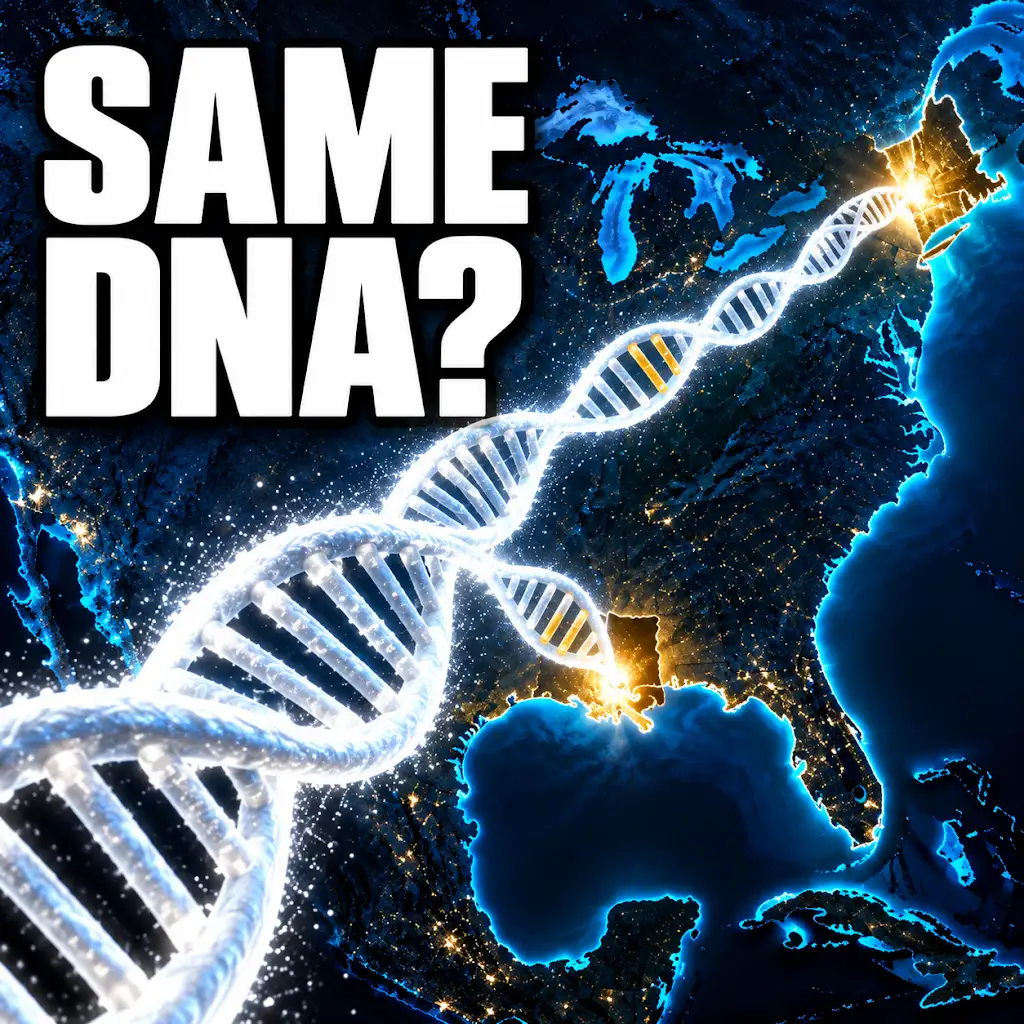
Cajun or French Canadian? The DNA Looked the Same—Until Researchers Looked Closer
FAQs
1. What is the history of the Acadian population?
The Acadians were French colonists who settled in Acadia, now known as the Maritime provinces of Canada, in the early 17th century. They developed a distinct culture and way of life, blending French, Indigenous, and other influences.
2. How did DNA analysis contribute to understanding Acadian population history?
DNA analysis has helped researchers trace the genetic origins and migrations of the Acadian population. By studying the DNA of modern-day Acadians and comparing it to historical records, scientists can uncover valuable insights into their ancestry and genetic diversity.
3. What are some key findings from DNA studies on the Acadian population?
Some key findings from DNA studies on the Acadian population include evidence of French, Indigenous, and other European genetic influences. Researchers have also identified genetic connections between Acadians and other French-speaking populations in North America.
4. How has DNA research impacted our understanding of Acadian genealogy?
DNA research has revolutionized the field of Acadian genealogy by providing a scientific basis for tracing family lineages and connections. It has helped confirm or refute traditional genealogical claims and shed light on previously unknown relationships among Acadian families.
5. What are the implications of DNA research on Acadian population history?
The implications of DNA research on Acadian population history are far-reaching, offering new perspectives on migration patterns, genetic diversity, and cultural exchanges. This research not only enriches our understanding of Acadian heritage but also contributes to broader discussions on population genetics and human history.