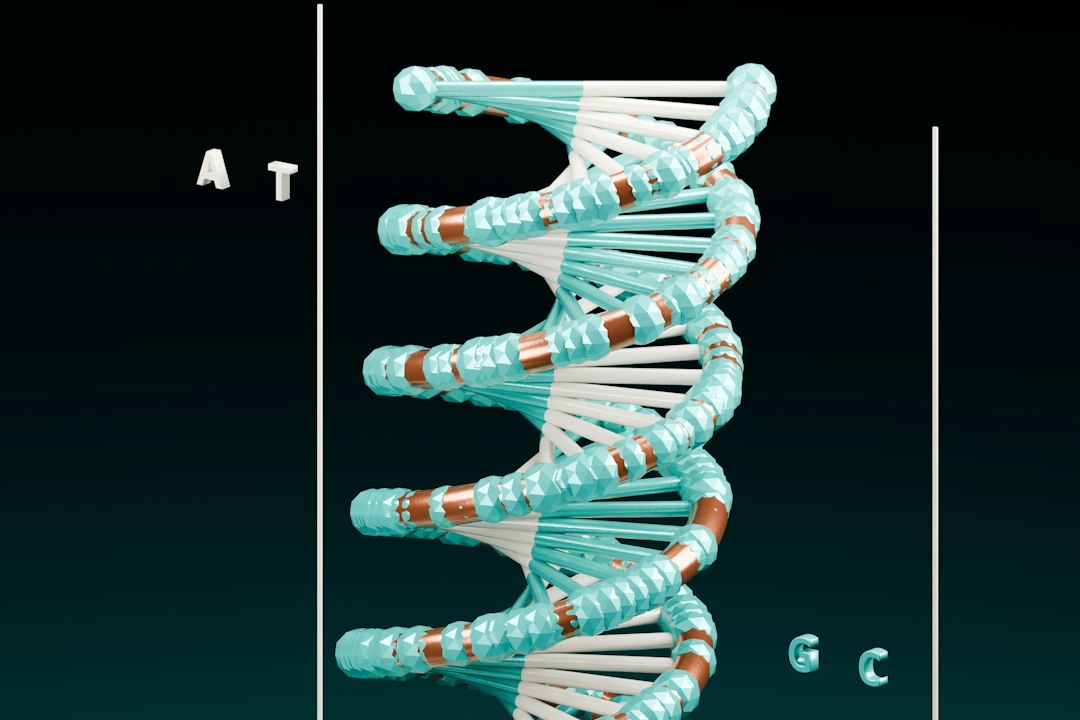
The Maternal Thread: Unraveling the Past with Mitochondrial DNA
The human story is a tapestry woven from countless individual threads, each representing a unique life. For those seeking to understand their origins, tracing these threads back through generations can be a profound and often surprising journey. While paternal lineages have long been accessible through Y-chromosome analysis, a complementary and equally powerful tool exists for exploring the maternal side: mitochondrial DNA (mtDNA) analysis. This article delves into the fascinating world of tracing ancestry through the single lineage of mitochondrial DNA, exploring its unique inheritance pattern, the scientific principles behind its analysis, and the wealth of insights it can provide into our ancient past and familial connections.
Mitochondrial DNA single lineage studies provide fascinating insights into human ancestry and evolution, revealing how maternal lineages have shaped genetic diversity over generations. For a deeper understanding of how historical events have influenced human populations, you might find the article “The Year History Stood Still: When the Wind Ceased” particularly intriguing. It explores the impact of significant historical moments on societal development and can be accessed here: The Year History Stood Still: When the Wind Ceased.
Understanding the Nature of Mitochondrial DNA Inheritance
Mitochondrial DNA, often referred to as the “powerhouse of the cell,” resides not within the nucleus of our cells but in discrete organelles called mitochondria. These tiny structures are responsible for generating the energy required for cellular functions. Crucially, unlike nuclear DNA which is inherited from both parents, mtDNA has a distinct mode of inheritance. In humans, virtually all of the mtDNA in a fertilized egg comes from the egg cell, and thus, it is exclusively passed down from mother to child. This means that an individual’s mtDNA is a direct copy of their mother’s mtDNA, and their mother’s mother’s mtDNA, and so on, tracing back uninterruptedly through the maternal line.
The Uniparental Transmission Advantage
This uniparental inheritance is the cornerstone of mtDNA’s utility in genealogical research. While nuclear DNA scrambles and recombines during each generation, creating a complex mosaic of parental contributions, mtDNA remains largely unchanged. Mutations do occur, but at a relatively slow and predictable rate. This stability allows for the identification of a direct maternal lineage, unaffected by the genetic contributions of fathers or the recombination that occurs with autosomal DNA. For anyone curious about their mother’s mother’s mother’s lineage, mtDNA offers a clear and direct pathway to explore those ancient connections.
The Circular Structure and Abundance
Mitochondria themselves contain multiple copies of their own circular DNA molecule, distinct from the linear chromosomes found in the cell nucleus. This circular structure is characteristic of bacterial DNA and is a key piece of evidence supporting the endosymbiotic theory of organelle evolution, which posits that mitochondria originated from free-living bacteria that were engulfed by early eukaryotic cells. The abundance of mtDNA within each cell, with hundreds or even thousands of mitochondria per cell, makes it relatively easy to extract and analyze compared to the often-scarce nuclear DNA from ancient samples. This high copy number ensures that even degraded samples can yield sufficient genetic material for analysis, making it invaluable for studying ancient human migrations and relationships.
The Scientific Foundations of mtDNA Analysis
The power of mtDNA in tracing ancestry lies in the accumulation of mutations over vast timescales. These mutations, changes in the DNA sequence, serve as markers that differentiate maternal lineages. By comparing the mtDNA sequences of individuals, scientists can infer relationships and track the movement of populations across the globe. The process involves several key stages, from sample collection to the interpretation of the genetic data.
Polymerase Chain Reaction (PCR) and Sequencing
At the heart of mtDNA analysis is the polymerase chain reaction (PCR). This technique allows scientists to amplify small segments of DNA, making them detectable and analyzable. Specific regions of the mtDNA molecule, particularly the hypervariable regions (HVRs) known as HVR-I and HVR-II, are targeted for amplification because they accumulate mutations at a faster rate than other parts of the mtDNA genome. These regions are crucial for distinguishing between closely related maternal lineages. Once amplified, the DNA fragments are subjected to sequencing, a process that determines the precise order of nucleotide bases (Adenine, Guanine, Cytosine, and Thymine) within the DNA.
Haplogroup Assignment: A Genetic Rosetta Stone
The sequenced mtDNA data is then compared to reference databases. The pattern of mutations within the HVRs, and increasingly across the entire mtDNA genome, allows for the assignment of an individual to a specific mtDNA haplogroup. Haplogroups are large groups of individuals who share a common ancestral mtDNA sequence. These haplogroups are designated by letters (e.g., H, U, L, K) and further subdivided into subclades with numerical and lowercase letter designations. Each haplogroup is associated with specific geographical origins and migration routes. For instance, certain haplogroups are predominantly found in Africa, while others are more common in Europe, Asia, or the Americas, reflecting the deep history of human dispersal across the planet.
Mutation Rates and Divergence Times
Understanding the rate at which mtDNA mutations accumulate is critical for interpreting haplogroup assignments and estimating divergence times. While generally stable, these rates are not perfectly constant and can be influenced by various factors. Scientists use calibration points, such as well-dated archaeological discoveries or known historical migrations, to refine these mutation rate estimates. By comparing the number of genetic differences between two individuals’ mtDNA sequences, and knowing the estimated mutation rate, researchers can calculate the approximate time since their last common maternal ancestor. This allows for estimations of how long ago a particular maternal lineage branched off from another, providing insights into ancient population movements and splits.
Applications of mtDNA Analysis in Genealogy and Anthropology
The insights gleaned from mtDNA analysis extend far beyond a simple understanding of one’s mother’s mother’s lineage. It has become an indispensable tool for both amateur genealogists seeking to connect with distant relatives and professional anthropologists unraveling the complex story of human migration and evolution.
Connecting with Distant Maternal Relatives
For individuals engaging in genealogical research, mtDNA analysis can unlock connections that are otherwise impossible to discover. By testing with a company that provides mtDNA analysis and allows for surname searching or haplogroup matching, one can identify other individuals who share the same maternal ancestor. This is particularly powerful for identifying individuals who share a common maternal ancestor from many generations ago, where surname changes or lack of documented records might otherwise obscure the connection. A match in mtDNA can confirm a suspected maternal link or, even more excitingly, reveal entirely unexpected familial ties to individuals across the globe.
Tracing Ancient Migrations and Population Movements
On a grander scale, mtDNA analysis has revolutionized our understanding of prehistoric human migrations. By examining the distribution of mtDNA haplogroups in populations across continents, anthropologists can reconstruct ancient population movements, identify ancestral homelands, and map the pathways by which humans spread out of Africa and populated the rest of the world. For example, the prevalence of certain haplogroups in specific indigenous populations in the Americas provides strong evidence for their ancient migration from Asia across the Bering land bridge. Similarly, the patterns of mtDNA variation in Europe offer insights into the arrival of different waves of settlers from the Near East and Africa following the last Ice Age.
Understanding Maternal Lineage Continuity and Disruption
mtDNA analysis can also shed light on the continuity and disruption of maternal lineages over time. By studying the genetic diversity within and between populations, researchers can infer periods of population growth, decline, or admixture. For instance, a lack of mtDNA diversity within a population might suggest a severe bottleneck event, where the population was drastically reduced, and a single or a few maternal lines survived to repopulate. Conversely, high diversity can indicate a long period of stability and growth. Understanding these patterns helps to paint a more nuanced picture of how human societies have evolved and interacted over millennia.
Recent studies on mitochondrial DNA have shed light on the concept of a single lineage that traces back to our ancient ancestors, revealing fascinating insights into human evolution. This topic is further explored in an intriguing article that discusses the implications of erasing ancient wisdom and how it relates to our understanding of lineage and heritage. For a deeper dive into this subject, you can read more in the article here.
The Process of mtDNA Ancestry Testing
| Metric | Description | Typical Value/Range | Significance |
|---|---|---|---|
| Haplogroup | Classification of mitochondrial DNA lineages based on shared mutations | H, U, L, M, N, etc. | Used to trace maternal ancestry and migration patterns |
| Mutation Rate | Rate at which mutations accumulate in mitochondrial DNA | ~1 mutation per 3,600 years (coding region) | Helps estimate time to most recent common ancestor (TMRCA) |
| Control Region Variability | Number of polymorphic sites in the hypervariable regions (HVR1 and HVR2) | ~50-100 variable sites | Used for fine-scale maternal lineage differentiation |
| Effective Population Size (Ne) | Estimated number of females contributing to the mitochondrial gene pool | Varies widely; often 10,000-20,000 in humans | Reflects maternal lineage diversity and demographic history |
| Time to Most Recent Common Ancestor (TMRCA) | Estimated age of the most recent common maternal ancestor | ~150,000 – 200,000 years ago (for modern humans) | Provides insight into human evolutionary history |
Embarking on an mtDNA ancestry test is a relatively straightforward process, typically involving a simple saliva or cheek swab. These kits are widely available from various direct-to-consumer genetic testing companies. The journey from sample submission to receiving your mtDNA haplogroup and potential relative matches involves several key steps.
Ordering a Testing Kit and Sample Collection
The first step is to order an mtDNA ancestry testing kit from a reputable company. These kits typically include instructions, a collection device (often a sterile swab or a saliva collection tube), and a pre-paid return mailer. Following the provided instructions carefully is crucial for ensuring the integrity of the sample. For a saliva sample, one will usually be asked to spit into a tube until a certain fill line is reached. For a cheek swab, the individual will gently rub a swab inside their cheek to collect cells. It is important to avoid eating, drinking, or smoking for a period before sample collection to prevent contamination.
Laboratory Analysis and Data Interpretation
Once the sample is received by the testing laboratory, it undergoes a rigorous analysis process. As previously described, the mtDNA is extracted, amplified using PCR, and then sequenced. The raw genetic data is then analyzed by sophisticated bioinformatics software. This software compares the individual’s mtDNA sequence to extensive reference databases, identifies any mutations, and assigns the individual to a specific mtDNA haplogroup and subclade. The results are usually presented in a user-friendly format through an online portal provided by the testing company.
Understanding Your Haplogroup and Potential Matches
The primary output of an mtDNA test is the haplogroup assignment. This tells you which major branch of the maternal tree you belong to. The testing company will often provide detailed information about the geographical origins and historical migration patterns associated with your specific haplogroup. Beyond haplogroup assignment, many companies offer a matching service. If other individuals tested by the same company share your mtDNA sequence (or a very similar one), they will appear as potential maternal relatives. The closer the mtDNA match, the more recent the common maternal ancestor is likely to be. This can lead to exciting discoveries and the opportunity to connect with individuals who share your maternal heritage.
Recent studies on mitochondrial DNA have shed light on the concept of single lineage ancestry, providing fascinating insights into human evolution and migration patterns. This research not only enhances our understanding of genetic inheritance but also connects to broader discoveries in archaeology and geography. For instance, the recent findings regarding ancient maps that reveal an ice-free Antarctica could have significant implications for understanding early human settlements and their movements. To explore this intriguing connection further, you can read about it in the article on ancient maps and their revelations about our planet’s history here.
Limitations and Considerations in mtDNA Analysis
While mtDNA analysis offers remarkable insights, it is essential to understand its limitations and consider them when interpreting results. It is not a comprehensive genetic profile and provides a specific type of information.
The Maternal Lineage Focus
The most significant limitation is that mtDNA analysis exclusively traces the maternal line. It tells you nothing about your paternal lineage (which is better explored through Y-chromosome DNA analysis if you are male) or the vast majority of your autosomal DNA, which comes from both parents and all their ancestors. Therefore, mtDNA results alone cannot provide a complete picture of your entire ancestry. It is a single thread, albeit a very old and informative one, within the broader tapestry of your genetic heritage.
The Resolution of Haplogroups
While mtDNA haplogroups provide valuable information about deep ancestry and migration patterns, their resolution can vary. For very ancient migrations, broad haplogroup assignments are sufficient. However, for tracing more recent maternal relatives, the differences between certain subclades might be subtle, and a direct mtDNA match might be required to confirm a closer relationship. Furthermore, the databases used by testing companies are constantly growing and evolving, meaning that future analyses might provide more refined haplogroup assignments or identify new matches.
Interpreting Matches and Potential False Positives
Interpreting matches requires careful consideration. A match in mtDNA indicates a shared maternal ancestor, but it does not necessarily mean you are closely related. If you share the same haplogroup as someone, it simply means you have a common maternal ancestor at some point in history, which could be thousands of years ago. Closer matches, where there are fewer or no mutations between your sequences, are more indicative of a recent maternal relative. However, it is also important to be aware of the possibility of false positives due to rare mutations or laboratory errors, though these are generally uncommon with reputable testing services. Collaboration with identified matches and traditional genealogical research can often help to confirm and understand the nature of the connection.

The Lincoln DNA Study: Why the Internet is Wrong
FAQs
What is mitochondrial DNA single lineage?
Mitochondrial DNA single lineage refers to a situation where all individuals in a population share the same mitochondrial DNA sequence, indicating a common maternal ancestor.
How is mitochondrial DNA single lineage inherited?
Maternal inheritance is the process by which mitochondrial DNA single lineage is passed down from a mother to her offspring. This means that all individuals in a single lineage share the same mitochondrial DNA sequence as their maternal ancestor.
What are the implications of mitochondrial DNA single lineage in genetic studies?
Having a single mitochondrial DNA lineage in a population can simplify genetic studies by allowing researchers to trace maternal lineages more easily and accurately. It can also provide insights into population history and migration patterns.
Can mitochondrial DNA single lineage be used to study human evolution?
Yes, mitochondrial DNA single lineage has been instrumental in studying human evolution. By analyzing the variations and mutations in mitochondrial DNA sequences, researchers can trace back maternal lineages and infer evolutionary relationships among different populations.
Is mitochondrial DNA single lineage common in all populations?
No, mitochondrial DNA single lineage is not common in all populations. Some populations may have multiple mitochondrial DNA lineages due to genetic diversity, while others may have a single lineage due to a recent common maternal ancestor.