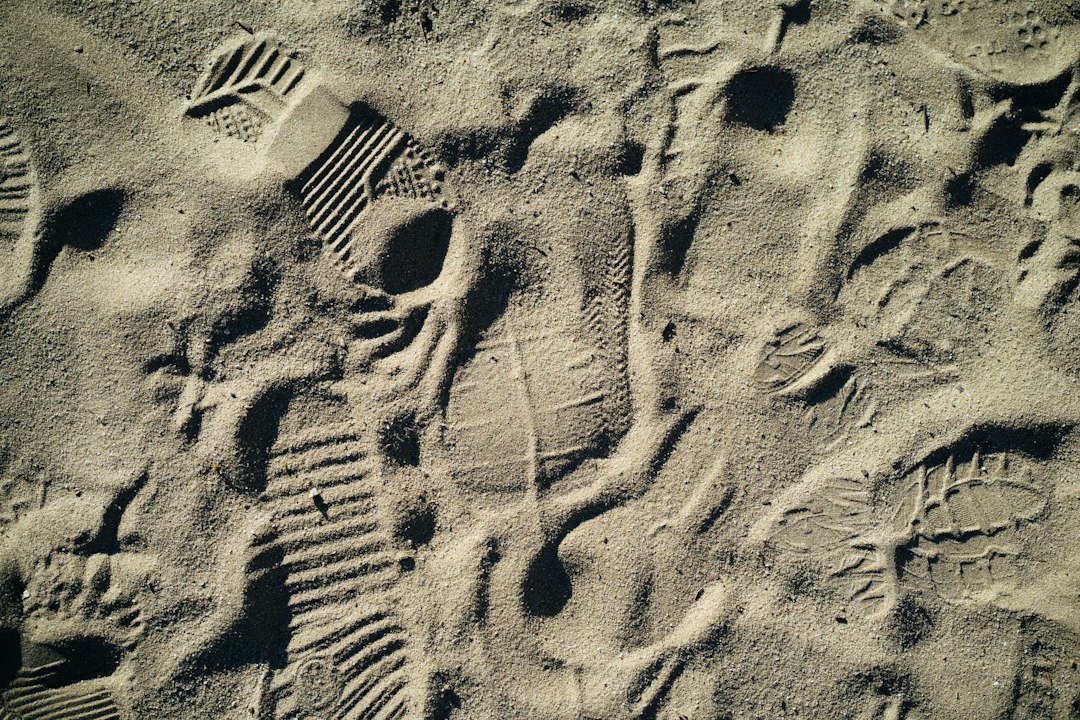
Archaeology, the silent whisperer of forgotten eras, offers an unparalleled lens through which humanity can trace its ancient lineage. While written records, precious as they are, only illuminate a fraction of our past, the material culture unearthed by diligent excavators provides a tangible connection to the lives, beliefs, and migrations of our ancestors. These archaeological footprints, from the faintest imprint of a sandal in ancient mud to the monumental structures that defy time, serve as indelible markers on the vast tapestry of human history. Through meticulous excavation, sophisticated dating techniques, and interdisciplinary analysis, archaeologists reconstruct narratives of settlement, trade, conflict, and innovation, piecing together the complex mosaic of human evolution and dispersal across the globe.
Echoes in the Earth: Unearthing Early Human Migrations
The story of human lineage is inextricably linked to our migratory journeys. For millennia, our ancestors traversed continents, driven by resource scarcity, climate change, or the innate human desire for exploration. Archaeology provides the most potent evidence for these ancient movements, revealing the pathways taken and the adaptations made to diverse environments. The discovery of hominin fossil sites in Africa, such as those at Olduvai Gorge, chronicles the cradle of humanity, offering insights into early bipedalism and tool use. As our ancestors ventured out of Africa, their archaeological traces become more diffuse but no less significant.
The Out-of-Africa Dispersal: Following the First Steps
The “Out-of-Africa” theory, a cornerstone of paleoanthropology, is primarily supported by archaeological finds. Early stone tool industries, like the Oldowan and Acheulean, found across Africa and subsequently in the Levant and Asia, demonstrate the spread of early hominins. The discovery of Homo erectus fossils and associated artifacts at sites like Dmanisi in Georgia, dated to around 1.8 million years ago, provides crucial evidence of early excursions beyond the African continent. These sites act as temporal signposts, indicating the routes and timing of these initial grand migrations. Further east, sites in Indonesia, such as Sangiran and Trinil, have yielded Homo erectus remains and tools, suggesting their presence in Southeast Asia tens of thousands of years before previously thought. The analysis of artifact types, their distribution, and geological context allows archaeologists to map these ancient migrations with remarkable detail.
The Peopling of the Americas: A Complex Journey
The arrival of humans in the Americas is another chapter of ancient lineage traced through archaeological footprints. For decades, the Clovis-First model, positing a migration around 13,000 years ago, dominated the discourse. However, discoveries at sites like Monte Verde in Chile and Paisley Caves in Oregon have pushed back the timeline of human presence to at least 15,000 years ago, and increasingly, evidence suggests even earlier occupations. The archaeological record here is complex, involving debate over the nature of early Paleo-Indian technology, the identification of true pre-Clovis sites, and the potential multiple migration routes, including possible coastal routes in addition to the Bering land bridge. The recovery of ancient human DNA from skeletal remains at these sites is revolutionizing our understanding, offering direct genetic links to Asian populations and providing crucial clues about the timing and routes of the peopling of the Americas.
Recent advancements in archaeology have shed light on tracing ancient lineages through the study of footprints, revealing fascinating insights into the movements and behaviors of our ancestors. For a deeper understanding of how historical artifacts and maps can influence our perception of ancient civilizations, you may find the article “Debunking the Piri Reis Map: A Scientific Rebuttal” particularly enlightening. It explores the implications of historical cartography and its relation to our understanding of ancient human migration. You can read it here: Debunking the Piri Reis Map: A Scientific Rebuttal.
Civilizations Risen and Fallen: The Material Legacy of Societies
Beyond migrations, archaeology illuminates the rise and fall of complex societies. From the mudbrick villages of Mesopotamia to the stone cities of the Maya, the material remains left behind offer a profound glimpse into the organization, achievements, and eventual decline of ancient civilizations. These discoveries are not merely historical curiosities; they reveal fundamental patterns of human social development, economic systems, and cultural expressions that continue to resonate today.
The Dawn of Agriculture: Sedentism and its Consequences
The transition from nomadic hunter-gatherer lifestyles to settled agricultural communities, a monumental shift in human history, is vividly documented in the archaeological record. Sites like Çatalhöyük in Turkey, a Neolithic settlement dating back over 9,000 years, reveal the early stages of village life, with densely packed houses, evidence of early animal domestication, and sophisticated burial practices. The proliferation of pottery, grinding stones, and storage facilities at these sites signifies the development of new technologies and social structures necessitated by a more sedentary existence. The surplus of food generated by agriculture allowed for population growth, specialization of labor, and the eventual emergence of more complex social hierarchies and political organization.
Monumental Architecture and Urbanism: Symbols of Power and Organization
The construction of monumental structures, from the pyramids of Egypt and the ziggurats of Sumer to the temples of Angkor Wat, stands as a testament to the organizational capabilities and ideological motivations of ancient civilizations. These architectural marvels are not just feats of engineering; they are archaeological footprints that reveal intricate social stratification, religious beliefs, and economic power. The planning and execution of such projects required a coordinated workforce, sophisticated logistical management, and often, a centralized authority. Studying the layout of ancient cities, the distribution of public and private spaces, and the construction techniques employed provides invaluable insights into the social fabric and governance of these bygone societies. The analysis of settlement patterns, defensive fortifications, and the infrastructure of water management, for example, reveals the practical challenges and solutions faced by urban populations in antiquity.
The Threads of Connection: Trade, Exchange, and Cultural Diffusion
Ancient lineage is not solely about isolated populations but also about the connections that bound them together. Trade networks, the exchange of ideas, and the diffusion of technologies across vast distances played a crucial role in shaping human societies and spreading cultural innovations. Archaeology provides the tangible evidence for these interconnectedness, unearthing artifacts far from their origins and revealing the complex pathways of ancient commerce and cultural transmission.
Ancient Trade Routes: Navigating the Seas and Lands
The discovery of exotic goods, such as obsidian from Anatolia found in Neolithic settlements in the Aegean, or Roman coins unearthed in India, provides irrefutable evidence of extensive ancient trade. The Silk Road, a network of trade routes connecting the East and West for centuries, is a prime example, with archaeological finds along its path revealing the movement of goods like silk, spices, and precious metals. Maritime trade routes, too, left their mark, with shipwrecks like the Uluburun wreck off the coast of Turkey, laden with a diverse cargo of copper ingots, tin, and even ivory, offering a snapshot of Bronze Age maritime commerce. The analysis of trade goods’ provenance, quantity, and distribution allows archaeologists to reconstruct the economic and political relationships between ancient polities and to understand the flow of goods and influences.
Cultural Diffusion and the Spread of Ideas: Beyond Physical Goods
The movement of people and goods inevitably led to the diffusion of ideas, technologies, and cultural practices. The spread of alphabetic scripts, agricultural techniques, and religious beliefs across continents can be traced through archaeological evidence. The adoption of Roman architectural styles in conquered territories, the dissemination of Buddhism along the Silk Road, or the spread of agricultural innovations from the Fertile Crescent are all examples of cultural diffusion evidenced by archaeological discoveries. Examining stylistic similarities in pottery, art, and weaponry across different regions can reveal the transmission of knowledge and artistic traditions. The presence of foreign religious iconography or burial practices in distant lands further underscores the interconnectedness of ancient populations.
The Language of the Dead: Funerary Practices and Belief Systems
The way ancient peoples treated their dead offers a profound and intimate glimpse into their beliefs about life, death, and the afterlife. Funerary practices, from elaborate burial rituals to simple interments, are a rich source of archaeological data that helps us understand the social status, kinship structures, and spiritual worldviews of past societies. These discoveries are not just about the deceased; they reflect the living society’s values and anxieties.
Elaborate Tombs and Rituals: Status and Spirituality
The construction of monumental tombs, such as the Egyptian pyramids or the elaborate burial mounds of the Scythians, speaks volumes about social hierarchy and the desire to ensure the deceased’s passage into the afterlife. The grave goods accompanying the deceased – jewelry, weapons, pottery, and even sacrificed animals – offer insights into their wealth, profession, and beliefs. The ritualistic arrangement of bodies, the presence of offerings, and the specific location of burials reveal complex cosmological understandings and a deep engagement with the spiritual realm. The analysis of skeletal remains can also reveal information about diet, health, and disease, providing a more complete picture of individual lives within the broader social context.
Symbolic Landscapes and Ancestor Veneration: Connecting to the Past
Ancient peoples often shaped their landscapes to honor their ancestors and connect with the spiritual world. Megalithic structures like Stonehenge, or the intricate rock-cut tombs of Petra, served as sacred spaces and focal points for communal rituals. The orientation of these structures, often aligned with celestial events, suggests a sophisticated understanding of astronomy and a desire to integrate earthly life with cosmic cycles. Evidence of ancestor veneration, such as offerings left at burial sites or the creation of ancestral shrines, indicates a continuous dialogue between the living and the dead, a fundamental aspect of many ancient lineages. The study of these symbolic landscapes helps us understand how ancient societies perceived their place in the cosmos and their relationship with their forebears.
Recent discoveries in archaeology have shed light on the fascinating topic of tracing ancient lineage through the analysis of footprints left behind by early humans. These footprints, often preserved in sedimentary rock, provide invaluable insights into the movement, behavior, and social structures of our ancestors. For those interested in exploring how historical agreements have shaped modern societies, a related article discusses the implications of trade agreements on cultural exchanges, which can be found here. Understanding these connections can deepen our appreciation of how ancient practices influence contemporary life.
Decoding the Past: Modern Technologies in Archaeological Discovery
| Metric | Description | Example Data | Significance |
|---|---|---|---|
| Footprint Age (years) | Estimated age of the footprint based on stratigraphy and dating methods | 1,500,000 | Helps determine the time period of ancient human or hominin activity |
| Footprint Length (cm) | Measurement of the footprint from heel to toe | 28.5 | Used to estimate the height and size of the individual |
| Stride Length (cm) | Distance between two consecutive footprints of the same foot | 75 | Provides insight into walking speed and gait |
| Number of Footprints | Total count of footprints found in a site or trackway | 120 | Indicates group size or frequency of passage |
| Footprint Depth (cm) | Depth of the footprint impression in sediment | 3.2 | Can indicate weight and walking surface conditions |
| Location Coordinates | Geographical coordinates of the footprint site | 36.7783° N, 119.4179° W | Essential for mapping ancient migration routes |
| Associated Artifacts | Number and type of artifacts found near footprints | 5 stone tools | Helps correlate footprints with cultural activity |
The field of archaeology has been revolutionized by the advent of modern technologies. These innovations allow for non-invasive exploration, precise dating, and the detailed analysis of even the most fragile artifacts, enabling archaeologists to unearth and interpret ancient lineages with unprecedented accuracy and scope. The convergence of disciplines, from physics and chemistry to genetics and computer science, is pushing the boundaries of what we can learn from the archaeological record.
Remote Sensing and Geophysical Survey: Seeing Beneath the Surface
Techniques like ground-penetrating radar (GPR), magnetometry, and lidar have transformed the way archaeologists survey potential sites. These methods allow researchers to identify buried structures, ancient field systems, and even pathways without disturbing the ground. Lidar, in particular, has revealed vast ancient cities and landscapes hidden beneath dense jungle canopies, such as the Maya sites in Central America, revolutionizing our understanding of their urban planning and territorial extent. These technologies enable targeted excavation, maximizing efficiency and minimizing environmental impact, while also providing a broader spatial context for individual discoveries.
Radiocarbon Dating and Isotopic Analysis: Pinpointing Time and Diet
The development of radiocarbon dating has provided a crucial tool for establishing chronological frameworks for archaeological sites. By measuring the decay of radioactive carbon isotopes in organic materials, scientists can determine the age of artifacts and human remains with remarkable accuracy. Furthermore, isotopic analysis of bone and teeth can reveal invaluable information about an individual’s diet, geographic origin, and even migration patterns. For instance, analyzing the strontium isotopes in fossilized teeth can indicate where an individual spent their childhood, providing direct evidence of movement within ancient populations. These scientific methods are instrumental in constructing robust timelines and understanding the biological and dietary realities of ancient peoples, thus enriching our tracing of ancient lineages.
Paleo-genetics and Ancient DNA: The Ultimate Ancestral Fingerprint
Perhaps the most transformative technological advancement in recent decades has been the retrieval and analysis of ancient DNA (aDNA). By extracting genetic material from skeletal remains, archaeologists and geneticists can now directly study the genetic relationships between ancient populations and their modern descendants. This has provided definitive answers to questions about migration routes, admixture events, and the origins of various human groups. The study of Neanderthal and Denisovan DNA in modern human genomes, for example, has revealed interbreeding between these ancient hominins and our ancestors, demonstrating a more complex evolutionary history than previously imagined. Ancient DNA analysis is an unparalleled tool for tracing the deepest threads of our lineage, offering a molecular record of our shared past.

Beneath the Ice: Surviving the Ice Age 20,000 Years Ago
FAQs
1. How can archaeologists trace ancient lineage through archaeological footprints?
Archaeologists can trace ancient lineage through archaeological footprints by analyzing artifacts, DNA samples, and other evidence left behind by ancient civilizations. By studying these remnants, researchers can piece together the history and lineage of ancient populations.
2. What role do ancient footprints play in understanding human migration patterns?
Ancient footprints provide valuable insights into human migration patterns by revealing where ancient populations traveled, settled, and interacted with other groups. By studying these footprints, researchers can map out the movements of ancient civilizations and understand how different populations spread across the globe.
3. How do archaeological footprints help in understanding cultural exchanges between ancient civilizations?
Archaeological footprints help in understanding cultural exchanges between ancient civilizations by revealing evidence of trade, communication, and interactions between different groups. By studying artifacts and other remnants left behind by ancient populations, researchers can uncover the extent of cultural exchanges and influences between civilizations.
4. Can ancient footprints provide clues about social structures and hierarchies in ancient societies?
Ancient footprints can provide valuable clues about social structures and hierarchies in ancient societies. By analyzing artifacts, burial sites, and other evidence, researchers can infer the social organization, power dynamics, and hierarchies that existed within ancient civilizations.
5. What challenges do archaeologists face when tracing ancient lineage through archaeological footprints?
Archaeologists face challenges such as incomplete or fragmented evidence, preservation issues, and the interpretation of artifacts when tracing ancient lineage through archaeological footprints. Additionally, cultural biases, limited resources, and ethical considerations can also impact the study of ancient lineages.