Sure, let’s dive into how genetics can help you uncover shared ancestors between Cajun and French Canadian families.
Unraveling the Genetic Threads: Connecting Cajun and French Canadian Roots
The short answer is yes, genetics can absolutely help trace shared ancestry between Cajun and French Canadian populations. In fact, due to their distinct historical migrations and relatively isolated development, these two groups often show fascinating and identifiable genetic patterns. By looking at your DNA, you can often pinpoint common ancestors who lived in France centuries ago and eventually made their way to Acadia (modern-day Nova Scotia and surrounding areas) and then, for many, down to Louisiana. It’s like finding an invisible thread that stitches together your family history across North America and back to Europe.
Recent studies have highlighted the fascinating connections between Cajun French Canadians and their shared ancestry, particularly in the context of genetic heritage and migration patterns. For those interested in exploring how environmental factors have influenced human history, a related article discusses the insights gained from ice core samples in Greenland, shedding light on climate changes that have shaped various populations over time. You can read more about this intriguing intersection of genetics and climate history in the article found here: Uncovering Greenland’s Climate History Through Ice Cores.
The Historical Tapestry: From France to Acadia and Beyond
To understand the genetic connections, a little history is crucial. Both Cajun and French Canadian populations trace their origins back to French settlers who arrived in North America starting in the early 17th century. These early colonists were primarily from western and northwestern France.
Early French Colonization: The Seed of Acadia
The French presence in North America began with attempts at settlement and trade. Acadia, established in the early 1600s, was one of the earliest French colonies. The settlers were a mix of farmers, fishermen, artisans, and adventurers, many coming from regions like Normandy, Brittany, Poitou, and Saintonge. These were hardy folk looking for a new life, and they established a unique culture in the rugged landscape of what is now Canada’s Maritime provinces.
The Great Upheaval: The Acadian Expulsion
The mid-18th century marked a pivotal, and often tragic, turning point. Following the British conquest of Acadia in 1713, tensions grew, culminating in the Grand Dérangement, or the Great Upheaval, from 1755 to 1764. The British forcibly deported thousands of Acadians from their homeland. Families were separated, and many were scattered across the British colonies in North America, to England, and even to France.
The Louisiana Migration: A New Home
A significant portion of these exiled Acadians found their way to Louisiana, a Spanish-held territory at the time. They brought their language, traditions, music, and a deep resilience, eventually forming the distinct Cajun culture we recognize today. Those who remained in Canada, or who later migrated from other parts of France to Quebec, formed the basis of the French Canadian population.
How DNA Testing Reveals These Links

Genetic genealogy services analyze your DNA, specifically looking at markers that are passed down through generations. These markers can reveal your ancestral origins and, importantly, identify segments of DNA you share with other individuals who have also tested.
Autosomal DNA: The Broad Picture
Most consumer DNA tests rely on autosomal DNA, which you inherit from all your ancestors, going back roughly six to eight generations. This type of DNA is invaluable for finding relatives and understanding broad ancestral origins.
For Cajun and French Canadian ancestry, autosomal DNA can reveal:
- Shared DNA with other test-takers: If you share a significant amount of DNA with someone who identifies as Cajun or French Canadian, it’s a strong indicator of a recent common ancestor.
- Geographic Origins: DNA testing companies often provide ethnicity estimates or “ancestral origins” reports. For those with strong Cajun or French Canadian heritage, you’ll likely see a significant percentage attributed to France, and often specific regions within France that align with the historical settlement patterns of Acadians and early French colonists in Canada. You might also see some percentages from other European countries, reflecting the diverse origins of even the earliest settlers.
Cajun French Canadians have a rich cultural heritage that is deeply intertwined with their shared ancestry, which can be traced back to various European roots. This fascinating genetic tapestry has been explored in various studies, shedding light on the unique characteristics of this community. For those interested in delving deeper into the connections between ancestry and genetics, you might find this article on ancient technology and knowledge particularly intriguing, as it highlights how historical influences shape modern identities. You can read more about it here.
Y-DNA and mtDNA: The Deep Past
While autosomal DNA is great for recent connections, Y-DNA (passed from father to son) and mitochondrial DNA (mtDNA, passed from mother to child) trace direct paternal and maternal lines, respectively, back thousands of years.
- Y-DNA: If you are male, your Y-DNA can be traced back to your earliest known paternal ancestor. If this ancestor was among the original French settlers of Acadia or Quebec, their Y-DNA haplogroup will likely be identifiable. Comparing your Y-DNA haplogroup with others can reveal deep ancestral connections to specific French regions or migration routes.
- mtDNA: Similarly, your mtDNA traces your maternal line. This can also point to the origins of your earliest female ancestors who came from France.
Specific Genetic Signatures: What to Look For
The historical isolation of Acadian communities before and after the expulsion, and
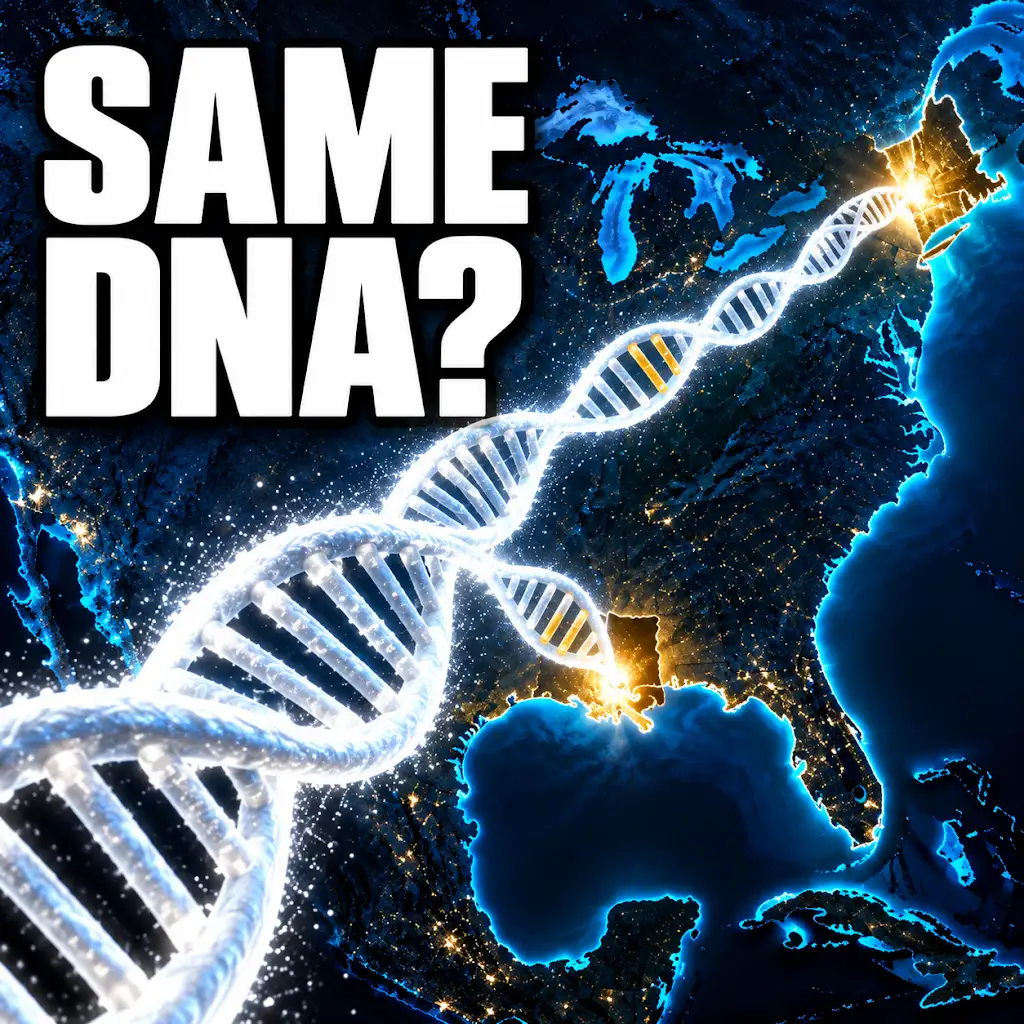
Cajun or French Canadian? The DNA Looked the Same—Until Researchers Looked Closer
FAQs
1. What is Cajun French Canadian shared ancestry?
Cajun French Canadian shared ancestry refers to the genetic connection between the Cajun people of Louisiana and French Canadians, particularly those from Quebec. This shared ancestry can be traced back to the migration of French settlers to both regions in the 17th and 18th centuries.
2. How do genetics play a role in Cajun French Canadian shared ancestry?
Genetics play a crucial role in Cajun French Canadian shared ancestry by revealing common genetic markers and traits among individuals with roots in both populations. Through genetic testing and analysis, researchers can identify genetic similarities that point to a shared ancestry.
3. What are some common genetic markers found in individuals with Cajun French Canadian shared ancestry?
Common genetic markers found in individuals with Cajun French Canadian shared ancestry include specific DNA sequences, haplogroups, and genetic variations that are prevalent in both Cajun and French Canadian populations. These markers help trace the genetic lineage and connections between the two groups.
4. How has the history of migration influenced Cajun French Canadian shared ancestry?
The history of migration, particularly the movement of French settlers to North America, has greatly influenced Cajun French Canadian shared ancestry. The migration patterns, intermarriages, and cultural exchanges between the French Canadians and Cajuns have contributed to the genetic similarities and shared ancestry seen today.
5. What are the implications of studying Cajun French Canadian shared ancestry genetics?
Studying Cajun French Canadian shared ancestry genetics can provide valuable insights into the history, migration patterns, and genetic connections between different populations. It can also help individuals of Cajun and French Canadian descent better understand their genetic heritage and ancestral roots.