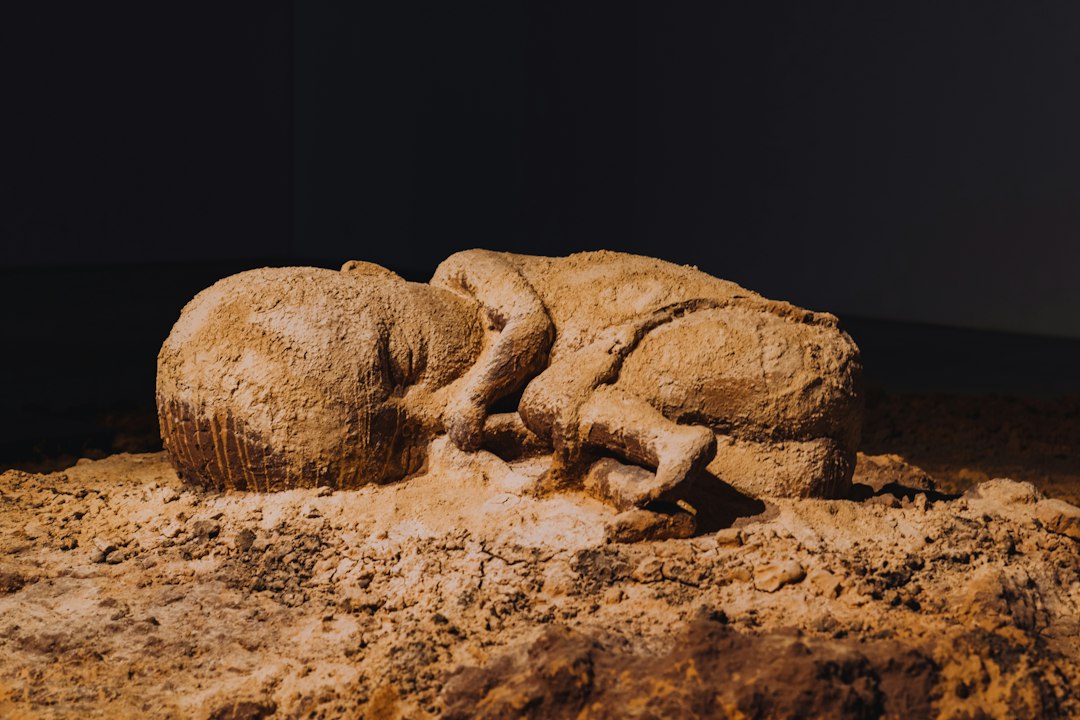
The flickering images on screen, imbued with the gravitas of a forgotten age, illuminated a narrative far grander than any single nation or empire. “Tracing Footsteps: Early Human Migration in Ancient History” was not merely a documentary; it was a journey through time, a visual and intellectual expedition that sought to unravel the very origins of humanity’s presence across the globe. The film, masterfully crafted, employed a blend of expert interviews, stunning CGI reconstructions, and on-location filming at pivotal archaeological sites to paint a vivid picture of the incredibleOdyssey undertaken by our distant ancestors. It eschewed sensationalism for scientific rigor, allowing the evidence, painstakingly gathered over decades, to speak for itself. The core premise was deceptively simple: how did humans, a species originating in Africa, come to inhabit every continent, adapting and evolving in vastly different environments? The documentary embarked on answering this question, not with definitive pronouncements, but with a tapestry of hypotheses, supported by an array of scientific disciplines.
The African Cradle: Genesis of Our Species
The documentary began, as any true exploration of human origins must, with Africa. The vast, ancient continent served as the undisputed birthplace of Homo sapiens. The film meticulously detailed the fossil evidence unearthed in East Africa, specifically in regions like the Omo Valley in Ethiopia and the Swartkrans cave system in South Africa. Renowned paleoanthropologists, their faces etched with the wisdom of years spent in the field, explained the significance of finds like the Omo Kibish fossils, dating back approximately 195,000 years, which provided some of the earliest definitive evidence of anatomically modern humans.
Unveiling the Earliest Ancestors
The narrative delved into the evolutionary journey, showcasing the transition from earlier hominin species, such as Australopithecus and Homo erectus, to Homo sapiens. Animated sequences, rendered with remarkable accuracy, depicted the subtle yet profound changes in skeletal structure, cranial capacity, and bipedal locomotion that characterized this evolutionary leap. The documentary emphasized the mosaic nature of evolution, explaining that not all traits evolved at the same pace. For instance, the development of sophisticated tool-making, evident in Acheulean handaxes associated with Homo erectus, predated the full emergence of anatomically modern humans, suggesting a complex interplay of biological and technological advancements. The genetic evidence, a cornerstone of modern anthropological research, was also powerfully integrated. Geneticists explained how DNA analysis, particularly mitochondrial DNA and Y-chromosome DNA, allowed them to trace maternal and paternal lineages back through millennia, confirming the African origin and highlighting the genetic bottleneck that occurred as small groups of early humans dispersed.
The Genesis of Culture and Cognition
Beyond mere physical evolution, the documentary explored the burgeoning cognitive and cultural capabilities that set Homo sapiens apart. The emergence of symbolic thought, evidenced by early art, personal adornment, and the development of more complex tools, was presented as a crucial factor in the success of human migration. The ability to communicate, to plan, and to innovate provided the essential toolkit for navigating unfamiliar landscapes and overcoming challenges. The film posited that the development of abstract thought allowed for the transmission of knowledge across generations, fostering a cumulative cultural evolution that accelerated human adaptation and expansion.
In exploring the fascinating topic of early human migration, one can gain further insights by examining the various systems that ancient civilizations developed to manage resources. A related article that delves into this subject is “Rationing Systems in the Ancient World,” which discusses how early societies adapted to their environments and the challenges they faced. Understanding these rationing systems can provide a deeper context for the migration patterns of early humans as they sought to find sustenance and stability. For more information, you can read the article here: Rationing Systems in the Ancient World.
The First Exits: Eastward Bound
With the African origins firmly established, “Tracing Footsteps” then turned its attention to the pivotal moments when early humans ventured beyond their ancestral homeland. The documentary focused on the prevailing scientific consensus: the “Out of Africa” model, which suggests that Homo sapiens migrated out of Africa in one or more waves. The primary route, and the one most heavily explored, was the southward expansion across the Bab-el-Mandeb strait, a narrow sea passage connecting the Horn of Africa to the Arabian Peninsula.
Navigating the Arabian Peninsula
The film presented archaeological evidence from sites like Jebel Faya in the United Arab Emirates, where stone tools dating back to around 125,000 years ago were discovered. These finds challenged earlier notions that significant human migration out of Africa occurred much later. The documentary’s experts discussed the environmental conditions of the time, positing that fluctuations in sea levels and the presence of more verdant, habitable corridors likely facilitated these early dispersals. The Arabian Peninsula, far from being the arid desert we often envision, was during certain periods of the Pleistocene epoch a land of rivers, lakes, and savannas, supporting diverse flora and fauna that could sustain migrating hominin populations. The documentary’s CGI reconstructions brought these ancient landscapes to life, showing early humans hunting, gathering, and establishing temporary encampments.
The Levant and Beyond: A Stepping Stone
The Levant, the region encompassing modern-day Israel, Palestine, Lebanon, Syria, and Jordan, served as another critical early hub. The discovery of hominin fossils and stone tools in caves like Skhul and Qafzeh in Israel, dated to around 90,000 to 100,000 years ago, provided crucial evidence of human presence in this region during this period. The documentary highlighted how the Levant, with its diverse ecosystems and proximity to water sources, acted as a natural bridge, allowing early humans to move both further into the Arabian Peninsula and eventually towards Eurasia. The narrative emphasized the adaptability of these early migrants, their ability to exploit a range of resources, and their capacity to overcome the challenges posed by different climates and terrains.
Encounters with the Unknown: Eurasia and the Neanderthal Legacy
As human populations expanded, they inevitably encountered existing hominin populations, most notably the Neanderthals in Europe and Western Asia. “Tracing Footsteps” dedicated a significant portion of its narrative to these fascinating interactions, which had profound implications for the genetic makeup of modern humans.
The Neanderthal Puzzle: Coexistence and Interbreeding
The documentary meticulously detailed the archaeological evidence of Neanderthal presence across Eurasia, showcasing their distinctive tool technologies (Mousterian industry) and their adaptation to colder climates. Through expert interviews with geneticists and archaeologists, the film explored the groundbreaking discovery of Neanderthal DNA in the genomes of non-African human populations. This evidence unequivocally demonstrated that interbreeding between Homo sapiens and Neanderthals occurred. The documentary illustrated how these genetic contributions, though small (typically 1-4% of the genome), have had significant impacts on modern human health, immunity, and even physical characteristics like skin pigmentation and hair texture. The CGI reconstructions depicted hypothetical encounters, not as violent confrontations, but as complex interactions involving curiosity, competition for resources, and perhaps even limited cooperation.
Denisovans and Other Enigmatic Cousins
The narrative then broadened to include other archaic hominin groups, particularly the Denisovans. The documentary explained how the discovery of a finger bone and teeth in Denisova Cave in Siberia, analyzed through ancient DNA, revealed a distinct hominin lineage that had diverged from both Neanderthals and modern humans. The film highlighted that Denisovan DNA is also found in some modern human populations, particularly in Melanesia and East Asia, suggesting further interbreeding events in different parts of the world. This section emphasized the growing understanding that human evolution was not a simple linear progression but a complex web of interconnections and gene flow between various hominin groups. The documentary underscored the ongoing nature of scientific discovery, with new fossil and genetic evidence constantly reshaping our understanding of these ancient encounters.
Colonizing the Globe: The Far Reaches of Human Expansion
The journey of human migration did not cease in Eurasia. “Tracing Footsteps” then charted the incredible dispersals that led humans to populate the most remote corners of the planet, a testament to their remarkable resilience and ingenuity.
The Australasian Voyage: Island Hopping Across Oceans
The settlement of Australia and New Guinea, beginning at least 65,000 years ago, presented a particularly compelling chapter. The documentary explained that this migration required significant seafaring capabilities, forcing early humans to cross stretches of open water. This was a monumental achievement, demonstrating a level of technological and navigational prowess that challenged previous assumptions about the capabilities of early Homo sapiens. The film showcased archaeological sites like Madjedebbe in Australia, which yielded rock art dating back tens of thousands of years, providing visual evidence of the early human presence and their deep connection to the land. The documentary explored the diverse environments of the Australasian region, from lush rainforests to arid interiors, and how human populations adapted to these varied ecological niches, developing unique cultural practices and technologies suited to their local surroundings.
The Americas: A Continent Unveiled
The arrival of humans in the Americas, though still a subject of ongoing debate regarding the precise timing and routes, was a pivotal moment in human history. The documentary presented the prevailing “Beringia” model, suggesting migration across a land bridge that connected Siberia and Alaska during the last glacial period. Archaeological sites like Monte Verde in Chile, with evidence dating back over 14,000 years, provided strong support for pre-Clovis settlements, challenging earlier theories that relied solely on the younger Clovis culture. The film explored the vastness of the Americas, from the Arctic tundra to the tropical rainforests of Central and South America, and how human populations adapted and diversified as they spread across these immense landscapes. The documentary highlighted the development of specialized hunting techniques, the domestication of plants and animals, and the emergence of diverse cultural traditions that characterized the indigenous peoples of the Americas.
In exploring the fascinating journey of early human migration, one can gain deeper insights by examining related topics that highlight the advancements in our understanding of ancient history. For instance, an intriguing article discusses the technological innovations that have shaped our exploration of space and how these advancements can parallel our studies of human movement across the globe. You can read more about this connection in the article on space domain awareness technology, which sheds light on how modern tools can enhance our understanding of ancient migrations. To learn more, visit this article.
The Enduring Legacy: Humanity’s Global Tapestry
| Metric | Details |
|---|---|
| Time Period Covered | 2 million years ago to 10,000 years ago |
| Key Migration Routes | Out of Africa to Eurasia, Australia, and the Americas |
| Hominin Species Featured | Homo erectus, Neanderthals, Homo sapiens |
| Estimated Migration Waves | At least three major waves |
| Genetic Markers Discussed | mtDNA haplogroups, Y-chromosome haplogroups |
| Archaeological Sites Highlighted | Olduvai Gorge, Denisova Cave, Blombos Cave |
| Climate Factors | Ice Age cycles, sea level changes |
| Technological Advances | Stone tools, fire use, early art |
| Estimated Population Sizes | Few thousand to tens of thousands during migrations |
| Documentary Length | 90 minutes |
“Tracing Footsteps” concluded not with a definitive end, but with a profound reflection on the enduring legacy of early human migration. The documentary emphasized that the journeys undertaken by our ancestors were not just about physical movement, but about the creation of a global human tapestry, a mosaic of cultures, languages, and genetic variations that enriches our present world.
The Science of Our Past: Tools of Discovery
The film underscored the pivotal role of scientific disciplines in reconstructing this ancient history. From the meticulous excavation and dating of fossils and artifacts to the sophisticated analysis of ancient DNA, these scientific tools have allowed us to peer back into the deep past with unprecedented clarity. The documentary celebrated the collaborative efforts of archaeologists, paleoanthropologists, geneticists, geologists, and climatologists, whose combined expertise is essential for understanding the complex interplay of factors that drove human migration. It highlighted the ethical considerations involved in studying human origins and the importance of respecting the heritage of indigenous populations.
Echoes in the Present: A Connected Humanity
Ultimately, the documentary served as a powerful reminder of our shared humanity. The migrations of our ancestors, driven by curiosity, necessity, and the innate human desire to explore, connected disparate groups and led to the peopling of every habitable corner of the Earth. The film posited that understanding these ancient journeys fosters a deeper appreciation for the diversity of human cultures and a recognition of our interconnectedness. The final scenes, showing diverse populations around the world, left the viewer with a sense of awe and wonder, contemplating the extraordinary saga of human resilience and the remarkable journey that brought us all here, together. The “footsteps” traced in the documentary were not just of our ancient ancestors, but echoed in the very existence and diversity of humanity today.

Beneath the Ice: Surviving the Ice Age 20,000 Years Ago
FAQs
What is the significance of studying early human migration in ancient history?
Studying early human migration in ancient history helps us understand how our ancestors spread across the world, adapted to different environments, and interacted with other species. It provides insights into the origins of modern human populations and the development of diverse cultures.
What are some key theories about the routes early humans took during migration?
Some key theories about the routes early humans took during migration include the Out of Africa theory, which suggests that modern humans originated in Africa and migrated to other continents, and the Coastal Migration theory, which proposes that early humans used coastlines to travel to different regions.
How did early humans adapt to different environments during their migration?
Early humans adapted to different environments during their migration by developing new tools, techniques, and social structures. They learned to hunt different animals, gather diverse plants, and build shelters suitable for various climates.
What role did climate change play in shaping early human migration patterns?
Climate change played a significant role in shaping early human migration patterns by creating opportunities and challenges for populations. Changes in temperature, sea levels, and vegetation influenced where early humans could live, forcing them to move to new areas in search of resources.
How do ancient history documentaries contribute to our understanding of early human migration?
Ancient history documentaries use archaeological evidence, scientific research, and expert analysis to present a comprehensive view of early human migration. They bring the past to life, making complex theories and discoveries accessible to a wide audience and sparking interest in our shared history.