
So, you’re curious about French Canadian DNA and what it can tell you about your family history? That’s a fantastic question, and the short answer is: it can tell you quite a lot! By combining DNA testing with traditional genealogical research, you can unlock fascinating details about your ancestors’ origins, migration patterns, and even discover previously unknown branches of your family tree. Think of it as a detective story where DNA provides some of the most compelling clues, and your family history research helps you piece them all together.
The French Canadian Ancestry Puzzle: What to Expect from DNA
French Canadian ancestry is a rich tapestry woven from centuries of history. When you embark on tracing your roots, you’re often dealing with a distinct genetic heritage shaped by early settlers from various regions of France and subsequent interactions with Indigenous populations and other European groups. DNA testing can provide tangible evidence to support or expand upon what you might already know from family stories or existing records.
Understanding Your Ancestry Results
When you submit a DNA sample to a testing company, they analyze specific markers in your DNA. These markers are compared to vast reference databases of people with known ancestries. Your results will typically break down your ethnicity into percentages, indicating regions or countries where your ancestors likely lived. For French Canadian heritage, you’ll often see significant percentages attributed to Western France, particularly regions like Normandy, Brittany, Picardy, and Poitou.
However, it’s not always that straightforward. The databases are constantly being updated, and the percentages can shift over time. What’s particularly interesting for French Canadians is the potential for seeing more nuanced regional breakdowns within France. Instead of just “France,” you might see “Northwest France” or even more specific areas, which can be incredibly validating if you’ve been researching a particular ancestral region.
Beyond the “French” Label: Other Influences
French Canadian DNA isn’t solely “French.” Over generations, there have been other significant influences. For example, the early settlers often intermarried with Indigenous peoples of North America. Depending on the strength and recency of these connections in your lineage, you might see a percentage of Native American ancestry, often from specific tribal groups. This is a crucial aspect for many French Canadian families and a significant reason why DNA testing can be so revealing.
Furthermore, there was some immigration from other parts of Europe, and later, a considerable amount of migration from French Canada to the United States, particularly the New England states. This means you might also see DNA segments linked to English, Scottish, Irish, or even Italian ancestry, depending on your family’s specific journey.
Exploring French Canadian DNA family history can provide fascinating insights into the diverse cultural heritage of this region. For those interested in understanding the broader context of ancestry and its connections to historical events, a related article titled “Uncovering Ancient Astronomy Secrets” offers intriguing perspectives on how ancient civilizations influenced modern populations. You can read more about it here: Uncovering Ancient Astronomy Secrets. This exploration can enrich your understanding of how various factors, including migration and cultural exchange, have shaped the genetic landscape of French Canadians.
Bridging the Gap: DNA and Genealogical Records
DNA testing is a powerful tool, but it’s most effective when used in conjunction with traditional genealogical research. Think of DNA as the breadcrumbs leading you to the right path, and genealogical records as the map that helps you navigate it.
Autosomal DNA: Your Primary Tool
The most common type of DNA test offered by companies like AncestryDNA, 23andMe, and MyHeritage is autosomal DNA testing. This type of DNA is inherited from all your recent ancestors (going back about 5-7 generations), meaning it provides a comprehensive overview of your ancestral makeup. Autosomal DNA is excellent for identifying ethnic origins and, crucially, for finding DNA matches.
Finding Your “Matches”: The Power of Shared DNA
DNA matches are individuals who share a statistically significant amount of DNA with you. These are your genetic cousins. For French Canadian research, these matches can be invaluable. If you have a match who also has a strong French Canadian background, and you share a segment of DNA, it’s highly probable that you share a common ancestor.
The challenge, however, lies in identifying which ancestor. This is where the detective work really begins. You’ll need to examine your match’s public family tree, look for shared ancestors with your own tree, and then try to pinpoint the common link. Sometimes, a match might not have a tree, or their tree might be incomplete. In these cases, you might need to reach out to them to collaboratively build your shared history.
Exploring French Canadian DNA family history can lead to fascinating discoveries about ancestral roots and cultural heritage. For those interested in delving deeper into the intricacies of genealogy, an insightful article can be found at this link, which discusses the broader implications of historical research and its impact on understanding family connections. Unraveling these connections can provide a richer perspective on personal identity and community ties.
The Importance of Family Trees and Public Records
Your family tree is your roadmap. The more detailed and accurate it is, the easier it will be to connect your DNA matches to specific ancestral lines. Start with what you know – parents, grandparents, great-grandparents – and work backward. Utilize birth, marriage, and death records, census data, immigration documents, and church records. French Canadian records, particularly those from Quebec, are often quite well-preserved, especially church records which were meticulously kept.
When you have a DNA match and a potential common ancestor identified through their tree, cross-reference this with your own research. Do your records support this connection? Are there other shared ancestors that might explain the shared DNA? This triangulation process is key to confirming relationships.
Uncovering Specific French Canadian Ancestral Regions
French Canadian heritage isn’t monolithic. The early settlers hailed from various provinces in France, and their descendants settled in distinct regions of New France (which would become Quebec, Acadia, and parts of what is now the United States). DNA can sometimes offer clues to these specific origins.
The Normandy Connection
Normandy, a region in northwestern France, is often cited as a primary origin for many early settlers in New France. If your DNA results show a strong affinity for Northwest France, it could be a reflection of this heritage. Look for ancestral surnames that are common in Normandy. Researching the history of emigration from Normandy to Canada can provide context for your findings.
Brittany and the West of France
Brittany, another northwestern region, also contributed a significant number of settlers. Additionally, other western French provinces like Poitou, Saintonge, and Angoumois were crucial recruitment grounds for the colonial administration and various companies. If your DNA leans towards these areas, it can guide your genealogical research towards specific parish records and historical accounts from these French regions.
The Maritime Provinces: Acadian Roots
If your ancestry includes the Maritime provinces of Canada (Nova Scotia, New Brunswick, Prince Edward Island), you might be looking at Acadian heritage. Acadians have a distinct history, often intertwined with both French and English colonial efforts, and later, significant diaspora. While their origins are French, their history is unique, and DNA might reflect a blend of French regions and perhaps even some Spanish or Portuguese influences due to historical events.
Navigating the Nuances of French Canadian DNA
It’s important to approach French Canadian DNA with a certain level of nuance. The genetic landscape is complex, shaped by centuries of isolation, intermarriage, and migration.
The “Founder Effect” and Genetic Bottlenecks
French Canadians are a classic example of a population that has experienced a “founder effect.” This means that a new population was established by a relatively small number of individuals from a larger population. In this case, the initial settlers of New France were a limited group. Over time, as this population grew and became more geographically isolated, certain genetic traits became more common, and others became less so. This can lead to a higher incidence of specific genetic conditions within the French Canadian population compared to the general population of France.
A “genetic bottleneck” is a related phenomenon where a population’
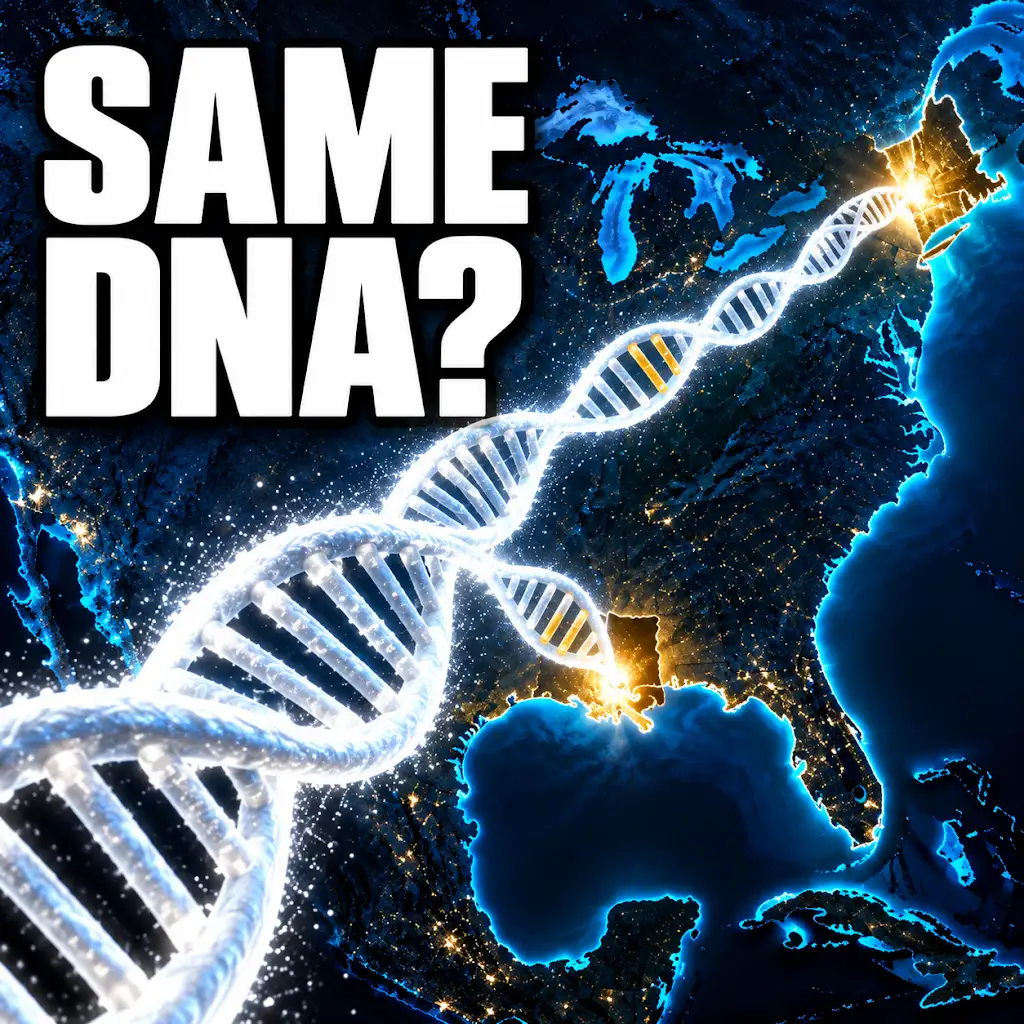
Cajun or French Canadian? The DNA Looked the Same—Until Researchers Looked Closer
FAQs
1. Can DNA testing help me trace my French Canadian family history?
Yes, DNA testing can provide valuable information about your French Canadian ancestry by identifying genetic matches and potential relatives who share common ancestors.
2. What are some common DNA testing companies that offer services for tracing French Canadian ancestry?
Popular DNA testing companies like AncestryDNA, 23andMe, and MyHeritage offer genetic testing services that can help individuals trace their French Canadian family history.
3. How accurate are DNA tests in determining French Canadian heritage?
DNA tests are generally accurate in identifying genetic connections and can provide insights into your French Canadian ancestry. However, the accuracy may vary depending on the testing company and the size of their database.
4. Can DNA testing reveal specific regions in France where my ancestors originated from?
While DNA testing can provide clues about your French Canadian heritage, pinpointing specific regions in France where your ancestors came from may require additional research and genealogical work.
5. Are there any specific genetic markers or traits associated with French Canadian DNA?
French Canadian DNA may exhibit certain genetic markers or traits that are common among individuals with French Canadian ancestry, such as specific haplogroups or genetic variations that are prevalent in the French Canadian population.