The study of how early human tribal groups evolved is a complex and multidisciplinary endeavor, drawing upon a vast array of evidence from paleontology, archaeology, genetics, anthropology, and linguistics. Understanding this evolutionary trajectory requires piecing together fragmented clues, each contributing to a broader narrative of human social organization and adaptation. The emergence of tribal structures was not a single event but a protracted process, shaped by environmental pressures, cognitive advancements, and the fundamental human need for cooperation and survival.
Unearthing the Roots: The Earliest Stages of Social Grouping
The journey towards complex tribal societies began long before anatomically modern humans. The earliest hominins, such as Australopithecus, likely lived in small, relatively egalitarian social groups, akin to those observed in modern primates. These groups would have been characterized by close kinship ties and a reliance on cooperation for foraging and defense against predators. The fossil record provides scant direct evidence of their social structures, but the analysis of their anatomy and inferred behaviors offers glimpses into their lives.
The Social Landscape of Australopithecines
Fossil discoveries, particularly in East Africa, have painted a picture of Australopithecus as ape-like in many respects but with bipedal locomotion, a key adaptation that freed their hands for tool use and carrying. Their skeletal remains suggest a degree of sexual dimorphism, with males often larger than females, a trait common in many primate species and indicative of potential competition for mates. This likely fostered social dynamics centered around male dominance hierarchies, though the exact nature of these relationships remains speculative. Small group sizes, perhaps ranging from a dozen to a few dozen individuals, would have been advantageous for resource acquisition in their savanna environments, minimizing competition within the group.
The Dawn of Tool Use and its Social Implications
The earliest stone tools, dating back over 3 million years, are associated with early hominins. The manufacture and use of these tools, even in their rudimentary forms, would have necessitated some level of social learning and transmission of knowledge. This rudimentary form of culture, passed down through generations, represents a crucial step in the development of more complex social structures. The ability to create tools for hunting, butchering, and processing food would have enhanced the group’s survival capabilities and potentially led to more stable social bonds. The shared experience of tool-making and use could have fostered a sense of collective identity and purpose within these nascent social units.
The study of early human tribal groups provides fascinating insights into our evolutionary history, particularly in understanding how social structures and cooperation among individuals contributed to survival and adaptation. For a deeper exploration of ancient technologies that may have influenced human development, you can read about the intriguing Baghdad Battery and its implications in the context of early human innovation in this article: Unlocking the True Purpose of the Baghdad Battery.
The Rise of Homo Erectus and the Expansion of Social Networks
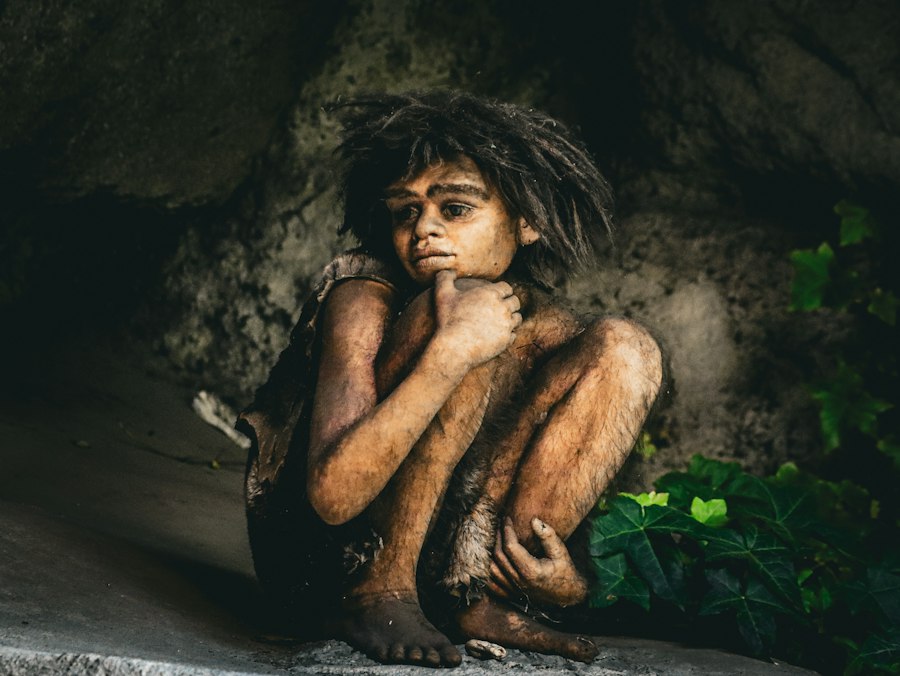
With the emergence of Homo erectus, approximately 1.9 million years ago, significant shifts in hominin behavior and social organization began to take shape. This species exhibited larger brains, more sophisticated toolkits (the Acheulean industry), and a greater capacity for endurance running, suggesting increased hunting prowess and a wider range of social interactions. The geographical spread of Homo erectus out of Africa also implies the ability to form and maintain social networks that could sustain migratory groups.
Cooperative Hunting and Resource Management
The development of more advanced hunting strategies by Homo erectus likely demanded greater coordination and cooperation within groups. The success of hunts for larger game would have depended on individuals working together, sharing roles, and communicating effectively. This increased reliance on coordinated effort would have reinforced social bonds and encouraged the development of more complex social hierarchies. The successful acquisition of resources through cooperative hunting also implies a degree of resource sharing, a fundamental element of social cohesion. Evidence of hearths and controlled fire use suggests communal living spaces, where shared meals and social interactions would have been central.
Migration and the Adaptation to New Environments
The dispersal of Homo erectus across continents presented novel challenges and opportunities. Adapting to diverse climates and ecosystems would have required social flexibility and the ability to learn and innovate. Different groups would have developed unique strategies for survival, leading to regional variations in tool technology and social practices. The ability to migrate and establish new social groups in unfamiliar territories points to a level of social resilience and adaptability. This expansion also suggests the formation of extended social networks, where groups might have interacted, exchanged knowledge, or even interbred, thus spreading successful social strategies across wider geographical areas.
The Emergence of Anatomically Modern Humans: Increased Cognitive Capacity and Social Complexity

The advent of Homo sapiens marked a pivotal moment in human evolution. With larger brains and enhanced cognitive abilities, modern humans developed more sophisticated language, abstract thought, and a greater capacity for cultural innovation. These advancements fueled the evolution of increasingly complex social structures, including the emergence of distinct tribal groups with shared identities, norms, and traditions.
The Role of Language in Social Bonding and Information Exchange
The development of complex language is widely considered a critical factor in the evolution of human sociality. Language enabled individuals to communicate abstract ideas, share detailed information about the environment, and coordinate complex activities with unprecedented efficiency. This facilitated the formation of larger, more cohesive social groups and the transmission of knowledge and cultural practices across generations. The ability to articulate social rules, establish shared histories, and build consensus would have been instrumental in solidifying group identity and maintaining social order within increasingly complex tribal structures.
The Development of Symbolic Behavior and Cultural Transmission
The proliferation of art, ornamentation, and ritualistic practices during the Upper Paleolithic period is indicative of a significant leap in symbolic thinking and cultural complexity. These symbolic expressions served to reinforce group identity, transmit values, and strengthen social bonds. The development of shared myths, stories, and beliefs would have provided a common framework for understanding the world and a sense of belonging within a particular tribe. This cultural transmission, facilitated by language and symbolic representation, allowed for the rapid adaptation of social strategies and the maintenance of distinct group identities over time.
The Formation of Tribal Societies: Kinship, Cooperation, and Identity
As human populations grew and spread, the fundamental unit of social organization shifted towards the tribe. These early tribal groups were characterized by a network of interconnected kinship ties, a reliance on reciprocal cooperation, and a strong sense of shared identity that distinguished them from other groups. The size and structure of these tribes varied widely, influenced by environmental factors, resource availability, and the specific social and cognitive capacities of their members.
Kinship Networks as the Bedrock of Tribal Structure
Kinship has always been a cornerstone of human social organization, and this was particularly true for early tribal groups. Tribes were often structured around extended family units, with descent and lineage playing crucial roles in determining social status, inheritance, and alliances. The emphasis on kinship provided a built-in system of mutual obligation and support, ensuring the survival and well-being of group members. Marriage regulations and exogamy (marriage outside the immediate group) likely played a significant role in forging alliances between different kin groups, thus expanding the reach and influence of tribes.
Reciprocal Cooperation and the Benefits of Group Living
The advantages of living in cooperative groups for early humans were manifold. Foraging for food, raising children, defending against predators, and undertaking large-scale projects like building shelters or hunting large game all benefited from collective effort. Reciprocal altruism, where individuals help each other with the expectation of future reciprocation, would have been a powerful force in maintaining social cohesion. This system of mutual aid and support created a robust social safety net, increasing the overall resilience and success of the tribe. The sharing of resources, skills, and labor was not just beneficial; it was often essential for survival.
The Formation of Group Identity and Intergroup Relations
A defining characteristic of tribal societies is the development of a strong sense of shared identity, often referred to as “us” versus “them.” This identity was forged through common language, shared cultural practices, beliefs, and ancestral histories. This collective identity served to bind individuals together, fostering loyalty and a willingness to cooperate against external threats. However, this strong in-group cohesion also often led to intergroup conflict and competition for resources, shaping the complex dynamics of early human societies. The development of distinct tribal territories and the establishment of social boundaries were crucial aspects of this intergroup relationship.
The study of early human tribal groups offers fascinating insights into our evolutionary history and social structures. Understanding how these groups functioned can shed light on the development of cooperation and communication among our ancestors. For a deeper exploration of how human adaptability has influenced our presence beyond Earth, you might find this article on securing long-term human presence on the moon particularly interesting. It highlights the importance of collaboration, much like that seen in early tribes, in overcoming challenges in new environments. You can read more about it here.
Ongoing Research and Future Directions in Tracing Tribal Evolution
| Time Period | Tribal Group | Region | Key Characteristics | Estimated Population | Notable Evolutionary Traits |
|---|---|---|---|---|---|
| 2.5 million years ago | Early Homo habilis groups | East Africa | Use of simple stone tools (Oldowan) | Several hundred individuals | Increased brain size (~600-700 cc), manual dexterity |
| 1.8 million years ago | Homo erectus tribes | Africa, Asia | Use of Acheulean tools, control of fire | Thousands across regions | Longer legs for endurance walking, larger brain (~900 cc) |
| 300,000 years ago | Early Homo sapiens groups | Africa | Advanced tool technology, symbolic behavior beginnings | Several thousand | Modern brain size (~1350 cc), complex social structures |
| 50,000 years ago | Upper Paleolithic tribes | Worldwide (Africa, Europe, Asia) | Art, language development, sophisticated hunting | Several tens of thousands | Complex language, cultural transmission |
| 12,000 years ago | Neolithic tribal groups | Near East, Europe | Agriculture, permanent settlements | Thousands to tens of thousands per tribe | Domestication of plants and animals, social stratification |
The study of early human tribal group evolution is a dynamic and ever-evolving field. New discoveries in archaeology and paleontology, coupled with advancements in genetic analysis and computational modeling, continue to refine our understanding of this complex process. Future research will likely focus on finer-grained analyses of genetic variation, the reconstruction of ancient languages, and the detailed study of archaeological sites to gain deeper insights into the social lives of our ancestors.
Genetic Clues to Population Movements and Relatedness
Advances in paleogenomics are revolutionizing our understanding of human migration patterns and population structures. By analyzing ancient DNA, researchers can now trace the movements of ancient populations, identify instances of interbreeding between different hominin groups, and infer the genetic relatedness of individuals and groups. This genetic evidence provides a powerful complement to archaeological findings, offering a molecular fingerprint of human history and shedding light on the genetic underpinnings of social organization. Future studies will aim to correlate genetic signatures with specific cultural markers, providing a more comprehensive picture of how genes and culture co-evolved within tribal structures.
Archaeological Evidence for Social Organization and Ritual
Detailed excavation and analysis of ancient settlements, burial sites, and artifact distributions offer crucial insights into the social organization of early human groups. The layout of settlements, the types of dwellings, the presence of communal structures, and the patterns of artifact deposition can all reveal information about social hierarchies, division of labor, and daily life. The study of burial practices, in particular, can provide evidence of social stratification, beliefs about the afterlife, and ritualistic behaviors that helped to solidify group identity and social cohesion. Future archaeological research will likely employ increasingly sophisticated technologies, such as remote sensing and non-invasive survey techniques, to uncover even more subtle clues about the lives of our ancestors.
The Power of Comparative Anthropology and Linguistics
By studying contemporary hunter-gatherer societies and reconstructing the characteristics of extinct languages, anthropologists and linguists can provide valuable comparative data for understanding early human tribal groups. Modern tribal societies, while evolved, may retain elements of ancient social structures and practices that offer analogies for past human behavior. Linguistic analysis can help to reconstruct the social contexts in which early languages developed and the ways in which language was used to maintain social order, transmit knowledge, and forge group identities. The interdisciplinary approach, integrating insights from genetics, archaeology, anthropology, and linguistics, is essential for building a robust and nuanced understanding of the evolutionary history of early human tribal groups.

Beneath the Ice: Surviving the Ice Age 20,000 Years Ago
FAQs
What is the significance of early human tribal groups in evolutionary history?
Early human tribal groups played a crucial role in the evolution of our species by promoting cooperation, sharing of resources, and social bonding, which ultimately contributed to our survival and success as a species.
How did early human tribal groups communicate with each other?
Early human tribal groups likely communicated through a combination of verbal language, gestures, body language, and possibly even early forms of symbolic communication such as cave paintings or engravings.
What were the typical social structures within early human tribal groups?
Early human tribal groups often had hierarchical social structures with leaders or elders who made decisions for the group, as well as specialized roles for tasks such as hunting, gathering, and childcare.
How did early human tribal groups adapt to their environments?
Early human tribal groups adapted to their environments by developing tools, techniques for hunting and gathering, and knowledge of local plants and animals. They also migrated to new areas in search of resources as needed.
What evidence do we have of early human tribal groups in the archaeological record?
Archaeological evidence of early human tribal groups includes tools, weapons, art, burial sites, and other artifacts that provide insights into their daily lives, social structures, and interactions with their environment.