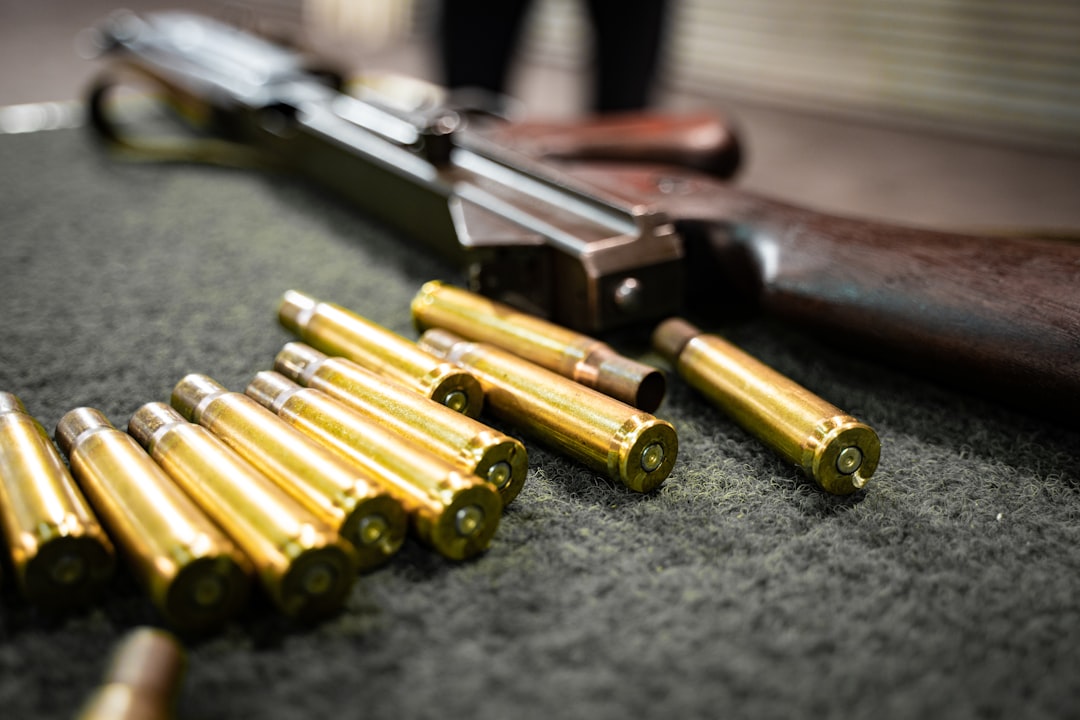
The evolution of combat has been a relentless march, intrinsically linked to humanity’s burgeoning ingenuity. From the earliest bludgeons to the sophisticated firearms of the modern era, each advancement in weaponry has reshaped not only the battlefield but also the very fabric of society. This exploration delves into the historical trajectory of ultimate battle weapons, examining their design, impact, and the societal shifts they catalyzed.
Humanity’s initial foray into organized conflict primarily relied upon the strength and skill of individual combatants, amplified by rudimentary handheld tools. These early weapons, while simple, laid the groundwork for sophisticated close-quarters combat.
The Spear and the Axe: Extensions of the Arm
The spear, in its myriad forms, stands as one of the most enduring and universally adopted weapons. Its primary function was to extend the reach of the warrior, allowing for a safer engagement with threats. Early spears, often sharpened sticks, gradually evolved to include hafted stone or bone points, significantly enhancing their penetrative power. Its versatility allowed for both thrusting and throwing, making it an effective tool for hunting as well as warfare. The phalanx formations of antiquity, such as those employed by the Greeks and Macedonians, demonstrated the devastating potential of massed spearmen, creating an impenetrable wall of pointy death.
The axe, on the other hand, offered a different tactical advantage. Its inherent weight and chopping power made it an ideal weapon for close-quarters brutalization. From the hand axes of prehistory to the formidable battle axes of the Vikings, this weapon was designed for delivering powerful, disfiguring blows. Its utility extended beyond combat, often serving as a tool for felling trees and shaping wood, blurring the lines between utilitarian implement and weapon of war. The double-headed axe, or ‘labrys,’ while iconic, was largely ceremonial or symbolical, with single-bladed variations proving more practical in battle.
The Sword: The Art of the Blade
The sword represents a significant leap in weapon metallurgy and craftsmanship. Before its widespread adoption, advanced metalworking techniques were a prerequisite. The transition from bronze to iron swords marked a pivotal moment, with iron offering greater durability and edge retention. The design of swords varied immensely across cultures and eras, each optimized for specific combat styles and armor types.
Short Swords and Daggers: These weapons, often used as secondary arms or for close infighting, prioritized quickness and maneuverability. Roman gladii, for instance, were short, stabbing weapons designed for the tight confines of legionary formations. Daggers, smaller still, were often concealed or used as last-resort weapons.
Long Swords and Greatswords: As armor evolved, so too did the sword. Longer blades, such as the medieval longsword, allowed for greater reach and offered more leverage for cleaving through less substantial armor. Greatswords, requiring immense strength and skill to wield, were designed to overcome heavily armored opponents, often functioning as a mobile obstacle remover, creating space and disorder in enemy ranks. These weapons, in the hands of a master, were akin to a dancer’s extension, a fluid integration of steel and skill.
Curved Blades: Scimitars and Katanas: The curved blade, exemplified by the scimitar and katana, offered distinct advantages. The curvature facilitated drawing cuts, which could inflict devastating wounds through a combination of slicing and impact. The Japanese katana, renowned for its exceptional sharpness and the artistry of its forging, is a testament to the pursuit of perfection in blade design, often becoming an emblem of the warrior class and the philosophical tenets of Bushido.
For those interested in the evolution of battle weapons throughout history, a fascinating article can be found at Real Lore and Order. This article delves into the various types of weaponry used in different eras, exploring how advancements in technology and changes in warfare tactics have shaped the tools of battle. It provides a comprehensive overview that enhances our understanding of the significance of these weapons in historical conflicts.
The Projectile Revolution: Bows, Crossbows, and Early Artillery
While melee weapons dominated for millennia, the development of projectile weapons fundamentally altered the dynamics of warfare, introducing the concept of engaging the enemy from a distance.
The Bow: From Hunting Tool to Battlefield Decimator
The bow, initially a hunting instrument, found its true calling on the battlefield. Its simplicity belied its effectiveness, allowing a skilled archer to deliver lethal force without direct engagement. The longbow, particularly famous for its use by English armies in the Hundred Years’ War, could pierce substantial armor and unleash a hail of arrows at impressive ranges, turning enemy formations into pincushions. The composite bow, developed in various forms by steppe nomads and other cultures, offered greater power and range in a more compact form, ideal for cavalry archers. The strategic deployment of archers could decimate enemy ranks before they even reached close quarters, shifting the power dynamic significantly.
The Crossbow: Leveraged Power and Ease of Use
The crossbow emerged as a powerful alternative to the traditional bow. Its primary advantage lay in its ease of use; a soldier required less training to become proficient with a crossbow than with a traditional longbow. The mechanical advantage provided by the loading mechanism allowed for much heavier draw weights, translating into greater projectile velocity and penetrative power. The bolts, or quarrels, fired from a crossbow could often pierce the plate armor of knights, making it a democratizing weapon on the battlefield. However, its slower rate of fire and more complex loading mechanism proved to be a tactical trade-off compared to the rapid volleys of skilled archers.
Early Siege Weapons: Trebuchets and Catapults
Beyond handheld projectiles, ancient and medieval engineers developed colossal machines designed to break fortifications and decimate enemy encampments from afar. Trebuchets, magnificent feats of engineering, utilized a counterweight system to hurl massive projectiles, including stones, flaming tar, and even diseased corpses, over walls. Catapults, leveraging torsion or tension, served a similar purpose, although often on a smaller scale. These siege engines were the heavy artillery of their time, capable of reducing stone walls to rubble and striking terror into the hearts of besieged garrisons. Their construction and operation required significant resources and manpower, reflecting their strategic importance.
The Gunpowder Era: A Paradigm Shift

The introduction of gunpowder weaponry stands as one of the most profound revolutions in military history, rendering many traditional weapons obsolete and fundamentally changing the nature of warfare. This was not a gradual evolutionary step, but a sudden seismic shift, a chemical alchemy that forever altered the battlefield.
Early Firearms: Hand Cannons and Arquebuses
The earliest firearms, such as hand cannons, were crude but effective. They were essentially small, metallic tubes loaded with gunpowder and a projectile, ignited by a match or fuse. While inaccurate and slow to reload, their sheer destructive power and the psychological impact of their noise and smoke were undeniable. The arquebus, a more refined shoulder-fired firearm, built upon these early designs, offering improved accuracy and a faster reloading process. These weapons began to erode the dominance of heavily armored knights, as even a less skilled peasant with an arquebus could fell a mounted warrior. The arquebus represented the first ripple in a coming tsunami, the initial crack in the old order.
Muskets and Rifles: Precision and Mass Firepower
The evolution from arquebuses to muskets brought further advancements. Muskets, though still muzzle-loaded and relatively inaccurate at range, were capable of delivering significant close-range impact. Their widespread adoption led to the development of linear tactics, where massed ranks of musketeers could unleash devastating volleys, creating a wall of lead. The introduction of the flintlock mechanism significantly improved reliability and allowed for firing in all weather conditions, further cementing the musket’s place as the primary infantry weapon.
The rifled barrel, a technological breakthrough that imparted spin to the projectile, dramatically increased accuracy and range. While initially slower to load than smoothbore muskets, rifles transformed marksmanship into an art form. The Minie ball, a conical bullet designed to expand into the rifling grooves upon firing, further enhanced accuracy and ease of loading. This combination led to the development of the modern rifle, a weapon that prioritized precision and individual skill, ushering in an era of more dispersed and nuanced combat.
Cannons and Artillery: The Architects of Destruction
Parallel to the development of small arms, artillery pieces also underwent radical transformations. Early cannons, often made of bronze, were valuable but unwieldy. The transition to cast iron and later steel allowed for the creation of lighter, more durable, and more powerful cannons. The development of various types of artillery — from field guns for direct fire to howitzers for indirect, plunging fire — fundamentally changed siege warfare and battlefield tactics. Artillery became the great equalizer, capable of breaking fortifications, disrupting enemy formations, and creating a terrifying psychological impact. Whole landscapes could be reshaped by the sustained barrage of these mechanical titans.
The Modern Era: Precision, Automation, and Global Reach

The 20th and 21st centuries have witnessed an unparalleled acceleration in weapon development, driven by scientific advancements and global conflicts. The focus has shifted towards increased firepower, precision, and efficiency, often blurring the lines between traditional weaponry and futuristic concepts.
Automatic Weapons: Sustained Firepower
The invention of the machine gun in the late 19th century was a brutal harbinger of modern warfare. Capable of firing hundreds of rounds per minute, it could mow down charging infantry formations with terrifying efficiency. The First World War, in particular, demonstrated the devastating power of the machine gun, turning open battlefields into killing fields. Subsequent developments led to lighter, more portable automatic weapons, such as submachine guns and assault rifles, like the AK-47 and the M16. These weapons prioritize sustained fire and suppressive capabilities, allowing individual soldiers to exert a disproportionate amount of firepower. The roar of the machine gun became the soundtrack of industrial war.
Guided Missiles and Smart Weapons: Surgical Strikes
The advent of rocketry and sophisticated guidance systems revolutionized projectile weaponry. Guided missiles, whether air-to-air, surface-to-air, or anti-tank, empower military forces to strike targets with unprecedented accuracy over vast distances. These “smart weapons” utilize various guidance technologies, including infrared, laser, and GPS, to home in on their targets, minimizing collateral damage and maximizing the probability of a direct hit. This precision, while technically impressive, also raises complex ethical considerations regarding the nature of warfare. The ability to strike a target on the other side of the world with pinpoint accuracy is a testament to human ingenuity, and a terrifying reflection of its destructive potential.
Drones and Autonomous Systems: The Future of Warfare
Perhaps the most significant development in modern weaponry is the emergence of unmanned aerial vehicles (UAVs), or drones, and increasingly autonomous weapon systems. Drones, initially used for surveillance, have evolved into armed platforms capable of conducting strikes with precision, often without risking human pilots. The development of artificial intelligence is pushing towards fully autonomous weapon systems, capable of identifying and engaging targets without direct human intervention. This raises profound questions about accountability, ethics, and the very definition of warfare. The implications of machines making life-or-death decisions on the battlefield are a complex tapestry of technological advancement and ethical quandary.
In exploring the evolution of battle weapons throughout history, one can gain a deeper understanding of their impact on warfare and society. A fascinating article that delves into this topic is available at this link, where various types of weaponry are analyzed in terms of their design, functionality, and historical significance. This resource provides valuable insights for anyone interested in the intricate relationship between technology and conflict.
The Continuing Evolution: Beyond the Horizon
| Weapon Name | Type | Origin | Effective Range | Weight (kg) | Material | Era |
|---|---|---|---|---|---|---|
| Longsword | Melee | Europe | Close Combat | 1.2 | Steel | Medieval |
| Katana | Melee | Japan | Close Combat | 1.1 | Folded Steel | Feudal Japan |
| Crossbow | Ranged | Europe | 150 meters | 3.5 | Wood & Steel | Medieval |
| Longbow | Ranged | England | 200 meters | 1.8 | Yew Wood | Medieval |
| Spear | Melee/Ranged | Global | 20 meters (thrown) | 1.5 | Wood & Iron | Ancient to Modern |
| Musket | Ranged | Europe | 100 meters | 4.5 | Wood & Steel | Early Modern |
| Battle Axe | Melee | Europe | Close Combat | 2.0 | Steel & Wood | Medieval |
| Flail | Melee | Europe | Close Combat | 1.8 | Steel & Wood | Medieval |
The trajectory of battle weapons is a continuous line of innovation and adaptation. From the blunt force of a stone axe to the algorithmic precision of a drone, each weapon reflects the scientific, technological, and tactical capabilities of its era. As our understanding of physics deepens and our technological prowess expands, new forms of weaponry are constantly being imagined and developed. Directed energy weapons, cyber warfare capabilities, and even biotechnological enhancements for soldiers are no longer confined to the realms of science fiction. The pursuit of decisive advantage in conflict remains a powerful driver of innovation, ensuring that the evolution of ultimate battle weapons will continue its relentless march into the uncharted territories of the future battlefield. The arms race, in many respects, is an eternal one, a ceaseless quest for the ultimate tool of dominance, a mirror reflecting humanity’s darker impulses and its enduring ingenuity.
FAQs
What are battle weapons?
Battle weapons are tools or instruments designed and used primarily for combat or warfare. They can range from traditional melee weapons like swords and spears to modern firearms and explosives.
What types of battle weapons have been used historically?
Historically, battle weapons have included swords, spears, bows and arrows, shields, axes, and later, firearms such as muskets and cannons. Each era and culture developed weapons suited to their combat needs and technological capabilities.
How have battle weapons evolved over time?
Battle weapons have evolved from simple hand-held tools made of stone or metal to complex machinery incorporating advanced technology. Innovations include the development of gunpowder, firearms, artillery, and modern precision-guided munitions.
What factors influence the design of battle weapons?
The design of battle weapons is influenced by factors such as the intended use (close combat or ranged), available materials, technological advancements, the tactics and strategies of warfare, and the environment in which they will be used.
Are battle weapons regulated under international law?
Yes, many battle weapons are regulated under international law, including treaties and conventions that restrict or ban the use of certain weapons, such as chemical, biological, and landmine weapons, to reduce unnecessary suffering and protect civilians.