The Earth’s crust, a seemingly solid and familiar layer beneath our feet, holds secrets and challenges that far surpass our current understanding and capabilities. While humanity has ventured into the ocean’s abyssal plains and the vacuum of space, the journey into the planet’s inner layers remains a formidable and largely unfulfilled ambition. The pursuit of drilling through this rocky shell is not merely a technical hurdle; it’s a deep dive into the very fabric of our planet, a quest fraught with immense pressure, searing temperatures, and materials that defy our most robust engineering.
The Earth’s crust, while appearing thin from a geological perspective, represents a significant barrier to direct exploration. It is a complex tapestry of rock, minerals, and tectonic plates, constantly shifting and interacting. Understanding its composition, structure, and the forces at play within it is a prerequisite for any successful deep drilling endeavor. The quest to penetrate this layer is not a recent one, but rather a persistent dream that has captivated scientists and engineers for decades. The rewards of such an achievement are immense: a deeper understanding of planetary formation, access to potentially vast geothermal energy resources, and the discovery of novel materials and biological forms. However, the journey is arduous, and the depths that remain unattainable continue to serve as a stark reminder of our planet’s unfathomable immensity.
A Layer of Mystery: What Lies Beneath?
The crust itself is divided into two distinct types: the continental crust and the oceanic crust. The continental crust, which forms the landmasses, is thicker and less dense, composed primarily of granite. The oceanic crust, found beneath the oceans, is thinner, denser, and richer in basalt. Both are relatively brittle and subject to the immense pressures exerted by the overlying layers and the planet’s internal heat. Beneath the crust lies the mantle, a much thicker and hotter layer that is partially molten. The transition zone between the crust and the mantle, known as the Mohorovičić discontinuity (or Moho), represents a significant change in seismic wave velocity, indicating a fundamental shift in material properties. Reaching the Moho itself has been a long-standing goal of deep drilling projects, offering a glimpse into the boundary between the planet’s outer shell and its interior.
The Continental Conundrum
The continental crust presents a unique set of challenges for deep drilling. Its greater thickness means that simply reaching the mantle from land requires penetrating kilometers of rock that vary wildly in composition and integrity. Ancient shields, cratons, and younger mountain belts all possess different geological characteristics, each posing its own set of drilling obstacles. Fault lines, intrusions of igneous rock, and zones of metamorphism can all compromise the stability of boreholes, leading to collapses and equipment loss. The sheer effort required to excavate through these diverse geological formations is a testament to the robust nature of the continental lithosphere.
The Oceanic Opportunity (and its own Hurdles)
While the oceanic crust is thinner, making it a seemingly more accessible target, it comes with its own formidable set of difficulties. The immense water pressure at the ocean floor, combined with the need for specialized drilling platforms and the constant threat of harsh weather conditions, makes oceanic drilling an engineering marvel in itself. Furthermore, the geological processes occurring at the mid-ocean ridges, where new oceanic crust is formed, are dynamic and volatile, creating environments that are both scientifically fascinating and technically challenging to navigate.
The exploration of Earth’s crust has always been a topic of great interest, yet we have never successfully drilled through it due to a combination of technical challenges, extreme conditions, and economic factors. For a deeper understanding of how technology influences our capabilities and limitations in such endeavors, you can read a related article that discusses the broader implications of technological advancements on civilization’s progress. This article can be found at this link.
The Tyranny of Pressure and Temperature
As one descends into the Earth’s crust, the conditions become increasingly extreme. The weight of the overlying rock exerts unimaginable pressure, capable of crushing even the most robust drilling equipment. Simultaneously, the planet’s internal heat source, a consequence of radioactive decay and residual heat from formation, causes temperatures to skyrocket. These twin forces of pressure and heat create an environment that is profoundly hostile to human-made materials and technologies.
Pressure’s Unyielding Grip
The pressure at the bottom of a deep borehole increases proportionally with depth. At the depths targeted for scientific drilling, pressures can reach thousands of atmospheres, equivalent to the weight of an elephant on a postage stamp. This immense force can deform, fracture, and ultimately destroy drill bits, casings, and other vital components. Maintaining borehole stability under such extreme pressure requires specialized drilling fluids and advanced casing designs, pushing the boundaries of materials science and engineering. The challenge is not just to drill, but to maintain the integrity of the hole as it plunges deeper.
The Physics of Compaction
The sheer weight of the rock above causes significant compaction. This process can squeeze out pore fluids, alter the rock’s permeability, and make it more prone to collapsing into the borehole. Understanding the physics of rock compaction at depth is crucial for predicting and mitigating these effects. Sophisticated modeling techniques are employed to forecast how different rock types will behave under increasing pressure, guiding drilling strategies and the selection of appropriate support mechanisms.
The Search for Pressure-Resistant Materials
The development of materials capable of withstanding such crushing forces is an ongoing area of research. Alloys of steel, ceramics, and even novel composites are being explored for their potential to endure the rigors of deep drilling. However, even the most advanced materials have their limits, and pushing beyond those limits requires a continuous innovation cycle. The search for materials that can not only survive but also function effectively under these extreme conditions is a critical bottleneck in achieving deeper penetration.
The Inferno Within: Earth’s Fiery Core
Temperature is another formidable adversary. As depth increases, so does the geothermal gradient, the rate at which temperature rises with depth. In some regions, this gradient can be as high as 30 degrees Celsius per kilometer. At depths approaching the lower crust and upper mantle, temperatures can exceed several hundred degrees Celsius, well beyond the melting point of many conventional materials.
Heat Dissipation Challenges
Keeping drilling equipment cool enough to function is a monumental task. Standard cooling systems are simply overwhelmed by the ambient heat. Specialized drilling fluids that can absorb and dissipate heat are essential, but their effectiveness is limited. The very act of drilling generates friction, further exacerbating the temperature problem. Innovative approaches to heat management, including the use of circulating fluids with extremely high boiling points and the development of heat-resistant components, are paramount.
The Material Science Conundrum
The high temperatures also degrade the performance of many materials. Lubricants can break down, seals can fail, and the structural integrity of metal components can be compromised. Engineers must select materials that retain their strength and functionality at these extreme temperatures, a challenge that often leads to compromises in other desirable properties. The quest for truly high-temperature drilling fluids and lubricants remains a significant hurdle.
Technological Frontiers and Engineering Prowess
The limitations imposed by pressure and temperature necessitate a constant push for innovation in drilling technology. Every meter gained deeper into the Earth represents a triumph of human ingenuity and engineering prowess. From the design of drill bits to the sophisticated control systems that manage the drilling process, every aspect is being scrutinized and refined.
The Evolution of the Drill Bit
The drill bit, the workhorse of any drilling operation, faces immense wear and tear in the Earth’s crust. Traditional steel drill bits are quickly dulled by hard rock and extreme temperatures. The development of polycrystalline diamond compact (PDC) bits and other advanced composite materials has significantly improved drilling efficiency and longevity. However, even these cutting-edge bits struggle in the deepest, hottest sections of the crust. Research continues into even more durable and heat-resistant bit designs, including those that can self-cool or utilize novel drilling mechanisms.
From Mechanical to Thermal Drilling
While mechanical drilling has been the standard, researchers are exploring alternative methods. Thermal drilling, which uses intense heat to melt or vaporize rock, is one such approach. This method bypasses the abrasive nature of rock-on-bit contact but presents its own challenges in terms of energy consumption and controlling the molten material. Sonic drilling, which uses high-frequency vibrations to fracture rock, is another promising avenue being investigated for its potential to reduce friction and improve efficiency.
Advanced Drilling Fluids and Mud Systems
Drilling fluids, or “muds,” play a crucial role in deep drilling. They lubricate the drill bit, cool the borehole, carry rock cuttings to the surface, and help maintain borehole stability by counteracting the immense pressures. At extreme depths, standard water-based muds are inadequate. High-density, high-temperature fluids, often oil-based or synthetic, are required. Developing these specialized fluids that can perform effectively under immense pressure and heat, without causing environmental damage, is a complex chemical engineering challenge.
Navigating Borehole Instability
Borehole instability, where the walls of the drilled hole collapse, is a constant threat. This can be caused by a combination of high pressures, reactive rock formations, and seismic activity. Advanced drilling fluids, along with careful casing designs and hydraulic fracturing techniques, are employed to mitigate these issues. Understanding the stress regimes within the Earth’s crust is critical for predicting and managing borehole stability.
Remote Operation and Sensing Technologies
As drilling projects delve deeper, the environment becomes increasingly inaccessible and hazardous. This necessitates the development of highly automated and remotely operated systems. Sophisticated sensors are employed to monitor downhole conditions in real-time, providing critical data on pressure, temperature, and geological formations. This data is then used to adjust drilling parameters and ensure operational safety. The ability to drill and operate equipment with minimal human intervention is a key factor in the success of future deep drilling endeavors.
The Challenge of Data Transmission
Transmitting vast amounts of data from hundreds of kilometers below the surface, through dense rock and under extreme conditions, is a significant communication challenge. Fiber optic cables, while offering high bandwidth, can be vulnerable. Developing robust and reliable data transmission systems that can withstand the harsh downhole environment is an ongoing area of development.
Economic Realities and Scientific Imperatives
The immense cost and technical difficulty of drilling deep into the Earth’s crust raise fundamental questions about the balance between scientific curiosity and economic feasibility. While the potential scientific discoveries and resource exploitation opportunities are vast, the investment required is substantial, often requiring international collaboration and significant government funding.
The Price of Knowledge: Funding Deep Drilling
Deep drilling projects are inherently expensive, requiring specialized equipment, highly skilled personnel, and extensive logistical support. Securing the necessary funding often involves complex grant proposals, public-private partnerships, and international consortia. The long-term nature of these projects, with results that may not be immediately apparent, can also make them challenging to justify to funding bodies. The scientific community must continually articulate the profound importance of these endeavors to secure the resources needed to push the boundaries of exploration.
International Collaboration: A Necessity for Scale
Given the magnitude of the undertaking, international collaboration is often essential for deep drilling projects. Sharing resources, expertise, and financial burdens allows for more ambitious projects to be realized. The International Ocean Discovery Program (IODP) and the now-completed Integrated Ocean Drilling Program (IODP) are prime examples of successful international efforts in deep-sea drilling, demonstrating the power of global cooperation in tackling complex scientific challenges.
The Promise of Resources: Geothermal Energy and Beyond
The Earth’s interior holds enormous untapped potential for resources. Geothermal energy, derived from the Earth’s internal heat, is a clean and sustainable energy source that could play a significant role in meeting future energy demands. Deep drilling is essential for accessing these high-temperature geothermal reservoirs. Beyond energy, deep drilling could unlock access to rare earth minerals, novel materials, and even unique forms of microbial life that could have significant applications in medicine and biotechnology.
Unlocking Geothermal’s Potential
The technology for extracting geothermal energy already exists, but its widespread adoption is limited by the cost and complexity of drilling to sufficient depths. Advances in deep drilling technology could dramatically reduce these barriers, making geothermal energy a more economically viable and geographically widespread option. The potential for a clean, baseload power source derived directly from our planet is a powerful motivator for continued investment in deep drilling.
The Hunt for Earth’s Hidden Treasures
The deep crust and upper mantle are believed to contain vast reserves of minerals and elements essential for modern technology. The challenges of reaching these resources, however, are immense. Developing the drilling and extraction technologies required to access these deep deposits is a long-term goal, but one with the potential for significant economic and strategic rewards.
The quest to drill through Earth’s crust has fascinated scientists for decades, yet numerous challenges have prevented this ambitious endeavor from becoming a reality. The extreme temperatures and pressures encountered at such depths pose significant technical hurdles, making it a daunting task for even the most advanced drilling technologies. For those interested in exploring the broader implications of scientific exploration and its impact on various sectors, a related article discusses economic stabilization measures that can support recovery efforts in the face of such ambitious projects. You can read more about it here.
The Future of Deep Drilling: A Vision of Progress
| Metric | Value/Description | Reason/Impact |
|---|---|---|
| Maximum Depth Drilled | 12.3 km (Kola Superdeep Borehole) | Only a tiny fraction of Earth’s crust thickness (~35 km average continental crust) |
| Average Continental Crust Thickness | ~35 km | Too thick for current drilling technology to penetrate fully |
| Temperature at 12 km Depth | ~180°C to 250°C | High temperatures cause equipment failure and drilling difficulties |
| Temperature at Crust-Mantle Boundary (Moho) | ~400°C to 600°C | Extreme heat makes drilling and material handling nearly impossible |
| Pressure at Crust-Mantle Boundary | ~1.2 GPa (12,000 atmospheres) | High pressure crushes drilling equipment and complicates operations |
| Rock Hardness and Composition | Varies; includes hard igneous and metamorphic rocks | Increases drill bit wear and slows progress |
| Technological Limitations | Current drilling tech limited to ~12 km depth | Insufficient materials and cooling systems to handle extreme conditions |
| Cost and Time | Decades and billions of dollars for deepest boreholes | Economic impracticality for deeper drilling |
| Scientific Challenges | Unpredictable rock formations and fluid pressures | Risk of blowouts, equipment loss, and safety hazards |
Despite the formidable challenges, the allure of exploring Earth’s unattainable depths remains powerful. The scientific community is not deterred by the obstacles; instead, it is spurred on by the promise of groundbreaking discoveries and the potential for technological advancement. The future of deep drilling is one of continued innovation, collaboration, and a persistent drive to understand the planet we inhabit.
Next-Generation Drilling Technologies
The development of autonomous drilling systems, advanced robotic exploration vehicles, and novel drilling methods like laser or plasma drilling are on the horizon. These technologies promise to overcome some of the current limitations imposed by extreme conditions and human accessibility. The integration of artificial intelligence and machine learning will also play a crucial role in optimizing drilling operations and analyzing the vast amounts of data generated.
Pushing the Boundaries of Materials Science
Continued advancements in materials science will be crucial for creating drill bits, casings, and sensors that can withstand even higher pressures and temperatures. The development of self-healing materials, advanced ceramics, and nanotechnology-enabled composites could revolutionize deep drilling capabilities.
The Quest for the Moho and Beyond
The ultimate goal for many scientific drilling endeavors is to reach the Mohorovičić discontinuity and sample the upper mantle. This would provide invaluable insights into the processes that drive plate tectonics, the generation of magma, and the Earth’s magnetic field. While the challenges are immense, the scientific rewards are equally profound. The ambition to touch the very mantle of our planet continues to drive exploration.
Unraveling Planetary Evolution
By drilling deeper, scientists can gain a more comprehensive understanding of Earth’s formation and evolution. The composition and structure of the crust and upper mantle hold clues to the planet’s early history, the processes that shaped its interior, and the conditions that allowed life to emerge. This knowledge has implications not only for understanding our own planet but also for the search for life on other celestial bodies.
A New Era of Earth Science
The continued pursuit of deep drilling promises to usher in a new era of Earth science. With every meter drilled, our understanding of the planet expands, revealing intricate geological processes, hidden resources, and the dynamic nature of our world. The unattainable depths of Earth’s crust, once a mere frontier of imagination, are slowly but surely becoming a canvas for scientific discovery, painted with the brushstrokes of human perseverance and technological ambition. The journey into the Earth’s interior is far from over; it is a testament to humanity’s enduring quest for knowledge and our insatiable desire to explore the unknown.
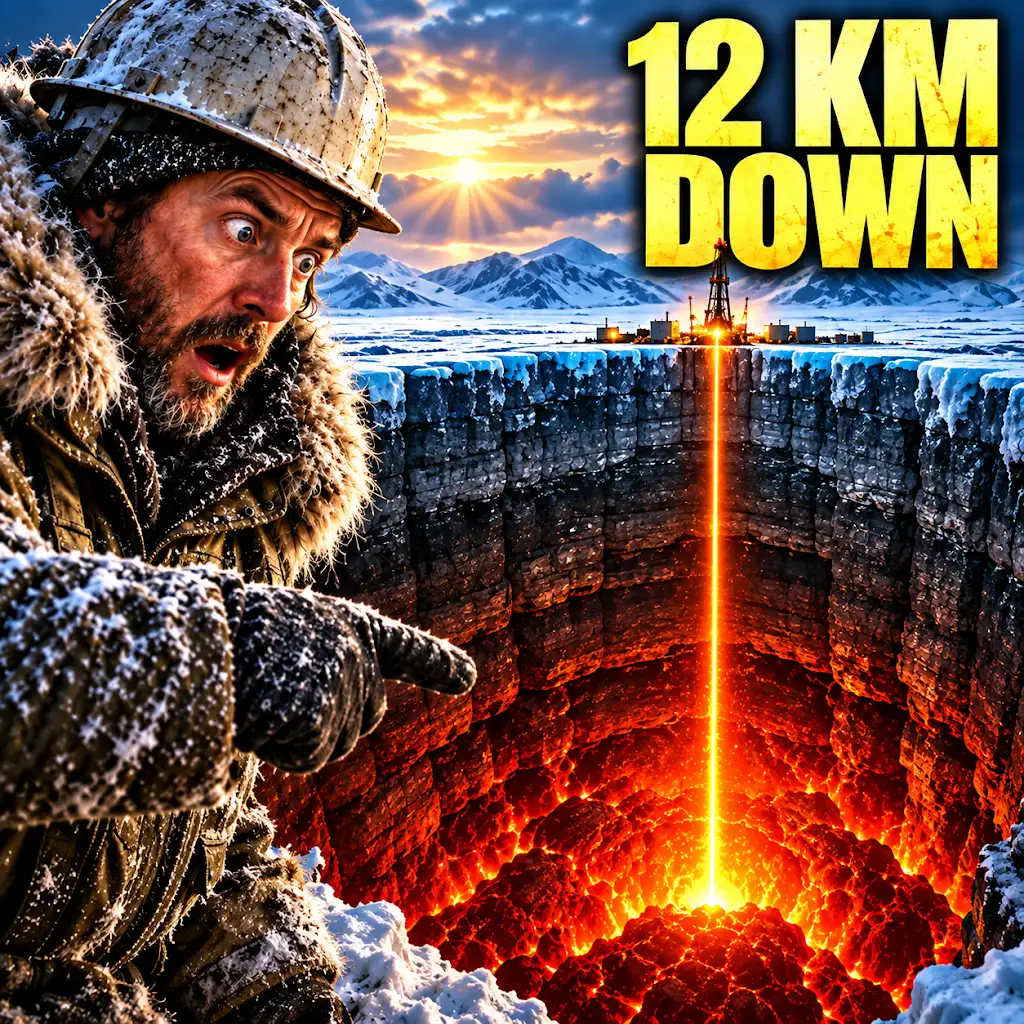
They Drilled 12 KM Into Earth — Then Everything Changed
FAQs
1. Why have we never drilled through Earth’s crust?
Currently, the deepest hole ever drilled into the Earth’s crust is the Kola Superdeep Borehole in Russia, reaching a depth of about 7.5 miles. The main reason we have not drilled through the Earth’s crust is due to the extreme heat and pressure that exist at deeper levels, making it technologically challenging and costly to drill further.
2. What are some challenges of drilling through Earth’s crust?
Some of the challenges of drilling through Earth’s crust include the increasing temperature and pressure as we go deeper, which can damage drilling equipment and make it difficult for humans to work at such depths. Additionally, the rock formations become more complex and harder to penetrate, requiring advanced drilling technologies.
3. What are the potential risks of drilling through Earth’s crust?
Drilling through Earth’s crust poses various risks, such as encountering high temperatures that can damage drilling equipment, triggering seismic activity, and releasing harmful gases or substances trapped underground. There is also the risk of contaminating groundwater or causing environmental damage.
4. What scientific knowledge could be gained from drilling through Earth’s crust?
By drilling through Earth’s crust, scientists could gain valuable insights into the Earth’s composition, structure, and geological processes. This could help us better understand the planet’s history, evolution, and natural resources. It could also provide information about seismic activity, volcanism, and the potential for geothermal energy.
5. Are there any future plans to attempt drilling through Earth’s crust?
While there are currently no concrete plans to drill through Earth’s crust, scientific and technological advancements may make it more feasible in the future. Researchers continue to explore innovative drilling techniques and materials that could withstand the extreme conditions deep within the Earth.