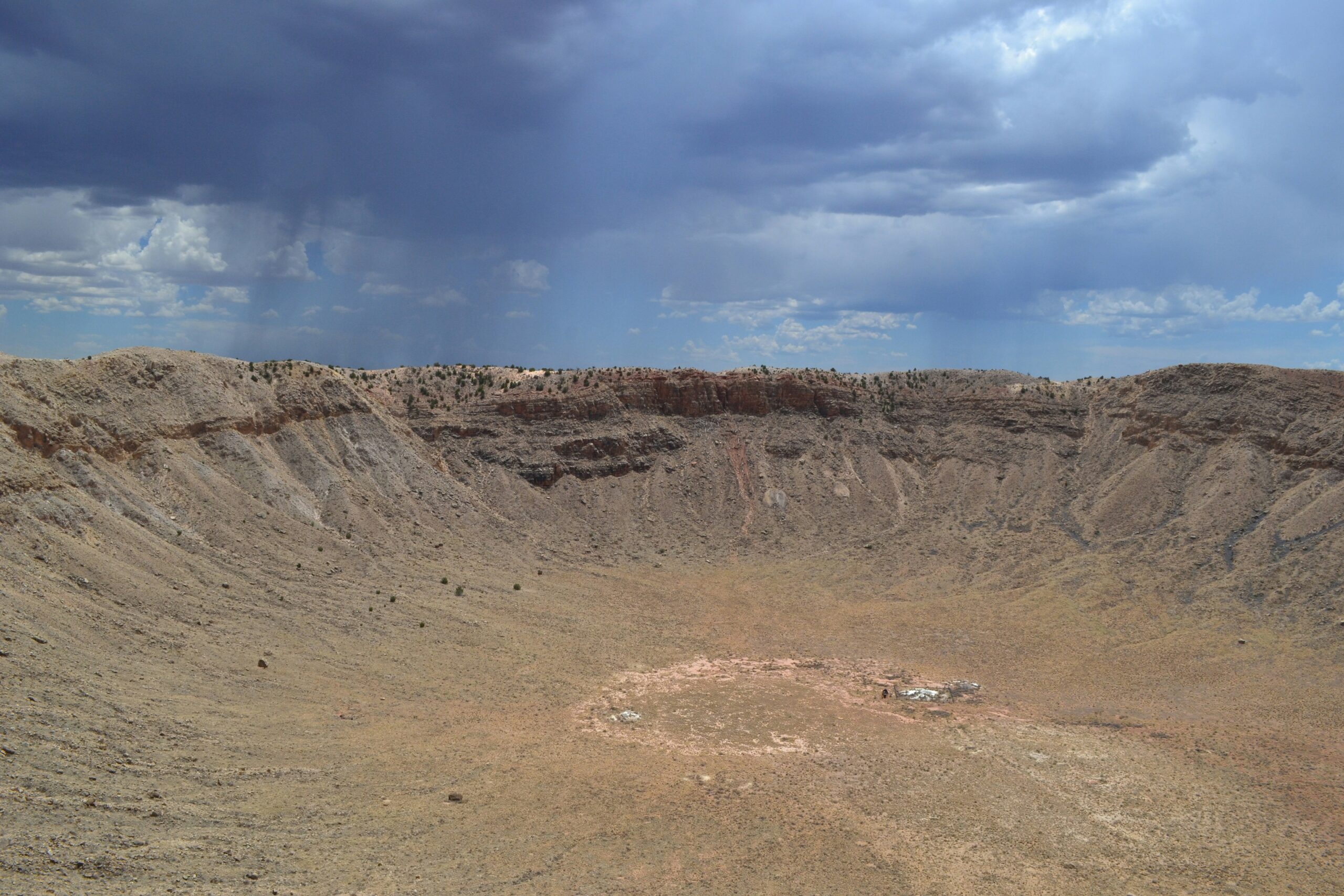
The Earth, a planet sculpted by millennia of geological forces, holds secrets buried deep within its crust. For decades, a team of dedicated geologists and astronomers had been poring over satellite imagery and conducting field surveys in a remote, sparsely populated region of the Canadian Shield. Their quarry: evidence of a colossal cosmic collision, an impact crater of truly staggering proportions, now largely obscured by the slow, persistent march of time and the relentless embrace of nature. This is the story of how they began to uncover an ancient impact crater, a celestial scar that once reshaped a continent.
The initial hints of this monumental event came not from direct observation of a gaping chasm, but from subtle anomalies detected through years of painstaking geophysical surveys. Researchers had been mapping the region for its mineral potential, employing technologies that probed beneath the surface. It was within the vast archives of gravity and magnetic field data that the first intriguing patterns began to emerge.
Gravity’s Gravitation Towards the Unknown
Gravity surveys, which measure the minute variations in the Earth’s gravitational pull, revealed a peculiar circular anomaly. Instead of the expected, relatively uniform gravitational field of the Canadian Shield’s ancient crystalline rocks, there was a distinct, large-scale depression. This suggested a significant disturbance to the underlying geological structure, a sinking or removal of mass.
Magnetic Mysteries: Unraveling Magnetic Signatures
Magnetic surveys, which map the magnetic properties of rocks, presented an even more compelling picture. The impact of a large meteorite would have fundamentally altered the magnetic field of the rocks in its vicinity. The researchers observed a complex pattern of magnetic intensity, with a stronger magnetic signature in the outer regions and a weaker, more disturbed zone towards the center. This concentric, ring-like structure was a powerful indicator of an extraterrestrial impact.
Geochemical Clues: Traces of the Unearthly
Beyond geophysical data, preliminary geochemical analyses of scattered rock samples from the region hinted at unusual rock compositions. Elevated levels of certain elements, particularly iridium, a rare element on Earth but more common in meteorites, were detected in some localized areas. While not conclusive on its own, these geochemical fingerprints added another layer to the growing suspicion of a significant impact event.
The study of ancient impact craters provides fascinating insights into the Earth’s geological history and the events that have shaped its surface. For those interested in exploring more about the mysteries of the past, a related article discusses various unexplained ancient artifacts that have puzzled researchers for years. You can read more about these intriguing discoveries in the article available at Unexplained Ancient Artifacts: Mysteries of the Past.
The Reconnaissance Mission: Entering the Field
Buoyed by the geophysical and early geochemical evidence, the team organized a dedicated reconnaissance mission. Armed with advanced geological tools, including ground-penetrating radar, portable X-ray fluorescence (XRF) analyzers, and the unwavering determination to find solid proof, they ventured into the rugged terrain. The objective was to physically explore the suspected impact zone and collect tangible evidence.
Navigating the Wilderness: Isolation and Challenges
The chosen region was remote, requiring extensive travel by helicopter and then by foot through dense boreal forests and rocky outcrops. The sheer scale of the suspected crater meant that no single vantage point could reveal its entirety. Days were spent traversing challenging landscapes, battling biting insects and unpredictable weather, all in pursuit of a buried secret. The isolation, while daunting, also offered a rare opportunity to observe the landscape with minimal human alteration.
Initial Ground Truthing: Confirming the Anomalies
Upon reaching the areas indicated by the geophysical anomalies, the team began their ground truthing. They meticulously examined rock formations, searching for the tell-tale signs of a hypervelocity impact. This involved looking for fractured rock, breccias (rocks composed of broken fragments cemented together), and evidence of shock metamorphism – a suite of mineralogical and structural changes that occur under extreme pressure and temperature.
The Search for Shocked Minerals: Evidence Under the Microscope
A critical aspect of impact crater identification is the presence of shocked minerals, particularly quartz. Under intense impact pressures, quartz grains develop characteristic planar deformation features (PDFs) – microscopic, parallel fractures that are only formed by the extreme conditions of an impact event. The team carefully collected rock samples from promising locations and later subjected them to microscopic analysis.
Identifying Impact Breccias: The Debris of Destruction
The impact would have pulverized and mixed the pre-existing rocks, creating distinctive impact breccias. These breccias are characterized by their chaotic mixture of rock fragments, often angular and of varying sizes, cemented together by a finer-grained matrix. Finding large outcrops of such breccias, especially in association with the geophysical anomalies, was a significant step in confirming the impact hypothesis.
Unearthing the Evidence: The Breakthrough Discoveries
The reconnaissance mission, after weeks of arduous exploration, began to yield its first concrete breakthroughs. The team identified key geological features that strongly supported the presence of an ancient impact crater, moving the hypothesis from speculation to near certainty.
The Central Uplift: A Monument to the Impact
One of the most significant discoveries was the identification of a feature consistent with a central uplift. In large impact craters, the intense pressure of the impact can cause the target rocks at the very center of the impact to rebound upwards, forming a raised dome. The team found a large, roughly circular area with an unusual geological structure, including uplifted and deformed rock layers that pointed towards this dramatic post-impact rebound.
The Rim Structure: The Outer Boundary of the Scar
Evidence of the crater’s rim was also crucial. The outer edge of an impact crater is often defined by a raised rim, formed by the ejecta thrown out during the impact. They found a distinct, arcuate topographic feature, consistent with the eroded remnants of a once-prominent rim. While heavily weathered and vegetated, its sheer scale and circularity spoke volumes.
Ejecta Deposits: The Scattered Debris
Scattered around the suspected rim and within the crater structure were deposits of ejecta – material that was thrown out from the impact site. These ejecta blankets often contain a mixture of target rocks and potentially fragments of the impactor itself. Detailed analysis of these deposits revealed rock types not typically found in the immediate vicinity, further supporting an external origin.
Shatter Cones: The Cone-Shaped Scars of Pressure
Another compelling piece of evidence came in the form of shatter cones. These are distinctive, cone-shaped fractures in rock that radiate downwards from a point of intense stress. They are a unique indicator of shock wave propagation. The team discovered several outcrops exhibiting well-formed shatter cones, a definitive sign of a hypervelocity impact event.
Dating the Event: Placing the Crater in Time

With compelling evidence for the impact crater’s existence, the next crucial step was to determine when this catastrophic event occurred. Dating the crater precisely would help scientists understand its place in Earth’s history and its potential impact on past environments and life.
Radiometric Dating: Unlocking the Age of Rocks
The most reliable method for dating ancient rocks and geological events is radiometric dating. This technique uses the decay of radioactive isotopes within minerals to determine their age. By analyzing the isotopic composition of minerals within the impactites (rocks formed by the impact), the team could estimate the age of the impact.
Argon-Argon Dating: A Precise Chronometer
Specifically, the team employed Argon-Argon (Ar-Ar) dating, a highly precise radiometric method. This technique involves irradiating samples with neutrons to convert potassium isotopes into argon. By measuring the ratio of different argon isotopes, they could determine the cooling age of the minerals, which in this case, would represent the time since the impact event.
Zircon Dating: Dating the Shocked Minerals
Another critical technique involved dating zircons found within the impact breccias. Zircons are incredibly durable minerals that often preserve evidence of shock metamorphism. Dating these shocked zircons provides a direct age for the impact event, as they would have crystallized or been reset during the heat and pressure of the collision.
Paleontological Clues: Correlating with Environmental Changes
In addition to radiometric dating, the team also considered paleontological evidence found in sedimentary layers surrounding the impact site. If the crater was formed during a period of significant biological change or extinction, fossil records in these layers could provide indirect dating clues and help correlate the impact event with broader Earth history.
The study of ancient impact craters provides fascinating insights into the history of our planet and its geological processes. Researchers are continually uncovering new information about how these craters have shaped the Earth’s surface over millions of years. For those interested in the broader implications of how information can be manipulated and perceived, a related article explores the concept of truth and reality in our understanding of history. You can read more about this intriguing topic in the article titled “The Illusion of Truth” found here.
Reconstructing the Impact: Visualizing the Cataclysm
| Crater Name | Location | Diameter (km) | Age (millions of years) |
|---|---|---|---|
| Vredefort Crater | South Africa | 300 | 2023 |
| Chicxulub Crater | Mexico | 180 | 66 |
| Sudbury Basin | Canada | 250 | 1850 |
Once the existence and age of the crater were established, the focus shifted to reconstructing the event itself. What was the size and composition of the impactor? What were the immediate and long-term consequences of such a colossal collision?
The Impactor: Size, Speed, and Composition
Through detailed analysis of the crater’s dimensions, the volume of ejecta, and the shock effects observed in the rocks, scientists could estimate the size, speed, and likely composition of the extraterrestrial object that struck Earth. This involved complex modeling that took into account various impact scenarios.
Modeling the Impact: Simulating the Cosmic Collision
Advanced computer simulations were employed to model the impact process. These simulations, based on the physical properties of the target rocks and theoretical impactor characteristics, helped visualize the dynamics of the collision, including the formation of the central uplift, the excavation of the crater, and the distribution of ejecta.
Identifying the Impactor Material: A Glimpse of the Extraterrestrial
While direct fragments of the impactor are often rare or completely vaporized in large impacts, careful analysis of certain elements and isotopic ratios within the impactites can sometimes provide clues about its origin and composition, potentially pointing to an asteroid or comet.
The Immediate Aftermath: A World Transformed
The immediate aftermath of the impact would have been catastrophic. The energy released by such a collision would have triggered massive earthquakes, generated colossal tsunamis if it occurred in or near an ocean (though this particular impact is inland), and ejected vast quantities of dust and debris into the atmosphere, plunging the region into darkness and potentially causing global climatic shifts.
Ejecta Plume and Atmospheric Effects: A Global Shadow
The immense explosion would have created a massive ejecta plume, lofting pulverized rock and vaporized material high into the atmosphere. This material could have spread globally, blocking sunlight, causing a significant drop in global temperatures, and leading to widespread crop failure and ecological collapse.
Shock Waves and Seismic Activity: Earth Trembling
The impact would have generated immense shock waves that propagated through the Earth’s crust, causing widespread earthquakes on a scale rarely experienced. The target rocks themselves would have been subjected to unimaginable pressures and temperatures, undergoing rapid fracturing and melting.
Long-Term Consequences: A Scar on the Landscape and a Story for Science
The ancient impact crater, though now largely softened by erosion and vegetation, serves as a lasting testament to a pivotal moment in Earth’s history. Its discovery not only adds a new chapter to our planet’s geological story but also provides invaluable insights into the processes of crater formation, the dynamics of hypervelocity impacts, and their potential influence on the evolution of life on Earth. The ongoing study of this ancient scar promises to unravel further secrets of our dynamic planet and the cosmos from which it came.
Understanding Planetary Evolution: A Window into Other Worlds
The study of impact craters on Earth also provides a crucial framework for understanding impact processes on other celestial bodies in our solar system. Features observed on the Moon, Mars, and other planets can be better understood when compared to well-preserved terrestrial craters.
The Role of Impacts in Biosphere Evolution: Resetting the Stage
The discovery of ancient impact craters, particularly those of significant size, has led to a deeper understanding of the role such events may have played in shaping the evolution of life on Earth. Massive impacts can cause mass extinction events, clearing ecological niches and allowing for the subsequent diversification of surviving species. This crater, as researchers continue to investigate it, may hold clues to such evolutionary turning points.
The uncovering of this ancient impact crater is a testament to human curiosity, scientific ingenuity, and the enduring power of systematic exploration. What began as subtle anomalies in geophysical data has blossomed into the profound realization that a monumental cosmic event, long buried and forgotten, has finally begun to yield its secrets, offering a stark reminder of Earth’s violent past and the ceaseless interplay between our planet and the universe beyond.

This Crater Was Supposed to Rewrite Human History… It Didn’t
FAQs
What is an impact crater?
An impact crater is a circular depression on the surface of a planet, moon, or other solid body in the solar system, formed by the hypervelocity impact of a smaller body, such as a meteorite.
How are impact craters formed?
Impact craters are formed when a high-speed impactor, such as a meteorite or asteroid, collides with the surface of a planet or moon, creating a shock wave that excavates material and forms a crater.
What is an ancient impact crater?
An ancient impact crater is a crater that was formed in the distant past and has since undergone significant erosion and other geological processes, making it difficult to recognize as an impact structure without detailed study.
Where are ancient impact craters found?
Ancient impact craters can be found on Earth as well as on other planetary bodies in the solar system, such as the Moon, Mars, and Mercury. They are often identified through geological and geophysical surveys.
Why are ancient impact craters important to study?
Studying ancient impact craters can provide valuable insights into the geological history of a planetary body, as well as the frequency and effects of impact events in the solar system’s past. Additionally, they can yield information about the potential for past habitability and the distribution of resources.