
Chaco Canyon, a UNESCO World Heritage Site in New Mexico, stands as a monumental testament to the ingenuity and complexity of the Ancestral Puebloan civilization. For centuries, this arid landscape has guarded the secrets of a society that flourished between the years 850 and 1250 CE, leaving behind an enigmatic network of Great Houses, great kivas, and intricate roadways. While archaeologists have meticulously unearthed pottery shards, architectural marvels, and ceremonial artifacts, a fundamental aspect of Chacoan life has remained largely elusive: the genetic makeup of its people. However, in recent years, cutting-edge advancements in ancient DNA (aDNA) analysis have begun to unlock this profound mystery, offering unprecedented insights into the origins, migration patterns, and social structures of those who once called Chaco Canyon home. This article delves into the groundbreaking discoveries made through the study of ancient DNA, shedding new light on the inhabitants of this extraordinary archaeological landscape.
The Challenges of Ancient DNA Extraction
The arid environment of Chaco Canyon, while beneficial for preserving organic materials on the surface, presents its own set of hurdles when it comes to recovering viable ancient DNA. The very conditions that prevent rapid decay also contribute to the degradation of genetic material over time.
Environmental Factors and DNA Degradation
The intense solar radiation, fluctuating temperatures, and the presence of microbes in the soil can all act as agents of DNA breakdown. Ultraviolet radiation, for instance, causes damage to the chemical bonds within DNA strands, leading to fragmentation and modification. Similarly, temperature fluctuations can accelerate chemical reactions that degrade DNA. Microbes, even in seemingly dry environments, can consume and further break down any remaining genetic material.
Contamination: A Constant Threat
One of the most significant challenges in ancient DNA research is the pervasive risk of contamination. DNA is everywhere – in the air we breathe, on our skin, and on the tools we use. Modern DNA from researchers, excavators, or even the surrounding environment can easily mix with the ancient samples, leading to misleading results. Rigorous protocols are therefore essential to mitigate this risk.
Strict Laboratory Protocols
Ancient DNA laboratories are designed to be ultra-clean environments, often featuring dedicated clean rooms with filtered air and strict access controls. Researchers meticulously wear full protective suits, including masks, gloves, and specialized lab coats, to minimize the introduction of their own DNA. All equipment is sterilized, and reagents are pre-treated to remove any contaminating DNA.
Sample Collection and Handling
The careful collection of samples from Chaco Canyon is paramount. Excavators are trained to minimize their contact with the soil and skeletal remains. Samples are typically collected using sterile instruments and immediately placed in sterile containers, often stored at low temperatures to slow down any further degradation. Specific techniques are employed to target bone fragments that are most likely to contain preserved DNA, such as the petrous bone in the skull.
Recent studies on ancient DNA from Native American populations have shed light on the historical significance of Chaco Canyon, a major center of culture and trade in the American Southwest. Researchers have been able to trace genetic lineages that connect modern Indigenous peoples to their ancestors who thrived in this remarkable landscape. For a deeper understanding of ancient civilizations and their architectural achievements, you can explore a related article that delves into the mysteries of ancient palace ruins at this link: Exploring the Mysterious Secrets of Ancient Palace Ruins.
Breakthroughs in Ancient DNA Analysis
Despite the inherent difficulties, advancements in DNA sequencing technology and extraction techniques have revolutionized the field of ancient genomics, making it possible to retrieve and analyze genetic information from even highly degraded samples.
The Power of Next-Generation Sequencing (NGS)
Next-Generation Sequencing (NGS) technologies have been a game-changer for ancient DNA. Unlike older sequencing methods that could only analyze small fragments of DNA, NGS allows for the simultaneous sequencing of millions of DNA molecules. This high-throughput approach significantly increases the chances of recovering enough genetic information from ancient samples, even if the DNA is highly fragmented.
Amplification and Library Preparation
Before sequencing, ancient DNA samples undergo a meticulous process of amplification and library preparation. DNA extraction aims to isolate the ancient DNA from the bone matrix. This is followed by fragmentation of the DNA into smaller pieces and the attachment of special adapters. These adapters are crucial for the NGS platform to bind and sequence the DNA fragments. Polymerase Chain Reaction (PCR) is then used to amplify specific regions of the DNA, creating enough copies for sequencing.
Data Analysis and Bioinformatic Tools
Once the DNA is sequenced, the raw data must be analyzed using sophisticated bioinformatic tools. These programs are designed to piece together the fragmented DNA sequences, identify genetic variations, and compare them to reference genomes. Advanced algorithms are used to filter out potential contamination and to reconstruct the complete or near-complete genome of the ancient individual.
Ancient Peptide Analysis: A Complementary Approach
In cases where DNA is too degraded to yield genomic information, ancient peptide analysis offers a valuable alternative. This technique focuses on analyzing proteins, which are generally more stable than DNA and can survive for longer periods. While proteins don’t contain the same level of genetic detail as DNA, they can still provide crucial information about an individual’s sex, diet, and even familial relationships through the analysis of specific protein markers.
Genetic Insights into Chacoan Ancestry
The application of these advanced techniques to skeletal remains from Chaco Canyon has begun to paint a clearer picture of the genetic heritage of its inhabitants. Early findings challenge some long-held assumptions about the population dynamics of the Ancestral Puebloan world.
Population Origins and Migrations
Genetic studies have provided compelling evidence that the inhabitants of Chaco Canyon were not an isolated group. Instead, their genetic profiles indicate connections to wider Ancestral Puebloan populations across the American Southwest.
Ancestral Ties to the Archaic Period
Analysis of ancient DNA from Chaco Canyon individuals has revealed strong genetic links to ancestral populations that inhabited the Southwest during the Archaic period, which predates the Ancestral Puebloan era. This suggests a long-term continuity of populations in the region, with later developments building upon these foundational groups.
Connections to Mesa Verde and Other Regions
Genetic data has also shown that Chaco Canyon was not a singular genetic entity. Individuals buried at Chaco exhibited genetic markers consistent with populations found in other major Ancestral Puebloan centers, such as Mesa Verde. This suggests a degree of movement and intermixing between these distinct but interconnected cultural areas.
Sex Determination and Biological Affiliation
One of the most straightforward applications of ancient DNA analysis is the determination of an individual’s biological sex. This can be achieved by analyzing specific genetic markers on the X and Y chromosomes.
Unveiling the Roles of Men and Women
By determining the sex of individuals found in various contexts within Chaco Canyon, researchers can begin to understand the biological contributions of both men and women to the community. This can inform interpretations of labor, social roles, and burial practices. For example, discovering the sex of individuals associated with specific crafts or agricultural activities can shed light on gendered divisions of labor.
Social Structures and Kinship Networks
Perhaps the most profound insights emerging from ancient DNA research at Chaco Canyon relate to the social organization and kinship networks of its inhabitants. The ability to analyze mitochondrial DNA (mtDNA), which is inherited maternally, and Y-chromosome DNA, which is inherited paternally, allows for the reconstruction of family lineages.
Maternal and Paternal Lineages
By examining mtDNA and Y-chromosome DNA profiles from multiple individuals, researchers can identify patterns of inheritance and infer relationships. This allows them to understand how families were structured and how lineage was traced within Chacoan society.
Matrilineal or Patrilineal Societies?
The genetic data has provided crucial clues regarding whether Chacoan society was predominantly matrilineal or patrilineal. If individuals within a household or settlement shared similar mtDNA but different Y-chromosome DNA, it would suggest a matrilineal society where women remained in their natal communities, and men moved to join their wives’ families. Conversely, similar Y-chromosome DNA with varying mtDNA would point towards a patrilineal structure.
Evidence of Migration and Social Mobility
Ancient DNA can also reveal instances of individuals who were not born in Chaco Canyon but migrated there later in life. By comparing the genetic profile of an individual to broader regional genetic databases, researchers can identify non-local ancestry.
Outsiders in Chacoan Society
The identification of individuals with genetic ancestry from outside the immediate Chaco region suggests that the canyon was a hub for migration and interaction. This could have been driven by trade, intermarriage, or the movement of skilled craftspeople. Understanding the prevalence of these non-local individuals can shed light on the social integration and assimilation processes within Chacoan communities.
Social Integration and Status
The presence of individuals with distinct genetic backgrounds within Chacoan settlements could also relate to social status. Were these individuals integrated into the community, or did they maintain a separate social identity? Genetic analysis, combined with archaeological evidence, can help answer these complex questions about social hierarchies and the composition of Chacoan society.
Recent studies on ancient DNA from Native American populations have shed light on the intriguing history of Chaco Canyon, a significant archaeological site in the American Southwest. Researchers have uncovered genetic evidence that connects contemporary Native American tribes to their ancestors who thrived in this region over a thousand years ago. This fascinating exploration of ancestry not only enhances our understanding of the cultural and historical significance of Chaco Canyon but also highlights the enduring legacy of indigenous peoples. For those interested in the broader context of historical innovations and their impact on society, you can read more about it in this article on lost inventions and history’s game changers.
The Future of Chacoan Genomics
The exploration of ancient DNA in Chaco Canyon is still in its early stages, and the potential for future discoveries is immense. As technology continues to advance and more researchers delve into this rich archaeological landscape, our understanding of the Ancestral Puebloan people will undoubtedly deepen.
Expanding the Genetic Database
The more skeletal remains that are subjected to ancient DNA analysis, the more comprehensive our understanding of Chacoan genetics will become. Future research will likely involve analyzing individuals from a wider range of time periods and geographical locations within and around Chaco Canyon.
Comparative Genomics Across the Southwest
Comparing the genetic profiles of Chacoan individuals with those from other Ancestral Puebloan sites and even earlier Archaic and Paleoindian populations will be crucial for understanding the broader historical context of human settlement in the Southwest. This comparative approach will help to illuminate the complex tapestry of migration, interaction, and cultural development that shaped the region.
Investigating Disease and Diet
Beyond ancestry and kinship, ancient DNA can also provide insights into the health and lifestyle of past populations. While challenging, researchers are increasingly able to analyze DNA for markers related to disease susceptibility or the presence of ancient pathogens.
Paleopathology Through Genomics
The study of ancient pathogens, such as those responsible for tuberculosis or plague, can be facilitated through ancient DNA analysis. Identifying the genetic signatures of these diseases in Chacoan individuals could reveal patterns of disease prevalence and transmission, offering a unique perspective on the health challenges faced by these ancient communities.
Insights into Ancient Diets
While not directly revealing dietary habits, the isotopes found within skeletal remains can provide this information. However, future advancements in DNA analysis might also indirectly contribute to understanding diet through the identification of genetic adaptations related to food processing or the analysis of DNA from gut microbiome remnants.
Conclusion: A Genetic Tapestry Unveiled
The study of ancient DNA in Chaco Canyon represents a paradigm shift in our understanding of this iconic archaeological site. Moving beyond the silent stones and pottery fragments, genetic analysis offers a tangible connection to the individuals who lived, worked, and died within its monumental structures. The initial findings have already challenged existing assumptions, revealing a more dynamic and interconnected Ancestral Puebloan world than previously imagined. As research continues to push the boundaries of what is possible with ancient DNA, the genetic tapestry of Chaco Canyon will continue to be unveiled, providing us with a richer, more nuanced, and deeply human understanding of this extraordinary civilization. The whispers of the past, once confined to the earth, are now being amplified through the language of our genes, offering profound insights into the enduring legacy of the Chacoan people.
Ancient DNA Found a Living Link to Chaco Canyon
FAQs
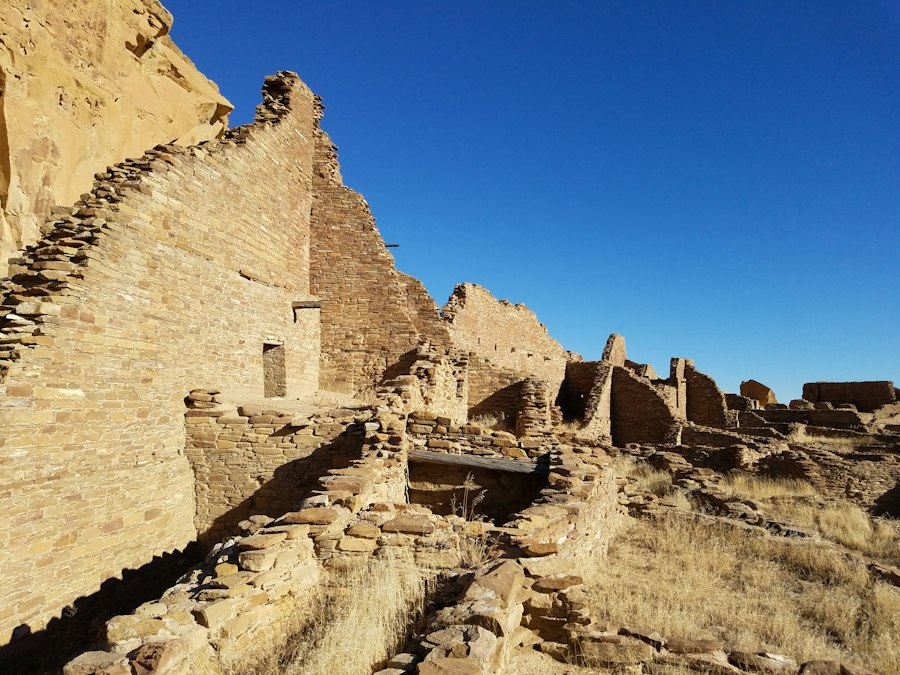
What is Chaco Canyon?
Chaco Canyon is a significant archaeological site located in northwestern New Mexico, USA. It was a major center of ancestral Pueblo culture between 850 and 1250 AD.
What is ancient DNA?
Ancient DNA refers to genetic material that is extracted from ancient remains such as bones, teeth, or artifacts. It provides valuable information about the genetic history and ancestry of past populations.
Why is studying ancient DNA important in relation to Native American populations?
Studying ancient DNA helps researchers understand the genetic diversity, migration patterns, and population dynamics of Native American groups over time. It provides insights into their origins, relationships, and adaptations to different environments.
What have studies of ancient DNA at Chaco Canyon revealed?
Studies of ancient DNA at Chaco Canyon have revealed genetic connections between the ancestral Pueblo people and modern Native American populations. They have also shed light on the migration patterns and interactions of different groups in the region.
How does ancient DNA research contribute to our understanding of Native American history?
Ancient DNA research contributes to our understanding of Native American history by providing a genetic perspective on their origins, population movements, and cultural developments. It helps reconstruct the complex history of indigenous peoples in the Americas.