Whispers from the Dry Earth: The Enigmatic Nazca Lines and Unseen Visitors
The arid plains of Peru’s Nazca Desert, a vast canvas stretching under an unforgiving sun, hold secrets whispered by the wind and etched into the very earth. For centuries, these enigmatic geoglyphs, some stretching for hundreds of meters, have baffled archaeologists, historians, and curious minds alike. While the scientific community has largely focused on astronomical, agricultural, and ritualistic interpretations, a persistent undercurrent of speculation has always revolved around the possibility of extraterrestrial involvement. This article delves into the intriguing realm where ancient mysteries meet modern curiosity, exploring the arguments and evidence that fuel the enduring fascination with “ancient Nazca traveler encounters.”
The Canvas of the Ancients: Creation and Purpose
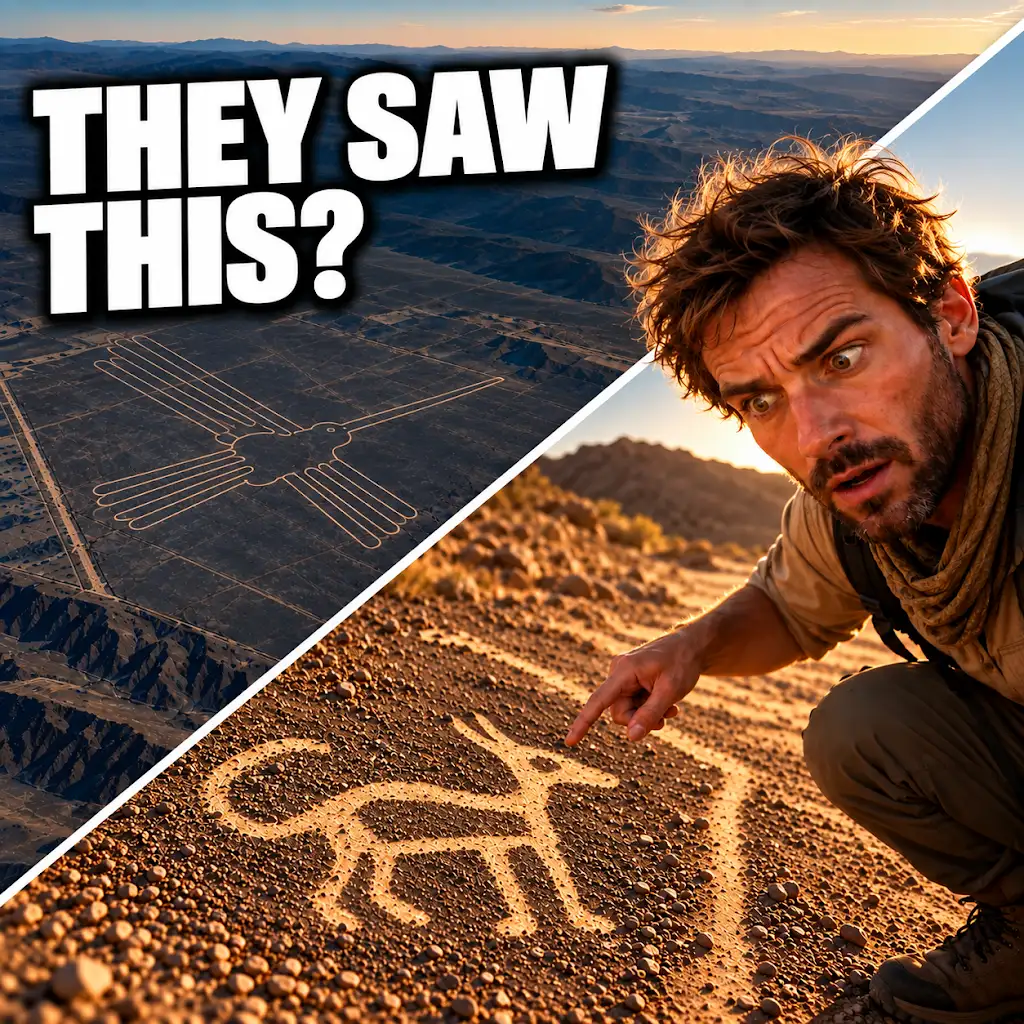
The Nazca culture, flourishing between 100 and 800 AD, is credited with the creation of these colossal designs. Comprising hundreds of figures – animals like hummingbirds, monkeys, spiders, and lizards, as well as geometric shapes and abstract lines – the geoglyphs are only truly visible from a considerable height. This fundamental characteristic immediately sparks questions about their intended audience. Who were these designs meant to be seen by, and why were they created on such a grand scale?
The traditional explanations for the Nazca Lines center on their possible functions within Nazca society. Archaeological evidence suggests they were deeply intertwined with religious practices and astronomical observations. The precise alignment of some lines with celestial events, such as the solstices and equinoxes, has led to theories that they served as gigantic calendars or observatories, guiding agricultural cycles and important religious festivals. The vastness of the figures, it is argued, would have been impressive to the gods, or perhaps to priests and shamans performing rituals on elevated platforms or nearby hillsides, thus gaining a perspective unavailable to the general populace. The sheer labor involved, requiring coordinated effort and sophisticated knowledge of surveying, points to a well-organized society with a strong spiritual and communal drive.
However, the sheer scale and complexity of the Nazca Lines, coupled with the undeniable fact that they are best appreciated from the sky, have naturally led some to consider alternative possibilities. The lack of visible paths or stairs connecting the figures, and the fact that many of these designs remain remarkably intact after centuries of erosion, add further layers to the enigma.
The Technological Conundrum: How Were They Made?
One of the most compelling aspects that fuels the “traveler encounter” theories is the question of how the Nazca people, with their seemingly limited technology, managed to create such precise and expansive designs. The geoglyphs were made by removing the reddish-brown iron oxide-coated pebbles that cover the desert surface, revealing the lighter-colored earth beneath. This process required not only an understanding of geometry and scale but also a means of transferring complex designs onto the vast desert floor with remarkable accuracy.
- Precision and Scale: The lines are astonishingly straight, and the figures are rendered with impressive fidelity. For instance, the hummingbird is depicted with delicate features and outstretched wings, a feat that would be challenging to achieve even with modern tools on such a scale. The spider, with its intricate legs, is another testament to the meticulous planning and execution involved.
- Lack of Intermediate Tools: While the Nazca undoubtedly possessed tools for digging and leveling, there is a distinct lack of evidence for the advanced surveying equipment or large-scale scaffolding that one might expect for such an undertaking if one were to assume solely terrestrial methods were employed. Explanations often involve the use of simple sighting sticks, ropes, and perhaps even acoustic signaling for coordination over vast distances.
- Preservation: The dry, stable climate of the Nazca desert has played a crucial role in preserving these geoglyphs. However, the fact that they have endured for over a millennium without significant degradation, despite being exposed to the elements, is itself a testament to the skill and materials employed.
The perceived technological gap between the Nazca civilization and the monumental scale and precision of their creations has, for some, opened the door to speculation about external assistance.
The ancient Nazca traveler encounter figures, known for their mysterious geoglyphs etched into the Peruvian desert, have long intrigued archaeologists and historians alike. These massive designs, which can only be fully appreciated from the air, are believed to have served various purposes, including religious rituals and astronomical alignments. For those interested in exploring the broader context of ancient civilizations and their interactions, a related article titled “The Mexican Consumer on the Rise” delves into the cultural and economic dynamics of ancient societies in the Americas. You can read more about it here: The Mexican Consumer on the Rise.
The Extraterrestrial Hypothesis: A Persistent Question
The notion that the Nazca Lines might be evidence of contact with extraterrestrial beings is a popular, albeit controversial, theory. This hypothesis, popularized by authors like Erich von Däniken in his book “Chariots of the Gods?”, posits that the sheer scale, precision, and aerial visibility of the geoglyphs suggest they were created for beings who traveled by air.
The argument often rests on several key points:
Aerial Observation as the Primary Purpose
The most direct and compelling argument for extraterrestrial involvement stems from the very nature of the geoglyphs. They are, by design, intended to be viewed from above. While it’s possible that Nazca priests or elites had access to high vantage points, the consistent interpretation that they are best seen from a significant altitude leads to the question: who, or what, was intended to be the primary observer?
- The “Landing Strip” Theory: Some proponents suggest that certain straight lines and trapezoidal shapes could have served as landing or launch strips for spacecraft. The vast, flat expanses of the desert, devoid of obstacles, would have been ideal for such a purpose. The sheer length of some of these lines, exceeding hundreds of meters, is considered by some to be indicative of a need for substantial runway space.
- Communication with the Heavens: Another interpretation is that the geoglyphs were intended as a form of communication or greeting to celestial visitors. The animals depicted might have been representations of their own world, or perhaps symbolic messages to beings from afar. The intricate nature of some of the designs, like the well-known “astronaut” figure, has also been cited as suggestive of an interest in beings who might travel through space.
The “Gods from the Sky” Narrative
Many ancient cultures across the globe have myths and legends that speak of divine beings descending from the heavens to interact with humanity. The Nazca people were no exception. Their cosmology likely involved deities and powerful beings associated with the sky and celestial phenomena.
- Interpreting Religious Iconography: Some researchers suggest that the Nazca Lines could be a literal representation of these sky-dwelling deities or their vehicles. The figures might not simply be animals or abstract symbols, but rather depictions of the visitors themselves or their mode of transportation. The elaborate headdresses and the distinctive features of some figures could be interpreted as representations of non-human entities.
- The “Astronaut” Figure: Perhaps the most frequently cited piece of “evidence” within this framework is the so-called “Nazca astronaut” figure. This geoglyph depicts a humanoid figure with a large head, an open mouth, and what appears to be a helmet or head covering. While mainstream archaeology explains this as a stylized representation of a shaman in trance or a deity, proponents of the extraterrestrial hypothesis see it as a direct depiction of an alien being.
Challenging the Conventional: Arguments Against Extraterrestrial Intervention
While the extraterrestrial hypothesis is captivating, it faces significant challenges from the mainstream archaeological and scientific communities. The prevailing view is that the Nazca Lines can be explained by human ingenuity, ingenuity that, while impressive, does not require supernatural or extraterrestrial intervention.
Human Ingenuity and Astronomical Knowledge
The primary counter-argument is that the Nazca people were far more sophisticated than their technological tools might suggest. Archaeological evidence points to a culture with a deep understanding of astronomy, mathematics, and engineering.
- Calendrical and Astronomical Alignments: As previously mentioned, many lines and figures are aligned with celestial events. This suggests a profound knowledge of the stars and planets, and a desire to use this knowledge to structure their society and religious practices. The precision of these alignments, when studied, often reveals sophisticated observational techniques.
- Surveying and Measurement Techniques: While the exact methods remain a subject of ongoing research, it is widely accepted that the Nazca could have used simple but effective surveying techniques. These could have involved using ropes, stakes, and sighting devices to transfer large-scale designs from smaller models or sketches onto the desert floor. The process might have been iterative, with trial and error playing a role.
- Community Labor and Organization: The creation of the Nazca Lines would have required a significant amount of organized labor. This suggests a hierarchical society with the ability to mobilize and direct large groups of people towards a common goal. The religious or social importance of the geoglyphs would have provided the motivation for such an undertaking.
The ancient Nazca traveler encounter figures, known for their mysterious geoglyphs etched into the Peruvian desert, have long fascinated researchers and historians alike. These large-scale designs, which can only be fully appreciated from the air, raise questions about the cultural and spiritual significance of the Nazca civilization. For those interested in exploring how ancient societies interacted with their environments and the resources they valued, a related article discusses the implications of currency systems in historical contexts. You can read more about this intriguing topic in the article on currency crises and their historical significance here.
The Absence of Direct Evidence
A crucial point raised by skeptics is the complete lack of direct physical evidence for extraterrestrial visitation.
- No Artifacts: Despite extensive archaeological research in the Nazca region, no artifacts definitively attributable to an alien civilization have ever been found. There are no crashed spacecraft parts, no alien tools, and no undisputed depictions of alien technology.
- Interpreting the Unknown: Critics argue that the extraterrestrial hypothesis often relies on interpreting the unknown through a modern, technologically-driven lens. The desire to find something extraordinary can lead to over-interpretation of ambiguous evidence. What might appear as an “astronaut” to a modern observer could have a perfectly rational explanation within the Nazca belief system.
- Occam’s Razor: The principle of Occam’s Razor suggests that the simplest explanation is often the best. In this case, the simplest explanation is that the Nazca people, through their own ingenuity and cultural imperative, created these remarkable geoglyphs.
The Enduring Mystery: What Lies Beyond Conventional Interpretations?
Despite the robust scientific explanations, the allure of the extraterrestrial hypothesis persists. It taps into a fundamental human curiosity about our place in the universe and the possibility of life beyond Earth. The Nazca Lines, in their silent grandeur, serve as a potent symbol of the unknown.
The sheer artistry and engineering prowess displayed by the Nazca people are undeniable. Their ability to conceive and execute such massive works, visible only in their entirety from the sky, continues to inspire awe. Whether the purpose was solely earthly or involved a broader cosmological vision, the geoglyphs are a testament to human creativity and the enduring desire to connect with something larger than ourselves.
While definitive proof of alien encounters remains elusive, the ongoing fascination with the Nazca Lines serves a valuable purpose. It encourages critical thinking, stimulates debate, and drives further research into the mysteries of our past. The desert sands of Nazca may hold more secrets, and the whispers of ancient travelers, whether human or otherwise, continue to echo across the plains, inviting us to ponder the vastness of time and the infinite possibilities of the cosmos. The story of the Nazca Lines is far from over, and each generation continues to add its own chapter to the enduring enigma.
AI Found New Nazca Drawings—Could People See Them from the Ground?

FAQs

What are the Nazca traveler encounter figures?
The Nazca traveler encounter figures are a series of ancient geoglyphs found in the Nazca Desert in southern Peru. These figures depict humanoid figures with elongated heads, often interpreted as representations of extraterrestrial beings.
When were the Nazca traveler encounter figures created?
The Nazca traveler encounter figures were created by the Nazca culture between 200 BCE and 600 CE. These geoglyphs were made by removing the reddish-brown iron oxide-coated pebbles that cover the surface of the Nazca Desert, revealing the lighter-colored earth underneath.
What is the purpose of the Nazca traveler encounter figures?
The purpose of the Nazca traveler encounter figures remains a subject of debate among archaeologists and researchers. Some theories suggest that they served as religious symbols, markers for underground water sources, or even as astronomical calendars. Others believe they were created for ritualistic or ceremonial purposes.
How were the Nazca traveler encounter figures made?
The Nazca traveler encounter figures were created by removing the surface stones to reveal the lighter-colored earth beneath, forming the shapes of the figures. The process involved meticulous planning and coordination, as the figures are large and can only be fully appreciated from the air.
Can the Nazca traveler encounter figures be seen from the ground?
Due to their large size and intricate designs, the Nazca traveler encounter figures are best viewed from the air. Visitors can take flights over the Nazca Desert to see these geoglyphs in their entirety. On the ground, it can be difficult to discern the shapes of the figures.