The hum of the 3D printer is a stark contrast to the whispered histories unearthed by trowel and brush. Yet, in the hallowed halls where ancient stones meet cutting-edge technology, a profound synergy is blossoming. Archaeology, the meticulous study of past human endeavors, and engineering, the systematic application of scientific knowledge to design and build, have always shared a symbiotic relationship. However, the advent of advanced engineering principles and digital tools has propelled this intersection into an era of unprecedented discovery, allowing us to not merely unearth artifacts, but to deconstruct the very ingenuity of ancient civilizations. This article explores the transformative impact of engineering on archaeological practice, revealing how the principles of planning, construction, analysis, and preservation, honed by centuries of engineering innovation, are unlocking secrets previously buried deep within the earth.
The archaeological dig, at its genesis, is an exercise in understanding how things were built. Ancient settlements, temples, fortifications, and even rudimentary tools are testaments to the engineering prowess of our ancestors. Engineers, with their ingrained understanding of structural integrity, material science, and construction methodologies, bring a unique perspective to the interpretation of these remains. They don’t just see walls and foundations; they see load-bearing capacities, cantilever effects, and the application of physical laws, however intuitive or empirical.
Understanding Building Materials and Techniques
One of the most fundamental contributions of engineering to archaeology lies in the analysis and understanding of ancient building materials. Modern engineering employs sophisticated techniques to determine the composition, strength, and durability of materials like stone, brick, wood, and even early forms of concrete. Archaeologists, armed with this scientific rigor, can move beyond simple identification to a deeper appreciation of the challenges and innovations involved in their procurement, preparation, and application.
The Spectrometry of Stone and Soil
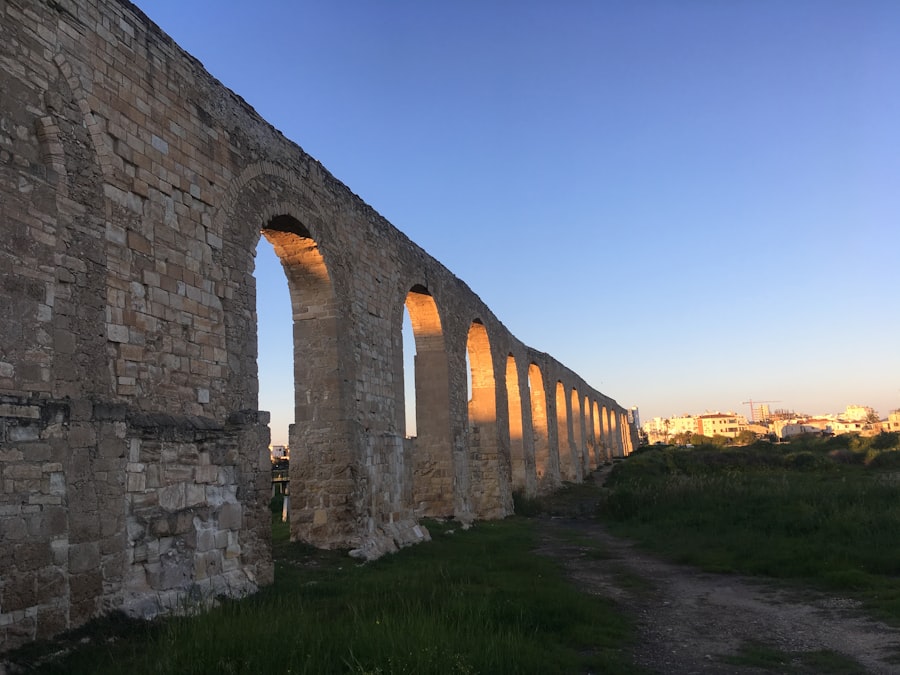
When an archaeologist unearths a section of a Roman aqueduct, an engineer can utilize techniques like X-ray fluorescence (XRF) or laser-induced breakdown spectroscopy (LIBS) to analyze the elemental composition of the stone. This can reveal the quarry of origin, providing insights into ancient trade routes and logistical networks. Similarly, soil analysis, a field heavily influenced by civil engineering principles, can identify traces of ancient construction materials discarded during building processes, offering clues about the scale and sophistication of the construction effort. The presence of specific aggregate ratios in concrete, for instance, can point to carefully formulated mixing techniques.
Decoding Ancient Mortars and Binders
Mortar, the seemingly humble binding agent of ancient masonry, is a treasure trove of engineering information. Engineers can employ petrography to examine thin sections of mortar under a microscope, revealing the types of aggregate, the quality of the lime, and the presence of additives like pozzolans. This allows for a detailed understanding of the binder’s performance and how it contributed to the longevity of structures. The Romans, pioneers in concrete technology, utilized volcanic ash (pozzolan) to create a remarkably durable and water-resistant substance. Engineering analysis confirms the precise chemical reactions that made this possible, offering lessons for modern material science.
Geometric Principles in Ancient Design
The alignment of buildings with celestial bodies, the precise proportions of temple façades, and the intricate layouts of ancient cities all point to a sophisticated understanding of geometry and mathematics. Engineers, trained in the abstract principles of geometry and its practical application in spatial design, can often identify these underlying mathematical frameworks in archaeological sites.
The Golden Ratio in Temples and Tombs
The prevalence of the Golden Ratio (approximately 1.618) in the dimensions of ancient structures, from Egyptian pyramids to Greek temples, is often a subject of fascination. Engineers, familiar with its aesthetic and structural properties, can systematically measure and analyze these proportions, confirming their deliberate incorporation. This isn’t mere coincidence; it speaks to an inherent, perhaps intuitive, understanding of aesthetically pleasing and harmonically balanced forms, which engineers today still regard as fundamental to good design.
Surveying and Layout of Ancient Cities
The organized grid patterns of cities like Pompeii or the meticulously planned fortifications of ancient fortifications demonstrate advanced surveying techniques. Engineers accustomed to modern surveying methods can reconstruct the likely tools and methodologies employed by ancient surveyors. This might involve analyzing the precise alignment of streets, the consistent spacing of buildings, and the relationship of urban elements to natural landmarks. The use of basic trigonometry and accurate measurement tools, while seemingly rudimentary by today’s standards, required a deep understanding of geometric principles.
The intersection of archaeology and engineering reveals fascinating insights into how ancient technologies influenced societal structures. A related article discusses the impact of these technologies on political control throughout history, highlighting how engineering feats such as aqueducts and fortifications were not only practical solutions but also tools of power. For more information, you can read the article here: The Influence of Ancient Technology on Political Control.
The Structural Detective: Analyzing the Demise and Durability of Ancient Monuments
Beyond understanding how ancient structures were built, engineering offers critical tools for understanding why they have endured or succumbed to the ravages of time and environment. The study of structural failure, material degradation, and the impact of natural forces are all core to engineering disciplines, and these principles are invaluable in archaeological site analysis.
Forensic Engineering in Archaeology
When a significant portion of an ancient edifice collapses, or when archaeologists observe unusual settlement patterns, forensic engineering principles can be applied to determine the cause. This detective work involves analyzing stress points, material fatigue, seismic activity, and even the impact of human intervention over centuries.
Recent advancements in the intersection of archaeology and engineering have shed light on ancient civilizations, revealing how they adapted to their environments. A fascinating example of this is the study of seismic profiles beneath the Antarctic ice cap, which provides insights into past human activities in extreme conditions. For more information on this topic, you can read the article on the seismic profile of the Antarctic ice cap at this link. Understanding these connections not only enhances our knowledge of history but also informs modern engineering practices in challenging climates.
Load-Bearing Capacity and Stress Analysis
Engineers can assess the load-bearing capacity of remaining structural elements and simulate the stresses that ancient builders would have anticipated. This involves calculating the weight of roofs, the lateral forces exerted by walls, and the distribution of loads. By analyzing the failure patterns of fallen stones or fractured columns, engineers can pinpoint weak points in the original design or identify external forces that exceeded the structure’s capacity. For example, a collapsed arch might reveal an overestimation of the keystone’s ability to distribute weight or an unexpected shift in the foundation.
Seismic Resilience and Earthquake Damage
Many ancient civilizations were situated in seismically active zones. Engineers with expertise in earthquake engineering can analyze the damage patterns on standing ruins to understand how ancient structures responded to seismic events. They can identify whether buildings were designed with any inherent earthquake resistance, such as flexible joints or strategically placed reinforcements, or if their collapse was a direct consequence of seismic forces. The meticulous construction of Japanese pagodas, designed to sway with earthquakes, is a prime example of ancient seismic resilience that modern engineering can interpret and learn from.
Material Degradation and Environmental Factors
The survival of ancient structures is a constant battle against environmental forces: erosion, water damage, salt crystallization, and biological decay. Engineering provides the scientific framework to understand these degradation processes and to devise strategies for their mitigation.
Corrosion and Chemical Weathering
The metallic elements found in ancient artifacts, such as bronze statues or iron tools, are subject to corrosion. Engineers can analyze the products of this corrosion to understand the environmental conditions that contributed to it and the original composition of the metal. Similarly, the weathering of stone is a chemical process. Engineers can study the chemical interactions between atmospheric pollutants, water, and the mineral composition of the stone to understand the rate and mechanism of degradation. This knowledge is crucial for conservation efforts.
The Impact of Hydrogeology on Foundations
The foundations of ancient structures are particularly vulnerable to changes in groundwater levels and soil moisture content. Civil engineers specializing in hydrogeology can analyze the geological context of a site to understand the flow of water and its potential impact on foundations. This can explain issues like differential settlement, where parts of a structure sink at different rates, leading to structural instability. The discovery of ancient water management systems, such as drainage channels and cisterns, also falls within this purview, highlighting the engineering foresight of ancient peoples.
The Digital Architect: Modeling, Simulation, and Reconstruction
Perhaps the most profound transformation in the archaeology-engineering nexus is occurring in the digital realm. The advent of powerful

The Walls That Shouldn’t Still Be Standing
FAQs
What is the relationship between archaeology and engineering?
Archaeology and engineering have a close relationship as engineering techniques and technologies are often used in archaeological research and excavation. Engineers help archaeologists with surveying, mapping, and preserving historical sites.
How do engineers contribute to archaeological projects?
Engineers contribute to archaeological projects by providing expertise in geophysical surveying, remote sensing, 3D modeling, and preservation of historical structures. They also help in the development of tools and technologies for excavation and analysis.
What are some examples of engineering techniques used in archaeology?
Examples of engineering techniques used in archaeology include ground-penetrating radar, LiDAR (Light Detection and Ranging), photogrammetry, 3D scanning, and GIS (Geographic Information Systems). These technologies help archaeologists to map and analyze archaeological sites.
How does the collaboration between archaeologists and engineers benefit archaeological research?
The collaboration between archaeologists and engineers benefits archaeological research by providing innovative solutions for site exploration, data collection, and preservation. Engineers help archaeologists to uncover new insights and discoveries through the use of advanced technologies.
What are the ethical considerations in the use of engineering in archaeology?
Ethical considerations in the use of engineering in archaeology include the responsible use of technology to avoid damage to historical sites, respecting local communities and their cultural heritage, and ensuring that the use of technology does not compromise the integrity of archaeological findings.