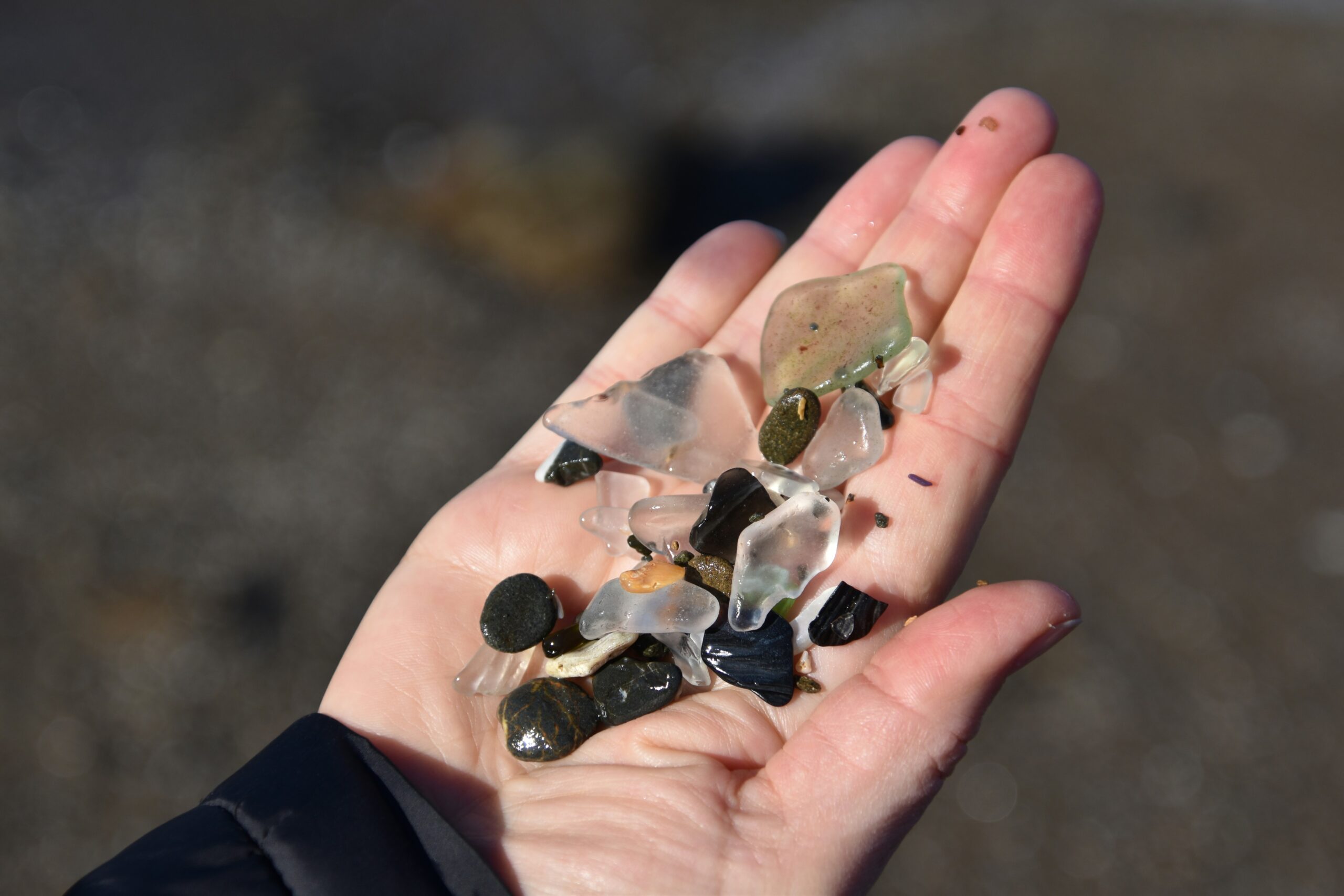
The allure of the past often lies hidden beneath layers of earth and time, protected by the silent testament of ancient materials. Among the most captivating of these are the volcanic glasses, shards of obsidian and other glassy rocks that have witnessed the fiery birth of mountains and the slow march of civilizations. Volcanic glass archaeology, a specialized and increasingly vital field, delves into the unique properties of these materials to unlock profound insights into human history, migration, technology, and social structures. It is a discipline that combines cutting-edge scientific analysis with the traditional detective work of piecing together fragmented lives from the tools and ornaments our ancestors left behind. More than just remnants of geological events, these glassy artifacts are windows into the very fabric of ancient societies, their resourcefulness, and their intricate connections across vast landscapes.
Volcanic glass, also known as obsidian, has been a significant material in archaeology due to its sharpness and ability to be crafted into tools. Researchers have been exploring how ancient civilizations utilized this natural resource for various purposes, including weaponry and trade. For a deeper understanding of the implications of resource management in modern contexts, you might find the article on financial security and asset protection insightful. It discusses the potential risks associated with savings and investments, which can draw parallels to how ancient societies managed their resources. You can read more about it in this article: Could the Fed Seize 401k and IRA Savings?.
The Genesis of Ancient Tools: Obsidian’s Magnetic Pull
Obsidian, a naturally occurring volcanic glass, formed from rapidly cooled felsic lava, has captivated humans since the dawn of our existence. Its sharp, conchoidal fracture, producing incredibly thin and precise edges, made it an indispensable material for crafting cutting tools long before the advent of metallurgy. The allure of obsidian for ancient toolmakers was not merely utilitarian; it was also driven by its aesthetic qualities. Its deep, lustrous black, often interspersed with swirling patterns of brown, green, or even iridescence, made it a prized material for ornaments and symbolic objects.
The Advantage of Sharpness: An Evolutionary Leap in Toolmaking
The ability to fracture obsidian predictably and with extraordinary sharpness represented a significant evolutionary advantage for early hominins. The creation of fine cutting edges allowed for more efficient butchering of game, the preparation of hides for clothing and shelter, and the crafting of more sophisticated wooden tools. This sharp advantage directly impacted survival rates, allowing for better resource utilization and the development of more complex behaviors. The distinct fracture patterns, unlike those of flint or chert, are a direct consequence of obsidian’s amorphous glassy structure. This difference in fracture mechanics is not only crucial for understanding tool function but also provides a unique fingerprint for archaeological analysis.
Beyond the Cutting Edge: Obsidian as a Canvas for Art and Ritual
While its practical applications were paramount, obsidian’s visual appeal also led to its use in decorative and ceremonial contexts. The polished sheen of obsidian was highly valued for creating jewelry, amulets, and other personal adornments. These items often carried significant social or spiritual meaning, reflecting status, belief systems, or tribal affiliations. In some cultures, obsidian was also incorporated into burial rituals and offerings, suggesting a belief in its protective or symbolic power that extended beyond the mortal realm. The ability to shape and polish obsidian into these forms speaks to a sophisticated understanding of its properties and advanced knapping techniques.
Tracing the Footprints of the Past: Provenance and Sourcing Studies

One of the most powerful applications of volcanic glass archaeology lies in its ability to trace the movement of people and goods across ancient landscapes. Unlike many other archaeological materials, obsidian possesses a unique geochemical fingerprint, a chemical composition determined by its origin within specific volcanic sources. This characteristic makes it an invaluable tool for provenance studies, allowing archaeologists to identify where an artifact was made and, consequently, to reconstruct ancient trade networks and migration routes.
The Geochemical Signature: A Unique Identifier
The geological processes involved in obsidian formation imbue each volcanic deposit with a distinct set of trace element concentrations. These trace elements, present in minuscule but measurable quantities, act like a chemical fingerprint, distinguishing obsidian from one volcanic source from that of another. Sophisticated analytical techniques, such as instrumental neutron activation analysis (INAA) and X-ray fluorescence (XRF), are employed to precisely measure these trace element profiles. By comparing the chemical composition of obsidian artifacts found at an archaeological site to the known compositions of geological obsidian sources, researchers can definitively determine the origin of the raw material used to create those artifacts.
Mapping the Trade Routes: Ancient Networks Unveiled
The results of provenance studies have revolutionized our understanding of ancient economies and social interactions. By identifying the origins of obsidian artifacts dispersed across a region, archaeologists can map out complex trade networks that connected seemingly disparate communities. For example, the presence of obsidian from a distant volcanic source at an inland settlement might indicate established trade routes, the movement of nomadic groups carrying their tools, or even the expansion of a cultural sphere of influence. These studies have revealed that ancient peoples were far more interconnected than previously imagined, engaging in long-distance exchange of essential materials and valuable commodities.
Migration and Dispersal: Following the Obsidian Trail
Beyond trade, obsidian sourcing also plays a crucial role in understanding human migration and dispersal patterns. When obsidian tools are found far from their original volcanic source, it can indicate the movement of people who either carried the raw material with them or traveled carrying finished tools. This evidence can corroborate or challenge existing theories about population movements, settlement patterns, and the spread of cultural technologies. The distribution of obsidian can act as a tangible marker of human journeys, offering a direct link to the people who made and used these materials.
The Art of the Knapper: Understanding Technological Prowess

The creation of obsidian tools was not a simple act of chipping away at a rock; it was a highly skilled craft that required an intimate knowledge of the material’s properties and precise execution. Volcanic glass archaeology, through the microscopic examination of tool wear and manufacturing residues, allows us to delve into the technological prowess of ancient knappers. This analysis goes beyond simply identifying tools, aiming to understand the processes of their creation and the skill involved.
Microscopic Clues: Decoding the Manufacturing Process
The act of knapping obsidian leaves behind characteristic microscopic traces on both the tools and the debitage (waste material produced during tool manufacture). Examining these flakes and edges under a microscope reveals the precise angles and forces used during the knapping process. Researchers can identify evidence of bipolar percussion, soft hammer percussion, and pressure flaking, each technique requiring different skill sets and producing distinct results. The analysis of micro-wear patterns on the working edges of tools can reveal the specific tasks for which they were used and the materials they interacted with.
Innovation and Adaptation: The Evolution of Tool Kits
The study of obsidian tool assemblages reveals the evolution of ancient technologies and the adaptive strategies of human societies. As new challenges arose or as access to different types of obsidian varied, ancient knappers would innovate and adapt their techniques. The emergence of new tool forms, the refinement of existing ones, or the standardization of manufacturing processes all speak to the dynamic nature of technological development. Examining the diversity and uniformity of obsidian tool kits within and between sites can illuminate the spread of technological knowledge and the cultural influences on toolmaking traditions.
Residue Analysis: Unveiling Tool Usage
Beyond the physical evidence of knapping, advanced analytical techniques can reveal residual organic matter adhered to obsidian tools. These residues, often invisible to the naked eye, can include traces of blood, plant fibers, animal tissues, or even hafting materials. Blood residue analysis, for instance, can identify the types of animals or humans that were on the tool’s surface, providing direct evidence of its function in activities like butchery or hunting. Similarly, identifying plant residues can inform us about the plants used for food, medicine, or crafting.
Volcanic glass, also known as obsidian, has been a significant material in archaeology due to its sharp edges and ease of shaping, which made it a preferred choice for tool-making in ancient cultures. Recent studies have shed light on how these artifacts can provide insights into trade networks and social interactions among prehistoric communities. For a deeper understanding of the implications of resource availability and economic factors in archaeology, you might find this article on inflation and asset seizure interesting, as it draws parallels between modern economic challenges and historical resource management. You can read more about it here.
Beyond the Stone Age: Obsidian’s Enduring Legacy
| Site | Excavation Date | Findings |
|---|---|---|
| Pompeii | 1748 | Volcanic glass artifacts found in ancient Roman ruins |
| Teotihuacan | 1905 | Obsidian tools and objects discovered in Mesoamerican archaeological site |
| Maya Ruins | 1930s | Obsidian blades and jewelry unearthed in Maya civilization sites |
While the widespread adoption of metal tools eventually diminished the necessity of obsidian for everyday cutting tasks, its importance did not entirely vanish. In many cultures, obsidian continued to hold significant symbolic, ceremonial, and even practical value. Volcanic glass archaeology helps us understand this enduring legacy, revealing how these glassy materials continued to shape human societies long after the Stone Age.
The Ritualistic Resonance: Obsidian in Ceremonies and Beliefs
Even as metal technologies advanced, obsidian retained its prestige and its role in ritualistic practices. Its lustrous appearance and unique properties made it suitable for use in religious ceremonies, as ritual objects, and as grave goods. The association of obsidian with the underworld or with spiritual power in some cultures further cemented its importance in their belief systems. The careful placement and intricate crafting of obsidian objects in burial sites offer a window into their cosmological views and their understanding of life and death.
The Persistence of Craftsmanship: Specialized Obsidian Industries
In some regions, specialized obsidian industries continued to thrive, catering to specific needs for ceremonial objects, luxury goods, or even specialized tools for particular crafts. These industries often involved highly skilled artisans who mastered the techniques of working obsidian into intricate forms, demonstrating a continued appreciation for its aesthetic and material qualities. The presence of such specialized production centers can indicate complex social organization and divisions of labor.
Obsidian as a Historical Marker: Corroborating Texts and Traditions
In historical periods, obsidian can sometimes serve as a tangible link to written records or oral traditions. The identification of obsidian artifacts from known historical periods and trade routes can help corroborate ancient texts or legends about long-distance travel, trade, and cultural exchanges. This interdisciplinary approach, where archaeology informs and is informed by historical accounts, provides a richer and more nuanced understanding of the past.
Recent studies in volcanic glass archaeology have shed light on ancient human behaviors and trade networks, revealing how early societies utilized this natural resource for tool-making and navigation. For a deeper understanding of how these ancient peoples may have navigated their environments, you can explore the fascinating insights presented in this article on unraveling the ancient navigation mystery. This connection between volcanic glass and navigation highlights the intricate relationship between material culture and the development of early human societies.
The Future of Volcanic Glass Archaeology: New Frontiers in Research
The field of volcanic glass archaeology is continuously evolving, driven by advancements in analytical technologies and the development of new research methodologies. The future promises even deeper insights into the human story, as scientists and archaeologists push the boundaries of what can be learned from these ancient volcanic relics.
Advanced Spectroscopic and Imaging Techniques: Seeing the Unseen
Emerging spectroscopic and imaging techniques offer unprecedented capabilities for analyzing volcanic glass. Techniques like Raman spectroscopy and synchrotron-based X-ray fluorescence can provide even more detailed chemical characterization, allowing for the differentiation of even subtly distinct obsidian sources or the detection of incredibly faint traces of residues. High-resolution microscopy and 3D imaging allow for more precise reconstruction of tool manufacturing processes and wear patterns.
Geochronological Dating of Obsidian Sources: Pinpointing Timelines
While obsidian itself is an artifact of a geological process, the geological context of its formation can sometimes be dated. Advances in dating techniques applied to the volcanic deposits from which obsidian originates can provide a more precise temporal framework for understanding when specific obsidian sources were active and accessible to ancient populations. This can help refine chronologies and better understand the timing of material acquisition and tool production.
Interdisciplinary Collaboration: A Holistic Approach
The future of volcanic glass archaeology lies in even stronger interdisciplinary collaboration. Closer partnerships between geologists, chemists, physicists, anthropologists, and archaeologists will unlock new avenues of research. By combining expertise from diverse fields, researchers can tackle complex questions about human-environment interactions, the impact of geological events on human societies, and the sophisticated ways in which ancient peoples utilized the natural resources available to them. The story etched in volcanic glass is far from fully told, and with each new discovery, our understanding of humanity’s journey continues to deepen and expand.

How Volcanic Glass Solved a 10,000-Year-Old Mystery
FAQs
What is volcanic glass archaeology?
Volcanic glass archaeology is the study of artifacts made from volcanic glass, such as obsidian, and the use of these artifacts to understand past human behavior and trade networks.
How is volcanic glass used in archaeology?
Volcanic glass, particularly obsidian, is used in archaeology for dating purposes, as well as for understanding ancient trade routes and social interactions based on the distribution of the material.
What can volcanic glass artifacts tell us about ancient societies?
Volcanic glass artifacts can provide information about ancient societies’ trade networks, technological capabilities, and social interactions. They can also help archaeologists understand the movement of people and goods in the past.
Where is volcanic glass commonly found?
Volcanic glass, such as obsidian, is commonly found in areas with volcanic activity, such as the Pacific Northwest of the United States, the Mediterranean region, and parts of Central and South America.
What are some examples of volcanic glass artifacts found in archaeological sites?
Examples of volcanic glass artifacts found in archaeological sites include tools, weapons, and decorative items made from obsidian, as well as evidence of obsidian trade networks in ancient societies.