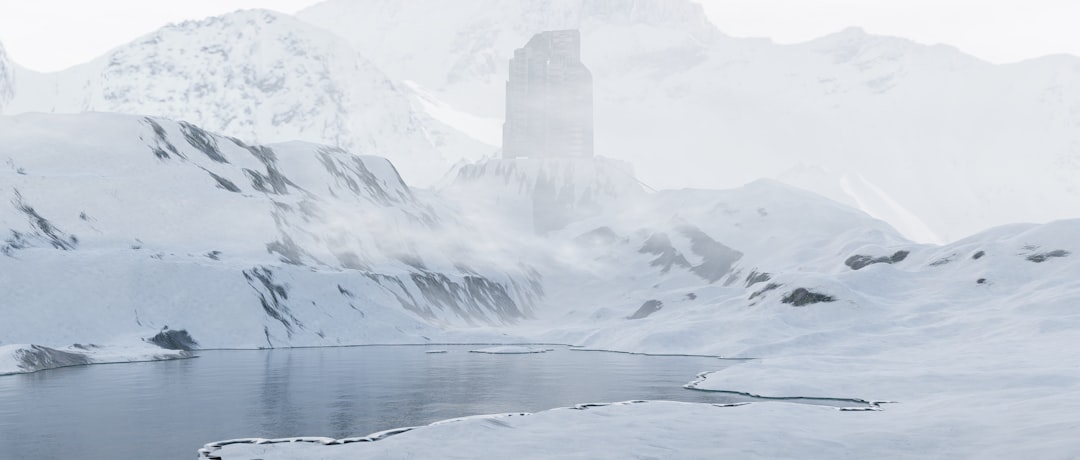
The vast, white expanse of Antarctica, a continent largely defined by its ice sheets and extreme climate, may seem like an uninhabited wasteland. Yet, beneath this frozen veneer, stories of human endeavor, scientific exploration, and surprising resilience lie waiting to be uncovered. This article delves into the lesser-known narratives of Antarctica, moving beyond the iconic penguins and scientific bases to explore the hidden city secrets that have emerged from this unique environment. Imagine a vast library, its shelves filled with scientific data and logs, but with entire wings dedicated to the daily lives, architectural marvels, and evolving communities that have taken root on this icy frontier.
The early days of Antarctic exploration were characterized by rugged individualism and daring expeditions. However, as expeditions became more sustained and scientific research solidified its presence, a more permanent human footprint began to emerge. This transition marked the dawn of something akin to settlements, albeit ones vastly different from those on other continents.
Early Explorers and Their Temporary Camps
The first winter-overs in Antarctica were feats of sheer endurance. Figures like Carsten Borchgrevink and Otto Nordenskjöld established camps designed for survival against the elements. These were not cities in the conventional sense, but rather the embryonic forms of human habitation in an inhospitable place. The logbooks from these expeditions, akin to ancient chronicles, detail the daily struggles for warmth, food, and sanity in isolation.
The Rise of Scientific Bases as Proto-Cities
The mid-20th century saw a surge in international scientific interest in Antarctica, leading to the establishment of numerous research stations. These bases, often built with modular designs for rapid deployment, became the nuclei of Antarctic communities. They evolved beyond mere scientific outposts to become self-sufficient micro-societies, each with its own infrastructure, social dynamics, and even unique cultural quirks. Think of these bases as islands of civilization, each a distinct ecosystem within the larger Antarctic biome.
The Antarctican Treaty System: Shaping the Landscape of Habitation
The signing of the Antarctic Treaty in 1959 was a pivotal moment. It designated Antarctica as a continent for peace and science, prohibiting military activity and ensuring freedom of scientific investigation. This treaty, a bedrock of international cooperation, indirectly shaped the development of Antarctic settlements by fostering a collaborative spirit and setting guidelines for environmental protection, thus influencing the very design and expansion of these human outposts.
Recent explorations into the mysteries of Antarctica have unveiled intriguing theories about hidden cities beneath the ice, sparking curiosity and debate among researchers and enthusiasts alike. For those interested in delving deeper into these secrets, a related article titled “Unveiling the Secrets of Antarctica’s Hidden Cities” provides a comprehensive overview of the latest findings and theories surrounding this enigmatic continent. You can read more about it by visiting this link.
Architectural Ingenuity: Building a Home on the Ice
The architectural challenges of constructing and maintaining buildings in Antarctica are immense. Extreme temperatures, relentless winds, and the constant threat of snow accumulation demand innovative solutions. The resulting structures are not only functional but often represent remarkable feats of engineering.
The Evolution of Antarctic Structures
From the early, often precarious, wooden huts to the sophisticated, insulated modules of today, Antarctic architecture has undergone a significant transformation. Each generation of design has learned from the successes and failures of its predecessors, leading to more resilient and comfortable living and working spaces. These buildings are like the hardened shells of polar creatures, designed to withstand the harshest conditions.
Early Huts: The Dawn of Shelter
The very first shelters were rudimentary, prioritizing basic survival. Imagine these as the first sparks of a campfire in a vast, dark forest, providing just enough light and warmth to ward off the overwhelming cold. These structures, though simple, were revolutionary for their time.
Modern Research Stations: Self-Sufficient Hubs
Contemporary research stations are complex, integrated systems. They feature advanced insulation, robust power generation (often relying on renewable sources like wind and solar), sophisticated waste management, and comfortable living quarters, including recreational facilities and even hydroponic gardens. These are no longer mere shelters but functioning communities, akin to a futuristic eco-village transplanted to the South Pole.
The Impact of the Environment on Design
The persistent force of Antarctic winds, capable of stripping paint and eroding metal, has necessitated the development of aerodynamic designs and the use of exceptionally durable materials. Similarly, the insulating properties of buildings are paramount, with sophisticated double-wall constructions and advanced sealing techniques employed to minimize heat loss. The very shape and orientation of buildings are often dictated by the prevailing winds, like a sculptor shaping clay based on the invisible forces around it.
Innovations in Construction and Materials
Researchers and engineers have developed specialized materials and construction techniques to cope with the Antarctic environment. This includes self-healing materials, specialized coatings resistant to ice adhesion, and modular construction methods that allow for efficient assembly and disassembly in extreme conditions. These innovations are the cutting edge of material science, pushed to their limits by the demands of the Antarctic.
Life in the Antarctic Settlements: A Unique Social Fabric

Living in Antarctica is unlike any other human experience. The isolation, the extreme environment, and the close-knit communities create a distinct social fabric, characterized by a strong sense of camaraderie and shared purpose.
The Role of Isolation and Community
The vast distances separating Antarctic stations from the rest of the world foster a profound sense of isolation. However, this isolation also breeds a powerful sense of community among the residents. Personalities that might be overlooked in a bustling city often become vital threads in the social tapestry of an Antarctic base. The shared experience of living on the edge of the world is a powerful bonding agent.
Daily Life and Routines
The daily routines in Antarctic settlements are structured to maximize productivity and maintain morale. Days are filled with scientific work, station maintenance, and various recreational activities. The rhythm of life is set by the demands of research and the unique challenges of the environment. Imagine a finely tuned clockwork mechanism, each gear representing a member of the community, working in unison.
The Workday: Science and Sustainability
The primary purpose of most Antarctic settlements is scientific research. Residents engage in a wide array of disciplines, from glaciology and atmospheric science to biology and astronomy. Beyond research, the daily operation of a station requires constant vigilance in maintaining systems, managing resources, and ensuring safety. It is a constant dance between scientific pursuit and the pragmatic needs of survival.
Leisure and Recreation: Maintaining Morale
Maintaining psychological well-being in isolation is crucial. Antarctic stations offer various recreational facilities, including gyms, libraries, movie nights, and communal dining areas. Special events, like Midwinter celebrations, become significant milestones in the Antarctic calendar, reinforcing the sense of shared experience and providing much-needed cheer. These activities are the lifeblood that keeps the human spirit resilient against the encroaching stillness.
The Transient Nature of Antarctic Populations
Unlike permanent cities, Antarctic settlements are largely transient. Scientists and support staff typically serve for fixed terms, usually ranging from a few months to a year. This constant influx and outflow of personnel contribute to a dynamic social environment, where new relationships are forged and old ones are maintained across vast distances. It’s like a revolving door of dedicated individuals, each leaving their mark before passing on the baton.
Beyond the Bases: Unearthing Historical Remnants

While research stations represent the present, Antarctica also holds the echoes of its past. Remnants of early expeditions, whaling stations, and even abandoned bases lie scattered across the continent, offering glimpses into the history of human presence.
Relics of the Heroic Age of Exploration
The “Heroic Age” of Antarctic exploration, from the late 19th to the early 20th century, left behind historic huts and equipment that are now preserved as national monuments. These sites offer tangible connections to figures like Shackleton, Scott, and Amundsen, allowing us to step back in time and imagine the hardships they faced. These are not just ruins but time capsules, preserving the essence of an era of unparalleled bravery.
Abandoned Whaling Stations and Their Legacies
The history of Antarctic exploitation is also etched in the remains of abandoned whaling stations, primarily found on the Antarctic Peninsula and sub-Antarctic islands. These industrial sites, now largely reclaimed by nature, speak of a different kind of human endeavor – one driven by resource extraction. Their decaying structures stand as silent witnesses to a past that contrasts sharply with the continent’s current scientific focus.
The Challenge of Preservation in an Extreme Environment
Preserving these historical remnants in Antarctica presents unique challenges. The harsh climate, the remoteness, and the sheer logistical difficulties make conservation efforts a complex undertaking. Organizations and governments work to protect these sites, recognizing their immense historical and cultural value. The effort to preserve these past echoes is akin to carefully tending a delicate flame in a gale.
Recent explorations in Antarctica have unveiled intriguing secrets about a hidden city beneath the ice, sparking curiosity among researchers and enthusiasts alike. The mysteries surrounding this ancient civilization have led to numerous theories about its origins and purpose. For those interested in delving deeper into this captivating topic, a related article offers further insights and discoveries that shed light on the enigmatic structures found in this frozen landscape. You can read more about these astonishing revelations in the article here.
The Future of Antarctic Habitation: Sustainability and Collaboration
| Secret Name | Location | Discovery Year | Description | Current Status |
|---|---|---|---|---|
| Subglacial City Ruins | East Antarctica, beneath ice sheet | 2018 | Ancient structures detected under ice using radar technology, suggesting a lost civilization. | Under scientific investigation |
| Hidden Ice Caverns | West Antarctica, near Thwaites Glacier | 2020 | Network of large ice caves possibly formed by geothermal activity, rumored to contain artifacts. | Exploration ongoing |
| Submerged Dome Complex | Ross Sea region | 2015 | Underwater domed structures detected via sonar, speculated to be remnants of an ancient city. | Unconfirmed, requires further study |
| Ancient Alien Base Theory | Antarctic Peninsula | 2012 | Theory based on unusual aerial photographs showing geometric shapes beneath ice. | Debunked by mainstream science |
| Secret Military Installations | Various locations | Unknown | Rumors of hidden bases used during Cold War, no official confirmation. | Classified or disproven |
As scientific understanding and human presence in Antarctica continue to evolve, so too do the ideas surrounding its habitation. The focus is increasingly shifting towards sustainable practices and enhanced international collaboration.
Towards Greater Sustainability
The environmental sensitivity of Antarctica is paramount. Future development in Antarctic settlements will undoubtedly prioritize sustainability, with an emphasis on renewable energy, circular economy principles, and minimal environmental impact. The goal is to ensure that human activity on the continent does not compromise its pristine natural state for future generations. This is a delicate balancing act, ensuring that human footprints are as light as possible on this fragile landscape.
The Role of Technology in Antarctic Living
Advancements in technology will continue to play a crucial role in shaping life in Antarctic settlements. This includes innovations in remote sensing, robotics for exploration and maintenance, efficient communication systems, and even advanced food production techniques like vertical farming. Technology will serve as a vital tool to enhance both scientific endeavors and the quality of life for those stationed there.
International Cooperation as the Cornerstone
The Antarctic Treaty System has been a remarkable success in fostering international cooperation. The future of Antarctic habitation will continue to rely on this collaborative spirit, ensuring that scientific research and human presence are managed in a unified and responsible manner. The shared stewardship of this unique continent is a testament to what can be achieved when nations set aside differences for a common cause. Antarctica stands as a beacon of what is possible when humanity works together on a grand scale.
FAQs
What is the concept of hidden cities in Antarctica?
Hidden cities in Antarctica refer to rumored or speculative underground or concealed settlements that some believe exist beneath the ice. These ideas often stem from conspiracy theories or unverified claims rather than established scientific evidence.
Are there any known research stations or settlements in Antarctica?
Yes, Antarctica hosts numerous scientific research stations operated by various countries. These stations are temporary or semi-permanent and are used for scientific studies related to climate, biology, geology, and other fields. However, they are not hidden cities but well-documented facilities.
Is there any scientific evidence supporting the existence of ancient or hidden cities in Antarctica?
No credible scientific evidence supports the existence of ancient or hidden cities beneath Antarctica’s ice. The continent is covered by a thick ice sheet, and while there are geological features and subglacial lakes, no archaeological findings have confirmed the presence of human-made structures.
Why do some people believe in hidden cities or secrets in Antarctica?
Beliefs in hidden cities or secrets in Antarctica often arise from a combination of mystery surrounding the continent, limited public access, and speculative interpretations of satellite images or historical accounts. Popular culture and conspiracy theories also contribute to these ideas.
What is the primary purpose of human activity in Antarctica today?
The primary purpose of human activity in Antarctica is scientific research. International agreements, such as the Antarctic Treaty System, regulate activities to preserve the environment and promote peaceful scientific collaboration. There is no evidence of permanent civilian settlements or hidden cities.