The whisper of forgotten winds across the Illinois prairie often carries the echoes of a civilization far grander than many realize. For centuries, the sprawling mounds of Cahokia, near modern-day St. Louis, stood as silent sentinels to a vibrant past. Among these monumental earthworks, the Grand Plaza, a vast expanse at the heart of the ancient city, has long captivated archaeologists, offering a tantalizing glimpse into the social, political, and ceremonial life of its inhabitants. Recent and ongoing archaeological investigations have begun to peel back the layers of time, revealing the intricate planning and profound significance of this central urban feature, shedding new light on the complexity and sophistication of Mississippian society.
The Genesis of a Metropolis: Cahokia’s Rise to Prominence
Cahokia, flourishing between roughly 1050 and 1350 CE, was the most extensive and influential urban center of the Mississippian culture. Its peak population is estimated to have been tens of thousands, making it one of the largest cities north of Mexico at the time. The sheer scale of its construction, particularly the immense earthen mounds, speaks volumes about the organizational capacity and labor investment of its people. The city was not a random collection of settlements but a meticulously planned urban landscape, with distinct residential areas, agricultural zones, and ceremonial precincts. The Grand Plaza, centrally located and expansively designed, played a pivotal role in unifying and orchestrating the activities within this burgeoning metropolis. Understanding its genesis is crucial to grasping the evolution of Cahokia itself, from its humble beginnings to its zenith as a regional power.
Early Settlements and the Agricultural Foundation
Before the monumental constructions that define Cahokia, the area was home to smaller, more dispersed communities. These early inhabitants, likely drawn to the fertile bottomlands of the Mississippi River, established agricultural practices that would lay the groundwork for future societal growth. The cultivation of maize, beans, and squash provided a reliable food surplus, essential for supporting a growing population and freeing up labor for non-agricultural pursuits. Archaeological evidence from these early periods, often found beneath later constructions, reveals the seeds of Cahokia’s eventual greatness.
The Emergence of Social Stratification
As agricultural productivity increased and populations grew, so too did social complexity. The development of distinct social classes, evident in varying burial practices and the quality of grave goods, began to emerge. This stratification was likely a key factor in the ability to mobilize large labor forces for monumental construction projects, including the shaping of the urban landscape and the construction of the Grand Plaza. The centralized authority required to orchestrate such endeavors suggests a nascent political structure that would mature as the city expanded.
The Role of Resource Management and Trade Networks
Cahokia’s strategic location at the confluence of major rivers provided access to vital resources and facilitated extensive trade networks. The ability to acquire and distribute essential materials, from timber and stone to exotic goods from distant regions, was critical to the city’s economic and political power. The organization of these resources would have been managed from the city’s core, with the Grand Plaza likely serving as a nexus for the flow of goods and information, further solidifying its central importance.
The archaeology of Cahokia Grand Plaza offers fascinating insights into the social and political dynamics of one of North America’s most significant prehistoric urban centers. Researchers have uncovered evidence of complex ceremonial practices and community organization that highlight the ingenuity of the Mississippian culture. For those interested in exploring how ancient technologies and practices can inform modern solutions, a related article discusses the potential of these historical insights in contemporary contexts. You can read more about this intriguing connection in the article found here: Unlocking the Power of Ancient Tech for Modern Solutions.
The Enigmatic Grand Plaza: Layout and Construction
The Grand Plaza of Cahokia is not a natural feature but a testament to deliberate human design and immense labor. Covering an area of approximately 200 acres, this immense, flat expanse was intentionally cleared and compacted. Its sheer size suggests a primary function related to large gatherings, public ceremonies, and possibly civic administration. The careful engineering involved in its creation, including drainage systems and precise leveling, highlights the advanced understanding of environmental engineering possessed by the Mississippian people.
Excavations and the Unveiling of the Scale
Early archaeological investigations, often driven by curiosity and limited resources, provided the first glimpses into the Grand Plaza’s immense scale. However, it was through more systematic and extensive excavations that the true dimensions and the deliberate nature of its construction became apparent. These efforts, involving meticulous mapping and stratigraphic analysis, revealed the sheer volume of earth moved and the precision with which the space was shaped. The absence of significant habitation within the plaza itself, and the presence of compacted surfaces, further underscored its public function.
Engineering Marvels: Drainage and Compaction
The construction of such a large, open space in a riverine environment presented significant engineering challenges, particularly concerning drainage. Archaeologists have uncovered evidence of sophisticated drainage systems, including ditches and subtle grading, designed to channel rainwater away from the plaza and prevent waterlogging. The painstaking process of compacting the earth to create a stable and durable surface also speaks to the advanced techniques employed. This attention to detail underscores the importance placed on this central space and the desire for its long-term usability.
The Plaza’s Relationship to Monks Mound
The Grand Plaza’s spatial relationship to Monks Mound, the largest artificial earthwork in North America, is particularly significant. Monks Mound, a colossal four-terraced platform mound, dominates the Cahokian landscape and is believed to have served as the primary ceremonial and political center. The plaza’s direct adjacency to Monks Mound suggests a deliberate architectural pairing, where the open expanse of the plaza served as a stage for activities that took place at or emanated from the monumental mound. This visual and functional connection likely amplified the power and authority of those who resided on or controlled Monks Mound.
Functions of the Grand Plaza: A Hub of Activity
The precise functions of the Grand Plaza are a subject of ongoing debate and interpretation, but the archaeological evidence strongly suggests it served as a multifaceted hub for a variety of important activities. Its size and central location point towards a role in public life, encompassing ceremonial events, communal gatherings, administrative functions, and possibly even organized sporting events or competitions. Unraveling these functions is key to understanding the social fabric of Cahokia.
Ceremonial Spectacles and Public Rituals
The expansive, open nature of the Grand Plaza would have been ideal for hosting large-scale ceremonies and public rituals. Imagine thousands of people gathered, witnessing elaborate processions, performances, and symbolic events. The plaza could have served as the central arena for these spectacles, connecting the populace with their leaders and their spiritual beliefs. The proximity to Monks Mound further supports this idea, as major ceremonies likely involved activities on both the mound and in the plaza below.
The Arena of Political Discourse and Social Cohesion
Beyond religious ceremonies, the Grand Plaza likely served as a venue for political discourse and the reinforcement of social cohesion. Leaders may have addressed gatherings from elevated platforms within the plaza or from the terraces of Monks Mound, conveying important messages and solidifying their authority. Communal feasts, celebrations, and the negotiation of social relationships could have also taken place here, fostering a sense of shared identity and belonging among the inhabitants of Cahokia.
Economic Exchange and Market Activities
While not a formal marketplace in the modern sense, the Grand Plaza may have facilitated certain forms of economic exchange. The presence of traders and the movement of goods through the city would have likely converged in this central location. It is plausible that informal markets or designated areas for exchange existed within or adjacent to the plaza, allowing for the distribution of local produce and imported luxury items, further integrating Cahokia into regional trade networks.
The Possibility of Organized Sports or Games
Some archaeological interpretations suggest that large, open spaces like the Grand Plaza may have been used for organized games or sporting events. Such activities could have served multiple purposes: entertainment, the display of athletic prowess, and a means of reinforcing social bonds and demonstrating status. Evidence from other Mississippian sites and ethnographic accounts of Native American games lend credence to this possibility.
Reconstructing Life on the Plaza: Artifacts and Interpretations
The archaeological record, though often fragmentary, provides invaluable clues about the activities that transpired within and around the Grand Plaza. Excavations have unearthed a variety of artifacts, each telling a story about the people who used this space and the broader cultural context of Cahokia. These discoveries allow researchers to move beyond speculation and build more grounded interpretations of daily life and special events.
Evidence of Elite Presence and Activity
Artifacts found within and around the Grand Plaza often indicate the presence of elites. These can include finely crafted pottery, prestige goods such as shell beads and polished stone tools, and remnants of elaborate feasting. The concentration of such items in certain areas of the plaza or in associated structures suggests that these spaces were not solely for the common populace but also hosted gatherings involving the ruling class and important visitors.
Remains of Communal Activities and Daily Life
While the plaza was likely reserved for public events, evidence of more mundane activities can also be found in surrounding areas. This includes discarded tools, fragments of everyday pottery, and evidence of food preparation. These findings help to paint a picture of the people who lived and worked in Cahokia and how they interacted with this central civic space.
The Significance of Ritual Offerings and Deposits
Archaeologists have also discovered instances of ritual deposits within and around the Grand Plaza. These could include carefully placed artifacts, animal remains, or even human burials, suggesting the performance of specific ceremonies or offerings. The nature and context of these deposits provide crucial insights into the spiritual beliefs and practices of the Cahokian people.
Interpreting the Spatial Distribution of Artifacts
The spatial distribution of artifacts within the Grand Plaza is a critical aspect of archaeological interpretation. By mapping where specific types of objects are found, researchers can infer different zones of activity. For instance, a concentration of feasting refuse might indicate a designated area for communal meals, while the discovery of tools could point to temporary workshops or crafting areas that were set up for specific events.
Recent discoveries in the Cahokia Grand Plaza have shed light on the complex social and ceremonial life of this ancient city, revealing intricate connections between its inhabitants and their environment. For those interested in exploring similar archaeological findings, an insightful article discusses the mysteries of ancient city ruins and their significance in understanding past civilizations. You can read more about it in this fascinating piece on ancient city ruins.
The Enduring Legacy: Cahokia’s Grand Plaza in Modern Perspective
The Grand Plaza of Cahokia, though now largely grass-covered and open to the sky, continues to resonate with historical significance. Its uncovering and ongoing study offer profound lessons about the capacity for complex societies to emerge and thrive in North America long before European contact. The insights gained from its examination challenge simplistic narratives and highlight the ingenuity, organizational prowess, and rich cultural life of the Mississippian civilization.
A Testament to Human Ingenuity and Organization
The very existence of the Grand Plaza is a testament to the remarkable ingenuity and organizational abilities of the Mississippian people. The ability to conceive, plan, and execute such a massive undertaking, involving the movement of millions of cubic feet of earth and the coordination of a large labor force, is a significant achievement in human history. It demonstrates a sophisticated understanding of engineering, resource management, and social organization.
Challenging Preconceived Notions of Native American Societies
The discoveries at Cahokia, particularly concerning the Grand Plaza, have played a crucial role in challenging long-held and often prejudiced notions about Native American societies. The complexity of Cahokia, with its urban planning, social stratification, and monumental architecture, demonstrates that these societies were far from primitive. They possessed advanced social structures, sophisticated belief systems, and the capacity for large-scale, organized endeavors.
Ongoing Research and Future Discoveries
The archaeological exploration of Cahokia and its Grand Plaza is far from complete. New technologies, such as LiDAR (Light Detection and Ranging) and advanced remote sensing techniques, are continually revealing new details about the site that were previously hidden from view. Ongoing excavations and meticulous analysis of existing collections promise to yield even deeper insights into the functions of the Grand Plaza and the lives of the people who created and used it. The story of Cahokia, and its magnificent Grand Plaza, is a continually unfolding narrative, enriching our understanding of North America’s ancient past.
Preserving a Vital Piece of World Heritage
The Grand Plaza, as part of the larger Cahokia Mounds State Historic Site, is recognized as a UNESCO World Heritage site, underscoring its global importance. Preserving this invaluable archaeological resource is paramount for future generations to learn from and appreciate. Continued archaeological research, coupled with robust preservation efforts, will ensure that the secrets of Cahokia’s Grand Plaza continue to be uncovered, offering ever-deeper understanding of a lost but not forgotten civilization.
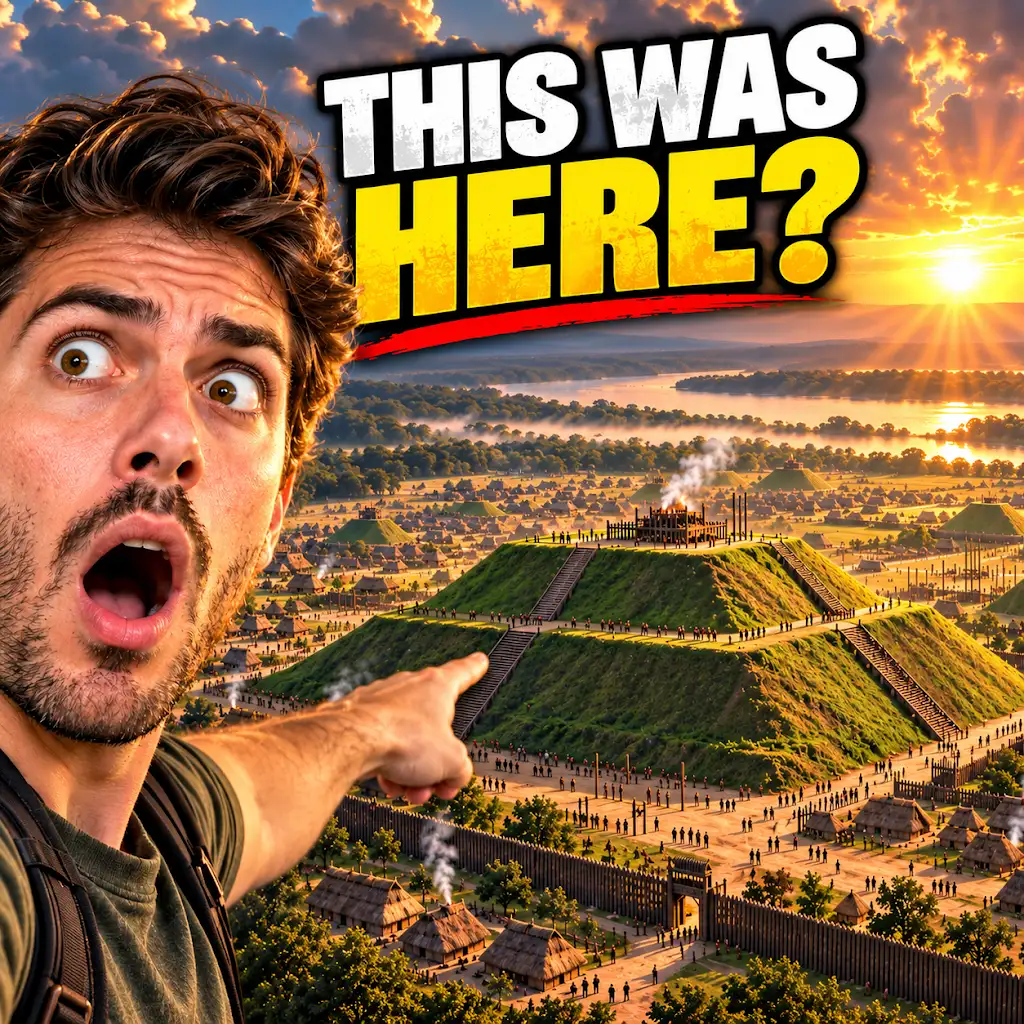
A City Bigger Than London Once Stood in America. Then It Vanished.
FAQs
What is the Cahokia Grand Plaza archaeology site?
The Cahokia Grand Plaza is an archaeological site located in Illinois, USA. It was once the center of the ancient Cahokia settlement, which was the largest pre-Columbian city north of Mexico.
What is the significance of the Cahokia Grand Plaza site?
The Cahokia Grand Plaza site is significant because it provides valuable insights into the Mississippian culture and the social, political, and economic organization of the Cahokia settlement. It also sheds light on the complex urban planning and architecture of the ancient city.
What have archaeologists discovered at the Cahokia Grand Plaza site?
Archaeologists have uncovered numerous artifacts, including pottery, tools, and ceremonial objects, as well as evidence of large-scale earthworks, mounds, and structures. These findings have helped researchers understand the daily life, religious practices, and trade networks of the Cahokia people.
How old is the Cahokia Grand Plaza site?
The Cahokia Grand Plaza site dates back to the Mississippian period, with its peak occupation occurring between 1050 and 1350 AD. The site covers an area of approximately 4,000 acres and was once home to thousands of people.
What can visitors see at the Cahokia Grand Plaza site today?
Visitors to the Cahokia Grand Plaza site can explore the remains of earthen mounds, plazas, and other structures, as well as a reconstructed stockade and interpretive center. The site offers a glimpse into the rich history and culture of the ancient Cahokia civilization.