Ancient DNA has emerged as a revolutionary tool, shedding new light on historical narratives that were once confined to fragmented texts and archaeological guesswork. For centuries, our understanding of Colonial America has been pieced together from letters, diaries, official records, and the unearthed remnants of past settlements. These sources, while invaluable, are often biased, incomplete, or open to interpretation. However, the advent of sophisticated ancient DNA analysis is now allowing historians and scientists to move beyond the written word and directly interrogate the biological past, revealing surprising and often nuanced insights into the lives, migrations, and interactions of people in Colonial America. This genetic evidence provides a powerful, independent line of inquiry, challenging long-held assumptions and painting a more complex and human picture of this formative era.
The traditional understanding of Colonial America is often framed by the narratives of European settlers and their interactions with Indigenous populations. Written records, predominantly produced by the colonists themselves, tend to focus on their own experiences, their motivations for migration, their establishment of societies, and their encounters with Native peoples, often through a lens of conquest or assimilation. While these documents offer crucial perspectives, they inherently carry the biases of their authors and may overlook or misrepresent the voices and experiences of many individuals and groups. Ancient DNA analysis offers a powerful counterpoint, enabling researchers to directly examine the biological heritage of individuals who lived during this period, independent of their social standing or ability to leave written accounts.
Unraveling the Tapestry of Ancestry
The most profound impact of ancient DNA in Colonial America lies in its ability to reconstruct the complex ancestral makeup of the populations inhabiting the continent. For a long time, the narrative was largely one of European settlers arriving in a land populated by Indigenous peoples. While true at a broad level, ancient DNA reveals a far more intricate picture. Studies have consistently shown that individuals from this period, both European and Indigenous, often carried a surprising mix of ancestries, reflecting the dynamic and interconnected nature of colonial societies.
Early European Migrations: More Than Just One Nation
Initial analyses of ancient DNA from early European colonists have revealed a greater diversity of origins than previously assumed. While English settlers are frequently highlighted, genetic data has demonstrated the significant presence of individuals from other European nations, including Dutch, French, German, and even Spanish ancestries, contributing to the nascent colonial populations. This challenges the simplistic notion of a monolithic “English” colonial project. The genetic signatures indicate that these early settlements were often hubs of trans-European migration, driven by economic opportunities, religious persecution, or a desire for adventure, creating a melting pot of European backgrounds from the very outset.
Indigenous Resilience and Interconnectedness
For Indigenous populations, ancient DNA offers crucial insights into their genetic continuity, migration patterns, and, importantly, their interactions with European newcomers. Contrary to narratives that often depict Indigenous societies as static or as being entirely overwhelmed and replaced, genetic studies have underscored their resilience and adaptability. Furthermore, ancient DNA has revealed the extent of pre-colonial networks and interactions among Indigenous groups, as well as the complex and often unintended consequences of the introduction of European diseases and technologies.
The Human Face of Contact: Beyond Societal Labels
Ancient DNA allows for a more granular understanding of individual lives, moving beyond broad societal labels and uncovering the personal stories of those who navigated the turbulent landscape of Colonial America. By analyzing the genetic material from human remains found in graves, settlements, and even battle sites, researchers can gain insights into an individual’s ancestry, kinship, and even geographical origins. This provides a tangible link to the past, connecting us directly to the people who lived, worked, and died during this transformative period.
Identifying Individuals: Connecting Bones to Stories
One of the most exciting applications of ancient DNA is the ability to identify the ancestry of individuals whose identities are otherwise unknown. Skeletal remains unearthed at colonial sites, often without accompanying artifacts that definitively identify them, can now be subjected to genetic analysis. This allows archaeologists and historians to determine if a particular individual was of European, African, or Indigenous descent, or a combination thereof. This is particularly crucial for understanding the lives of marginalized groups, such as enslaved Africans and their descendants, whose stories are often poorly documented in the historical record.
Kinship and Community: Reconstructing Social Networks
Ancient DNA can also reveal familial relationships, providing invaluable insights into social structures and community organization. By identifying parent-offspring relationships or sibling connections within burial sites, researchers can begin to reconstruct family units and understand how these units functioned within the broader colonial context. This has implications for understanding inheritance patterns, marriage practices, and the transmission of cultural knowledge across generations.
Recent studies on ancient DNA have shed light on the complex interactions between Indigenous peoples and European colonizers in colonial America. These genetic analyses not only reveal migration patterns but also provide insights into the social dynamics of the time. For a deeper understanding of how ancient knowledge and science intersect with historical narratives, you can explore a related article titled “The Lost Science Defying Physics” at this link. This article delves into the scientific advancements that have shaped our understanding of history, including the implications of ancient DNA research.
The Enslaved African Experience: A Genetic Legacy
The transatlantic slave trade brought millions of Africans to the Americas, profoundly shaping the demographic, cultural, and social landscape of Colonial America. Written records of this period often portray enslaved Africans as a homogenous group, their diverse origins and individual experiences obscured by the brutal realities of enslavement. Ancient DNA analysis has become an indispensable tool for uncovering the rich and complex African ancestries present in colonial populations, challenging simplistic understandings and highlighting the enduring legacy of these forced
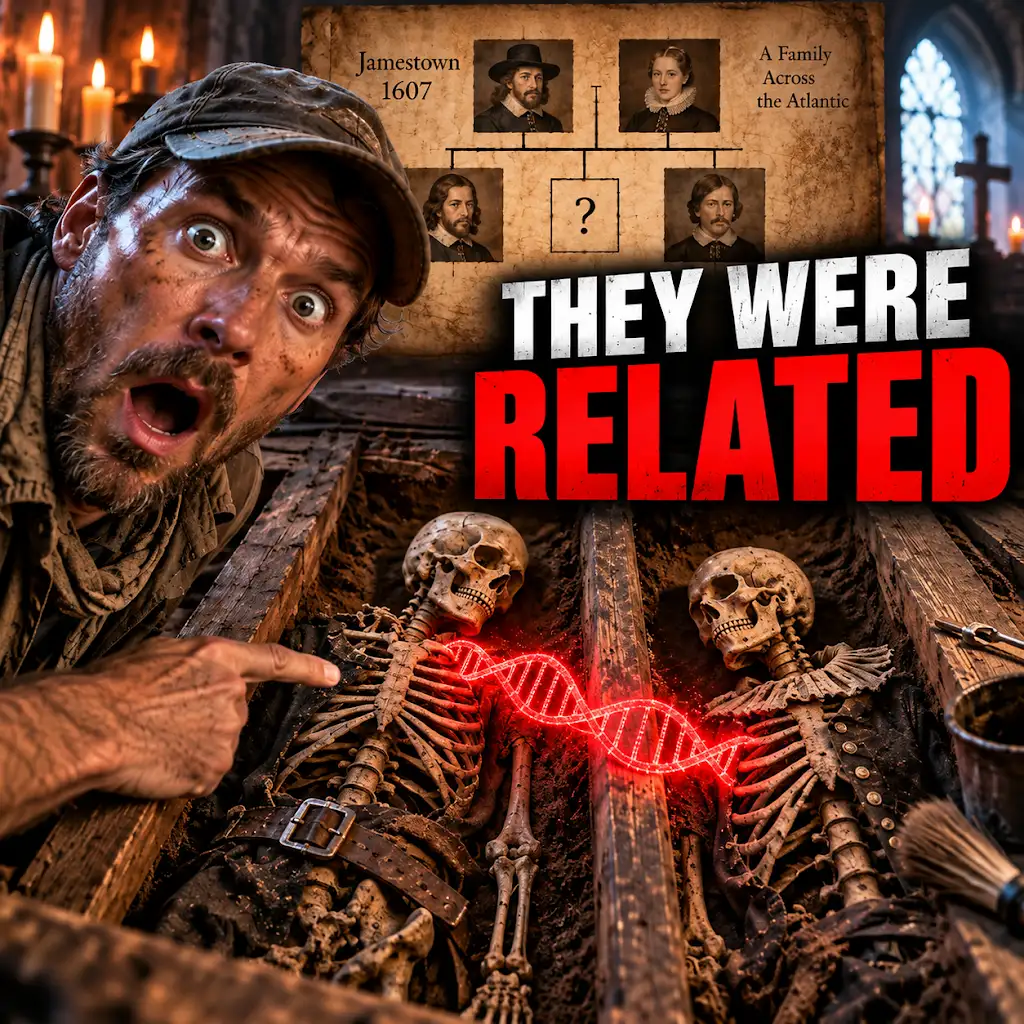
Jamestown DNA Revealed a Family Secret Hidden for 400 Years

FAQs
What is ancient DNA and how is it used in studying colonial America?
Ancient DNA refers to DNA extracted from ancient remains, such as bones or teeth, and is used to study the genetic makeup of past populations in colonial America.
What have studies of ancient DNA revealed about the population of colonial America?
Studies of ancient DNA have revealed insights into the genetic diversity, migration patterns, and interactions between different groups of people in colonial America.
How is ancient DNA different from modern DNA?
Ancient DNA is typically more degraded and fragmented compared to modern DNA due to the passage of time, making it more challenging to extract and analyze.
What are some challenges associated with studying ancient DNA from colonial America?
Challenges include contamination from modern DNA, degradation of ancient DNA over time, and the need for specialized techniques to extract and analyze the genetic material.
What are the implications of ancient DNA studies for our understanding of colonial America?
Ancient DNA studies provide valuable information about the genetic history of colonial America, shedding light on population movements, genetic adaptations, and cultural exchanges during this time period.