The Earth, a planet teeming with life and etched with a history spanning billions of years, holds within its depths a treasure trove of secrets. From the formation of continents to the origin of life itself, these mysteries are largely hidden beneath a surface that offers only fleeting glimpses. For centuries, humanity has gazed at the stars, but understanding our own planet requires looking inward, a feat made possible by the ingenious and ever-evolving field of deep drilling. These sophisticated techniques allow scientists to pierce the Earth’s crust, accessing environments previously unimaginable and unlocking a wealth of knowledge that reshapes our understanding of geological processes, past climates, and even the potential for life beyond Earth.
The motivation behind deep drilling is as profound as the depths we aim to reach. It is a pursuit driven by scientific curiosity, the need for essential resources, and the desire to comprehend the forces that shape our planet. The information gleaned from subsurface samples and direct observations provides critical insights into a multitude of Earth science disciplines.
Understanding Plate Tectonics and Earth’s Structure
The theory of plate tectonics, a cornerstone of modern geology, describes the movement of Earth’s lithospheric plates and their impact on earthquakes, volcanoes, and mountain formation. Deep drilling provides direct evidence of these processes.
Sampling Crustal and Mantle Rocks
By drilling into the oceanic and continental crust, scientists can retrieve rock samples that reveal their chemical composition, age, and the pressures and temperatures they have experienced. These samples are crucial for understanding the formation and evolution of tectonic plates, the composition of the Earth’s upper mantle, and the mechanisms driving plate movement. The famous Ocean Drilling Program (now International Ocean Discovery Program – IODP) has been instrumental in this regard, recovering cores from the ocean floor that tell stories of ancient seafloor spreading and subduction.
Investigating Seismic Activity and Fault Zones
Earthquakes are a dramatic manifestation of tectonic forces. Deep drilling allows for the placement of sensors and monitoring equipment directly within active fault zones, providing unprecedented data on stress accumulation, fault slip, and fluid pressure. This information is vital for improving earthquake prediction models and understanding the mechanics of seismic rupture. Drilling into the San Andreas Fault in California, for example, has provided invaluable data on the creeping nature of this immense geological feature.
Reconstructing Earth’s Climate History
The Earth’s climate has fluctuated dramatically over its history, with periods of intense warming and glacial epochs. The geological record, particularly in the form of ice cores and deep-sea sediments, offers a proxy for past atmospheric conditions.
Analyzing Ice Cores for Atmospheric Composition
In polar regions, thick ice sheets act as natural archives of past climate. Deep ice core drilling, reaching depths of kilometers, extracts ice that contains trapped air bubbles. Analyzing the composition of these bubbles, particularly the concentrations of greenhouse gases like carbon dioxide and methane, allows scientists to reconstruct atmospheric conditions stretching back hundreds of thousands, and even millions, of years. This data is fundamental to understanding natural climate variability and assessing the impact of human activities. The Vostok ice core in Antarctica, for instance, provides a record of climate extending back over 400,000 years.
Examining Deep-Sea Sediments for Paleoceanographic Data
The ocean floor is a vast repository of sediment, accumulating layer by layer over geological time. Deep-sea drilling operations extract sediment cores that contain the fossilized remains of marine organisms, as well as chemical and isotopic signatures that reflect past ocean conditions.
Foraminifera and Their Isotopic Secrets
Microscopic marine organisms called foraminifera build shells from the calcium carbonate present in seawater. The ratio of oxygen isotopes (¹⁸O to ¹⁶O) in these shells is highly sensitive to both the temperature of the water and the volume of ice stored on land. By analyzing these ratios in sediment cores, scientists can reconstruct past ocean temperatures and global ice volumes, providing a detailed picture of ice ages and interglacial periods.
Paleoclimate Proxies in Sedimentary Layers
Beyond foraminifera, other sedimentary components like pollen grains, plant fragments, and chemical markers serve as valuable paleoclimate proxies. The presence and abundance of certain plant species, for instance, can indicate past temperature and precipitation regimes. Similarly, the isotopic composition of organic matter can shed light on past soil moisture and vegetation types.
Exploring Earth’s Energy Resources
The demand for energy has driven significant advancements in drilling technology, particularly for the extraction of fossil fuels. However, these techniques also play a role in exploring and developing geothermal energy resources.
Oil and Gas Exploration and Extraction
The vast majority of deep drilling efforts are dedicated to locating and extracting oil and natural gas reserves. This involves drilling through thick layers of sedimentary rock, often at significant depths and under immense pressure. Advanced seismic surveying techniques are used to map subsurface geological structures that might trap hydrocarbons.
Geothermal Energy Development
Geothermal energy harnesses the heat from the Earth’s interior. Deep drilling is essential for accessing these high-temperature reservoirs. Wells are drilled into geothermal fields, and superheated water or steam is brought to the surface to drive turbines and generate electricity. This represents a cleaner and more sustainable energy source.
Investigating the Subsurface Biosphere
The discovery of life thriving in environments previously thought to be sterile has revolutionized our understanding of biology and astrobiology. The deep subsurface hosts a vast and largely unexplored microbial ecosystem.
Microbial Life in Extreme Environments
Deep drilling projects have revealed an astonishing diversity of microbial life existing kilometers beneath the Earth’s surface, in the absence of sunlight and often under extreme pressure and temperature conditions. These “deep biosphere” microbes obtain energy from chemical reactions involving rocks and fluids.
Extremophiles and Their Metabolic Pathways
Scientists study these “extremophiles” to understand their unique adaptations and metabolic pathways. This research has implications for understanding the limits of life, the potential for life on other planets, and even for biotechnological applications. Some extremophiles thrive in conditions similar to those found on Mars or in the subsurface oceans of icy moons like Europa.
Scientists have made significant advancements in drilling kilometers into the Earth’s crust to study its composition and understand geological processes. This groundbreaking work not only sheds light on the Earth’s interior but also has implications for resource management and environmental science. For those interested in exploring how ancient practices and rituals can influence modern survival strategies, a related article can be found at Surviving Famine: Ancient Rituals for Abundance, which discusses the intersection of human culture and the natural world.
The Tools of the Trade: Evolution of Drilling Technology
The ability to drill deep into the Earth has not been a sudden leap but a gradual evolution of ingenuity and engineering. From rudimentary hand augers to sophisticated modern rigs, the technology has transformed from a struggle against the elements to a precise scientific endeavor.
Rotary Drilling: The Foundation of Modern Techniques
Rotary drilling, a technique that has been refined over decades, forms the bedrock of most deep drilling operations. It relies on a rotating drill bit to grind through rock and a circulating fluid to remove cuttings and stabilize the borehole.
The Drill Bit: The Cutting Edge
The drill bit is the most critical component of the drilling system. Early bits were simple, but modern bits are complex tools made of hardened steel or tungsten carbide, often equipped with diamond inserts for superior cutting efficiency. Different types of bits are designed for various rock formations, from soft sediments to hard, crystalline rocks.
Drilling Fluids: More Than Just Lubrication
Drilling fluids, commonly known as “drilling mud,” serve multiple crucial functions. They cool and lubricate the drill bit, transport rock cuttings to the surface, and maintain hydrostatic pressure within the borehole to prevent blowouts and wellbore collapse. The composition of drilling fluids is carefully tailored to the specific geological conditions and drilling objectives.
The Drill String: Connecting Power to the Bit
The drill string is a series of interconnected pipes that transmit rotational power from the surface to the drill bit. It also serves as a conduit for the drilling fluid and for transmitting signals from downhole instruments. The length and strength of the drill string are critical for reaching great depths.
Advanced Drilling Methods: Pushing the Boundaries
Beyond conventional rotary drilling, specialized techniques have been developed to overcome the challenges of extreme depths, pressures, and geological formations.
Directional Drilling: Navigating the Subsurface Maze
Directional drilling allows for the deviation of a borehole from a vertical path, enabling access to reservoirs that are not directly beneath the drilling site. This technique is particularly important in oil and gas exploration, where multiple wells can be drilled from a single surface location to access a dispersed reservoir.
Horizontal Drilling: Unlocking Tight Formations
A subset of directional drilling, horizontal drilling involves steering the borehole through a reservoir for extended distances. This significantly increases the contact area between the wellbore and the reservoir rock, enhancing production, especially in low-permeability formations.
Underbalanced Drilling: Minimizing Formation Damage
In certain formations, the pressure exerted by the drilling fluid can be higher than the formation pressure, leading to fluid invasion and damage. Underbalanced drilling techniques involve using drilling fluids with lower density, allowing formation fluids to flow into the wellbore during drilling. This can help prevent formation damage and improve the characterization of the reservoir.
Managed Pressure Drilling (MPD): Precise Pressure Control
MPD is a sophisticated technique that allows for precise control over the annular pressure in the wellbore. This is achieved through advanced surface equipment and real-time monitoring of downhole conditions. MPD is crucial for drilling in challenging environments with narrow pressure windows, minimizing the risk of kicks and lost circulation.
Coring Techniques: Preserving the Geological Record
Extracting intact rock samples, known as cores, is paramount for detailed geological analysis. Specialized coring techniques ensure that the delicate structure and composition of the rock are preserved.
Conventional Coring: Extracting Cylindrical Samples
Conventional coring involves using a hollow cylindrical drill bit that cuts a core sample from the formation. The core is then retrieved to the surface for analysis. The length and diameter of the core can vary depending on the drilling objectives.
Wireline Coring: Efficient Sample Retrieval
Wireline coring is a more efficient method, particularly for deep boreholes. It allows for the retrieval of core barrels without having to pull the entire drill string out of the hole. A specialized wireline tool is lowered down the drill string to engage the core barrel, which can then be brought to the surface.
Sidewall Coring: Targeted Sample Acquisition
Sidewall coring involves using a specialized tool lowered into the borehole on a wireline to extract small core samples from the borehole wall. This technique is useful for obtaining samples from specific zones of interest without the need for a full coring operation.
Overcoming the Challenges: Engineering for Extreme Environments
Drilling deep into the Earth presents a formidable array of engineering challenges. Extreme pressures, high temperatures, corrosive fluids, and unstable geological formations demand robust and innovative solutions.
Managing High Pressures and Temperatures
As drilling progresses deeper, the ambient pressure and temperature increase dramatically. These conditions can strain equipment and pose safety risks.
Specialized Materials and Equipment
Drilling rigs, drill pipes, and downhole tools are constructed from high-strength alloys designed to withstand extreme pressures and temperatures. Advanced metallurgy and manufacturing processes are essential for producing equipment that can reliably operate in these harsh environments.
Wellbore Stabilization Techniques
Maintaining the integrity of the borehole is critical. Techniques such as cementing the wellbore and using specialized casing strings help to prevent collapse and isolate different geological zones.
Dealing with Geohazards
The Earth’s subsurface is not always a static and predictable environment. Geohazards, such as fault zones, fluid influx, and unstable rock formations, can pose significant risks to drilling operations.
Real-time Monitoring and Data Analysis
Advanced sensors and real-time data acquisition systems provide crucial information about downhole conditions. Sophisticated software analyzes this data to detect potential geohazards and inform operational decisions.
Blowout Prevention Systems
Robust blowout preventers (BOPs) are installed on the surface to seal the wellbore in the event of an uncontrolled influx of formation fluids, preventing catastrophic blowouts.
Environmental Considerations and Sustainability
Deep drilling, particularly for resource extraction, has environmental implications that must be carefully managed. The industry is increasingly focused on minimizing its footprint.
Minimizing Water Usage and Contamination
Drilling operations require significant amounts of water. Advanced techniques aim to reduce water consumption, recycle drilling fluids, and treat wastewater to prevent contamination of groundwater sources.
Reducing Greenhouse Gas Emissions
Efforts are underway to reduce greenhouse gas emissions associated with drilling operations, including the use of more energy-efficient equipment and exploring alternative energy sources for powering rigs.
The Future of Deep Drilling: New Frontiers and Unforeseen Discoveries
The field of deep drilling is far from stagnant. Ongoing research and technological advancements are pushing the boundaries of what is possible, opening up new frontiers for exploration and discovery.
Pushing Deeper: The Mantle Frontier
The Earth’s mantle, lying beneath the crust, represents a vast and largely unexplored region. The scientific community has long dreamt of drilling into the upper mantle to directly sample its composition and study the processes that drive plate tectonics.
The Moho Project and Beyond
While technically challenging and immensely expensive, proposals like the Moho Project aim to drill through the Earth’s crust to the Mohorovičić discontinuity (Moho), the boundary between the crust and the mantle. Success in such endeavors would revolutionize our understanding of Earth’s internal structure and dynamics.
Unlocking Subsurface Energy: Advanced Geothermal Systems
The potential of geothermal energy is vast, but accessing it in many regions requires drilling to greater depths and into more challenging geological formations.
Enhanced Geothermal Systems (EGS)
EGS technologies involve creating artificial geothermal reservoirs by fracturing hot, dry rock and injecting water. Deep drilling is essential for accessing these deeper, hotter rock formations and for circulating water to extract heat.
Astrobiological Implications and the Search for Extraterrestrial Life
The discovery of life in Earth’s deep subsurface has profound implications for the search for life beyond our planet.
Analogues for Extraterrestrial Environments
The subsurface environments on Earth, with their high pressures, extreme temperatures, and chemosynthetic ecosystems, serve as valuable analogues for the conditions found on other celestial bodies, such as Mars and the icy moons of Jupiter and Saturn.
Subsurface Oceans of Icy Moons
The possibility of subsurface liquid water oceans on moons like Europa and Enceladus makes deep drilling technologies particularly relevant. Future missions may involve drilling through thick ice shells to sample these potentially life-bearing environments.
Scientists have made significant advancements in drilling kilometers into the Earth’s crust, allowing them to study geological formations and gain insights into the planet’s history. This process is crucial for understanding seismic activity and the Earth’s internal processes. For those interested in the implications of resource extraction and government policies, a related article discusses how authorities can confiscate resources, which can be found here. Such discussions highlight the balance between scientific exploration and regulatory frameworks that govern resource management.
Conclusion: A Deeper Understanding of Our Home
| Metric | Value | Description |
|---|---|---|
| Maximum Depth Reached | 12.3 km | Depth of the Kola Superdeep Borehole, the deepest artificial point on Earth |
| Drilling Rate | 1-3 meters per day | Average penetration rate depending on rock type and drilling technology |
| Drill Bit Type | Polycrystalline Diamond Compact (PDC) | Commonly used drill bit for hard rock drilling |
| Drilling Temperature | Up to 180°C | Temperature encountered at extreme depths affecting equipment and operations |
| Drilling Pressure | Up to 500 MPa | Pressure exerted by overlying rock layers at deep drilling sites |
| Drilling Fluid | Water-based or synthetic mud | Used to cool drill bit, remove cuttings, and stabilize borehole walls |
| Core Sample Diameter | 6-10 cm | Typical diameter of rock cores extracted for scientific analysis |
| Drilling Duration | Several years | Time required to reach maximum depths in scientific drilling projects |
Deep drilling techniques are not merely about extracting resources; they are fundamental tools in humanity’s quest to understand our planet. From deciphering ancient climates to probing the origins of life, these sophisticated methods allow us to peer beneath the surface and unlock the Earth’s most profound secrets. As technology continues to advance, the depths we can reach will expand, promising even more revolutionary discoveries about the dynamic and complex world we inhabit. The ongoing evolution of deep drilling promises to continue unveiling the intricate tapestry of Earth’s history and its potential for life, both here and perhaps, in the not-too-distant future, elsewhere in the cosmos.
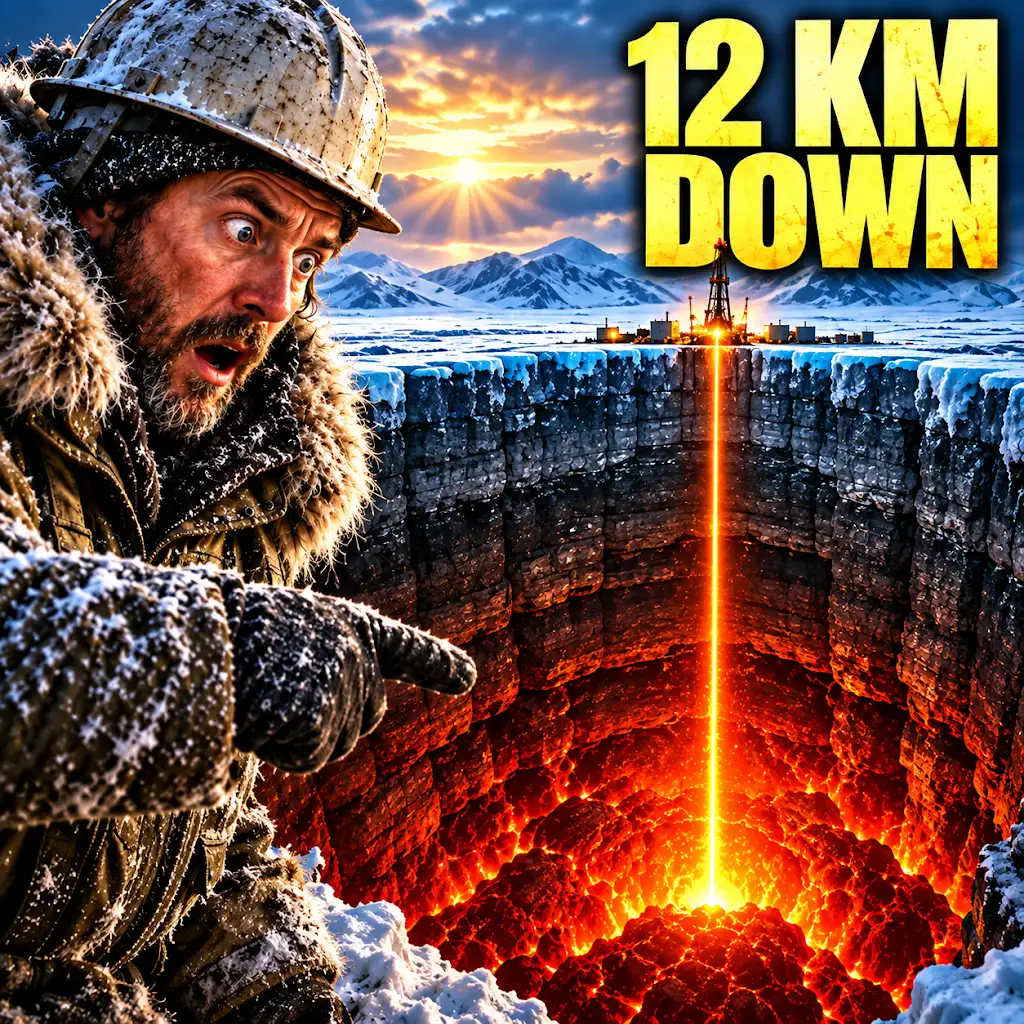
They Drilled 12 KM Into Earth — Then Everything Changed
FAQs
1. How deep have scientists drilled into the Earth’s surface?
Scientists have drilled up to 12 kilometers (7.5 miles) into the Earth’s surface, which is the deepest humans have ever drilled.
2. What technology do scientists use to drill kilometers into the Earth?
Scientists use advanced drilling techniques such as rotary drilling, diamond drilling, and hydraulic fracturing to drill kilometers into the Earth’s surface.
3. Why do scientists drill kilometers into the Earth?
Scientists drill kilometers into the Earth to study the Earth’s crust, mantle, and core, to understand geological processes, and to extract samples for research on Earth’s history and composition.
4. What challenges do scientists face when drilling kilometers into the Earth?
Scientists face challenges such as extreme temperatures, high pressures, and the need for specialized equipment to drill kilometers into the Earth’s surface.
5. What have scientists discovered by drilling kilometers into the Earth?
By drilling kilometers into the Earth, scientists have discovered new insights into the Earth’s structure, seismic activity, mineral deposits, and the history of the planet.