The dust of centuries settled on the banks of the James River, concealing the stories of those who first dared to build a new life in the nascent English colony of Jamestown. For generations, historians and archaeologists painstakingly unearthed physical remnants – pottery shards, rusted tools, and the very foundations of dwellings. Yet, a fundamental question lingered, one that eluded the grasp of traditional methods: who were these early settlers, truly? Beyond the names recorded in faded church registers and colonial dispatches, what was their shared heritage, their biological lineage? The advent of genetic genealogy has now opened a remarkable new avenue, allowing researchers to delve into the very fabric of these colonial lives, piecing together their ancestral puzzle from the whisper of DNA.
For too long, our understanding of Jamestown’s inhabitants was primarily built upon the brittle foundations of documentary evidence and material culture. While these have provided invaluable insights, they often offered a curated or incomplete picture. Official records spoke of prominent figures and key events, but the stories of the vast majority – the laborers, the indentured servants, the forgotten families – remained largely untold. Archaeological finds, while illuminating daily life, could not reveal the genetic connections that bound individuals together. The prospect of unlocking this deeper understanding, of tracing the biological threads that connected these early colonists to their ancestors and to each other, was a tantalizing but seemingly insurmountable challenge.
The Limitations of Traditional Methods
Historians rely heavily on written records. These can include government documents, personal letters, diaries, wills, and parish registers. While crucial, these sources are often biased, incomplete, or have been lost to time. For instance, the records of the very earliest years of Jamestown are notoriously sparse. The focus was on survival, not meticulous record-keeping. Furthermore, many early colonists were illiterate, and their lives were not deemed worthy of extensive documentation by those who could write. The very act of survival meant that many individuals perished without leaving a written trace of their family lineage.
Archaeology provides tangible evidence of past lives, revealing how people lived, what they ate, and the tools they used. The discovery of graves, for example, offers the potential for identifying individuals. However, without accompanying documentation, positively identifying the person buried and their familial relationships can be exceedingly difficult. While skeletal remains can provide information about diet, disease, and physical characteristics, they cannot inherently reveal ancestral origins or familial bonds without further scientific analysis.
The Promise of Genetic Genealogy
Genetic genealogy, also known as DNA genealogy, is a revolutionary field that utilizes DNA testing to explore ancestral origins and family history. By analyzing specific segments of an individual’s DNA, scientists can identify patterns that are inherited from ancestors. This allows for the reconstruction of family trees, the identification of distant relatives, and the tracing of migratory patterns across millennia. When applied to historical remains, genetic genealogy offers a unique opportunity to bypass the limitations of traditional historical research and access a direct, albeit fragmented, biological narrative. The possibility of applying these powerful techniques to the skeletal remains unearthed at Jamestown represented a significant leap forward in our quest to understand these foundational figures.
Genetic genealogy has become a fascinating tool for tracing ancestry and understanding the historical context of early American settlements, such as Jamestown, Virginia. An insightful article that explores the broader implications of historical events on our environment can be found at this link: The Climate Change Chronicles: A Documentary on Earth’s Environmental History. This resource delves into how climate and environmental changes have shaped human history, including the establishment of early colonies like Jamestown, providing a unique perspective on the intersection of genetics and history.
Unearthing the Past: The Archaeological Context
The archaeological excavations at Jamestown have been ongoing for decades, steadily revealing the physical footprint of the early settlement. These efforts have been instrumental in providing the physical samples necessary for genetic analysis. The discovery of burial sites, in particular, has been of paramount importance, offering the direct biological material required to extract ancient DNA. Each excavated artifact, each meticulously documented grave, represents a potential Rosetta Stone for unlocking the genetic secrets of the past.
The Jamestown Rediscovery Project
The Jamestown Rediscovery Project, initiated in 1994, has been at the forefront of uncovering the physical remains of the original 1607 settlement. This ambitious undertaking has unearthed thousands of artifacts, including the remains of the original fort and numerous burial sites. The meticulous excavation and preservation techniques employed by the project have ensured that the fragile ancient DNA within skeletal remains has a greater chance of survival. Without this dedicated archaeological work, the material for genetic analysis simply would not exist. The sheer volume of discoveries made by this project has provided an unprecedented opportunity for multidisciplinary research.
Identifying Key Burial Sites
The identification and careful excavation of specific burial sites have been crucial for the success of genetic genealogy efforts. These sites are not merely collections of bones; they are windows into the lives and relationships of the colonists. Each burial can potentially yield DNA that can be compared to other remains within the cemetery, or even to modern populations. The careful documentation of burial contexts – the depth, the orientation of the body, the presence of grave goods – can provide valuable clues even before genetic analysis begins. For example, the identification of a child buried next to an adult might suggest a familial relationship that can then be investigated genetically.
The Challenges of Ancient DNA Extraction
Extracting and analyzing ancient DNA (aDNA) is a highly complex and delicate process. DNA degrades over time, and the environmental conditions at Jamestown, while not ideal, have been sufficient for some preservation. Contamination from modern DNA is a significant concern, requiring stringent laboratory protocols. The fragmentary nature of ancient DNA also presents challenges for sequencing and interpretation. Despite these hurdles, advancements in molecular biology have made the recovery of aDNA from even ancient and degraded samples increasingly feasible.
The Science Behind the Stories: Genetic Analysis Techniques
The application of genetic genealogy to historical remains involves sophisticated scientific techniques. These methods allow researchers to extract DNA from ancient bone and tooth samples, amplify specific genetic markers, and compare these markers to reference databases. The resulting data can then be used to infer ancestry, kinship, and geographical origins. This scientific rigor is essential for ensuring the accuracy and reliability of the findings.
Mitochondrial DNA (mtDNA) Analysis
Mitochondrial DNA, inherited solely from the mother, is present in numerous copies within each cell. This abundance makes it more likely to survive over long periods compared to nuclear DNA. mtDNA analysis is particularly useful for tracing maternal lineages and for identifying broad geographical origins. While it doesn’t provide the detailed individual identification that nuclear DNA can, it offers a valuable starting point for understanding population movements and ancient kinship patterns. The maternal lineage traced through mtDNA can connect individuals across vast distances and timeframes.
Y-Chromosome DNA (Y-DNA) Analysis
The Y-chromosome is passed down from father to son. Y-DNA analysis is therefore used to trace paternal lineages. Similar to mtDNA, it can provide insights into ancestral origins and relationships. The unique inheritance pattern of the Y-chromosome makes it a powerful tool for investigating patrilineal connections among the Jamestown settlers and their male ancestors. This can be particularly useful in understanding the spread of certain lineages and the establishment of family lines within the colony.
Autosomal DNA (atDNA) Analysis
Autosomal DNA is inherited from both parents and constitutes the vast majority of an individual’s genome. Autosomal DNA analysis provides a more comprehensive picture of an individual’s ancestry, allowing for the identification of more distant relatives and the estimation of ethnic proportions. This is the most powerful tool for reconstructing detailed family trees and establishing close kinship relationships between individuals, both within the ancient sample and with modern individuals. The ability to analyze autosomal DNA from ancient remains represents a significant advancement in the field.
Revealing the Ancestral Tapestry of Jamestown

The application of these genetic techniques to the skeletal remains from Jamestown has begun to unveil a rich and complex ancestral tapestry. The findings are challenging simplistic notions of the colony’s origins and are revealing the diverse biological backgrounds of those who played a role in its establishment. This is not just about identifying a few prominent individuals; it’s about understanding the collective genetic heritage of this foundational community.
Tracing European Origins
Early genetic analyses of Jamestown settlers have confirmed their predominantly European origins, as expected. However, the data goes beyond broad generalizations, identifying specific regional ancestries within Europe. This includes identifying connections to England, Wales, Scotland, and Ireland, reflecting the diverse origins of the early English colonists. The granularity of these findings allows for a more nuanced understanding of the population dynamics that contributed to the colony. For example, the presence of specific genetic markers might indicate individuals from particular counties or regions within Great Britain.
Uncovering Unexpected Connections
Perhaps the most surprising and impactful findings have emerged from uncovering unexpected familial connections. By comparing the genetic profiles of individuals exhumed from different burials, researchers have been able to identify siblings, parents and children, and even more distant relatives. This has shed new light on the social structures and family units present in early Jamestown, often revealing relationships not evident in the historical record. These discoveries can fundamentally alter our understanding of how families were formed and maintained in this challenging new environment. For instance, the discovery of a child’s remains in close proximity to an adult might now be definitively confirmed as a parent-child relationship through DNA analysis.
The Presence of Diverse Ancestries
While the primary focus has been on European ancestry, genetic genealogy also has the potential to reveal the presence of individuals with diverse ancestral backgrounds in early Jamestown. This includes exploring evidence of African ancestry, which is crucial for understanding the complex social history of the colony, including the lives of the earliest enslaved Africans. The meticulous analysis of these ancient DNA samples is essential for accurately representing the full spectrum of people who contributed to Jamestown’s history. The presence of specific genetic markers associated with African populations, for example, could provide vital evidence for the lives and lineages of individuals whose stories have been marginalized or erased from historical accounts.
Genetic genealogy has become an intriguing tool for uncovering the ancestral roots of individuals, particularly in historical contexts such as Jamestown, Virginia. This method allows researchers to trace lineage and discover connections to early settlers, shedding light on the diverse backgrounds that contributed to the foundation of America. For those interested in the broader implications of environmental changes on historical sites, a related article discusses the impact of coastal erosion on shoreline stability, which can affect archaeological sites like Jamestown. You can read more about this issue in the article found here.
Implications for Historical Understanding and Future Research
| Metric | Value | Description |
|---|---|---|
| Number of DNA Samples Collected | 150+ | Samples from Jamestown descendants and related populations |
| Y-DNA Haplogroups Identified | 5 | Major paternal lineages traced among Jamestown settlers |
| mtDNA Haplogroups Identified | 7 | Maternal lineages found in Jamestown descendant populations |
| Estimated Time to Most Recent Common Ancestor (TMRCA) | 400 years | Approximate time frame linking Jamestown settlers genetically |
| Percentage of European Ancestry | 85% | Average European genetic contribution in tested descendants |
| Percentage of Native American Ancestry | 10% | Average Native American genetic contribution in tested descendants |
| Percentage of African Ancestry | 5% | Average African genetic contribution in tested descendants |
| Number of Documented Lineages Confirmed by DNA | 12 | Family lines from Jamestown settlers verified through genetic testing |
The ongoing genetic investigation of Jamestown’s inhabitants has profound implications for how we understand this pivotal period in history. It not only adds depth and detail to our existing knowledge but also opens up new avenues for future research, promising to redefine our understanding of colonial America. The insights gleaned from these genetic studies are not static; they are part of an evolving narrative that will continue to be refined with further analysis and discovery.
Reconstructing Family Trees and Social Networks
The ability to identify familial relationships genetically allows for the reconstruction of more accurate and comprehensive family trees. This, in turn, helps to map out the social networks that existed within the colony. Understanding who was related to whom, and how these relationships were maintained, provides crucial context for interpreting social dynamics, inheritance patterns, and community structures. This genetic data can fill in the blanks left by incomplete or biased historical records, offering a more complete picture of kinship and social organization.
Challenging and Refining Historical Narratives
The genetic findings from Jamestown have already begun to challenge and refine existing historical narratives. They offer objective biological evidence that can either corroborate or contradict documentary accounts. This scientific validation or revision process is essential for building a more accurate and nuanced understanding of the past. For example, if historical documents suggest a certain lineage for a prominent figure, genetic analysis can either confirm this or point to a different ancestral connection, prompting a re-evaluation of existing interpretations.
The Future of Genetic Genealogy in Archaeology
The success of genetic genealogy in uncovering the secrets of Jamestown bodes well for its future application in archaeological research worldwide. As technology continues to advance and methodologies become more refined, the ability to extract and analyze ancient DNA from even more challenging contexts will increase. This promises to revolutionize our understanding of human migration, population history, and the lives of countless individuals whose stories have been lost to time. The insights gained from Jamestown serve as a powerful testament to the potential of this interdisciplinary approach, paving the way for future breakthroughs in historical and archaeological research. The ongoing quest to understand the human past is now deeply intertwined with the power of our own biological code.
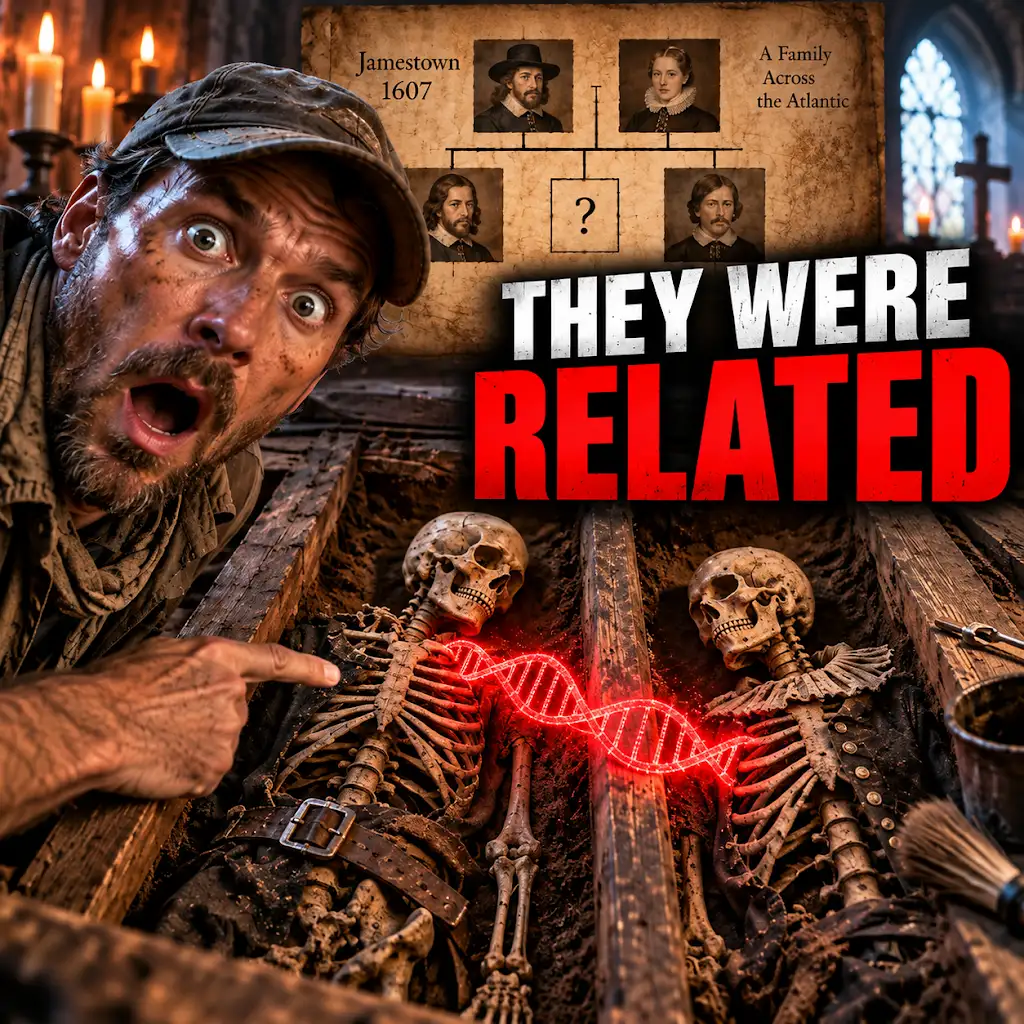
Jamestown DNA Revealed a Family Secret Hidden for 400 Years
FAQs
What is genetic genealogy?
Genetic genealogy is the use of DNA testing in combination with traditional genealogical and historical records to infer relationships between individuals.
How does genetic genealogy relate to Jamestown, Virginia?
Genetic genealogy has been used to trace the ancestry of individuals back to the early settlers of Jamestown, Virginia, providing insights into their origins and connections.
What can genetic genealogy reveal about Jamestown settlers?
Genetic genealogy can reveal information about the ethnic backgrounds, migration patterns, and familial relationships of Jamestown settlers, shedding light on their history and heritage.
How accurate is genetic genealogy in tracing ancestry to Jamestown, Virginia?
Genetic genealogy can provide accurate information about ancestry to Jamestown, Virginia, but it is important to consider the limitations of DNA testing and the need for additional genealogical research to confirm findings.
Are there any ethical considerations with genetic genealogy in Jamestown, Virginia?
Ethical considerations with genetic genealogy in Jamestown, Virginia include issues of privacy, consent, and the potential for unexpected or sensitive information to be revealed through DNA testing.